


The results of our project #EMPIRICAL speak for themselves - and now the #WHO is set to evaluate them ⚕️
A groundbreaking treatment reducing #pneumonia mortality in #HIV positive #infants 👇
Proud of this milestone and the amazing team behind it 👏
#ECTP3 #postdischarge #CMV #CLHIV
A groundbreaking treatment reducing #pneumonia mortality in #HIV positive #infants 👇
Proud of this milestone and the amazing team behind it 👏
#ECTP3 #postdischarge #CMV #CLHIV

Demuestran que un tratamiento innovador reduce la mortalidad por neumonía asociada en lactantes con VIH dozz.es/rkese4

Demuestran que un tratamiento innovador reduce la mortalidad por neumonía asociada en lactantes con VIH
dozz.es
July 15, 2025 at 11:31 AM
The results of our project #EMPIRICAL speak for themselves - and now the #WHO is set to evaluate them ⚕️
A groundbreaking treatment reducing #pneumonia mortality in #HIV positive #infants 👇
Proud of this milestone and the amazing team behind it 👏
#ECTP3 #postdischarge #CMV #CLHIV
A groundbreaking treatment reducing #pneumonia mortality in #HIV positive #infants 👇
Proud of this milestone and the amazing team behind it 👏
#ECTP3 #postdischarge #CMV #CLHIV
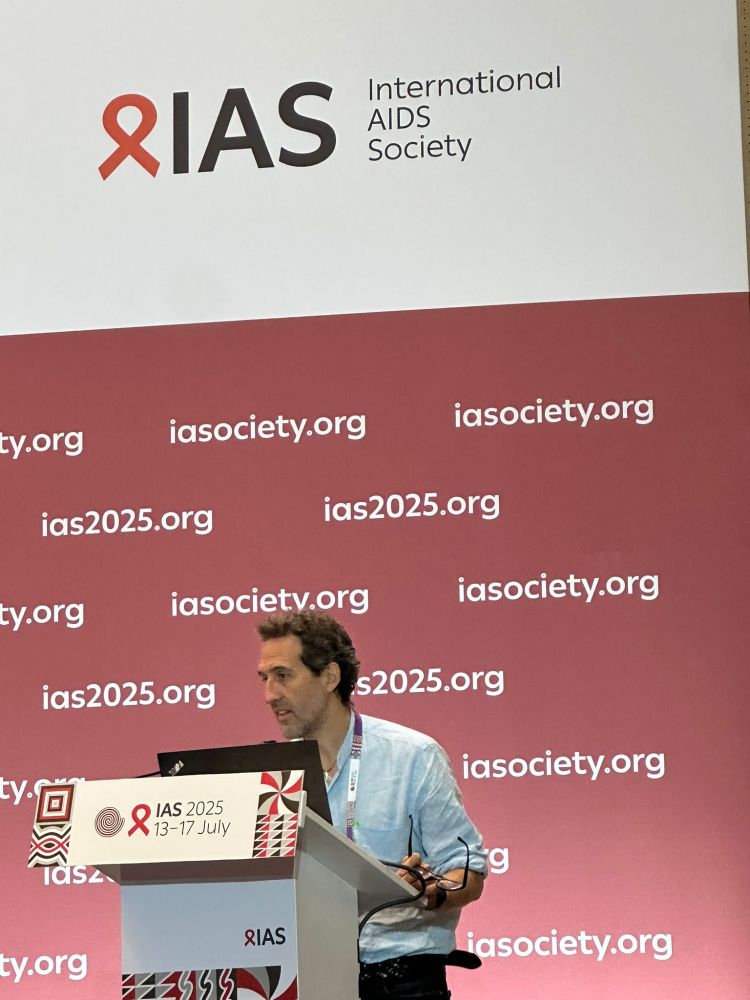
At #IAS25 important presentation by Alfredo Tagarro on #EARTH cohort viral reservoir results in #children living with #HIV, led by @pentafoundation.bsky.social and #EPIICAL 📊
@iasociety.bsky.social #CLHIV #pediatrics
@iasociety.bsky.social #CLHIV #pediatrics
July 14, 2025 at 8:42 AM
At #IAS25 important presentation by Alfredo Tagarro on #EARTH cohort viral reservoir results in #children living with #HIV, led by @pentafoundation.bsky.social and #EPIICAL 📊
@iasociety.bsky.social #CLHIV #pediatrics
@iasociety.bsky.social #CLHIV #pediatrics
👀 Check out this post on the relevance of Pediatric Advisory Groups (PEAGs)👥
#THRIVE PEAG has been addressing critical challenges in pediatric #AHD management, and tailoring solutions to improve the survival of #CLHIV in resource-limited settings 🚼
www.thriveinfo.org/post/collabo...
#THRIVE PEAG has been addressing critical challenges in pediatric #AHD management, and tailoring solutions to improve the survival of #CLHIV in resource-limited settings 🚼
www.thriveinfo.org/post/collabo...

Collaborating to Close Gaps in Advanced HIV Disease Management in Children
The THRIVE project aims to optimize the implementation of STOP AIDS package through research and stakeholder collaboration. A key component of the project is the Pediatric Expert Advisory Group (PEAG)...
www.thriveinfo.org
June 30, 2025 at 7:00 AM
👀 Check out this post on the relevance of Pediatric Advisory Groups (PEAGs)👥
#THRIVE PEAG has been addressing critical challenges in pediatric #AHD management, and tailoring solutions to improve the survival of #CLHIV in resource-limited settings 🚼
www.thriveinfo.org/post/collabo...
#THRIVE PEAG has been addressing critical challenges in pediatric #AHD management, and tailoring solutions to improve the survival of #CLHIV in resource-limited settings 🚼
www.thriveinfo.org/post/collabo...

📊 72 studies, 9,973 CLHIV: PDR 32.48% (43.23% with PMTCT failure) & ADR 61.43% (65.17% from NNRTI). INSTI-ADR low at 5.53%. Urgent need for drug-resistance surveillance!##idsky
HIV-1 drug resistance in children and implications for pediatric treatment strategies: A systematic review and meta-analysis
AbstractIntroductionFailure in the prevention of mother-to-child HIV transmission (PMTCT) and pediatric treatment challenges led to pretreatment drug resistance (PDR) and acquired drug resistance (ADR) in children living with HIV (CLHIV).MethodInterventional and observational data published between 2010 and 2024 on PDR and ADR in CLHIV were included and analysed by random effects models.ResultsOverall, 72 studies encompassing 9,973 children were included. The prevalence [95%CI] of PDR was 32.48%[26.08-39.21], and high among those who failed prevention of mother-to-child transmission (PMTCT)-prophylaxis (43.23%[32.94-53.82]) vs those without PMTCT-intervention (p<0.01) and driven by non-nucleoside reverse transcriptase inhibitors (NNRTI)-mutations (28.38% [18.74-39.08]; p=0.013). The prevalence of ADR was 61.43% [49.82-72.45], driven by NNRTI-mutations (65.17% [53.95-75.63]; p<0.001). INSTI-ADR was low (5.53%[2.49-9.53]) but emerging.ConclusionThere are high burdens of PDR and ADR among CLHIV suggesting the need to phase-out pediatric-NNRTIs used for either PMTCT or treatment. Emerging INSTI-resistance among CLHIV highlights the relevance of drug-resistance surveillance strategies.Prospero registration N°CRD42023470034.
academic.oup.com
June 27, 2025 at 11:30 PM
📊 72 studies, 9,973 CLHIV: PDR 32.48% (43.23% with PMTCT failure) & ADR 61.43% (65.17% from NNRTI). INSTI-ADR low at 5.53%. Urgent need for drug-resistance surveillance!##idsky