




X Zhang
@xunchaoz.bsky.social
International Security Fellow at @StanfordCISAC . #InternationalRelations Political Science PhD @UWMadison , formerly at @UChicago. 🇨🇳
zhangxunchao.com
zhangxunchao.com
Pinned
X Zhang
@xunchaoz.bsky.social
· Nov 7

Cycle of Suffering: Why Military Retaliation Provokes Rather Than Deters
YouTube video by CISAC Stanford (CISACStanford)
www.youtube.com
Conventional wisdom suggests that states, when challenged, can demonstrate their resolve by retaliating militarily, thereby deterring future challenges. I argue that rather than deterring, retaliation provokes cyclical revenge.
www.youtube.com/watch?v=LuBM...
www.youtube.com/watch?v=LuBM...
Reposted by X Zhang

Rose Gottemoeller, the former chief US negotiator for New START, explains that a one-year extension of the treaty limits would not prejudice any of the vital steps Washington is taking to respond to China's nuclear build-up.
- 9/n
#NewSTART #armscontrol #nukesky @stanfordcisac.bsky.social
- 9/n
#NewSTART #armscontrol #nukesky @stanfordcisac.bsky.social

New START ends. But a one-year extension could bring many benefits
Rose Gottemoeller, the former chief US negotiator for New START, explains that a one-year extension of the treaty limits would not prejudice any of the vital steps Washington is taking to respond to C...
thebulletin.org
February 6, 2026 at 10:44 PM
Rose Gottemoeller, the former chief US negotiator for New START, explains that a one-year extension of the treaty limits would not prejudice any of the vital steps Washington is taking to respond to China's nuclear build-up.
- 9/n
#NewSTART #armscontrol #nukesky @stanfordcisac.bsky.social
- 9/n
#NewSTART #armscontrol #nukesky @stanfordcisac.bsky.social
Great new book on the strategic implications of drones, including some interesting Cold War history of drone use along side interesting experiments newbooksnetwork.com/the-remote-r...
Erik Lin-Greenberg, "The Remote Revolution: Drones and Modern Statecraft" (Cornell UP, 2025) - New Books Network
newbooksnetwork.com
December 29, 2025 at 3:49 AM
Great new book on the strategic implications of drones, including some interesting Cold War history of drone use along side interesting experiments newbooksnetwork.com/the-remote-r...
Zainab Saleh discusses how the Iraq she grew up in—during the Ba'ath Party reign and under Saddam Hussein and explores the concept of nostalgia for the Saddam era, which exists even among those who suffered under the regime, because of the basic services that were provided.
youtu.be/p5bjV3N0Zrw?...
youtu.be/p5bjV3N0Zrw?...

Iraq: Eras of Rupture & the Illusions of Nostalgia | Zainab Saleh
YouTube video by afikra - عفكرة
youtu.be
December 27, 2025 at 8:01 PM
Zainab Saleh discusses how the Iraq she grew up in—during the Ba'ath Party reign and under Saddam Hussein and explores the concept of nostalgia for the Saddam era, which exists even among those who suffered under the regime, because of the basic services that were provided.
youtu.be/p5bjV3N0Zrw?...
youtu.be/p5bjV3N0Zrw?...
Reposted by X Zhang

New post on Iranian thinking after the June 2025 war and why missiles, not nuclear latency, are now at the center of Tehran's strategy. axesandatoms.substack.com/p/why-israel...

Why Israel Wants to Strike Again: Inside Iran's Expanding Missile Threat
Israeli officials are preparing to brief U.S.
axesandatoms.substack.com
December 22, 2025 at 10:33 PM
New post on Iranian thinking after the June 2025 war and why missiles, not nuclear latency, are now at the center of Tehran's strategy. axesandatoms.substack.com/p/why-israel...
Your Name Here is a fascinating bridge between literary fiction and foreign policy well worth reading. It warns that when a culture rewards ignorance and mendacity, politics is rarely far behind.
www.thenation.com/article/cult...
www.thenation.com/article/cult...

Helen DeWitt and Ilya Gridneff’s Sweeping Anti-War Novel
Your Name Here dramatizes the tensions and possibilities of political art.
www.thenation.com
December 22, 2025 at 6:22 PM
Your Name Here is a fascinating bridge between literary fiction and foreign policy well worth reading. It warns that when a culture rewards ignorance and mendacity, politics is rarely far behind.
www.thenation.com/article/cult...
www.thenation.com/article/cult...
The paper by Rauf et al. (2025) shows faculty-led experiments succeed more often, likely because of both resources (sample size) and design experiences.
If you’re a grad student, collaborate! Bringing an experienced experimentalist into the design stage raises your odds of success.
If you’re a grad student, collaborate! Bringing an experienced experimentalist into the design stage raises your odds of success.

December 21, 2025 at 4:13 AM
The paper by Rauf et al. (2025) shows faculty-led experiments succeed more often, likely because of both resources (sample size) and design experiences.
If you’re a grad student, collaborate! Bringing an experienced experimentalist into the design stage raises your odds of success.
If you’re a grad student, collaborate! Bringing an experienced experimentalist into the design stage raises your odds of success.
Reposted by X Zhang

🎧 What if nuclear war didn’t look like chaos, but competence?
CISAC Co-Director Scott Sagan discusses A House of Dynamite and the real risks of nuclear decision-making on the Bang Bang Podcast. ⤵️
www.bangbangpod.com/p/a-house-of...
CISAC Co-Director Scott Sagan discusses A House of Dynamite and the real risks of nuclear decision-making on the Bang Bang Podcast. ⤵️
www.bangbangpod.com/p/a-house-of...

A House of Dynamite (2025) w/ Scott Sagan | Ep. 54
Van and Lyle are joined by nuclear weapons and disarmament expert Scott Sagan to discuss A House of Dynamite, the 2025 political thriller that imagines nuclear catastrophe not as spectacle or obvious ...
www.bangbangpod.com
December 19, 2025 at 6:40 PM
🎧 What if nuclear war didn’t look like chaos, but competence?
CISAC Co-Director Scott Sagan discusses A House of Dynamite and the real risks of nuclear decision-making on the Bang Bang Podcast. ⤵️
www.bangbangpod.com/p/a-house-of...
CISAC Co-Director Scott Sagan discusses A House of Dynamite and the real risks of nuclear decision-making on the Bang Bang Podcast. ⤵️
www.bangbangpod.com/p/a-house-of...
Reposted by X Zhang

📢 New paper w/ @mcward.bsky.social in @ripejournal.bsky.social
: We show that left- and right-led governments negotiate fundamentally different bilateral investment treaties, with lasting consequences for treaty formation, design, and exit.
doi.org/10.1080/09692290.2025.2589412
: We show that left- and right-led governments negotiate fundamentally different bilateral investment treaties, with lasting consequences for treaty formation, design, and exit.
doi.org/10.1080/09692290.2025.2589412

Play the scramble, avoid the backlash? Partisan dynamics in the negotiation of bilateral investment treaties
Sparked by a proliferation of bilateral investment treaties (BITs) at the turn of the century, the modern international investment regime now faces a backlash from dissatisfied states. We examine t...
doi.org
December 18, 2025 at 7:31 PM
📢 New paper w/ @mcward.bsky.social in @ripejournal.bsky.social
: We show that left- and right-led governments negotiate fundamentally different bilateral investment treaties, with lasting consequences for treaty formation, design, and exit.
doi.org/10.1080/09692290.2025.2589412
: We show that left- and right-led governments negotiate fundamentally different bilateral investment treaties, with lasting consequences for treaty formation, design, and exit.
doi.org/10.1080/09692290.2025.2589412
Reposted by X Zhang
The Generalizability of IR Experiments beyond the United States
The Generalizability of IR Experiments beyond the United States By Lotem Bassan-Nygate, Harvard University, Jonathan Renshon, University of Wisconsin–Madison, Jessica L. P. Weeks, University of Wisconsin–Madison and Chagai M. Weiss,…
The Generalizability of IR Experiments beyond the United States By Lotem Bassan-Nygate, Harvard University, Jonathan Renshon, University of Wisconsin–Madison, Jessica L. P. Weeks, University of Wisconsin–Madison and Chagai M. Weiss,…
The Generalizability of IR Experiments beyond the United States
The Generalizability of IR Experiments beyond the United States By Lotem Bassan-Nygate, Harvard University, Jonathan Renshon, University of Wisconsin–Madison, Jessica L. P. Weeks, University of Wisconsin–Madison and Chagai M. Weiss, Stanford University Theories of international relations (IR) typically make predictions intended to hold across many countries, yet existing experimental evidence testing their micro-foundations relies overwhelmingly on studies fielded in the United States.
politicalsciencenow.com
December 18, 2025 at 3:00 PM
The Generalizability of IR Experiments beyond the United States
The Generalizability of IR Experiments beyond the United States By Lotem Bassan-Nygate, Harvard University, Jonathan Renshon, University of Wisconsin–Madison, Jessica L. P. Weeks, University of Wisconsin–Madison and Chagai M. Weiss,…
The Generalizability of IR Experiments beyond the United States By Lotem Bassan-Nygate, Harvard University, Jonathan Renshon, University of Wisconsin–Madison, Jessica L. P. Weeks, University of Wisconsin–Madison and Chagai M. Weiss,…
Reposted by X Zhang
Hollywood meets nuclear strategy, and it’s messier than you think. CISAC Co-director Scott Sagan and Research Assistant Shreya Lad unpack what A House of Dynamite gets right about nuclear risk, and where it goes dangerously wrong.
thebulletin.org/2025/12/a-ho...
thebulletin.org/2025/12/a-ho...

A house of mistakes: what Kathryn Bigelow’s 'A House of Dynamite' gets radically right—and dangerously wrong—about nuclear war
A House of Dynamite gets so many details wrong that the lessons viewers take from the film will likely be counterproductive, even dangerous. If it is a wake-up call, the audience will wake up on the w...
thebulletin.org
December 17, 2025 at 4:40 PM
Hollywood meets nuclear strategy, and it’s messier than you think. CISAC Co-director Scott Sagan and Research Assistant Shreya Lad unpack what A House of Dynamite gets right about nuclear risk, and where it goes dangerously wrong.
thebulletin.org/2025/12/a-ho...
thebulletin.org/2025/12/a-ho...
Reposted by X Zhang
So cool -> Quebec researchers tracked eye dilation + sweat when showing respondents political issues to see if they aligned with results from standard poll questions on issue importance. They did! And suggest asking people to choose their top issue is most reliable academic.oup.com/poq/article/...


December 16, 2025 at 6:52 PM
So cool -> Quebec researchers tracked eye dilation + sweat when showing respondents political issues to see if they aligned with results from standard poll questions on issue importance. They did! And suggest asking people to choose their top issue is most reliable academic.oup.com/poq/article/...

Conventional wisdom suggests that states, when challenged, can demonstrate their resolve by retaliating militarily, thereby deterring future challenges. I argue that rather than deterring, retaliation provokes cyclical revenge.
www.youtube.com/watch?v=LuBM...
www.youtube.com/watch?v=LuBM...
Cycle of Suffering: Why Military Retaliation Provokes Rather Than Deters
YouTube video by CISAC Stanford (CISACStanford)
www.youtube.com
November 7, 2025 at 10:48 PM
Conventional wisdom suggests that states, when challenged, can demonstrate their resolve by retaliating militarily, thereby deterring future challenges. I argue that rather than deterring, retaliation provokes cyclical revenge.
www.youtube.com/watch?v=LuBM...
www.youtube.com/watch?v=LuBM...
Grateful to have been in DC for the Stanton conference meeting fellows, scholars, alumni, and policy practitioners who are working on deterrence and nonproliferation from both social science and technical angles.


November 7, 2025 at 10:45 PM
Grateful to have been in DC for the Stanton conference meeting fellows, scholars, alumni, and policy practitioners who are working on deterrence and nonproliferation from both social science and technical angles.
Reposted by X Zhang
🚨 How & why do nuclear delivery vehicles proliferate? My article on the spread of delivery vehicles is out at Security Studies! #OpenAccess
It explains:
- Why the NPT allows nuclear delivery vehicles to spread
- How did India acquire its #nuclear delivery technology
tandfonline.com/doi/full/10....
It explains:
- Why the NPT allows nuclear delivery vehicles to spread
- How did India acquire its #nuclear delivery technology
tandfonline.com/doi/full/10....

Explaining the Proliferation of Nuclear Delivery Vehicles
How and why do nuclear delivery vehicles proliferate? This article identifies a permissive environment in the nonproliferation regime shaped by three drivers for proliferation: First, the multipurp...
tandfonline.com
September 5, 2025 at 1:56 PM
🚨 How & why do nuclear delivery vehicles proliferate? My article on the spread of delivery vehicles is out at Security Studies! #OpenAccess
It explains:
- Why the NPT allows nuclear delivery vehicles to spread
- How did India acquire its #nuclear delivery technology
tandfonline.com/doi/full/10....
It explains:
- Why the NPT allows nuclear delivery vehicles to spread
- How did India acquire its #nuclear delivery technology
tandfonline.com/doi/full/10....
Reposted by X Zhang
Please join us in welcoming our 2025-2026 fellows! These scholars will spend the academic year generating new knowledge across a range of topics that can help all of us build a safer world.
cisac.fsi.stanford.edu/news/cisac-n...
cisac.fsi.stanford.edu/news/cisac-n...
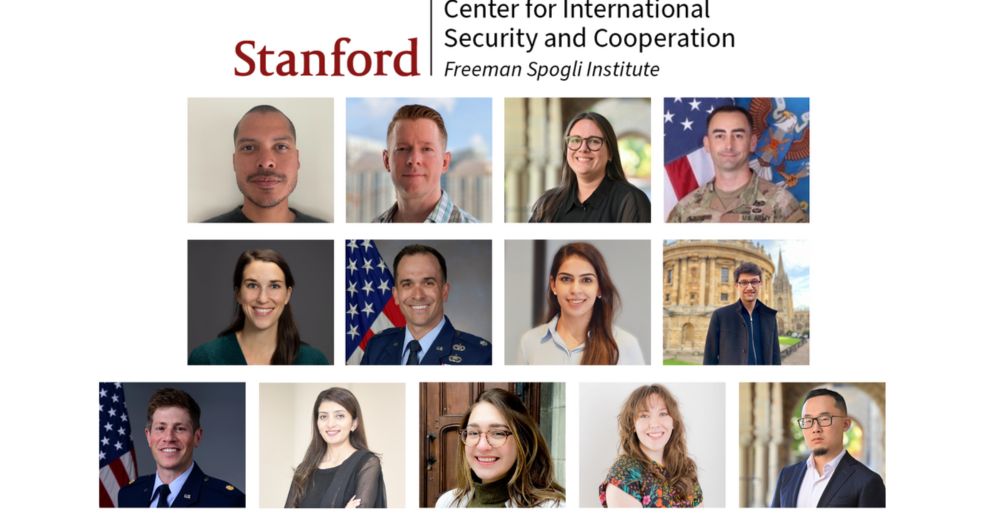
CISAC Names 2025-2026 Fellows
The Center for International Security and Cooperation (CISAC) is pleased to welcome the fellows who will be joining us for the 2025-26 academic year. These scholars will spend the academic year genera...
cisac.fsi.stanford.edu
June 16, 2025 at 4:50 PM
Please join us in welcoming our 2025-2026 fellows! These scholars will spend the academic year generating new knowledge across a range of topics that can help all of us build a safer world.
cisac.fsi.stanford.edu/news/cisac-n...
cisac.fsi.stanford.edu/news/cisac-n...
One understudied phenomenon in political science: how leaders (and publics) draw connections between seemingly unrelated events—across domestic and foreign arenas—simply because they happen concurrently, enabling unexpected cross-domain policy influence.

April 19, 2025 at 9:04 PM
One understudied phenomenon in political science: how leaders (and publics) draw connections between seemingly unrelated events—across domestic and foreign arenas—simply because they happen concurrently, enabling unexpected cross-domain policy influence.
Reposted by X Zhang
Next week: "Strategic Stability Dialogue between the United States and China in Historical Perspective" with Alexandre Debs
RSVP here⤵️
cisac.fsi.stanford.edu/events/strat...
RSVP here⤵️
cisac.fsi.stanford.edu/events/strat...

Strategic Stability Dialogue between the United States and China in
cisac.fsi.stanford.edu
March 27, 2025 at 10:30 PM
Next week: "Strategic Stability Dialogue between the United States and China in Historical Perspective" with Alexandre Debs
RSVP here⤵️
cisac.fsi.stanford.edu/events/strat...
RSVP here⤵️
cisac.fsi.stanford.edu/events/strat...