



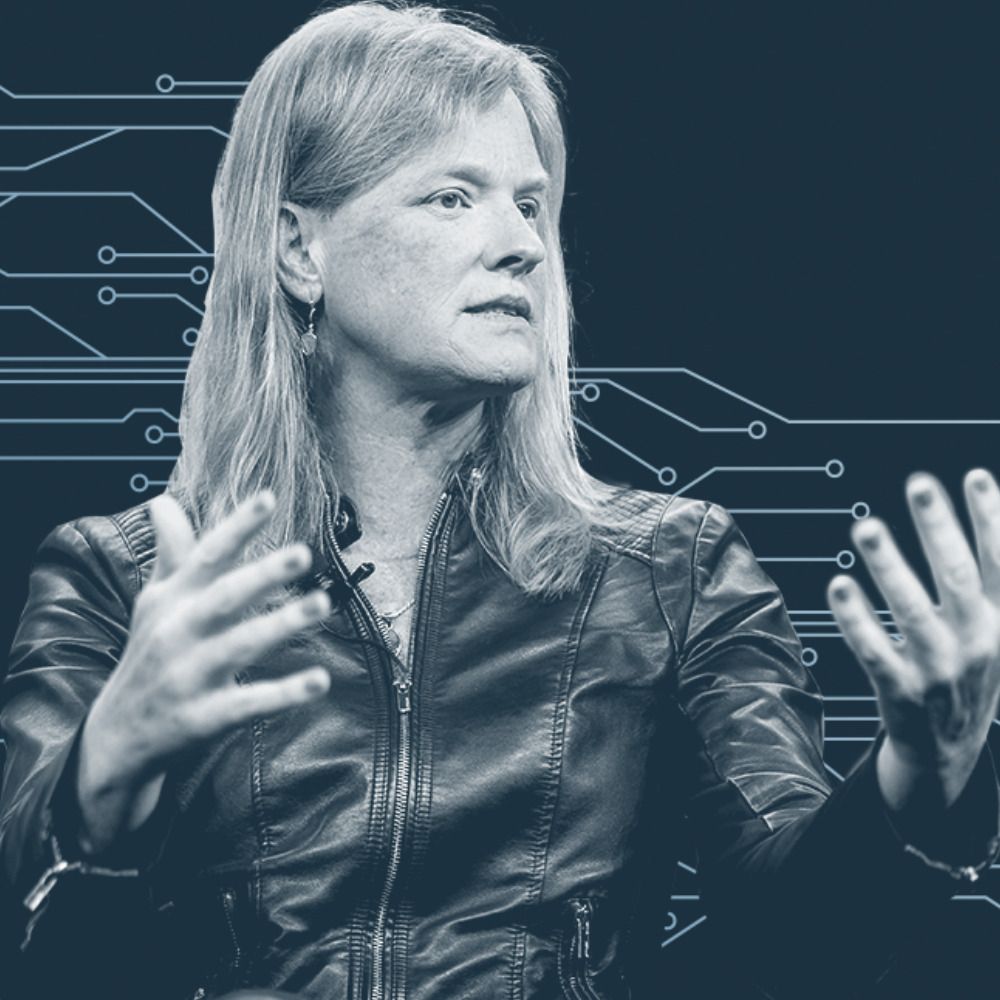
We are a dynamical systems problem. Stop trying to change people and start changing the physics of their experiences.
Subscribe here: academy.socos.org/architecting...
Or just sign up for the free weekly “Research Roundup”
#MetaLearning #RobotProof #EnvironmentalDesign #MadScience #FutureOfWork
Subscribe here: academy.socos.org/architecting...
Or just sign up for the free weekly “Research Roundup”
#MetaLearning #RobotProof #EnvironmentalDesign #MadScience #FutureOfWork
November 30, 2025 at 4:14 PM
We are a dynamical systems problem. Stop trying to change people and start changing the physics of their experiences.
Subscribe here: academy.socos.org/architecting...
Or just sign up for the free weekly “Research Roundup”
#MetaLearning #RobotProof #EnvironmentalDesign #MadScience #FutureOfWork
Subscribe here: academy.socos.org/architecting...
Or just sign up for the free weekly “Research Roundup”
#MetaLearning #RobotProof #EnvironmentalDesign #MadScience #FutureOfWork
In this week's paid newsletter, developing an operating manual for the external cortex. I break down how to design environments, in schools and offices, that act as a prosthetic for executive function and drive complex cognition to emerge.
November 30, 2025 at 4:14 PM
In this week's paid newsletter, developing an operating manual for the external cortex. I break down how to design environments, in schools and offices, that act as a prosthetic for executive function and drive complex cognition to emerge.
It turns out, you can't "teach" the most important skill of the 21st century—Meta-Learning—but you can engineer it.
November 30, 2025 at 4:13 PM
It turns out, you can't "teach" the most important skill of the 21st century—Meta-Learning—but you can engineer it.
The prose is dense, baroque, and feels constantly on the verge of collapsing under its own sheer creative weight. It is a masterpiece of unrestrained imagination.
November 28, 2025 at 4:33 PM
The prose is dense, baroque, and feels constantly on the verge of collapsing under its own sheer creative weight. It is a masterpiece of unrestrained imagination.
The plot follows a renegade mad scientist (my favorite kind) commissioned to help a de-winged bird-man fly again. Naturally, his scientific hubris accidentally unleashes a flock of interdimensional dream-eating moths.
November 28, 2025 at 4:33 PM
The plot follows a renegade mad scientist (my favorite kind) commissioned to help a de-winged bird-man fly again. Naturally, his scientific hubris accidentally unleashes a flock of interdimensional dream-eating moths.
It is the foundational text of the "New Weird"—a sprawling, steampunk, bio-punk nightmare set in New Crobuzon, a city populated by cactus people, sentient insect-women, and criminals surgically "remade" into grotesqueries.
November 28, 2025 at 4:33 PM
It is the foundational text of the "New Weird"—a sprawling, steampunk, bio-punk nightmare set in New Crobuzon, a city populated by cactus people, sentient insect-women, and criminals surgically "remade" into grotesqueries.
We aren't just addicted to the device; we are addicted to the distraction. We can engineer environments that save us from our own dopamine loops.
Read More at academy.socos.org/architecting...
#EdTech #AttentionEconomy #PhoneBan #CognitiveLoad #Policy
Read More at academy.socos.org/architecting...
#EdTech #AttentionEconomy #PhoneBan #CognitiveLoad #Policy

Architecting Meta-Learning [RR]
We must stop trying to teach meta-learning and start architecting environments that force it to emerge.
<<Support my work: book a keynote or briefing!>> Want to support my work but don't need a keyno...
academy.socos.org
November 27, 2025 at 6:17 PM
We aren't just addicted to the device; we are addicted to the distraction. We can engineer environments that save us from our own dopamine loops.
Read More at academy.socos.org/architecting...
#EdTech #AttentionEconomy #PhoneBan #CognitiveLoad #Policy
Read More at academy.socos.org/architecting...
#EdTech #AttentionEconomy #PhoneBan #CognitiveLoad #Policy
Initially resistant, students became supportive of the policy once they experienced the benefits. This might be a lesson in "paternalistic libertarianism" or perhaps just good design: sometimes you have to remove a dominant choice to expose people to the benefits of other choices.
November 27, 2025 at 6:16 PM
Initially resistant, students became supportive of the policy once they experienced the benefits. This might be a lesson in "paternalistic libertarianism" or perhaps just good design: sometimes you have to remove a dominant choice to expose people to the benefits of other choices.
Most fascinating, the“students exposed to the ban were substantially more supportive of phone-use restrictions”. This casts doubt on studies using 'willingness-to-pay' to value social media: our 'willingness' is not a fixed number, but a fluid state that shifts based on our recent experiences.
November 27, 2025 at 6:16 PM
Most fascinating, the“students exposed to the ban were substantially more supportive of phone-use restrictions”. This casts doubt on studies using 'willingness-to-pay' to value social media: our 'willingness' is not a fixed number, but a fluid state that shifts based on our recent experiences.
The gains were highest for “lower-performing, first-year, and non-STEM students”, possibly interacting with factors like working memory or executive control.
November 27, 2025 at 6:14 PM
The gains were highest for “lower-performing, first-year, and non-STEM students”, possibly interacting with factors like working memory or executive control.
A massive randomized controlled trial involving 17,000 students found that a strict ban—physically collecting phones during class—raised grades by nearly 10% of a standard deviation.
papers.ssrn.com/sol3/papers....
papers.ssrn.com/sol3/papers....
Removing Phones from Classrooms Improves Academic Performance
Widespread smartphone bans are being implemented in classrooms worldwide, yet their causal effects on student outcomes remain unclear. In a randomized controlle
papers.ssrn.com
November 27, 2025 at 6:14 PM
A massive randomized controlled trial involving 17,000 students found that a strict ban—physically collecting phones during class—raised grades by nearly 10% of a standard deviation.
papers.ssrn.com/sol3/papers....
papers.ssrn.com/sol3/papers....
Read More at academy.socos.org/architecting...
#Genetics #TheTaxOnBeingDifferent #EducationPolicy #PolygenicScores #NatureVsNurture
#Genetics #TheTaxOnBeingDifferent #EducationPolicy #PolygenicScores #NatureVsNurture

Architecting Meta-Learning [RR]
We must stop trying to teach meta-learning and start architecting environments that force it to emerge.
<<Support my work: book a keynote or briefing!>> Want to support my work but don't need a keyno...
academy.socos.org
November 26, 2025 at 3:13 PM
Our institutions must never be cynical sorting mechanisms for biological talent; they are engines that can override biological lottery tickets and lift all of society. Disassembling the infrastructure of high-quality universal education is the dissolution of our very capacity.
November 26, 2025 at 3:13 PM
Our institutions must never be cynical sorting mechanisms for biological talent; they are engines that can override biological lottery tickets and lift all of society. Disassembling the infrastructure of high-quality universal education is the dissolution of our very capacity.
Specifically, a “1 SD increase of school quality decreases the impact” of genetic disadvantages “by 6%.” This is important because reading comprehension tracks strongly with meta-learning development and human capital accumulation.
November 26, 2025 at 3:12 PM
Specifically, a “1 SD increase of school quality decreases the impact” of genetic disadvantages “by 6%.” This is important because reading comprehension tracks strongly with meta-learning development and human capital accumulation.
By combining genetic data (polygenic indices) “on mother-father-child trios” with causal estimates of school quality, researchers found that better schools significantly dampened the impact of genetic predisposition on reading scores.
November 26, 2025 at 3:12 PM
By combining genetic data (polygenic indices) “on mother-father-child trios” with causal estimates of school quality, researchers found that better schools significantly dampened the impact of genetic predisposition on reading scores.
Read More at academy.socos.org/architecting...
#Montessori #ExecutiveFunction #EarlyEd #CognitiveScience #FutureOfEducation
#Montessori #ExecutiveFunction #EarlyEd #CognitiveScience #FutureOfEducation
Architecting Meta-Learning [RR]
We must stop trying to teach meta-learning and start architecting environments that force it to emerge.
<<Support my work: book a keynote or briefing!>> Want to support my work but don't need a keyno...
academy.socos.org
November 25, 2025 at 9:40 PM
Too bad child-centered, self-directed learning is more expensive…oh wait, it isn’t: “a cost analysis suggested three years of public Montessori preschool costs less per child than traditional programs, largely due to Montessori having higher child:teacher ratios in PK3 and PK4.”
November 25, 2025 at 9:40 PM
Too bad child-centered, self-directed learning is more expensive…oh wait, it isn’t: “a cost analysis suggested three years of public Montessori preschool costs less per child than traditional programs, largely due to Montessori having higher child:teacher ratios in PK3 and PK4.”
It turns out that if you treat children like autonomous agents rather than empty vessels, they build the cognitive scaffolding necessary to fill themselves up.
November 25, 2025 at 9:40 PM
It turns out that if you treat children like autonomous agents rather than empty vessels, they build the cognitive scaffolding necessary to fill themselves up.
I have no particular allegiance to Montessori, specifically. It is the environment—self-directed choice and mixed-age peers—that causally lifts meta-learning, the architecture of learning itself.
November 25, 2025 at 9:40 PM
I have no particular allegiance to Montessori, specifically. It is the environment—self-directed choice and mixed-age peers—that causally lifts meta-learning, the architecture of learning itself.
Crucially, this causal effect appeared later—a "sleeper effect" suggesting that the Montessori environment wasn't just filling a bucket with facts, but building a better bucket.
November 25, 2025 at 9:40 PM
Crucially, this causal effect appeared later—a "sleeper effect" suggesting that the Montessori environment wasn't just filling a bucket with facts, but building a better bucket.
Early in preschool, Montessori children showed no obvious academic differences to their traditional school peers, but by the end of kindergarten, they had meaningfully “higher reading, short-term memory, theory of mind, and executive function scores.”
www.pnas.org/doi/10.1073/...
www.pnas.org/doi/10.1073/...
November 25, 2025 at 9:39 PM
Early in preschool, Montessori children showed no obvious academic differences to their traditional school peers, but by the end of kindergarten, they had meaningfully “higher reading, short-term memory, theory of mind, and executive function scores.”
www.pnas.org/doi/10.1073/...
www.pnas.org/doi/10.1073/...