




Pedro Romero-Vidal
@romero-vidal.bsky.social
Biodiversity and Conservation, postdoc researcher at @ebdonana.bsky.social (EBD-CSIC, Sevilla). Parrot ecology. Illegal Wildlife Trade.
Reposted by Pedro Romero-Vidal

This is King Ferdinand VI of Spain
Besides ruling one of the largest empires on Earth or attempting a full genocide on Spanish gipsy people, he hunted. A lot. And recorded the killings
OA PAPER Building historical biodiversity databases from royal hunts
Thread below
link.springer.com/article/10.1...
Besides ruling one of the largest empires on Earth or attempting a full genocide on Spanish gipsy people, he hunted. A lot. And recorded the killings
OA PAPER Building historical biodiversity databases from royal hunts
Thread below
link.springer.com/article/10.1...

February 13, 2026 at 11:33 AM
This is King Ferdinand VI of Spain
Besides ruling one of the largest empires on Earth or attempting a full genocide on Spanish gipsy people, he hunted. A lot. And recorded the killings
OA PAPER Building historical biodiversity databases from royal hunts
Thread below
link.springer.com/article/10.1...
Besides ruling one of the largest empires on Earth or attempting a full genocide on Spanish gipsy people, he hunted. A lot. And recorded the killings
OA PAPER Building historical biodiversity databases from royal hunts
Thread below
link.springer.com/article/10.1...
Reposted by Pedro Romero-Vidal
@clarahurricane.bsky.social ha hecho en @elconfidencial.bsky.social un estupendo artículo sobre los problemas asociados a que los gatos vivan en, o accedan al, exterior. Para la fauna, para la gente y para los propios gatos.
Un placer haber participado
El enlace, abalo
Un placer haber participado
El enlace, abalo

February 10, 2026 at 6:04 PM
@clarahurricane.bsky.social ha hecho en @elconfidencial.bsky.social un estupendo artículo sobre los problemas asociados a que los gatos vivan en, o accedan al, exterior. Para la fauna, para la gente y para los propios gatos.
Un placer haber participado
El enlace, abalo
Un placer haber participado
El enlace, abalo
Reposted by Pedro Romero-Vidal

The role of images of the extraction of marine resources from #fishing #fishweirs #whaling, and fish conservation, is interlinked with the indigenous people of North America and traditional ecological knowledge in the #Atlantic and #Pacific. 1/8 #coastalhistory

January 5, 2026 at 7:54 AM
The role of images of the extraction of marine resources from #fishing #fishweirs #whaling, and fish conservation, is interlinked with the indigenous people of North America and traditional ecological knowledge in the #Atlantic and #Pacific. 1/8 #coastalhistory
Reposted by Pedro Romero-Vidal
La entrada sobre Acociles (cangrejos de río en Náhuatl) de la Historia general de las cosas de Nueva España muestra que Bernardino de Sahagún no los conocía de Castilla
Normal, mediado el sXVI el cangrejo italiano, eso que @miteco.gob.es llama cangrejo ibérico, aun no había sido introducido
(sigue)
Normal, mediado el sXVI el cangrejo italiano, eso que @miteco.gob.es llama cangrejo ibérico, aun no había sido introducido
(sigue)

January 26, 2026 at 1:58 PM
La entrada sobre Acociles (cangrejos de río en Náhuatl) de la Historia general de las cosas de Nueva España muestra que Bernardino de Sahagún no los conocía de Castilla
Normal, mediado el sXVI el cangrejo italiano, eso que @miteco.gob.es llama cangrejo ibérico, aun no había sido introducido
(sigue)
Normal, mediado el sXVI el cangrejo italiano, eso que @miteco.gob.es llama cangrejo ibérico, aun no había sido introducido
(sigue)
Reposted by Pedro Romero-Vidal
@hoyporhoy.bsky.social de @cadenaser.com habla de angulas y su pesca en el País Vasco sin mencionar que la anguila es una especie al mismo borde de la extinción
Sigue un hilo explicando 1) lo Euskadi y 2) por qué hay que dejar de pescar, vender y comer anguila
cadenaser.com/podcast/cade...
Sigue un hilo explicando 1) lo Euskadi y 2) por qué hay que dejar de pescar, vender y comer anguila
cadenaser.com/podcast/cade...

January 22, 2026 at 11:16 AM
@hoyporhoy.bsky.social de @cadenaser.com habla de angulas y su pesca en el País Vasco sin mencionar que la anguila es una especie al mismo borde de la extinción
Sigue un hilo explicando 1) lo Euskadi y 2) por qué hay que dejar de pescar, vender y comer anguila
cadenaser.com/podcast/cade...
Sigue un hilo explicando 1) lo Euskadi y 2) por qué hay que dejar de pescar, vender y comer anguila
cadenaser.com/podcast/cade...
Reposted by Pedro Romero-Vidal
Que los medios se hagan eco de nuestro trabajo científico nos encanta... pero si lo hace OK diario la cosa ya no está tan bien.
No sólo porque lo de la foto sea un cangrejo rojo americano, Procambarus clarkii, (éste rojísimo por estar cocido), sino porque el texto hace aguas...
(sigue)
No sólo porque lo de la foto sea un cangrejo rojo americano, Procambarus clarkii, (éste rojísimo por estar cocido), sino porque el texto hace aguas...
(sigue)

January 9, 2026 at 9:29 AM
Que los medios se hagan eco de nuestro trabajo científico nos encanta... pero si lo hace OK diario la cosa ya no está tan bien.
No sólo porque lo de la foto sea un cangrejo rojo americano, Procambarus clarkii, (éste rojísimo por estar cocido), sino porque el texto hace aguas...
(sigue)
No sólo porque lo de la foto sea un cangrejo rojo americano, Procambarus clarkii, (éste rojísimo por estar cocido), sino porque el texto hace aguas...
(sigue)
Reposted by Pedro Romero-Vidal

España podría ser un experimento del @csic.es
Puedes leer el artículo completo en la web: www.elmundotoday.com/2025/12/espa...
Una colaboración del #CSIC con @elmundotoday.com
Puedes leer el artículo completo en la web: www.elmundotoday.com/2025/12/espa...
Una colaboración del #CSIC con @elmundotoday.com

December 18, 2025 at 11:07 AM
España podría ser un experimento del @csic.es
Puedes leer el artículo completo en la web: www.elmundotoday.com/2025/12/espa...
Una colaboración del #CSIC con @elmundotoday.com
Puedes leer el artículo completo en la web: www.elmundotoday.com/2025/12/espa...
Una colaboración del #CSIC con @elmundotoday.com
Reposted by Pedro Romero-Vidal

Tribuna | "La ciencia, una víctima más en la guerra que desangra República Democrática del Congo", por Pedro Romero Vidal, investigador del @csic.es

La ciencia, una víctima más en la guerra que desangra República Democrática del Congo | Tribuna
A la carencia histórica de infraestructuras científicas y de personal formado, se suma otro problema: el conflicto armado crónico que sacude la región oriental del país
social.elpais.com
December 8, 2025 at 8:00 PM
Tribuna | "La ciencia, una víctima más en la guerra que desangra República Democrática del Congo", por Pedro Romero Vidal, investigador del @csic.es
Tribuna que hemos publicado en la sección @planetafuturo.bsky.social de @elpais.com sobre la situación de nuestros colegas investigadores en República Democrática del Congo
@ebdonana.bsky.social
elpais.com/planeta-futu...
@ebdonana.bsky.social
elpais.com/planeta-futu...

La ciencia, una víctima más en la guerra que desangra República Democrática del Congo
A la carencia histórica de infraestructuras científicas y de personal formado, se suma otro problema: el conflicto armado crónico que sacude la región oriental del país
elpais.com
December 10, 2025 at 9:33 AM
Tribuna que hemos publicado en la sección @planetafuturo.bsky.social de @elpais.com sobre la situación de nuestros colegas investigadores en República Democrática del Congo
@ebdonana.bsky.social
elpais.com/planeta-futu...
@ebdonana.bsky.social
elpais.com/planeta-futu...
The DRC has experienced unprecedented forest loss in 2024. Agriculture, mining, and charcoal production are driving this rapid decline. In a country with limited access to electricity and ongoing conflict, this process appears to be accelerating.
news.mongabay.com/2025/11/drc-...
news.mongabay.com/2025/11/drc-...

December 2, 2025 at 10:14 AM
The DRC has experienced unprecedented forest loss in 2024. Agriculture, mining, and charcoal production are driving this rapid decline. In a country with limited access to electricity and ongoing conflict, this process appears to be accelerating.
news.mongabay.com/2025/11/drc-...
news.mongabay.com/2025/11/drc-...
Our Correspondence "Armed conflicts and biodiversity research" is now published in @natsustain.nature.com.
www.nature.com/articles/s41...
www.nature.com/articles/s41...

Armed conflicts and biodiversity research - Nature Sustainability
Nature Sustainability - Armed conflicts and biodiversity research
www.nature.com
November 17, 2025 at 2:21 PM
Our Correspondence "Armed conflicts and biodiversity research" is now published in @natsustain.nature.com.
www.nature.com/articles/s41...
www.nature.com/articles/s41...
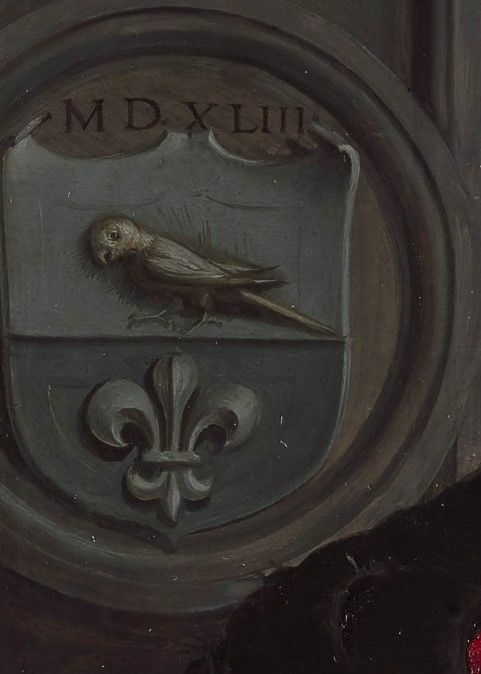
In the Portrait Christoph Baumgartner, the artist Christoph Amberger has painted an interesting bird in the coat of arms on the left. Above the fleur-de-lis, we can undoubtedly see a parakeet, which seems to be of the genus Psittacula. An interesting choice for a European coat of arms from 1543

November 13, 2025 at 9:21 AM
In the Portrait Christoph Baumgartner, the artist Christoph Amberger has painted an interesting bird in the coat of arms on the left. Above the fleur-de-lis, we can undoubtedly see a parakeet, which seems to be of the genus Psittacula. An interesting choice for a European coat of arms from 1543
Reposted by Pedro Romero-Vidal
Bald ibis, Geronticus eremita (or wood crow from Switzerland), drawn by Eleazar Albin (en.wikipedia.org/wiki/Eleazar...) in the 1730s, after an individual held in a private bird collection
Source: www.biodiversitylibrary.org/bibliography...
Source: www.biodiversitylibrary.org/bibliography...


November 4, 2025 at 11:49 AM
Bald ibis, Geronticus eremita (or wood crow from Switzerland), drawn by Eleazar Albin (en.wikipedia.org/wiki/Eleazar...) in the 1730s, after an individual held in a private bird collection
Source: www.biodiversitylibrary.org/bibliography...
Source: www.biodiversitylibrary.org/bibliography...
Reposted by Pedro Romero-Vidal

Ni siquiera Costa Rica, referente mundial en conservación, escapa al tráfico ilegal de fauna. Nos lo cuenta @romero-vidal.bsky.social de @ebdonana.bsky.social:

La captura ilegal de loros en Costa Rica nos enseña que crear áreas protegidas no basta para preservar la fauna silvestre
Proteger los hábitats no es suficiente para frenar el comercio ilegal de especies, hay que proporcionar una mayor educación ambiental a la población.
theconversation.com
November 3, 2025 at 4:52 PM
Ni siquiera Costa Rica, referente mundial en conservación, escapa al tráfico ilegal de fauna. Nos lo cuenta @romero-vidal.bsky.social de @ebdonana.bsky.social:
Reposted by Pedro Romero-Vidal

A new study warns that the international trade in African #hornbills is “terrifying”, with thousands of birds or their parts exported, entirely unregulated. Scientists are calling for increased protection for these key seed dispersers.

With ‘terrifying’ trade in African hornbills, scientists call for increased protection
For millions of years, the African landscape — the rainforests, woodlands, savannas and scrublands — has echoed with the booms and cackles of large, raucous, strange-looking birds: hornbills. When U.S...
news.mongabay.com
November 3, 2025 at 2:14 PM
A new study warns that the international trade in African #hornbills is “terrifying”, with thousands of birds or their parts exported, entirely unregulated. Scientists are calling for increased protection for these key seed dispersers.

Reposted by Pedro Romero-Vidal

🗣️ @romero-vidal.bsky.social: "Proteger los hábitats es necesario, pero insuficiente si no se afrontan también las actividades humanas responsables de la pérdida de especies, como la captura y el comercio ilegal de fauna."
👉Artículo completo: theconversation.com/la-captura-i...
👉Artículo completo: theconversation.com/la-captura-i...

La captura ilegal de loros en Costa Rica nos enseña que crear áreas protegidas no basta para preservar la fauna silvestre
Proteger los hábitats no es suficiente para frenar el comercio ilegal de especies, hay que proporcionar una mayor educación ambiental a la población.
theconversation.com
November 3, 2025 at 10:14 AM
🗣️ @romero-vidal.bsky.social: "Proteger los hábitats es necesario, pero insuficiente si no se afrontan también las actividades humanas responsables de la pérdida de especies, como la captura y el comercio ilegal de fauna."
👉Artículo completo: theconversation.com/la-captura-i...
👉Artículo completo: theconversation.com/la-captura-i...
Reposted by Pedro Romero-Vidal
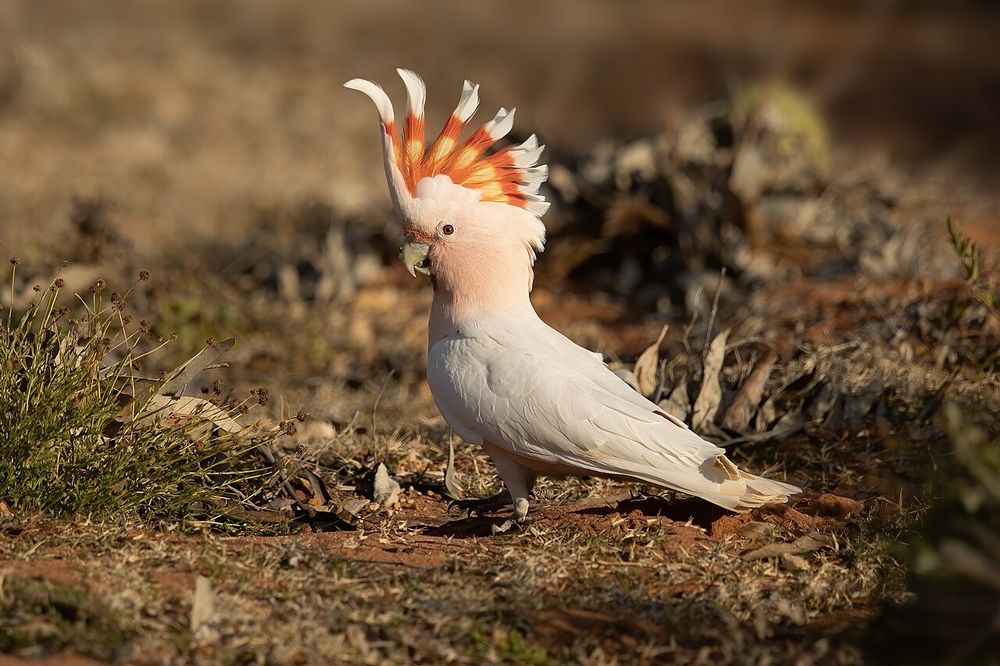
Del montón de cosas patéticas que rodean al (d)emérito, igual la palma se la lleva que ande acordándose de España a través de la cresta de la cacatúa rosa, Cacatua leadbeateri, con la que convive en el Golfo
Vaya esperpento todo
(y pobre bicho)
www.publico.es/opinion/colu...
Vaya esperpento todo
(y pobre bicho)
www.publico.es/opinion/colu...
November 1, 2025 at 9:59 PM
Del montón de cosas patéticas que rodean al (d)emérito, igual la palma se la lleva que ande acordándose de España a través de la cresta de la cacatúa rosa, Cacatua leadbeateri, con la que convive en el Golfo
Vaya esperpento todo
(y pobre bicho)
www.publico.es/opinion/colu...
Vaya esperpento todo
(y pobre bicho)
www.publico.es/opinion/colu...
In this print from the Caprichos series, Goya depicts a parrot speaking before the clergy. It is noteworthy that the species selected by the author is a gray parrot, one of the most fluent speakers among all parrots, which is precisely what has led to this species to being threatened by trade

October 29, 2025 at 11:38 AM
In this print from the Caprichos series, Goya depicts a parrot speaking before the clergy. It is noteworthy that the species selected by the author is a gray parrot, one of the most fluent speakers among all parrots, which is precisely what has led to this species to being threatened by trade
Que Galicia acabaría siendo un monocultivo forestal (aún más) creo que ya nadie lo dudaba...

🪚 Rueda chama as empresas "interesadas" a deseñar o novo modelo forestal da Galiza
www.nosdiario.gal/articulo/pol...
www.nosdiario.gal/articulo/pol...

Rueda chama as empresas "interesadas" a deseñar o novo modelo forestal da Galiza
O presidente da Xunta anuncia unha fundación, “de colaboración público-privada”, para “consolidar unha industria potente”.
www.nosdiario.gal
October 29, 2025 at 9:28 AM
Que Galicia acabaría siendo un monocultivo forestal (aún más) creo que ya nadie lo dudaba...
An interesting mix of species can be seen in this 1682 painting by
Melchior d'Hondecoeter, Bird Concert. Species found in Europe, where the artist came from, are depicted alongside others from Africa, South America, and even Papua New Guinea.
Melchior d'Hondecoeter, Bird Concert. Species found in Europe, where the artist came from, are depicted alongside others from Africa, South America, and even Papua New Guinea.

October 24, 2025 at 11:05 AM
An interesting mix of species can be seen in this 1682 painting by
Melchior d'Hondecoeter, Bird Concert. Species found in Europe, where the artist came from, are depicted alongside others from Africa, South America, and even Papua New Guinea.
Melchior d'Hondecoeter, Bird Concert. Species found in Europe, where the artist came from, are depicted alongside others from Africa, South America, and even Papua New Guinea.
In this still life by an anonymous Italian painter from the XVII century, Still-Life with Birds, we can see around 40 different species of birds. Particularly striking are the owl with jesses and the basket of plucked birds!

October 23, 2025 at 8:36 AM
In this still life by an anonymous Italian painter from the XVII century, Still-Life with Birds, we can see around 40 different species of birds. Particularly striking are the owl with jesses and the basket of plucked birds!
Parrots and Fruit with Other Birds and a Squirrel from Tobias Stranover, painted between 1710-1724. We can see a Scarlet macaw and a Yellow-naped amazon among european passerines and a Red squirrel. Parrots were already traded across the Atlantic at that time.
#parrot #art
#parrot #art

October 22, 2025 at 9:20 AM
Reposted by Pedro Romero-Vidal
🌱🪶 Un estudio en la isla de Surtsey (Islandia) revela que fueron las aves las principales responsables de llevar la mayoría de las plantas que colonizaron la isla.
🔗 www.ebd.csic.es/divulgacion/...
📄 doi.org/10.1111/ele....
🔗 www.ebd.csic.es/divulgacion/...
📄 doi.org/10.1111/ele....

October 22, 2025 at 7:40 AM
🌱🪶 Un estudio en la isla de Surtsey (Islandia) revela que fueron las aves las principales responsables de llevar la mayoría de las plantas que colonizaron la isla.
🔗 www.ebd.csic.es/divulgacion/...
📄 doi.org/10.1111/ele....
🔗 www.ebd.csic.es/divulgacion/...
📄 doi.org/10.1111/ele....
In the painting A Boy with a Flying Squirrel, from Henry Pelham in 1765, we can see a child who has what appears to be a Humboldt flying squirrel (Glaucomys oregonensis) as a pet, even with a little chain to prevent it from escaping. An interesting example of wild-caught pets from the 18th century.

October 21, 2025 at 3:05 PM
In the painting A Boy with a Flying Squirrel, from Henry Pelham in 1765, we can see a child who has what appears to be a Humboldt flying squirrel (Glaucomys oregonensis) as a pet, even with a little chain to prevent it from escaping. An interesting example of wild-caught pets from the 18th century.