



PAISAJE lab
@paisaje-lab.bsky.social
Plant-Animal Interactions & Landscape Ecology lab
Dpto. Biología – INMAR, Universidad de Cádiz
https://www.paisajelab.es/
Dpto. Biología – INMAR, Universidad de Cádiz
https://www.paisajelab.es/
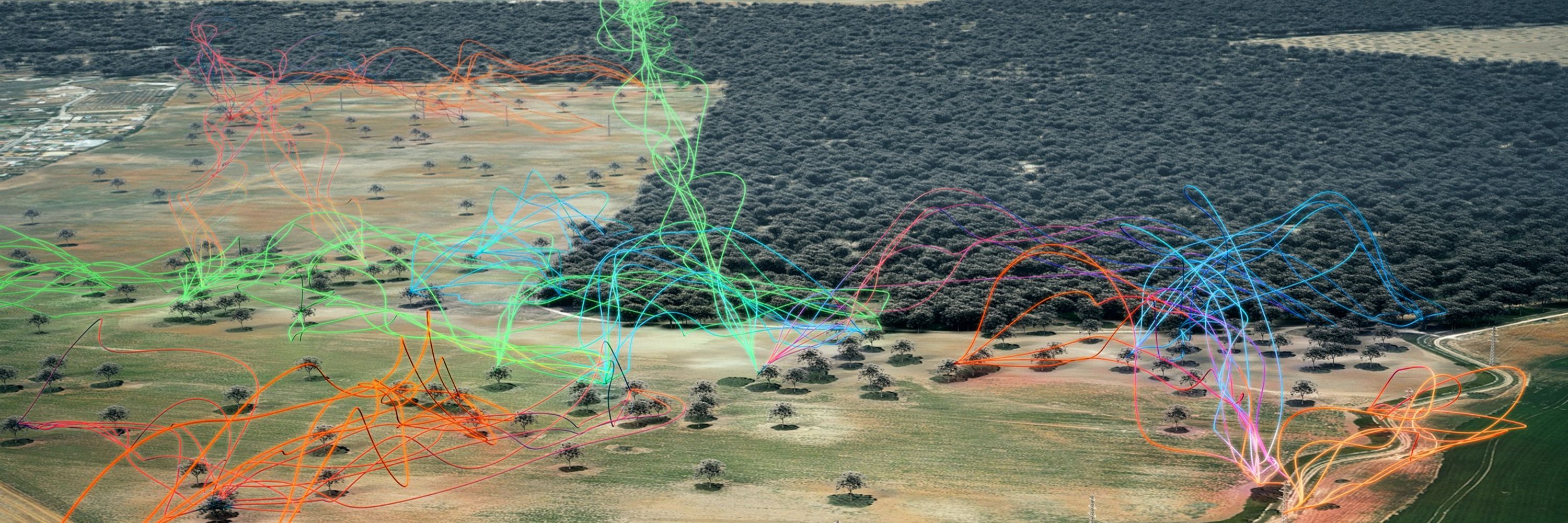
Conversely, the non-migratory movements of song thrushes, either at wintering grounds or at stopovers, generate short dispersal distances (mostly < 1 km), very similar across plant species. Reason: differences in retention times among plant spp are not important when movements are not directional.

November 27, 2025 at 6:22 PM
Conversely, the non-migratory movements of song thrushes, either at wintering grounds or at stopovers, generate short dispersal distances (mostly < 1 km), very similar across plant species. Reason: differences in retention times among plant spp are not important when movements are not directional.
Looks like we missed the full list of authors in the thread...
Sharing it here!
@univcadiz.bsky.social
@inmaruca.bsky.social
@uofglasgow.bsky.social
@uco.es
@unimarburg.bsky.social
doi.org/10.1098/rspb...
Sharing it here!
@univcadiz.bsky.social
@inmaruca.bsky.social
@uofglasgow.bsky.social
@uco.es
@unimarburg.bsky.social
doi.org/10.1098/rspb...

November 26, 2025 at 12:51 PM
Looks like we missed the full list of authors in the thread...
Sharing it here!
@univcadiz.bsky.social
@inmaruca.bsky.social
@uofglasgow.bsky.social
@uco.es
@unimarburg.bsky.social
doi.org/10.1098/rspb...
Sharing it here!
@univcadiz.bsky.social
@inmaruca.bsky.social
@uofglasgow.bsky.social
@uco.es
@unimarburg.bsky.social
doi.org/10.1098/rspb...
🧵 8/8 The mechanistic models of seed dispersal were developed in close collaboration with Juan M. Morales in Scotland and Spain.
This research was funded by the MIGRANTSEEDS project.
The paper was wonderfully led by @cabracho-estevanez.bsky.social as part of his PhD thesis.
This research was funded by the MIGRANTSEEDS project.
The paper was wonderfully led by @cabracho-estevanez.bsky.social as part of his PhD thesis.


November 26, 2025 at 9:46 AM
🧵 8/8 The mechanistic models of seed dispersal were developed in close collaboration with Juan M. Morales in Scotland and Spain.
This research was funded by the MIGRANTSEEDS project.
The paper was wonderfully led by @cabracho-estevanez.bsky.social as part of his PhD thesis.
This research was funded by the MIGRANTSEEDS project.
The paper was wonderfully led by @cabracho-estevanez.bsky.social as part of his PhD thesis.
🧵 7/n GPS tracking of birds involved numerous field campaigns between 2019 and 2023 in Cádiz (Spain), Helgoland (Germany), Falsterbo (Sweden), and Ventės Ragas (Lithuania). This was possible thanks to bird ringers and ringing stations (Vogelwarte Helgoland, Falsterbo Fågelstation and Ventės Ragas).


November 26, 2025 at 9:30 AM
🧵 7/n GPS tracking of birds involved numerous field campaigns between 2019 and 2023 in Cádiz (Spain), Helgoland (Germany), Falsterbo (Sweden), and Ventės Ragas (Lithuania). This was possible thanks to bird ringers and ringing stations (Vogelwarte Helgoland, Falsterbo Fågelstation and Ventės Ragas).
🧵 6/n But, due to their longer retention times, plant species with smaller seeds have a greater capacity to be dispersed by migratory flights and over longer distances. So, apart from fruiting phenology (doi.org/10.1038/s415...), seed size is a key trait that helps plants track rapid climate change.

November 26, 2025 at 9:04 AM
🧵 6/n But, due to their longer retention times, plant species with smaller seeds have a greater capacity to be dispersed by migratory flights and over longer distances. So, apart from fruiting phenology (doi.org/10.1038/s415...), seed size is a key trait that helps plants track rapid climate change.
🧵 5/n Our study reveals the ability of migrant frugivorous birds to (re)distribute plant species. Their role as long-distance seed dispersers may help explain past changes in plant distributions and the colonization of oceanic islands, and could be crucial for plants in fragmented landscapes.

November 26, 2025 at 8:55 AM
🧵 5/n Our study reveals the ability of migrant frugivorous birds to (re)distribute plant species. Their role as long-distance seed dispersers may help explain past changes in plant distributions and the colonization of oceanic islands, and could be crucial for plants in fragmented landscapes.
🧵 4/n Song thrushes can disperse seeds over tens or even hundreds of km during their migration, depending on the plant species (maximum distances ranged from 58 km to 521 km). Conversely, seed dispersal distances mediated by non-migratory movements were typically shorter than 1 km.

November 26, 2025 at 8:47 AM
🧵 4/n Song thrushes can disperse seeds over tens or even hundreds of km during their migration, depending on the plant species (maximum distances ranged from 58 km to 521 km). Conversely, seed dispersal distances mediated by non-migratory movements were typically shorter than 1 km.
🧵 3/n Here, we studied the seed dispersal capacity of the song thrush (Turdus philomelos) by tracking migratory movements across Europe and by combining this information with empirical data on fruit ingestion times, departure times, flight speed, and seed retention times in the birds' gut.

November 26, 2025 at 8:43 AM
🧵 3/n Here, we studied the seed dispersal capacity of the song thrush (Turdus philomelos) by tracking migratory movements across Europe and by combining this information with empirical data on fruit ingestion times, departure times, flight speed, and seed retention times in the birds' gut.
🧵 2/n The migration of frugivorous birds is one of the biological phenomena with the greatest potential to disperse the seeds of fleshy-fruited plants over long distances. But we did not know the distances over which frugivorous birds are able to disperse seeds during migration.
📸 Luis Ojembarrena
📸 Luis Ojembarrena

November 26, 2025 at 8:36 AM
🧵 2/n The migration of frugivorous birds is one of the biological phenomena with the greatest potential to disperse the seeds of fleshy-fruited plants over long distances. But we did not know the distances over which frugivorous birds are able to disperse seeds during migration.
📸 Luis Ojembarrena
📸 Luis Ojembarrena
🧵 1/n Paper out in Proceedings B! @royalsocietypublishing.org
How far can frugivorous birds disperse seeds during migration?
📸 Song thrush (Turdus philomelos) equipped with one of the satellite GPS tags used to track its migratory movements (credit: Sascha Rösner)
doi.org/10.1098/rspb...
How far can frugivorous birds disperse seeds during migration?
📸 Song thrush (Turdus philomelos) equipped with one of the satellite GPS tags used to track its migratory movements (credit: Sascha Rösner)
doi.org/10.1098/rspb...

November 26, 2025 at 8:33 AM
🧵 1/n Paper out in Proceedings B! @royalsocietypublishing.org
How far can frugivorous birds disperse seeds during migration?
📸 Song thrush (Turdus philomelos) equipped with one of the satellite GPS tags used to track its migratory movements (credit: Sascha Rösner)
doi.org/10.1098/rspb...
How far can frugivorous birds disperse seeds during migration?
📸 Song thrush (Turdus philomelos) equipped with one of the satellite GPS tags used to track its migratory movements (credit: Sascha Rösner)
doi.org/10.1098/rspb...
Longer seed retention does not guarantee longer dispersal distances if animals exhibit a resident behaviour
Tiempos de retención de semillas más largos no garantizan mayores distancias de dispersión si los animales tienen un comportamiento residente
doi.org/10.1016/j.ge...
doi.org/10.1098/rspb...
Tiempos de retención de semillas más largos no garantizan mayores distancias de dispersión si los animales tienen un comportamiento residente
doi.org/10.1016/j.ge...
doi.org/10.1098/rspb...

November 17, 2025 at 9:51 AM
Longer seed retention does not guarantee longer dispersal distances if animals exhibit a resident behaviour
Tiempos de retención de semillas más largos no garantizan mayores distancias de dispersión si los animales tienen un comportamiento residente
doi.org/10.1016/j.ge...
doi.org/10.1098/rspb...
Tiempos de retención de semillas más largos no garantizan mayores distancias de dispersión si los animales tienen un comportamiento residente
doi.org/10.1016/j.ge...
doi.org/10.1098/rspb...
Si buscas en Google la palabra "zorzales" estas son las sugerencias de búsquedas específicas que ofrece el algoritmo en nuestro país.
@seobirdlife.bsky.social
@seobirdlife.bsky.social

November 14, 2025 at 9:21 AM
Si buscas en Google la palabra "zorzales" estas son las sugerencias de búsquedas específicas que ofrece el algoritmo en nuestro país.
@seobirdlife.bsky.social
@seobirdlife.bsky.social
The queen among Mediterranean fruit-eating birds (the Sardinian warbler, a little and nervous pixie) is often hard to spot.
La reina de las aves frugívoras mediterráneas (la curruca cabecinegra, una pequeña y nerviosa duendecilla) suele ser difícil de observar.
La reina de las aves frugívoras mediterráneas (la curruca cabecinegra, una pequeña y nerviosa duendecilla) suele ser difícil de observar.

November 8, 2025 at 5:01 PM
The queen among Mediterranean fruit-eating birds (the Sardinian warbler, a little and nervous pixie) is often hard to spot.
La reina de las aves frugívoras mediterráneas (la curruca cabecinegra, una pequeña y nerviosa duendecilla) suele ser difícil de observar.
La reina de las aves frugívoras mediterráneas (la curruca cabecinegra, una pequeña y nerviosa duendecilla) suele ser difícil de observar.
Paeonia broteri seeds mimicking fleshy fruits and decepting the frugivorous birds that ingest and disperse them.
Semillas de Paeonia broteri que imitan frutos carnosos y engañan a las aves frugívoras que las ingieren y dispersan.
Semillas de Paeonia broteri que imitan frutos carnosos y engañan a las aves frugívoras que las ingieren y dispersan.

October 12, 2025 at 10:34 AM
Paeonia broteri seeds mimicking fleshy fruits and decepting the frugivorous birds that ingest and disperse them.
Semillas de Paeonia broteri que imitan frutos carnosos y engañan a las aves frugívoras que las ingieren y dispersan.
Semillas de Paeonia broteri que imitan frutos carnosos y engañan a las aves frugívoras que las ingieren y dispersan.
Spotless starling (Sturnus unicolor) released after being tagged with a GPS transmitter. We are studying the movements of these open-habitat frugivores to better understand their role as seed dispersers in anthropogenic landscapes.
(with Álex Onrubia)
#LANDSCAPERS
(with Álex Onrubia)
#LANDSCAPERS
September 23, 2025 at 2:21 PM
Spotless starling (Sturnus unicolor) released after being tagged with a GPS transmitter. We are studying the movements of these open-habitat frugivores to better understand their role as seed dispersers in anthropogenic landscapes.
(with Álex Onrubia)
#LANDSCAPERS
(with Álex Onrubia)
#LANDSCAPERS

Necesitamos ecosistemas resilientes, capaces de recuperarse tras grandes perturbaciones
Paradójicamente, zorros y córvidos, ANIMALES DISPERSORES DE SEMILLAS que juegan un papel crucial en la revegetación de zonas degradadas, son objeto de "controles cinegéticos" completamente legales
📸 internet
Paradójicamente, zorros y córvidos, ANIMALES DISPERSORES DE SEMILLAS que juegan un papel crucial en la revegetación de zonas degradadas, son objeto de "controles cinegéticos" completamente legales
📸 internet


August 23, 2025 at 11:03 AM
Necesitamos ecosistemas resilientes, capaces de recuperarse tras grandes perturbaciones
Paradójicamente, zorros y córvidos, ANIMALES DISPERSORES DE SEMILLAS que juegan un papel crucial en la revegetación de zonas degradadas, son objeto de "controles cinegéticos" completamente legales
📸 internet
Paradójicamente, zorros y córvidos, ANIMALES DISPERSORES DE SEMILLAS que juegan un papel crucial en la revegetación de zonas degradadas, son objeto de "controles cinegéticos" completamente legales
📸 internet
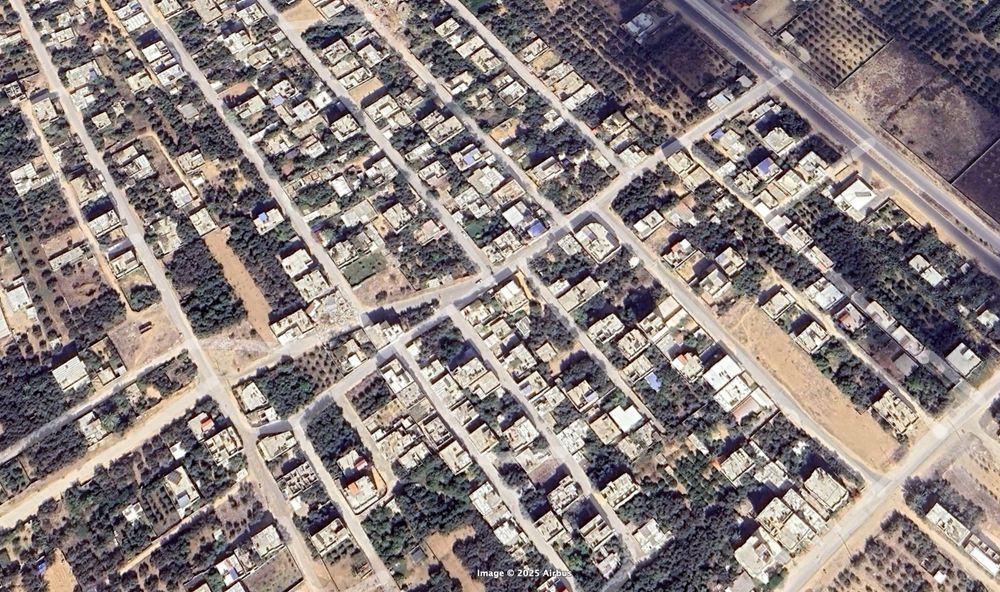
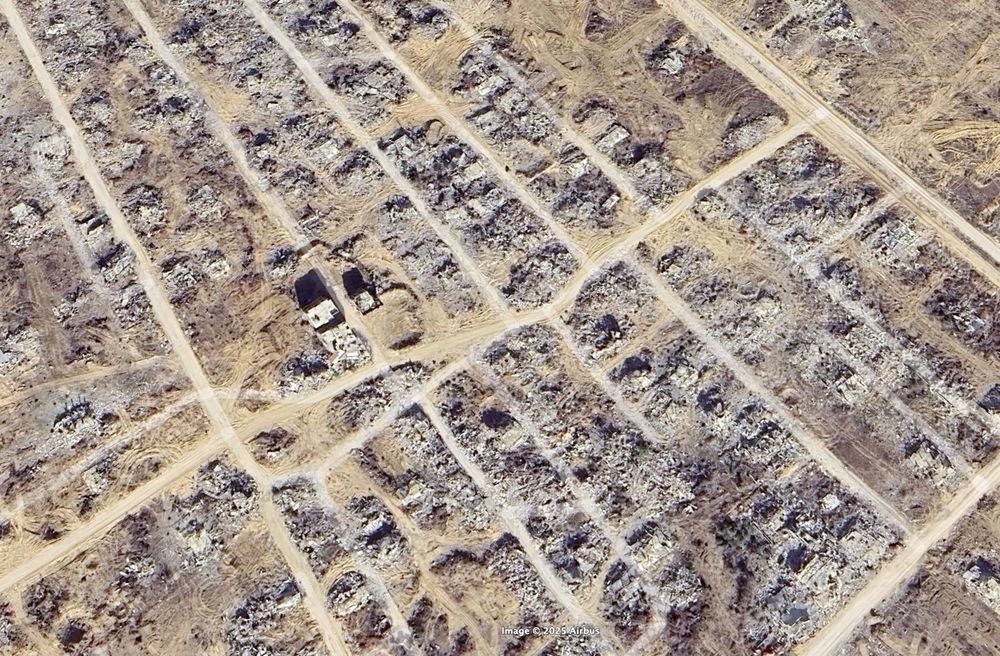
Landscape changes caused by Israel, a genocidal state. Anyone can take a walk through barbarism from Google Earth.
Cambios en el paisaje provocados por Israel, un estado genocida. Cualquiera puede dar un paseo por la barbarie desde Google Earth.
Cambios en el paisaje provocados por Israel, un estado genocida. Cualquiera puede dar un paseo por la barbarie desde Google Earth.
July 26, 2025 at 3:24 PM
Landscape changes caused by Israel, a genocidal state. Anyone can take a walk through barbarism from Google Earth.
Cambios en el paisaje provocados por Israel, un estado genocida. Cualquiera puede dar un paseo por la barbarie desde Google Earth.
Cambios en el paisaje provocados por Israel, un estado genocida. Cualquiera puede dar un paseo por la barbarie desde Google Earth.
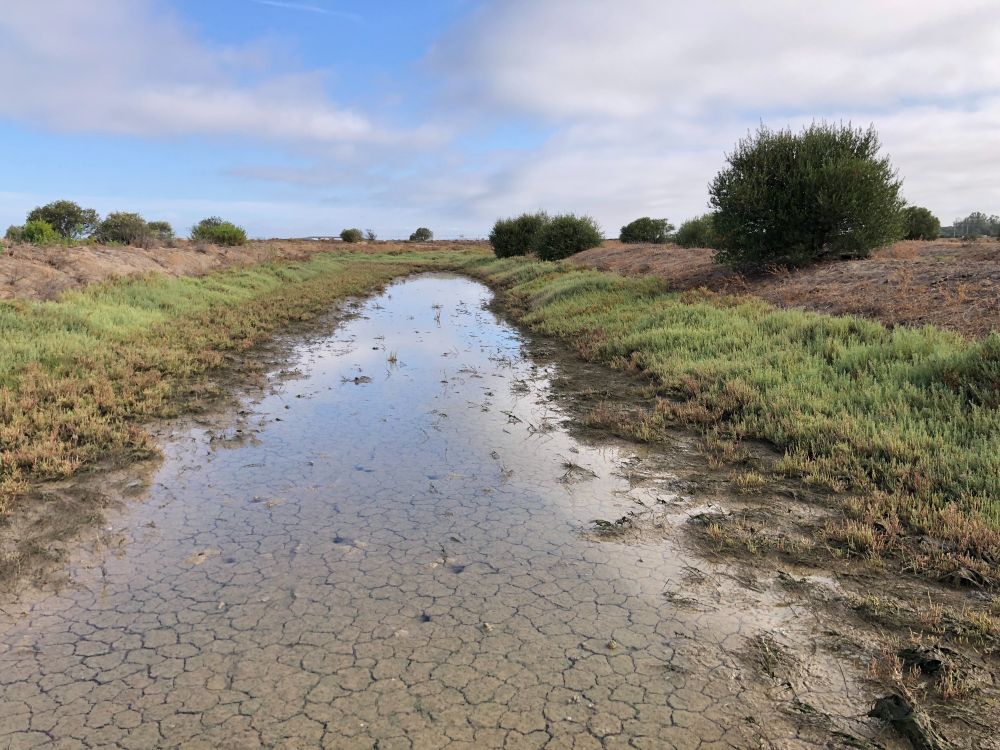
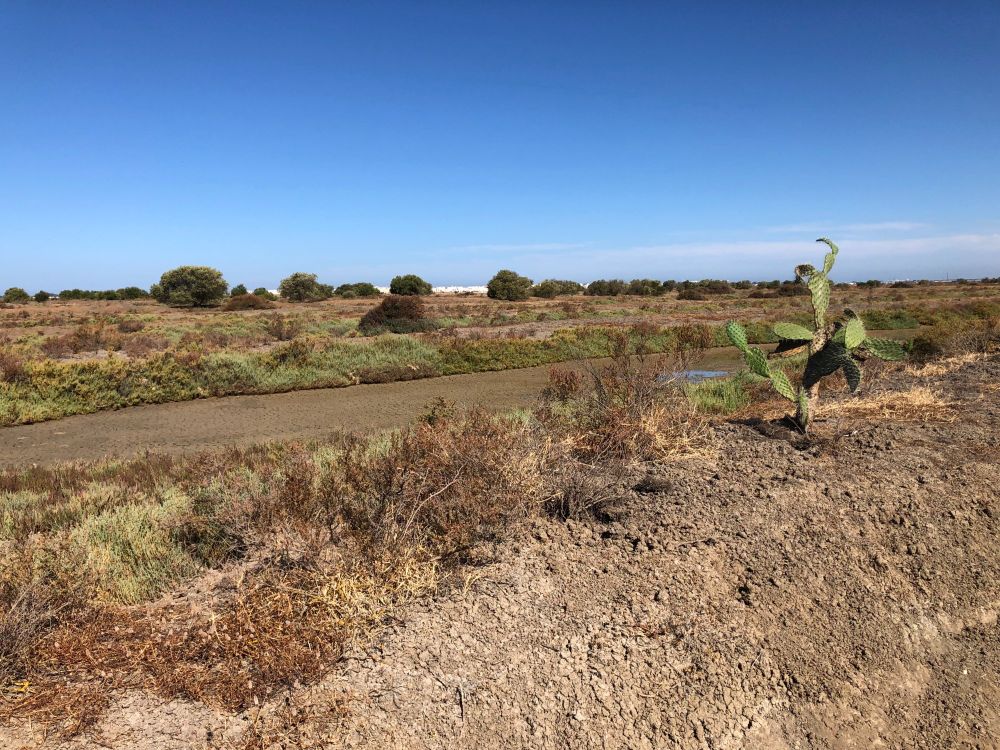
Los cambios de uso en las salinas del Parque Natural Bahía de Cádiz y la dispersión de semillas por aves frugívoras están modificando poco a poco el paisaje de la marisma.
Acebuches, lentiscos y plantas exóticas como Opuntia dillenii colonizan y se expanden por los muros.
Proyecto #LANDSCAPERS
Acebuches, lentiscos y plantas exóticas como Opuntia dillenii colonizan y se expanden por los muros.
Proyecto #LANDSCAPERS
July 23, 2025 at 12:02 PM
Los cambios de uso en las salinas del Parque Natural Bahía de Cádiz y la dispersión de semillas por aves frugívoras están modificando poco a poco el paisaje de la marisma.
Acebuches, lentiscos y plantas exóticas como Opuntia dillenii colonizan y se expanden por los muros.
Proyecto #LANDSCAPERS
Acebuches, lentiscos y plantas exóticas como Opuntia dillenii colonizan y se expanden por los muros.
Proyecto #LANDSCAPERS
@csic.es
@csicandalextrem.bsky.social
difunde los resultados de nuestro estudio
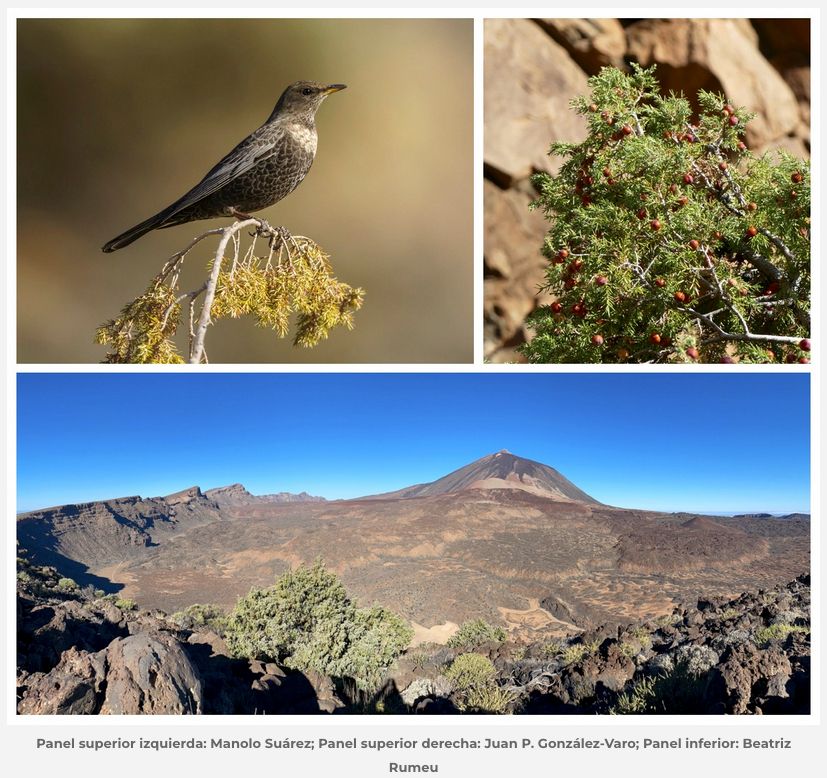
"El seguimiento satelital de mirlos capiblancos revela el alcance de sus movimientos y sus preferencias de hábitat en el Parque Nacional del Teide"
delegacion.andalucia.csic.es/el-seguimien...
@csicandalextrem.bsky.social
difunde los resultados de nuestro estudio
"El seguimiento satelital de mirlos capiblancos revela el alcance de sus movimientos y sus preferencias de hábitat en el Parque Nacional del Teide"
delegacion.andalucia.csic.es/el-seguimien...
July 16, 2025 at 9:04 AM
@csic.es
@csicandalextrem.bsky.social
difunde los resultados de nuestro estudio
"El seguimiento satelital de mirlos capiblancos revela el alcance de sus movimientos y sus preferencias de hábitat en el Parque Nacional del Teide"
delegacion.andalucia.csic.es/el-seguimien...
@csicandalextrem.bsky.social
difunde los resultados de nuestro estudio
"El seguimiento satelital de mirlos capiblancos revela el alcance de sus movimientos y sus preferencias de hábitat en el Parque Nacional del Teide"
delegacion.andalucia.csic.es/el-seguimien...
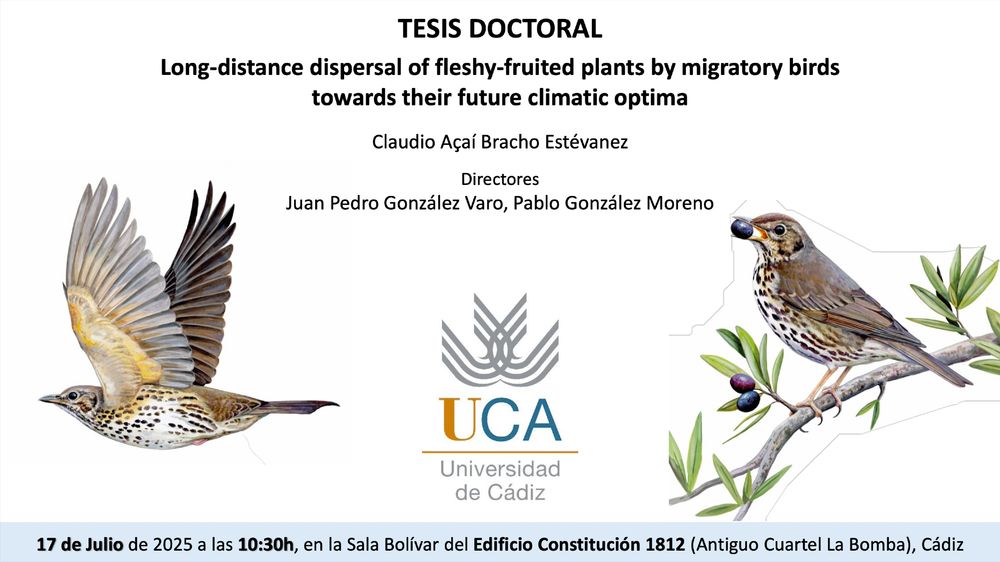
Este jueves Claudio defenderá su tesis doctoral sobre dispersión de semillas a larga distancia por aves frugívoras migratorias.
Si quieres saber cómo ha abordado este tema tan fascinante y desafiante, te esperamos a las 10:30 en la Sala Bolivar del Edificio Constitución 1812 (Cádiz) de la UCA.
Si quieres saber cómo ha abordado este tema tan fascinante y desafiante, te esperamos a las 10:30 en la Sala Bolivar del Edificio Constitución 1812 (Cádiz) de la UCA.
July 15, 2025 at 7:38 AM
Este jueves Claudio defenderá su tesis doctoral sobre dispersión de semillas a larga distancia por aves frugívoras migratorias.
Si quieres saber cómo ha abordado este tema tan fascinante y desafiante, te esperamos a las 10:30 en la Sala Bolivar del Edificio Constitución 1812 (Cádiz) de la UCA.
Si quieres saber cómo ha abordado este tema tan fascinante y desafiante, te esperamos a las 10:30 en la Sala Bolivar del Edificio Constitución 1812 (Cádiz) de la UCA.
Este trabajo se encuentra enmarcado dentro del proyecto InterActions ("Ecología de las interacciones planta-animal para la restauración de bosques altamente degradados"), y ha contado con el apoyo de la Universidad de Cádiz y el Parque Nacional del Teide
@inmaruca.bsky.social
@inmaruca.bsky.social
July 8, 2025 at 10:56 AM
Este trabajo se encuentra enmarcado dentro del proyecto InterActions ("Ecología de las interacciones planta-animal para la restauración de bosques altamente degradados"), y ha contado con el apoyo de la Universidad de Cádiz y el Parque Nacional del Teide
@inmaruca.bsky.social
@inmaruca.bsky.social
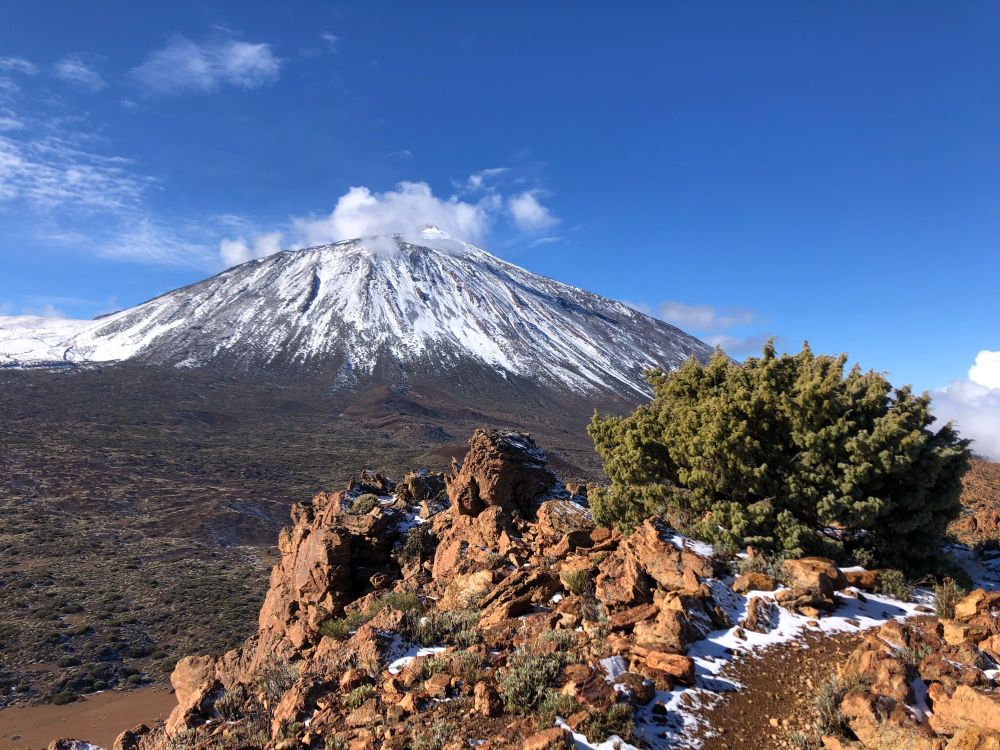
Esta información es muy relevante para orientar medidas para la conservación de este sistema planta-frugívoro vestigial y extremadamente vulnerable
July 8, 2025 at 8:02 AM
Esta información es muy relevante para orientar medidas para la conservación de este sistema planta-frugívoro vestigial y extremadamente vulnerable
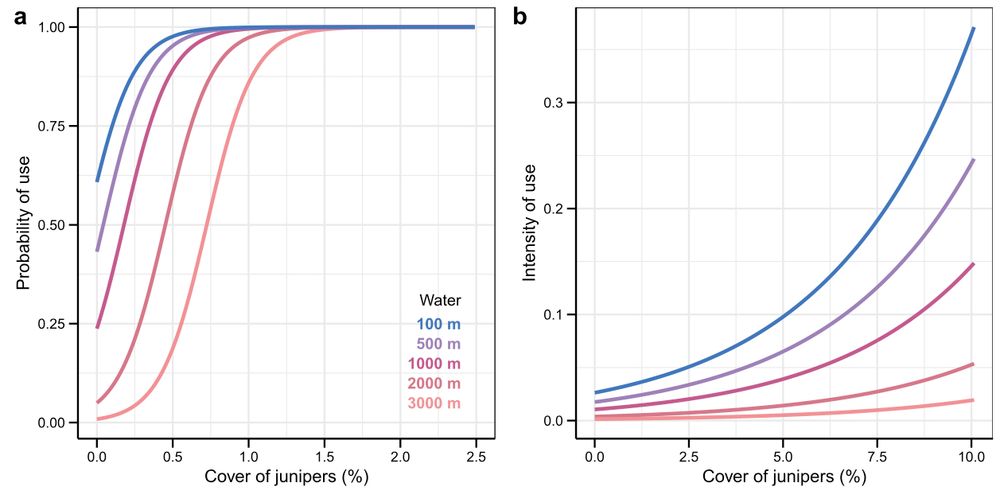
Los gálbulos de cedro canario suponen el 95% de la dieta del mirlo capiblanco en biomasa (doi.org/10.3161/0001...).
En este ecosistema árido, el agua es tan importante como el alimento determinando la probabilidad y la intensidad del uso del espacio!
Y el PN tiende hacia un clima más y más árido ♨️
En este ecosistema árido, el agua es tan importante como el alimento determinando la probabilidad y la intensidad del uso del espacio!
Y el PN tiende hacia un clima más y más árido ♨️
July 8, 2025 at 7:50 AM
Los gálbulos de cedro canario suponen el 95% de la dieta del mirlo capiblanco en biomasa (doi.org/10.3161/0001...).
En este ecosistema árido, el agua es tan importante como el alimento determinando la probabilidad y la intensidad del uso del espacio!
Y el PN tiende hacia un clima más y más árido ♨️
En este ecosistema árido, el agua es tan importante como el alimento determinando la probabilidad y la intensidad del uso del espacio!
Y el PN tiende hacia un clima más y más árido ♨️
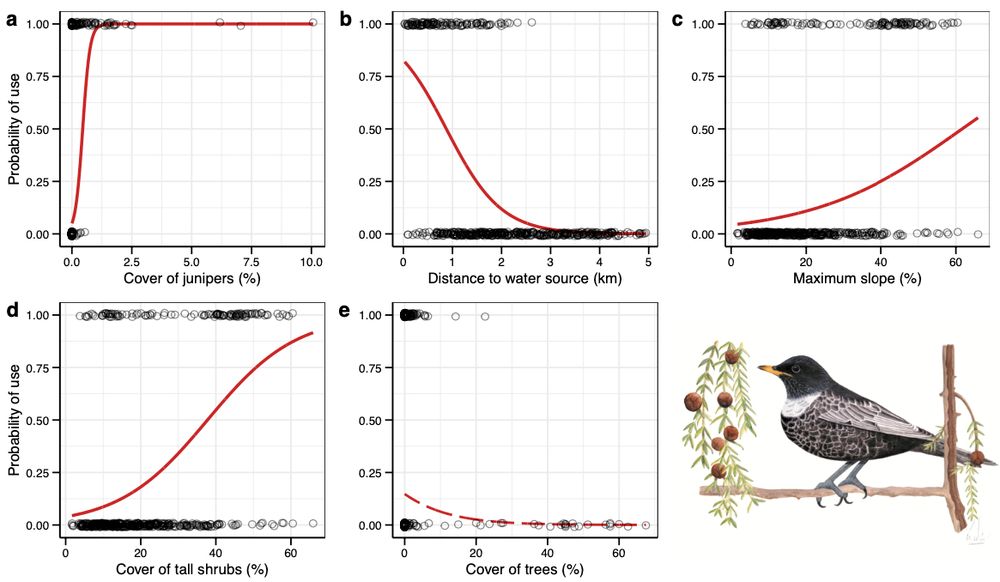
Todos estos movimientos estuvieron fuertemente ligados a la cobertura de cedros canarios (a) y a la zonas con puntos de agua cercanos (b), así como zonas con mayor pendiente (c) y (d) cobertura de arbustos de gran porte
👩🎨 María León
👩🎨 María León
July 8, 2025 at 7:45 AM
Todos estos movimientos estuvieron fuertemente ligados a la cobertura de cedros canarios (a) y a la zonas con puntos de agua cercanos (b), así como zonas con mayor pendiente (c) y (d) cobertura de arbustos de gran porte
👩🎨 María León
👩🎨 María León