




Pierre-Antoine Champin
@p20n.w3c.social.ap.brid.gy
[bridged from https://w3c.social/@p20n on the fediverse by https://fed.brid.gy/ ]
Magical sight at the festival of lights in Lyon last weekend.
December 8, 2025 at 4:42 PM
Magical sight at the festival of lights in Lyon last weekend.
Reposted by Pierre-Antoine Champin

Special offer for AI companies: for a modest donation to #OpenStreetMap we'll give you a direct download link to our data in a machine-friendly format. Much quicker than juggling 100,000 IPs to scrape our website. Start here: https://supporting.openstreetmap.org/donate/ #odbl #licensed #planet 😏🤖🌍💸
Donate
# **Thank you for your support!**
**OpenStreetMap is free to use, but not free to run.** We are truly grateful for donations. Any amount will go directly towards keeping OpenStreetMap strong, stable and independent.
* You can donate with a credit card, European SEPA transfer or PayPal below. **Other ways to donate can be foundhere.**
* If you want to contribute data and find out other ways to give back as an individual or as an organization, please see the donation FAQ below, how to contribute and https://welcome.openstreetmap.org/how-to-give-back/
* * *
## Make a donation
OpenStreetMap is run and supported by volunteers like you. With more and more people helping to make great maps, we need better, more reliable infrastructure and services to keep up with the demand.
If you enjoy using or contributing to OpenStreetMap, please consider making a donation.
The average donation is about 35€, but we are very thankful for any amount.
Donation Amount
€ 20.00
€ 50.00
€ 100.00
€ 500.00
€ 1,000.00
Other Amount
Other Amount €
Total Amount
I want to contribute on behalf of an organisation
On Behalf Of Organization
Organization Name *
Email (Main) *
Street Address *
Postal Code *
City *
State / Province
Choose country first
Country *
- select Country - Afghanistan Åland Islands Albania Algeria American Samoa Andorra Angola Anguilla Antarctica Antigua and Barbuda Argentina Armenia Aruba Australia Austria Azerbaijan Bahamas Bahrain Bangladesh Barbados Belarus Belgium Belize Benin Bermuda Bhutan Bolivia Bosnia and Herzegovina Botswana Bouvet Island Brazil British Indian Ocean Territory Brunei Darussalam Bulgaria Burkina Faso Burundi Cambodia Cameroon Canada Cape Verde Carribean Netherlands - Bonaire, Sint Eustatius and Saba (Netherlands Special Municipalities) Cayman Islands Central African Republic Chad Chile China Christmas Island Cocos (Keeling) Islands Colombia Comoros Congo, Republic Of The Congo, The Democratic Republic of the Cook Islands Costa Rica Côte d’Ivoire Croatia Cuba Curaçao Cyprus Czech Republic Denmark Djibouti Dominica Dominican Republic Ecuador Egypt El Salvador Equatorial Guinea Eritrea Estonia Eswatini Ethiopia Falkland Islands (Malvinas) Faroe Islands Fiji Finland France French Guiana French Polynesia French Southern Territories Gabon Gambia Georgia Germany Ghana Gibraltar Greece Greenland Grenada Guadeloupe Guam Guatemala Guernsey Guinea Guinea-Bissau Guyana Haiti Heard Island and McDonald Islands Holy See (Vatican City State) Honduras Hong Kong Hungary Iceland India Indonesia Iran, Islamic Republic of Iraq Ireland Isle of Man Israel Italy Jamaica Japan Jersey Jordan Kazakhstan Kenya Kiribati Korea, Democratic People's Republic of Korea, Republic of Kosovo Kuwait Kyrgyzstan Lao People's Democratic Republic Latvia Lebanon Lesotho Liberia Libya Liechtenstein Lithuania Luxembourg Macao Madagascar Malawi Malaysia Maldives Mali Malta Marshall Islands Martinique Mauritania Mauritius Mayotte Mexico Micronesia, Federated States of Moldova Monaco Mongolia Montenegro Montserrat Morocco Mozambique Myanmar Namibia Nauru Nepal Netherlands New Caledonia New Zealand Nicaragua Niger Nigeria Niue Norfolk Island North Macedonia Northern Mariana Islands Norway Oman Pakistan Palau Palestine, State of Panama Papua New Guinea Paraguay Peru Philippines Pitcairn Poland Portugal Puerto Rico Qatar Reunion Romania Russian Federation Rwanda Saint Barthélemy Saint Helena Saint Kitts and Nevis Saint Lucia Saint Martin (French part) Saint Pierre and Miquelon Saint Vincent and the Grenadines Samoa San Marino Sao Tome and Principe Saudi Arabia Senegal Serbia Seychelles Sierra Leone Singapore Sint Maarten (Constituent Country of the Netherlands) Slovakia Slovenia Solomon Islands Somalia South Africa South Georgia and the South Sandwich Islands Southern Sudan Spain Sri Lanka Sudan Suriname Svalbard and Jan Mayen Sweden Switzerland Syrian Arab Republic Taiwan Tajikistan Tanzania, United Republic of Thailand Timor-Leste Togo Tokelau Tonga Trinidad and Tobago Tunisia Turkey Turkmenistan Turks and Caicos Islands Tuvalu Uganda Ukraine United Arab Emirates United Kingdom United States United States Minor Outlying Islands Uruguay Uzbekistan Vanuatu Venezuela Viet Nam Virgin Islands, British Virgin Islands, U.S. Wallis and Futuna Western Sahara Yemen Zambia Zimbabwe
Donor information
First Name *
Last Name *
Email Address *
We will email you your receipt.
Contact me
It's OK to contact me about donations
We'll email you, very rarely, about supporting OpenStreetMap. You can unsubscribe at any time.
OSM username
Case sensitive
**The information you provide will NOT be shared with any third party organisations.**
Thank you for getting involved in our campaign!
Donation information
Optional public message, limited to 300 characters.
Message
Public
List my name on the public donor list.
Your donation will be shown as anonymous otherwise.
__Contribute
#
* * *
**Thank you for supporting a growing OpenStreetMap!**
OpenStreetMap is the largest open geographic database in the world, the data infrastructure for multitudes of mapping projects around the globe. **Your donation to the OpenStreetMap Foundation will cover our core operational expenses in supporting the OpenStreetMap project** : hardware and hosting costs, legal fees, administrative assistant and other expenses of our working groups and administration.
We currently run extremely lean for an operation for a project the size and importance of OpenStreetMap. The OpenStreetMap Foundation relies on revenue from individual and corporate membership dues, profits generated by the annual State of the Map conferences, and donations. We must keep our income sources diversified, as these vary from year to year, but our modest needs stay the same. For this, we need your support.
# Recent Donations
# Donation FAQ
#### Who is receiving funds?
The OpenStreetMap Foundation will be collecting the funds.
#### What’s the OpenStreetMap Foundation?
The OpenStreetMap Foundation is the non-profit organisation which supports the OpenStreetMap project by maintaining its services, providing a legal structure around the project’s database, by organizing an annual conference and more. Learn more about the OpenStreetMap Foundation on osmfoundation.org.
#### How are you spending your money? Can I see a budget?
You sure can! Our Finances overview page has more information on how we allocate our budget, and links to past income/expense and balance sheets. We invite you to peruse these and contact us with any questions you may have.
#### Are you a 501(c)(3)?
No. The OpenStreetMap Foundation is a UK-registered not-for-profit organisation that supports the OpenStreetMap Project. It is not a 501(c)(3) in the sense of the Internal Revenue Code of the US Internal Revenue Service (IRS).
#### What else can we do to support OpenStreetMap?
Join us! Aside from funds to upgrade our hardware what we need most are people. Whatever your background – technical or not – you can help OpenStreetMap. Here are just a few of the many possible ways to get more involved:
### For individuals:
If you have contributed data to OpenStreetMap, or time to helping organise mapping activities: _thank you_ for everything you’ve already done!
OpenStreetMap only survives because of the work put in by thousands of hard-working and selfless volunteer contributors. If you are one of these people, then you are already doing a great thing for the project.
If you would like to do more, then you can:
* Join the Foundation and support the body which supports (but doesn’t control) the project. By being a part of the Foundation, your voice can be heard in discussions about how the Foundation is run.
* Join a Working Group and give your time to solving those issues which require greater commitment. Being on a Working Group, as the name suggests, is hard work and requires diligence, but can make a huge difference to the project.
* Donate money here. Whatever you can spare will be gratefully received and put towards services necessary for the continued growth and success of the project.
### For companies:
Whether you use OpenStreetMap data in your products and services, or are just interested in helping, corporate sponsorship of OpenStreetMap events and hardware helps the project to keep going and be inclusive.
If your company would like to help the project grow and succeed, then you can:
* Join the Foundation as a corporate member. Your support of the Foundation will be greatly appreciated and publicly lauded.
* Donate time. Some of your employees might jump at the chance to be more involved with OSM, so why not give them a “20% time” to join a Working Group or contribute time to a project which helps OSM?
* Donate money here. Any contribution will help and is gratefully received.
#### How can I donate more? What if I have more questions?
Get in touch
**Home | Membership | Donate** | **OpenStreetMap**
* Facebook
* Instagram
* Mastodon
* Twitter
* Discord
* Telegram
* Reddit
* LinkedIn
* Discourse
* GitHub
**OpenStreetMap Foundation** , St John’s Innovation Centre, Cowley Road, Cambridge, CB4 0WS, United Kingdom
supporting.openstreetmap.org
December 2, 2025 at 9:04 PM
Special offer for AI companies: for a modest donation to #OpenStreetMap we'll give you a direct download link to our data in a machine-friendly format. Much quicker than juggling 100,000 IPs to scrape our website. Start here: https://supporting.openstreetmap.org/donate/ #odbl #licensed #planet 😏🤖🌍💸
Reposted by Pierre-Antoine Champin

I'm afraid everyone is going to find out I don't actually have Impostor Syndrome.
November 22, 2025 at 3:40 AM
I'm afraid everyone is going to find out I don't actually have Impostor Syndrome.
Reposted by Pierre-Antoine Champin
HTTP has a new method: QUERY. Tl;dr: GET with a body.
https://www.ietf.org/archive/id/draft-ietf-httpbis-safe-method-w-body-14.html
#ietf
https://www.ietf.org/archive/id/draft-ietf-httpbis-safe-method-w-body-14.html
#ietf
The HTTP QUERY Method
This specification defines the QUERY method for HTTP. A QUERY requests that the request target process the enclosed content in a safe and idempotent manner and then respond with the result of that processing. This is similar to POST requests but can be automatically repeated or restarted without concern for partial state changes.
www.ietf.org
November 20, 2025 at 9:39 PM
HTTP has a new method: QUERY. Tl;dr: GET with a body.
https://www.ietf.org/archive/id/draft-ietf-httpbis-safe-method-w-body-14.html
#ietf
https://www.ietf.org/archive/id/draft-ietf-httpbis-safe-method-w-body-14.html
#ietf
Reposted by Pierre-Antoine Champin
Interested in Data and working on related standards?
https://www.w3.org/careers/data-strategist-2025/
https://www.w3.org/careers/data-strategist-2025/

Data Strategist
W3C has an open full-time position for a Data Strategist, responsible for leading our standardization work around data on the web, to continue our efforts to represent, discover, query, and exchange data using web technologies.
www.w3.org
October 14, 2025 at 6:48 AM
Interested in Data and working on related standards?
https://www.w3.org/careers/data-strategist-2025/
https://www.w3.org/careers/data-strategist-2025/
Reposted by Pierre-Antoine Champin

Macron: "We were incredibly naive to entrust our democratic space to #socialNetworks that are controlled either by large American entrepreneurs or large Chinese companies, whose interests are not at all the survival or proper functioning of our democracies."
🤔
🤔

October 5, 2025 at 11:38 AM
Macron: "We were incredibly naive to entrust our democratic space to #socialNetworks that are controlled either by large American entrepreneurs or large Chinese companies, whose interests are not at all the survival or proper functioning of our democracies."
🤔
🤔
Reposted by Pierre-Antoine Champin

These iPhone features are getting ridiculous!
(By Simon Meyer on IG (simonmeyer_director)
(By Simon Meyer on IG (simonmeyer_director)
September 9, 2025 at 7:46 PM
These iPhone features are getting ridiculous!
(By Simon Meyer on IG (simonmeyer_director)
(By Simon Meyer on IG (simonmeyer_director)
Reposted by Pierre-Antoine Champin
This is a helpful and frightening perspective on why Americans have such different views of who Charlie Kirk was. Screenshot from FB; original poster's name is in the screenshot but I'm not typing it because she might not want it searchable outside FB:
"One thing that […]
[Original post on c.im]
"One thing that […]
[Original post on c.im]

September 13, 2025 at 10:42 PM
This is a helpful and frightening perspective on why Americans have such different views of who Charlie Kirk was. Screenshot from FB; original poster's name is in the screenshot but I'm not typing it because she might not want it searchable outside FB:
"One thing that […]
[Original post on c.im]
"One thing that […]
[Original post on c.im]
Reposted by Pierre-Antoine Champin
I've been talking to GitHub and giving them feedback on their "create issues with Copilot" thing they have in the works.
Today I tested a version for them and using it I asked copilot to find and report a security problem in curl and make it sound terrifying.
In about ten seconds it had a […]
Today I tested a version for them and using it I asked copilot to find and report a security problem in curl and make it sound terrifying.
In about ten seconds it had a […]
Original post on mastodon.social
mastodon.social
June 30, 2025 at 9:09 PM
I've been talking to GitHub and giving them feedback on their "create issues with Copilot" thing they have in the works.
Today I tested a version for them and using it I asked copilot to find and report a security problem in curl and make it sound terrifying.
In about ten seconds it had a […]
Today I tested a version for them and using it I asked copilot to find and report a security problem in curl and make it sound terrifying.
In about ten seconds it had a […]
Reposted by Pierre-Antoine Champin

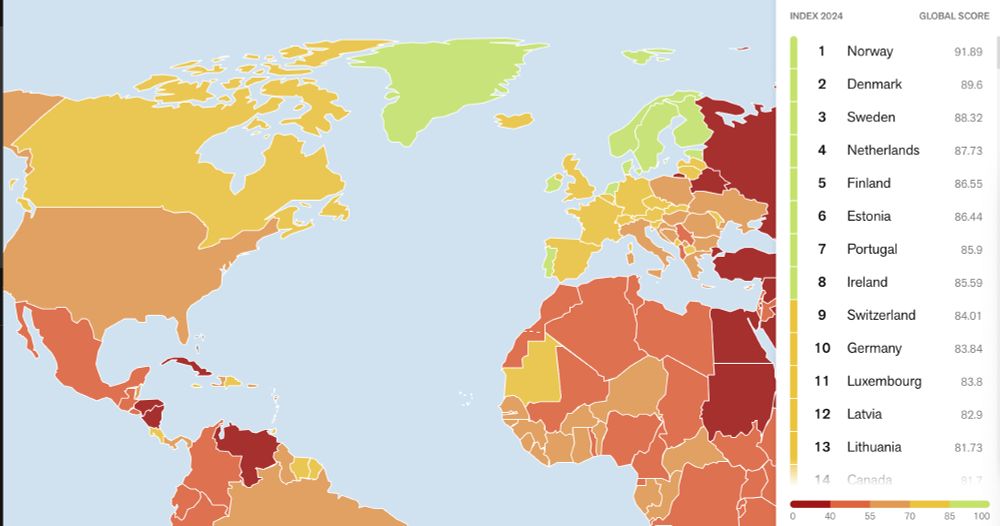
As Vance 'lectures' Europe on free speech, it is good to be reminded that the United States ranks 55 (!) on the World Press Freedom Index.
The top 10 countries are ALL in Europe.
#journalism #democracy #freepress
rsf.org/en/index
The top 10 countries are ALL in Europe.
#journalism #democracy #freepress
rsf.org/en/index
February 16, 2025 at 8:59 AM
As Vance 'lectures' Europe on free speech, it is good to be reminded that the United States ranks 55 (!) on the World Press Freedom Index.
The top 10 countries are ALL in Europe.
#journalism #democracy #freepress
rsf.org/en/index
The top 10 countries are ALL in Europe.
#journalism #democracy #freepress
rsf.org/en/index
https://www.creativeprocess.info/interviews22/pay-attention-mia-funk Interview of @fabien_gandon and Franck Michel about their paper "PAY ATTENTION: A Call to Regulate the Attention Market and Prevent Algorithmic Emotional Governance." https://arxiv.org/pdf/2402.16670

<div class="sqs-layout sqs-grid-12 columns-12" data-layout-label="Post Body" data-type="item" data-updated-on="1738520502021" id="item-679fb7b3e24ca17c57d51620"><div class="row sqs-row"><div class="col sqs-col-12 span-12"><div class="sqs-block html-block sqs-block-html" data-block-type="2" id="block-36c372dd94460b0ea1db"><div class="sqs-block-content">
<div class="sqs-html-content">
<p class="" style="white-space:pre-wrap;"><em>AI competes for our attention because our attention has been commodified. As our entire lives revolve more and more around the attention economy, what can we do to restore our autonomy, reclaim our privacy, and reconnect with the real world.</em></p><p class="" style="white-space:pre-wrap;">Computer scientist<strong> </strong><a href="https://www-sop.inria.fr/members/Fabien.Gandon/"><strong>Fabien Gandon</strong></a> and research engineer <a href="http://sparks.i3s.unice.fr/fmichel"><strong>Franck Michel</strong></a> are experts in AI, the Web, and knowledge systems. Fabien is a senior researcher at Inria (Institut national de recherche en sciences et technologies du numérique), specializing in the Semantic Web, while Franck focuses on integrating and sharing data through Linked Open Data technologies.</p><p class="" style="white-space:pre-wrap;">Together, they’ve written <em>Pay Attention: A Call to Regulate the Attention Market and Prevent Algorithmic Emotional Governance</em>. Their research unpacks how digital platforms are monetizing our attention at an unprecedented scale—fueling misinformation and division and even threatening democracy and affecting our emotions and well-being.</p>
</div>
</div></div><div class="sqs-block audio-block sqs-block-audio" data-block-type="41" id="block-92704cca16ac08275cbf"><div class="sqs-block-content">
<div class="sqs-audio-embed" data-author="The Creative Process Podcast - Arts, Culture and Society" data-color-theme="dark" data-design-style="minimal" data-duration-in-ms="3638000" data-mime-type="" data-show-download="false" data-title="PAY ATTENTION: A Call to Regulate the Attention Market & Prevent Algorithmic Emotional Governance" data-url="https://static1.squarespace.com/static/5745d9f137013b9d0a627c60/t/67a0bd3d86b7fe20ce4ad943/1738587709585/FABIEN+GANDON+FRANCK+MICHEL+the+creative+process+podcast+FULL.m4a/original/FABIEN+GANDON+FRANCK+MICHEL+the+creative+process+podcast+FULL.m4a">
</div>
</div></div><div class="sqs-block audio-block sqs-block-audio" data-block-type="41" id="block-c270105550e6ab516160"><div class="sqs-block-content">
<div class="sqs-audio-embed" data-author="The Creative Process Podcast - Arts, Culture and Society" data-color-theme="dark" data-design-style="minimal" data-duration-in-ms="694000" data-mime-type="" data-show-download="false" data-title="On Preventing Algorithmic Emotional Governance - FABIEN GANDON & FRANCK MICHEL" data-url="https://static1.squarespace.com/static/5745d9f137013b9d0a627c60/t/67a0bdade4674f75a4132ae4/1738587709591/FABIEN+GANDON+-+FRANCK+MICHEL+-+highlights.m4a/original/FABIEN+GANDON+-+FRANCK+MICHEL+-+highlights.m4a">
</div>
</div></div><div class="sqs-block html-block sqs-block-html" data-block-type="2" id="block-f80a0729af3cd6142a74"><div class="sqs-block-content">
<div class="sqs-html-content">
<p class="" style="text-align:center;white-space:pre-wrap;">THE CREATIVE PROCESS</p><p class="" style="white-space:pre-wrap;">So, on the topic of how to regulate the attention market, there is the EU AI ACT and the UK Online Safety Act. The US has the National Artificial Intelligence Initiative Act, a proposed Algorithmic Accountability Act, and the Blueprint for an AI Bill of Rights. China has the New Generation Artificial Intelligence Development Plan (AIDP) and Regulations on Algorithm Recommendation Services and other approaches to governance, but how are they going to be implemented? And how do we strengthen those human guarantees?</p><p class="" style="text-align:center;white-space:pre-wrap;">FABIEN GANDON</p><p class="" style="white-space:pre-wrap;">The fact that technologies are being used and combined to capture our attention is concerning. This is currently being done with no limitations and no regulations. That's the main problem. Attention is a very private resource. No one should be allowed to extract it from us by exploiting what we know about the human mind and how it functions, including its weaknesses. We wrote this paper as a call to regulate the attention market and prevent algorithmic emotional governance.</p><p class="" style="white-space:pre-wrap;">I think one of the key aspects right now when we talk about AI regulation is the notion of not only observability but also auditability. We need to check things against the original documented objectives of these technologies. For each one of these techniques, we need actors to take at least two steps. The first one is to publicly document the objective of the techniques. What do they want to achieve with them? Then, we need them to make these techniques observable so that we can be sure the actual technique is pursuing the documented objective. In other words, we need each of these players to state, "I want to use this technique to recommend better content to you." then, I'm showing you the data so that you can verify that my technique is actually achieving that and not something else. You need these two steps, which are extremely important in terms of transparency. If you don't have these two steps, if you don't know what the company's intended objective is, and if you cannot check whether this is the objective pursued by the techniques, you have a black box, and you can only manage control after that. It's extremely important to recognize that these different types are indeed having a combined effect.</p>
</div>
</div></div><div class="sqs-block image-block sqs-block-image sqs-col-7 span-7 float float-right" data-block-type="5" id="block-yui_3_17_2_1_1738575306345_191392"><div class="sqs-block-content">
<div class="image-block-outer-wrapper layout-caption-hidden design-layout-inline combination-animation-none individual-animation-none individual-text-animation-none" data-test="image-block-inline-outer-wrapper">
<figure class="sqs-block-image-figure intrinsic" style="max-width:700px;">
<div class="image-block-wrapper" data-animation-role="image">
<div class="sqs-image-shape-container-element has-aspect-ratio" style="
position: relative;
padding-bottom:100%;
overflow: hidden;-webkit-mask-image: -webkit-radial-gradient(white, black);
">
<img alt="" data-image="https://images.squarespace-cdn.com/content/v1/5745d9f137013b9d0a627c60/5386081c-f1a5-4da2-804a-42eeba4171b9/pay-attention-the-creative-process-podcast-ST2.jpg" data-image-dimensions="700x700" data-image-focal-point="0.5,0.5" data-load="false" data-loader="sqs" data-src="https://images.squarespace-cdn.com/content/v1/5745d9f137013b9d0a627c60/5386081c-f1a5-4da2-804a-42eeba4171b9/pay-attention-the-creative-process-podcast-ST2.jpg" data-stretch="false" decoding="async" elementtiming="system-image-block" height="700" loading="lazy" onload='this.classList.add("loaded")' sizes="(max-width: 640px) 100vw, (max-width: 767px) 100vw, 100vw" src="https://images.squarespace-cdn.com/content/v1/5745d9f137013b9d0a627c60/5386081c-f1a5-4da2-804a-42eeba4171b9/pay-attention-the-creative-process-podcast-ST2.jpg" srcset="https://images.squarespace-cdn.com/content/v1/5745d9f137013b9d0a627c60/5386081c-f1a5-4da2-804a-42eeba4171b9/pay-attention-the-creative-process-podcast-ST2.jpg?format=100w 100w, https://images.squarespace-cdn.com/content/v1/5745d9f137013b9d0a627c60/5386081c-f1a5-4da2-804a-42eeba4171b9/pay-attention-the-creative-process-podcast-ST2.jpg?format=300w 300w, https://images.squarespace-cdn.com/content/v1/5745d9f137013b9d0a627c60/5386081c-f1a5-4da2-804a-42eeba4171b9/pay-attention-the-creative-process-podcast-ST2.jpg?format=500w 500w, https://images.squarespace-cdn.com/content/v1/5745d9f137013b9d0a627c60/5386081c-f1a5-4da2-804a-42eeba4171b9/pay-attention-the-creative-process-podcast-ST2.jpg?format=750w 750w, https://images.squarespace-cdn.com/content/v1/5745d9f137013b9d0a627c60/5386081c-f1a5-4da2-804a-42eeba4171b9/pay-attention-the-creative-process-podcast-ST2.jpg?format=1000w 1000w, https://images.squarespace-cdn.com/content/v1/5745d9f137013b9d0a627c60/5386081c-f1a5-4da2-804a-42eeba4171b9/pay-attention-the-creative-process-podcast-ST2.jpg?format=1500w 1500w, https://images.squarespace-cdn.com/content/v1/5745d9f137013b9d0a627c60/5386081c-f1a5-4da2-804a-42eeba4171b9/pay-attention-the-creative-process-podcast-ST2.jpg?format=2500w 2500w" style="display:block;object-fit: cover; width: 100%; height: 100%; object-position: 50% 50%" width="700"/>
</div>
</div>
</figure>
</div>
</div></div><div class="sqs-block html-block sqs-block-html" data-block-type="2" id="block-yui_3_17_2_1_1738575306345_191732"><div class="sqs-block-content">
<div class="sqs-html-content">
<p class="" style="white-space:pre-wrap;">So, to put it bluntly, our brains are being hacked, and we can identify at least two ways this is happening. The first category includes techniques that are explicitly designed to use our cognitive biases. For instance, when applications use notifications or tell you how many people liked what you published, they are tapping into the dopaminergic pathways of your reward system and into your need for social approval. Some of these techniques are known as dark patterns, and they are designed to nudge us into actions we wouldn't have taken otherwise. The second category of techniques is based on machine learning, which is trained on massive behavioral data from web platforms. They learn how to recommend content to us. However, if the objective of these techniques is not to actually recommend the best content but to increase or prolong our engagement on the platform, then they can end up selecting content that is not necessarily interesting, but that triggers negative emotions, which are well-known to keep us engaged. That's how you end up having a system polluting your days with negative emotional content just to keep you connected. In both cases, it is important to document what the objective is and be able to observe what is actually being done so that we can hold people accountable for their actions and say, "Look, you told us you wanted to do A, but you are doing B, and we do not agree with that."</p><p class="" style="text-align:center;white-space:pre-wrap;">FRANCK MICHEL</p><p class="" style="white-space:pre-wrap;">What are the goals of the platforms? If you look at what the main social media platforms tell us they will do for us, they promise to find what interests us on the web. However, by doing so, they train algorithms to recommend information that conforms to our tastes and beliefs, which is very convenient and comfortable but too comfortable.</p><p class="" style="white-space:pre-wrap;">It tends to lock us into a filter bubble, a comfortable space where we are no longer confronted with contradictions or facts or ideas that challenge our opinions. This has a very concerning consequence: agenda setting. The platforms decide not what we have to think, but what we have to think about. By creating a vision of the world that is specific to us and almost unique for each individual, these techniques lock us into some sort of biased reality. The consequence here is that if we observe the same reality and the same facts, we can engage in debate and argument about the reasons for various issues that occur in the world and how to solve them.</p><p class="" style="white-space:pre-wrap;">Fair enough. What happens if we see a different reality? If we do not observe the same facts, then the debate becomes nearly impossible. There is no longer a possibility of a free, contradictory debate within the public space, which is essential to the functioning of democracies. By locking us into a comfortable informational space, they undermine the principles of democracy, which rely on our ability to discuss differing opinions about the same facts.</p><p class="" style="text-align:center;white-space:pre-wrap;">THE CREATIVE PROCESS</p><p class="" style="white-space:pre-wrap;">And it's quite ominous to think about the design to tell us what to think about. Of course, because we are feeling, emotional creatures, our mental landscape and emotional landscape are influenced by how we spend our increasing time and our entertainment.</p><p class="" style="white-space:pre-wrap;">We believe that there's a choice, but there is no choice. In the case of being flooded with misinformation, the journalistic landscape becomes overwhelming, with too much contradictory information leading people to lose faith in the democratic process. This contributes to the rise of populism and causes individuals to disengage. It disenfranchises them; they lose the desire to vote and engage politically. In this context, this is kind of like the playbook that autocrats can utilize to take power easily. We have seen this in Europe, along with a rise in populism elsewhere in the world. This is a dangerous moment to be in, as we know historically.</p><p class="" style="text-align:center;white-space:pre-wrap;">GANDON</p><p class="" style="white-space:pre-wrap;">I completely agree. What is actually frightening from a historical perspective is that, with the initial objective of making advertising effective, the widespread use of attention-capturing techniques and their exploitation of cognitive biases, combined with the network effects of these applications, have a worrying deleterious effect on our societies. We could mention the polarization of opinion, the dissemination of false information, or fake news. We could also view this as a mechanism for fragmenting our societies. This is splitting people apart.</p><p class="" style="white-space:pre-wrap;">It's important to stress that there is danger in how our attention is captured and focused on things we do not choose. That's one part of the danger we mentioned. But there is another danger, which I think is very relevant to us today, because this podcast is called "The Creative Process."</p><p class="" style="white-space:pre-wrap;"><strong>AI’s & Social Media’s Impact on Creativity and Imagination</strong></p><p class="" style="white-space:pre-wrap;">This is the perfect place to mention another worrying impact of techniques for capturing attention: the impact on the creative process itself. We know that concentration, boredom, intellectual wandering, and daydreaming are essential to creative thinking, and many of us have experienced the flash of a sudden brilliant idea in the middle of a moment of relaxation. By stealing these moments, attention-capturing systems hinder creativity. It is our opinion that this should be a major concern for all activities and professions requiring concentration, creativity, and imagination. One might ask what attention-capturing systems are doing to areas such as politics, health, education, and artistic creation. In other words, I think <em>The Creative Process</em> <em>Podcast</em> is the right place to address attention creators.</p><p class="" style="white-space:pre-wrap;">I really agree with your analysis. There is a philosopher and sociologist named Hartmut Rosa who wrote about the fact that acceleration can lead to a type of alienation. Acceleration is a way to alienate people; AI tends to accelerate things, especially the techniques we mentioned.</p><p class="" style="white-space:pre-wrap;">They aim to provoke our reflexes and immediate reactions, which does not allow time for contemplation. They are replacing reflection with reflexes.</p><p class="" style="white-space:pre-wrap;"><strong>The Case for Selective Acceleration</strong></p><p class="" style="white-space:pre-wrap;">However, there is a case to be made here. Not everything should be accelerated. We need to choose which tasks we want to automate and accelerate. We should select wisely; for example, we might want to accelerate doing laundry, but not necessarily other tasks. There are some domains where it is already known that a deliberative process should take place. In France, when you buy a flat, there is a duration during which the decision cannot be finalized. This duration is in place to give you the time to think twice about your action because it is a significant decision and investment. This time should not be shortened or accelerated, and there is a good reason for that. I firmly believe we need to reclaim our time.</p><p class="" style="white-space:pre-wrap;"><strong>Human-Centered AI: Augmented Intelligence</strong></p><p class="" style="white-space:pre-wrap;">The second point that comes to my mind is that in the 1950s, when the term "artificial intelligence" was coined, another term, "augmented intelligence," was also introduced around Douglas Engelbart. The point made at that time is that humans should be the center of everything. We should examine what we want to augment in human activity and what is beneficial. Humans should always be at the center of the picture. That is the significant difference between AI, artificial intelligence, and IA, intelligence augmentation; the human is at the center of the picture from the beginning.</p><p class="" style="white-space:pre-wrap;">We are generating fast content, but the quality is not there. The value linked to the nature of the content is lost. It is completely different, at least in my view, to contemplate a fake ocean video versus knowing that the video I am viewing was recorded by a human who had to dive, travel, and wait until they captured that rare species. The value in the first instance and the second is completely different. Yet, there is this tendency to pursue acceleration again. Just like we have fast food, we now have fast content.</p><h3 style="white-space:pre-wrap;">For the full conversation, listen to the <a href="https://podcasts.apple.com/us/podcast/the-creative-process-arts-culture-society-books-film/id1488924067"><strong>episode</strong></a>.</h3><h3 style="white-space:pre-wrap;">This interview was conducted by Mia Funk with the participation of collaborating universities and students. Associate Interviews Producers on this episode were Sophie Garnier and Devyn Daniele. The Creative Process & One Planet Podcast is produced by Mia Funk.</h3><h3 style="white-space:pre-wrap;">Mia Funk is an <a href="https://www.miafunk.com/"><span style="text-decoration:underline"><strong>artist</strong></span></a>, interviewer and founder of <a href="https://open.spotify.com/show/6vgGXntXZFUBJyIkSssXiI?nd=1&si=S0CPGQ5_QO2OD6qGs6_DYA"><span style="text-decoration:underline"><strong>The Creative Process</strong></span></a> & <a href="https://open.spotify.com/show/2bWcsPWWmKtKjedhbDPIM4?si=866e67e7998d405c"><span style="text-decoration:underline"><strong>One Planet Podcast</strong> </span></a>(Conversations about Climate Change & Environmental Solutions). <br/>Listen on <a href="https://podcasts.apple.com/us/podcast/the-creative-process-arts-culture-society-books-film/id1488924067"><span style="text-decoration:underline"><strong>Apple</strong></span></a>,<strong> </strong><a href="https://open.spotify.com/show/6vgGXntXZFUBJyIkSssXiI?si=f17c2d3e83c54de7"><span style="text-decoration:underline"><strong>Spotify</strong></span></a>, or wherever you get your podcasts.</h3>
</div>
</div></div><div class="sqs-block image-block sqs-block-image" data-block-type="5" id="block-21ee91fb9825fc1e50b7"><div class="sqs-block-content">
<figure class="sqs-block-image-figure image-block-outer-wrapper image-block-v2 design-layout-card combination-animation-none individual-animation-none individual-text-animation-none image-position-left image-linked" data-scrolled="" data-test="image-block-v2-outer-wrapper">
<div class="intrinsic">
<a class="sqs-block-image-link image-inset" data-animation-role="image" data-description="" href="https://open.spotify.com/show/6vgGXntXZFUBJyIkSssXiI?si=S0CPGQ5_QO2OD6qGs6_DYA&nd=1">
<div class="sqs-image-shape-container-element content-fit" style="
position: relative;
overflow: hidden;-webkit-mask-image: -webkit-radial-gradient(white, black);
">
<img alt="" data-image="https://images.squarespace-cdn.com/content/v1/5745d9f137013b9d0a627c60/03b0324e-671e-4fe0-aa05-c1bb8e48d241/mia-funk-the-creative-process-podcast-arts-culture-society-4.jpg" data-image-dimensions="800x400" data-image-focal-point="0.5,0.5" data-load="false" data-loader="sqs" data-src="https://images.squarespace-cdn.com/content/v1/5745d9f137013b9d0a627c60/03b0324e-671e-4fe0-aa05-c1bb8e48d241/mia-funk-the-creative-process-podcast-arts-culture-society-4.jpg" data-stretch="false" decoding="async" elementtiming="system-image-block" height="400" loading="lazy" onload='this.classList.add("loaded")' sizes="(max-width: 640px) 100vw, (max-width: 767px) 100vw, 100vw" src="https://images.squarespace-cdn.com/content/v1/5745d9f137013b9d0a627c60/03b0324e-671e-4fe0-aa05-c1bb8e48d241/mia-funk-the-creative-process-podcast-arts-culture-society-4.jpg" srcset="https://images.squarespace-cdn.com/content/v1/5745d9f137013b9d0a627c60/03b0324e-671e-4fe0-aa05-c1bb8e48d241/mia-funk-the-creative-process-podcast-arts-culture-society-4.jpg?format=100w 100w, https://images.squarespace-cdn.com/content/v1/5745d9f137013b9d0a627c60/03b0324e-671e-4fe0-aa05-c1bb8e48d241/mia-funk-the-creative-process-podcast-arts-culture-society-4.jpg?format=300w 300w, https://images.squarespace-cdn.com/content/v1/5745d9f137013b9d0a627c60/03b0324e-671e-4fe0-aa05-c1bb8e48d241/mia-funk-the-creative-process-podcast-arts-culture-society-4.jpg?format=500w 500w, https://images.squarespace-cdn.com/content/v1/5745d9f137013b9d0a627c60/03b0324e-671e-4fe0-aa05-c1bb8e48d241/mia-funk-the-creative-process-podcast-arts-culture-society-4.jpg?format=750w 750w, https://images.squarespace-cdn.com/content/v1/5745d9f137013b9d0a627c60/03b0324e-671e-4fe0-aa05-c1bb8e48d241/mia-funk-the-creative-process-podcast-arts-culture-society-4.jpg?format=1000w 1000w, https://images.squarespace-cdn.com/content/v1/5745d9f137013b9d0a627c60/03b0324e-671e-4fe0-aa05-c1bb8e48d241/mia-funk-the-creative-process-podcast-arts-culture-society-4.jpg?format=1500w 1500w, https://images.squarespace-cdn.com/content/v1/5745d9f137013b9d0a627c60/03b0324e-671e-4fe0-aa05-c1bb8e48d241/mia-funk-the-creative-process-podcast-arts-culture-society-4.jpg?format=2500w 2500w" style="display:block;object-fit: contain;" width="800"/>
<div class="image-overlay" style="overflow: hidden;-webkit-mask-image: -webkit-radial-gradient(white, black);"></div>
</div>
</a>
</div>
</figure>
</div></div></div></div></div>
www.creativeprocess.info
February 10, 2025 at 6:45 PM
https://www.creativeprocess.info/interviews22/pay-attention-mia-funk Interview of @fabien_gandon and Franck Michel about their paper "PAY ATTENTION: A Call to Regulate the Attention Market and Prevent Algorithmic Emotional Governance." https://arxiv.org/pdf/2402.16670
Reposted by Pierre-Antoine Champin

NRA Accidentally Forgets To Rise Up Against Tyrannical Government
https://theshovel.com.au/2020/06/04/nra-accidentally-forgets-to-rise-up-against-tyrannical-government/
https://theshovel.com.au/2020/06/04/nra-accidentally-forgets-to-rise-up-against-tyrannical-government/
February 8, 2025 at 10:16 AM
NRA Accidentally Forgets To Rise Up Against Tyrannical Government
https://theshovel.com.au/2020/06/04/nra-accidentally-forgets-to-rise-up-against-tyrannical-government/
https://theshovel.com.au/2020/06/04/nra-accidentally-forgets-to-rise-up-against-tyrannical-government/
Reposted by Pierre-Antoine Champin

I'm once again asking everyone who got the order to delete or change stuff on their websites etc. pp.:
Before doing so, ping us.
Either at @SafeguardingResearch or me
Also via matrix: @schoeneh:matrix.org
We also got a forum to organize:
https://safeguarding-research.discourse.group/
And a […]
Before doing so, ping us.
Either at @SafeguardingResearch or me
Also via matrix: @schoeneh:matrix.org
We also got a forum to organize:
https://safeguarding-research.discourse.group/
And a […]
Original post on fedihum.org
fedihum.org
January 31, 2025 at 7:39 AM
I'm once again asking everyone who got the order to delete or change stuff on their websites etc. pp.:
Before doing so, ping us.
Either at @SafeguardingResearch or me
Also via matrix: @schoeneh:matrix.org
We also got a forum to organize:
https://safeguarding-research.discourse.group/
And a […]
Before doing so, ping us.
Either at @SafeguardingResearch or me
Also via matrix: @schoeneh:matrix.org
We also got a forum to organize:
https://safeguarding-research.discourse.group/
And a […]