


Neha Binish
@nbinish.bsky.social
PhD student in Tübingen (@ Helfrich Lab, Uni Tü, Hertie Institute & IMPRS-MMFD)
Reposted by Neha Binish

Conjunctive population coding integrates sensory evidence to guide adaptive human behavior. New work led by @jonasterlau.bsky.social in @pnas.org. We used human intracranial EEG to understand how coordinated population activity supports context-dependent behavior. www.pnas.org/doi/10.1073/.... (1/4)
PNAS
Proceedings of the National Academy of Sciences (PNAS), a peer reviewed journal of the National Academy of Sciences (NAS) - an authoritative source of high-impact, original research that broadly spans...
www.pnas.org
January 5, 2026 at 4:58 PM
Conjunctive population coding integrates sensory evidence to guide adaptive human behavior. New work led by @jonasterlau.bsky.social in @pnas.org. We used human intracranial EEG to understand how coordinated population activity supports context-dependent behavior. www.pnas.org/doi/10.1073/.... (1/4)
Reposted by Neha Binish
Ripple oscillations are central for memory and sleep.
But ripple detection in humans remains challenging. Here we introduce a simulation approach in @natcomms.nature.com as common ripple detectors mainly pick up 1/f noise and not genuine oscillations
👇
www.nature.com/articles/s41...
#neuroskyence
But ripple detection in humans remains challenging. Here we introduce a simulation approach in @natcomms.nature.com as common ripple detectors mainly pick up 1/f noise and not genuine oscillations
👇
www.nature.com/articles/s41...
#neuroskyence

Aperiodic 1/f noise drives ripple activity in humans - Nature Communications
How aperiodic 1/f noise drives ripple activity in human brain and impacts on ripple detections is not fully understood. Here authors show that ripple detections should be driven by the 1/f noise, whic...
www.nature.com
January 21, 2026 at 6:57 PM
Ripple oscillations are central for memory and sleep.
But ripple detection in humans remains challenging. Here we introduce a simulation approach in @natcomms.nature.com as common ripple detectors mainly pick up 1/f noise and not genuine oscillations
👇
www.nature.com/articles/s41...
#neuroskyence
But ripple detection in humans remains challenging. Here we introduce a simulation approach in @natcomms.nature.com as common ripple detectors mainly pick up 1/f noise and not genuine oscillations
👇
www.nature.com/articles/s41...
#neuroskyence
Reposted by Neha Binish

🚨 New preprint!
Why do some insights from spikes translate to field potentials while others don't? In this paper we compare visual memory representations in spikes and LFPs to propose a general framework that answers this question.
www.biorxiv.org/content/10.6...
🧵 (1/10)
🧠🟦 🧠💻
Why do some insights from spikes translate to field potentials while others don't? In this paper we compare visual memory representations in spikes and LFPs to propose a general framework that answers this question.
www.biorxiv.org/content/10.6...
🧵 (1/10)
🧠🟦 🧠💻

Neural representations of visual memory in inferotemporal cortex reveal a generalizable framework for translating between spikes and field potentials
Translating neurophysiological findings requires understanding the relationship between common measures of brain activity in animals (spiking activity) and humans (local field potentials, LFP). Prior ...
www.biorxiv.org
January 5, 2026 at 3:21 PM
🚨 New preprint!
Why do some insights from spikes translate to field potentials while others don't? In this paper we compare visual memory representations in spikes and LFPs to propose a general framework that answers this question.
www.biorxiv.org/content/10.6...
🧵 (1/10)
🧠🟦 🧠💻
Why do some insights from spikes translate to field potentials while others don't? In this paper we compare visual memory representations in spikes and LFPs to propose a general framework that answers this question.
www.biorxiv.org/content/10.6...
🧵 (1/10)
🧠🟦 🧠💻
Reposted by Neha Binish

Bichan Wu (@bichanw.bsky.social) & I wrote a tutorial paper on Reduced Rank Regression (RRR) — the statistical method underlying "communication subspaces" from Semedo et al 2019 — aimed at neuroscientists.
arxiv.org/abs/2512.12467
arxiv.org/abs/2512.12467

Reduced rank regression for neural communication: a tutorial for neuroscientists
Reduced rank regression (RRR) is a statistical method for finding a low-dimensional linear mapping between a set of high-dimensional inputs and outputs. In recent years, RRR has found numerous applica...
arxiv.org
December 17, 2025 at 2:06 AM
Bichan Wu (@bichanw.bsky.social) & I wrote a tutorial paper on Reduced Rank Regression (RRR) — the statistical method underlying "communication subspaces" from Semedo et al 2019 — aimed at neuroscientists.
arxiv.org/abs/2512.12467
arxiv.org/abs/2512.12467
Reposted by Neha Binish
Aperiodic activity reflects pathological waveforms in epilepsy (and not necessarily hyper-excitability or altered E/I-balance). The 1/f slope goes up *or* down as function of waveforms during seizures. New work by Laura Heidiri and Frank van Schalkwijk from the lab: www.jneurosci.org/content/45/5...
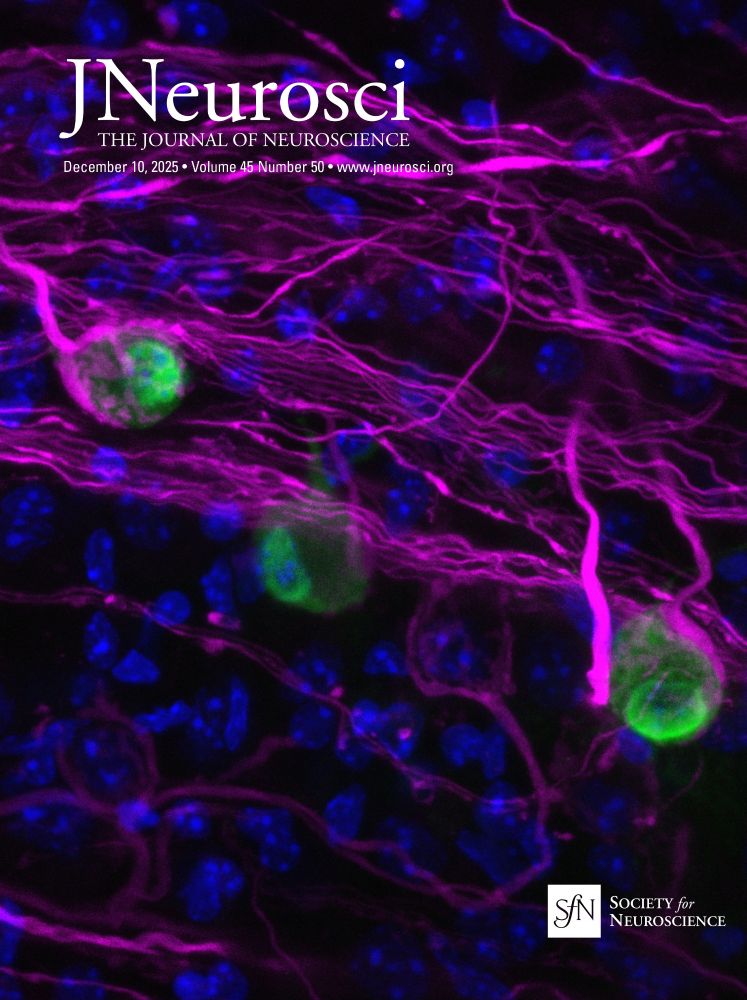
Aperiodic Activity Reflects Pathologic Waveform Shapes in Focal Epilepsy
Epilepsy constitutes a clinically manifest excitability disorder that is characterized by aberrant electrophysiological activity in the electroencephalogram (EEG). The correct identification of the se...
www.jneurosci.org
December 15, 2025 at 1:41 PM
Aperiodic activity reflects pathological waveforms in epilepsy (and not necessarily hyper-excitability or altered E/I-balance). The 1/f slope goes up *or* down as function of waveforms during seizures. New work by Laura Heidiri and Frank van Schalkwijk from the lab: www.jneurosci.org/content/45/5...
Reposted by Neha Binish
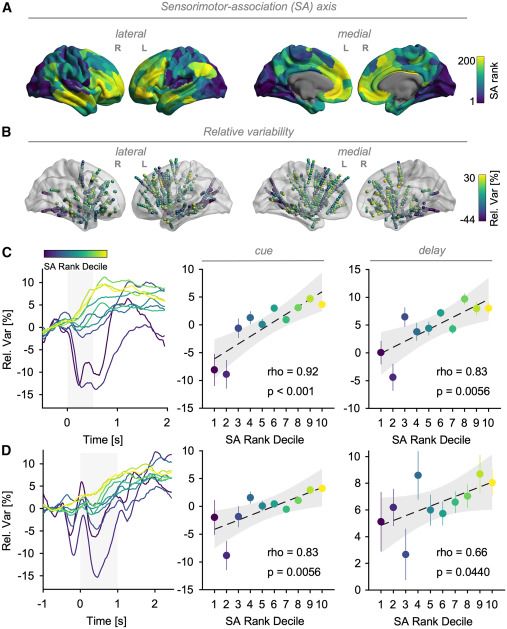
New work from the lab published in @cp-neuron.bsky.social by @jonasterlau.bsky.social and Jan Martini. We describe that trial-by-trial variability indexes recurrent connectivity across the cortical hierarchy, which supports reliable and flexible coding www.cell.com/neuron/abstr... (1/4)

Structure in noise: Recurrent connectivity shapes neural variability to balance perceptual and cognitive demands in the human brain
Does neural variability reflect random noise or a feature that benefits adaptive behavior?
Using intracranial recordings in humans, Terlau et al. demonstrate that neural variability
results from the r...
www.cell.com
November 10, 2025 at 5:06 PM
New work from the lab published in @cp-neuron.bsky.social by @jonasterlau.bsky.social and Jan Martini. We describe that trial-by-trial variability indexes recurrent connectivity across the cortical hierarchy, which supports reliable and flexible coding www.cell.com/neuron/abstr... (1/4)

Reposted by Neha Binish

Bifurcations—an underexplored concept in neuroscience—can help explain how small differences in neural circuits give rise to entirely novel functions, writes Xiao-Jing Wang.
#neuroskyence
www.thetransmitter.org/neural-dynam...
#neuroskyence
www.thetransmitter.org/neural-dynam...

The missing half of the neurodynamical systems theory
Bifurcations—an underexplored concept in neuroscience—can help explain how small differences in neural circuits give rise to entirely novel functions.
www.thetransmitter.org
October 27, 2025 at 1:51 PM
Bifurcations—an underexplored concept in neuroscience—can help explain how small differences in neural circuits give rise to entirely novel functions, writes Xiao-Jing Wang.
#neuroskyence
www.thetransmitter.org/neural-dynam...
#neuroskyence
www.thetransmitter.org/neural-dynam...
Reposted by Neha Binish
A cute little animation: a critically damped harmonic oscillator becomes unstable with integral control if the gain is too high. Here, at K_i = 2, a Hopf bifurcation occurs: two poles of the transfer function enter the right-hand s-plane and the closed-loop system becomes unstable.
September 9, 2025 at 2:34 PM
A cute little animation: a critically damped harmonic oscillator becomes unstable with integral control if the gain is too high. Here, at K_i = 2, a Hopf bifurcation occurs: two poles of the transfer function enter the right-hand s-plane and the closed-loop system becomes unstable.
Reposted by Neha Binish
📰 I really enjoyed writing this article with @thetransmitter.bsky.social! In it, I summarize parts of our recent perspective article on neural manifolds (www.nature.com/articles/s41...), with a focus on highlighting just a few cool insights into the brain we've already seen at the population level.
Neural manifold properties can help us understand how animal brains deal with competing and multifaceted information, execute flexible behaviors and reuse common computations, writes @mattperich.bsky.social.
#neuroskyence
www.thetransmitter.org/neural-dynam...
#neuroskyence
www.thetransmitter.org/neural-dynam...
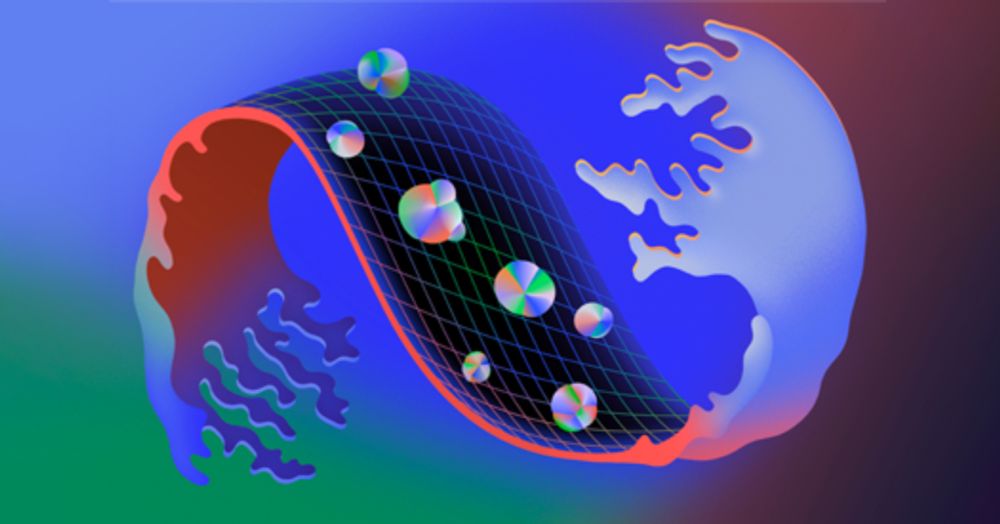
Neural population-based approaches have opened new windows into neural computations and behavior
Neural manifold properties can help us understand how animal brains deal with complex information, execute flexible behaviors and reuse common computations.
www.thetransmitter.org
August 4, 2025 at 6:45 PM
📰 I really enjoyed writing this article with @thetransmitter.bsky.social! In it, I summarize parts of our recent perspective article on neural manifolds (www.nature.com/articles/s41...), with a focus on highlighting just a few cool insights into the brain we've already seen at the population level.
Reposted by Neha Binish

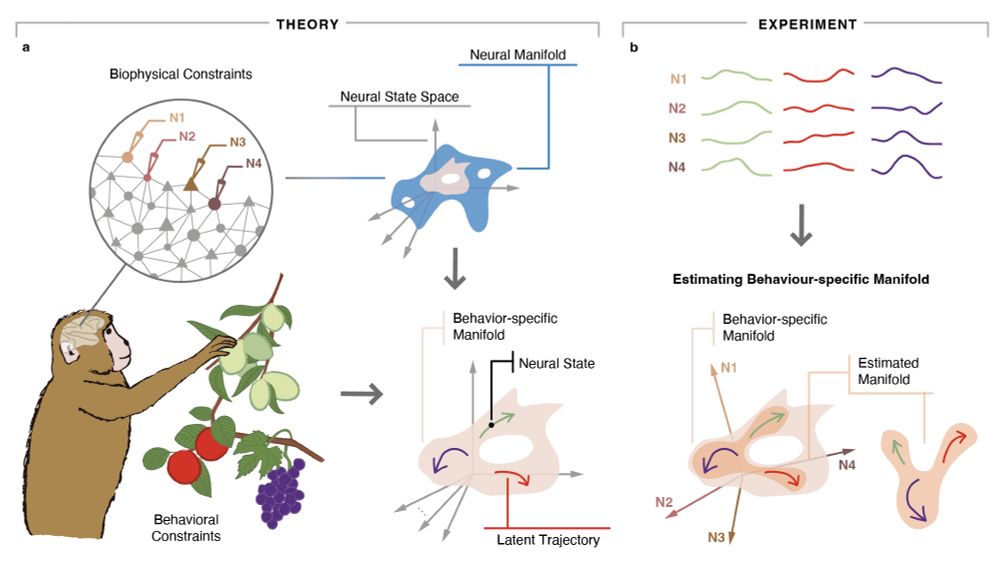
🚨New paper🚨
Neural manifolds went from a niche-y word to an ubiquitous term in systems neuro thanks to many interesting findings across fields. But like with any emerging term, people use it very differently.
Here, we clarify our take on the term, and review key findings & challenges rdcu.be/ex8hW
Neural manifolds went from a niche-y word to an ubiquitous term in systems neuro thanks to many interesting findings across fields. But like with any emerging term, people use it very differently.
Here, we clarify our take on the term, and review key findings & challenges rdcu.be/ex8hW
August 1, 2025 at 9:57 AM
🚨New paper🚨
Neural manifolds went from a niche-y word to an ubiquitous term in systems neuro thanks to many interesting findings across fields. But like with any emerging term, people use it very differently.
Here, we clarify our take on the term, and review key findings & challenges rdcu.be/ex8hW
Neural manifolds went from a niche-y word to an ubiquitous term in systems neuro thanks to many interesting findings across fields. But like with any emerging term, people use it very differently.
Here, we clarify our take on the term, and review key findings & challenges rdcu.be/ex8hW
Reposted by Neha Binish
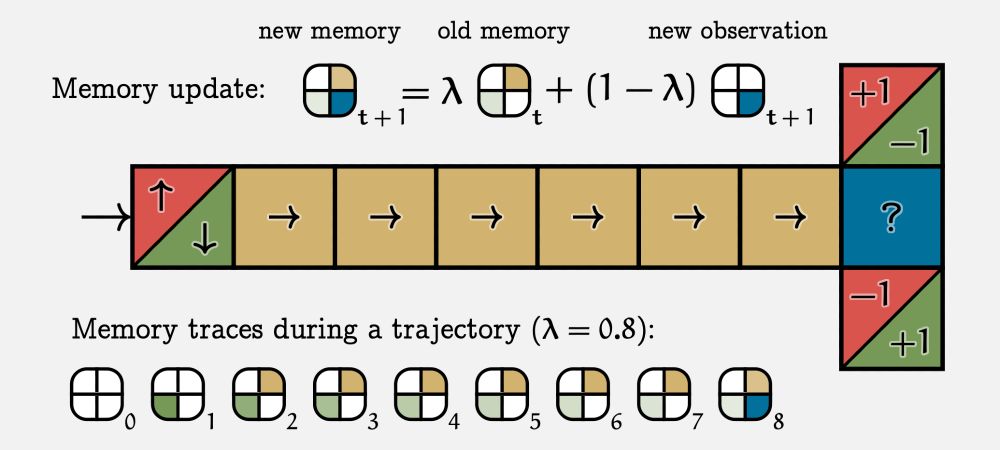
I am in Vancouver at ICML, and tomorrow I will present our newest paper "Partially Observable Reinforcement Learning with Memory Traces". We argue that eligibility traces are more effective than sliding windows as a memory mechanism for RL in POMDPs. 🧵
July 16, 2025 at 1:35 AM
I am in Vancouver at ICML, and tomorrow I will present our newest paper "Partially Observable Reinforcement Learning with Memory Traces". We argue that eligibility traces are more effective than sliding windows as a memory mechanism for RL in POMDPs. 🧵
Reposted by Neha Binish

How does the brain sample the #visual environment in space and time? @iraposo.bsky.social &co show that two distinct temporal patterns (rhythmic oscillations & aperiodic timescales) predict attention-guided behavior @plosbiology.org 🧪 plos.io/3ThTKVy

July 1, 2025 at 11:41 AM
How does the brain sample the #visual environment in space and time? @iraposo.bsky.social &co show that two distinct temporal patterns (rhythmic oscillations & aperiodic timescales) predict attention-guided behavior @plosbiology.org 🧪 plos.io/3ThTKVy
Reposted by Neha Binish

Hey #CVPR2025! Curious about this work? I'll be presenting it this morning! Poster 31, from 10:30 to 12:30 🤠
@cvprconference.bsky.social
@cvprconference.bsky.social
📢 New paper CVPR 25!
Can meshes capture fuzzy geometry? Volumetric Surfaces uses adaptive textured shells to model hair, fur without the splatting / volume overhead. It’s fast, looks great, and runs in real time even on budget phones.
🔗 autonomousvision.github.io/volsurfs/
📄 arxiv.org/pdf/2409.02482
Can meshes capture fuzzy geometry? Volumetric Surfaces uses adaptive textured shells to model hair, fur without the splatting / volume overhead. It’s fast, looks great, and runs in real time even on budget phones.
🔗 autonomousvision.github.io/volsurfs/
📄 arxiv.org/pdf/2409.02482
June 15, 2025 at 2:24 PM
Hey #CVPR2025! Curious about this work? I'll be presenting it this morning! Poster 31, from 10:30 to 12:30 🤠
@cvprconference.bsky.social
@cvprconference.bsky.social
Reposted by Neha Binish
I'm flying to Michigan today to present our new paper "A Pontryagin Perspective on Reinforcement Learning" at L4DC, where it has been nominated for the Best Paper Award! We ask the question: is it possible to learn an open-loop controller via RL? 🧵

June 4, 2025 at 8:06 AM
I'm flying to Michigan today to present our new paper "A Pontryagin Perspective on Reinforcement Learning" at L4DC, where it has been nominated for the Best Paper Award! We ask the question: is it possible to learn an open-loop controller via RL? 🧵
Reposted by Neha Binish

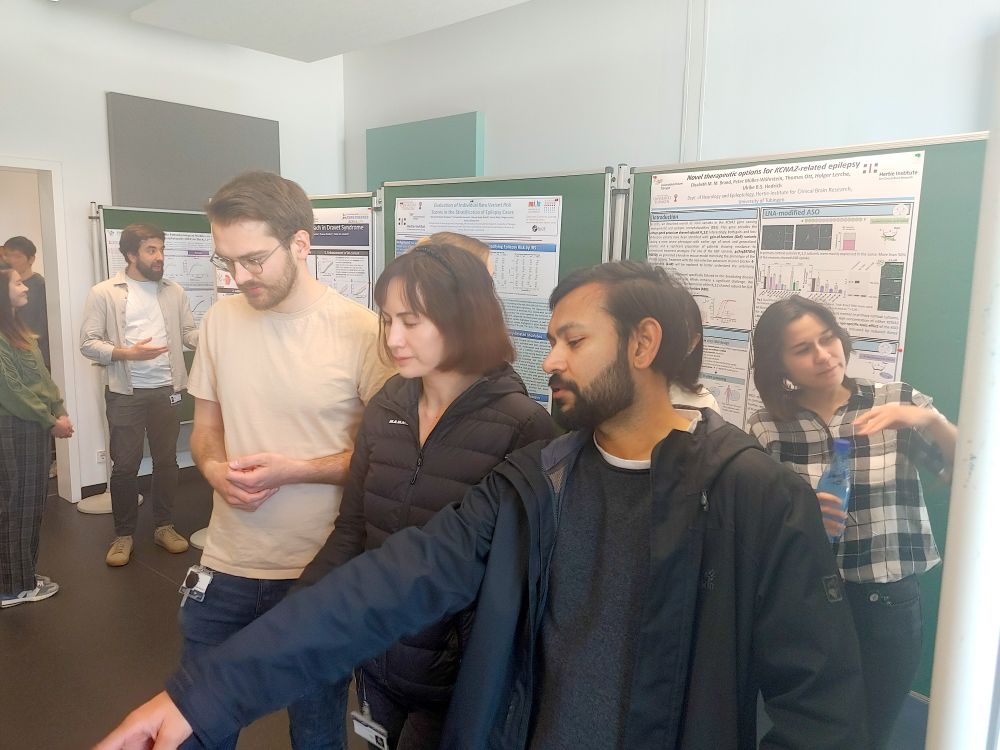
🙌 It's been a wonderful PhD Retreat at the HIH yesterday, with lots of time for exchange, poster sessions and the election of the new PhD representatives: Stefano Iavarone, Niloofar Mokhtari @estherkuehn.bsky.social & Surender Surender @ghtabatabai.bsky.social 🎉



April 9, 2025 at 12:25 PM
🙌 It's been a wonderful PhD Retreat at the HIH yesterday, with lots of time for exchange, poster sessions and the election of the new PhD representatives: Stefano Iavarone, Niloofar Mokhtari @estherkuehn.bsky.social & Surender Surender @ghtabatabai.bsky.social 🎉
Reposted by Neha Binish

Proud moment to see work from my PhD in the @granadalab.bsky.social featured on the cover of the April 2025 issue of @molsystbiol.org 🥹 special thanks to my talented husband who helped design this cover. Check out the full paper here: lnkd.in/eDVQuRfc.

April 4, 2025 at 10:54 AM
Proud moment to see work from my PhD in the @granadalab.bsky.social featured on the cover of the April 2025 issue of @molsystbiol.org 🥹 special thanks to my talented husband who helped design this cover. Check out the full paper here: lnkd.in/eDVQuRfc.
Reposted by Neha Binish
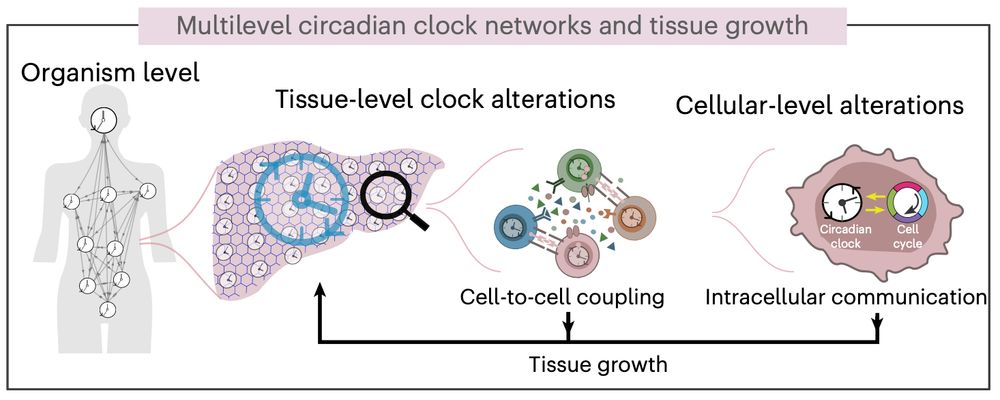
New work out in @naturephysics.bsky.social
Led by @NicaGutu & Malthe Nordentoft + great collaborators.
We show that circadian synchrony shapes cell growth. When coordination is lost, clock–cell cycle coupling breaks down.
May help explain paradoxes in circadian cancer biology.
📖 rdcu.be/efNaY
Led by @NicaGutu & Malthe Nordentoft + great collaborators.
We show that circadian synchrony shapes cell growth. When coordination is lost, clock–cell cycle coupling breaks down.
May help explain paradoxes in circadian cancer biology.
📖 rdcu.be/efNaY
March 31, 2025 at 12:46 PM
New work out in @naturephysics.bsky.social
Led by @NicaGutu & Malthe Nordentoft + great collaborators.
We show that circadian synchrony shapes cell growth. When coordination is lost, clock–cell cycle coupling breaks down.
May help explain paradoxes in circadian cancer biology.
📖 rdcu.be/efNaY
Led by @NicaGutu & Malthe Nordentoft + great collaborators.
We show that circadian synchrony shapes cell growth. When coordination is lost, clock–cell cycle coupling breaks down.
May help explain paradoxes in circadian cancer biology.
📖 rdcu.be/efNaY
Reposted by Neha Binish

How does the brain integrate prior expectation with sensory evidence? 👀🧠💭
We show that sensory and action neural tuning play distinct roles in guiding visual decisions. Dampening expected action information drives confirmation bias, while dynamic sensory tuning explains speed-accuracy trade-offs.
We show that sensory and action neural tuning play distinct roles in guiding visual decisions. Dampening expected action information drives confirmation bias, while dynamic sensory tuning explains speed-accuracy trade-offs.

Sensory and action neural tuning explains how priors guide human visual decisions https://www.biorxiv.org/content/10.1101/2025.03.26.645167v1
March 30, 2025 at 10:31 PM
How does the brain integrate prior expectation with sensory evidence? 👀🧠💭
We show that sensory and action neural tuning play distinct roles in guiding visual decisions. Dampening expected action information drives confirmation bias, while dynamic sensory tuning explains speed-accuracy trade-offs.
We show that sensory and action neural tuning play distinct roles in guiding visual decisions. Dampening expected action information drives confirmation bias, while dynamic sensory tuning explains speed-accuracy trade-offs.