




Anne Katula
@mycorrhizanne.bsky.social
PhD student | Soil microbial ecology | Afkhami Lab | University of Miami | DoD SMART Scholar | Dartmouth ‘24 🍄
Reposted by Anne Katula
Check out our new Tansley review on climate, plants, and microbes! I enjoyed working with a team of friendly and knowledgeable scientists.
@meafkhami.bsky.social
@kerricrawford.bsky.social
@aclassen.bsky.social
@johnstinchcombe.bsky.social
@damianmicroeco.bsky.social
doi.org/10.1111/nph....
@meafkhami.bsky.social
@kerricrawford.bsky.social
@aclassen.bsky.social
@johnstinchcombe.bsky.social
@damianmicroeco.bsky.social
doi.org/10.1111/nph....

Unraveling complexity in climate change effects on beneficial plant–microbe interactions: mechanisms, resilience, and future directions
Plant microbiomes have the potential to mitigate the impacts of climate change, yet both the complexity of climate change and the complexity of plant–microbe interactions make applications and future....
doi.org
October 14, 2025 at 3:05 PM
Check out our new Tansley review on climate, plants, and microbes! I enjoyed working with a team of friendly and knowledgeable scientists.
@meafkhami.bsky.social
@kerricrawford.bsky.social
@aclassen.bsky.social
@johnstinchcombe.bsky.social
@damianmicroeco.bsky.social
doi.org/10.1111/nph....
@meafkhami.bsky.social
@kerricrawford.bsky.social
@aclassen.bsky.social
@johnstinchcombe.bsky.social
@damianmicroeco.bsky.social
doi.org/10.1111/nph....
Reposted by Anne Katula
Come check out my talk at #ESA2025 today! I'll be chatting about some of my Postdoc research on mutualisms and how they impact niche breadth and diversification in the Eco-Evolutionary processes session in BCC344 at 1:45pm!

August 12, 2025 at 12:12 PM
Come check out my talk at #ESA2025 today! I'll be chatting about some of my Postdoc research on mutualisms and how they impact niche breadth and diversification in the Eco-Evolutionary processes session in BCC344 at 1:45pm!
Reposted by Anne Katula
Fungal spores reveal a global climate footprint on microbes' traits!
Incorporating microbial traits improves predictions of biogeographic shifts.
Fun project w @balachaudhary.bsky.social @smriti-pehim-limbu.bsky.social @sturmer.bsky.social @aguilart.bsky.social
www.pnas.org/doi/10.1073/...
Incorporating microbial traits improves predictions of biogeographic shifts.
Fun project w @balachaudhary.bsky.social @smriti-pehim-limbu.bsky.social @sturmer.bsky.social @aguilart.bsky.social
www.pnas.org/doi/10.1073/...
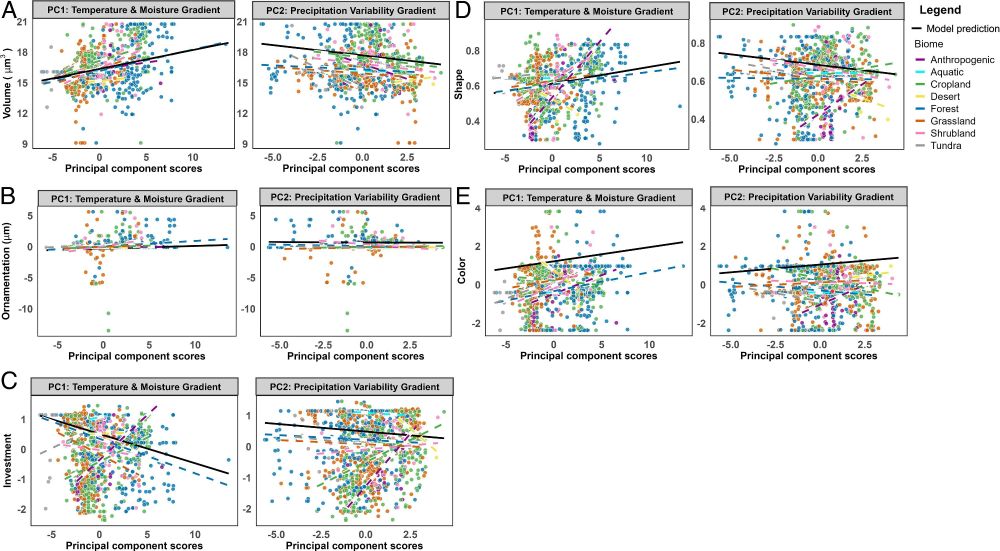
Climate-linked biogeography of mycorrhizal fungal spore traits | PNAS
Climate-driven variation in traits is crucial for predicting ecological responses
to environmental change, yet global patterns and drivers of micro...
www.pnas.org
July 15, 2025 at 6:56 PM
Fungal spores reveal a global climate footprint on microbes' traits!
Incorporating microbial traits improves predictions of biogeographic shifts.
Fun project w @balachaudhary.bsky.social @smriti-pehim-limbu.bsky.social @sturmer.bsky.social @aguilart.bsky.social
www.pnas.org/doi/10.1073/...
Incorporating microbial traits improves predictions of biogeographic shifts.
Fun project w @balachaudhary.bsky.social @smriti-pehim-limbu.bsky.social @sturmer.bsky.social @aguilart.bsky.social
www.pnas.org/doi/10.1073/...
Woke up early enough to enjoy the Moosilauke peak entirely to myself. AND saw some epic alpine species at the summit


July 6, 2025 at 11:45 PM
Woke up early enough to enjoy the Moosilauke peak entirely to myself. AND saw some epic alpine species at the summit
Reposted by Anne Katula
It’s alive! Our Mycorrhizal Networks special issue is out in Functional Ecology.
Packed with spore-tacular science.
A collection that highlights advances, identifies unresolved questions & the future research directions.
besjournals.onlinelibrary.wiley.com/doi/10.1111/...
Packed with spore-tacular science.
A collection that highlights advances, identifies unresolved questions & the future research directions.
besjournals.onlinelibrary.wiley.com/doi/10.1111/...
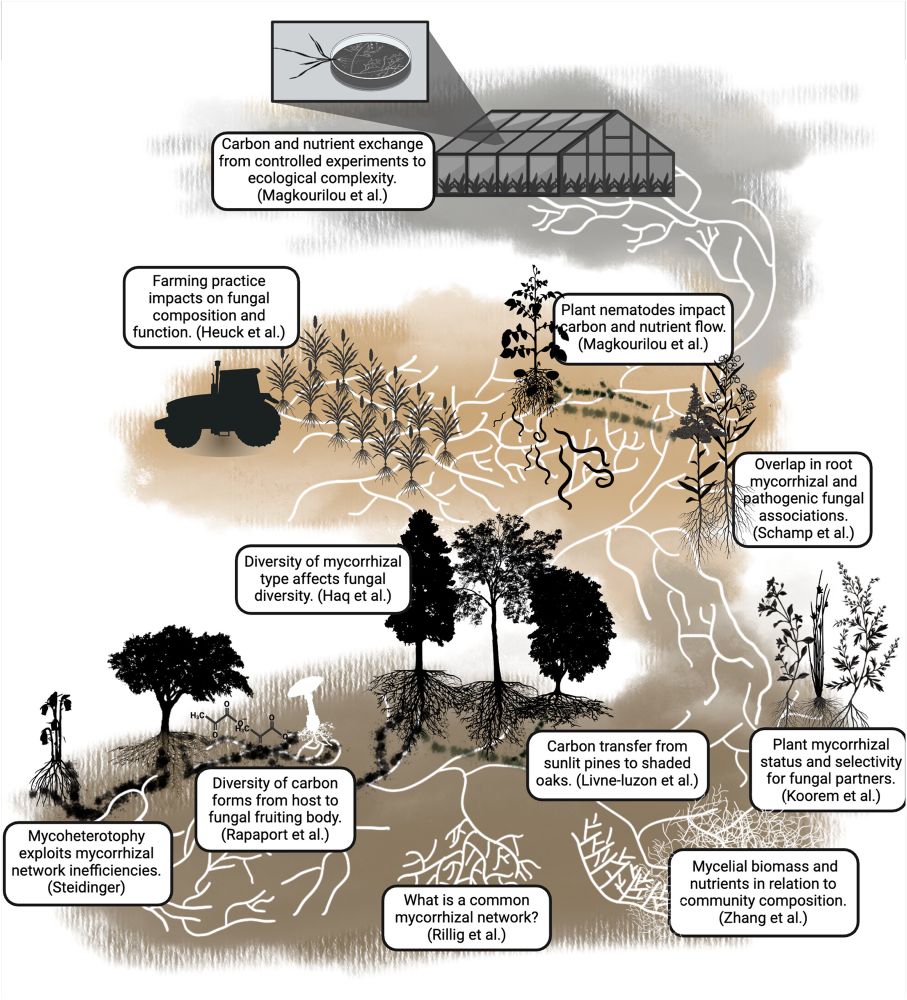
Mycorrhizal networks: Understanding hidden complexity
Read the free Plain Language Summary for this article on the Journal blog.
besjournals.onlinelibrary.wiley.com
June 4, 2025 at 5:10 PM
It’s alive! Our Mycorrhizal Networks special issue is out in Functional Ecology.
Packed with spore-tacular science.
A collection that highlights advances, identifies unresolved questions & the future research directions.
besjournals.onlinelibrary.wiley.com/doi/10.1111/...
Packed with spore-tacular science.
A collection that highlights advances, identifies unresolved questions & the future research directions.
besjournals.onlinelibrary.wiley.com/doi/10.1111/...
Reposted by Anne Katula
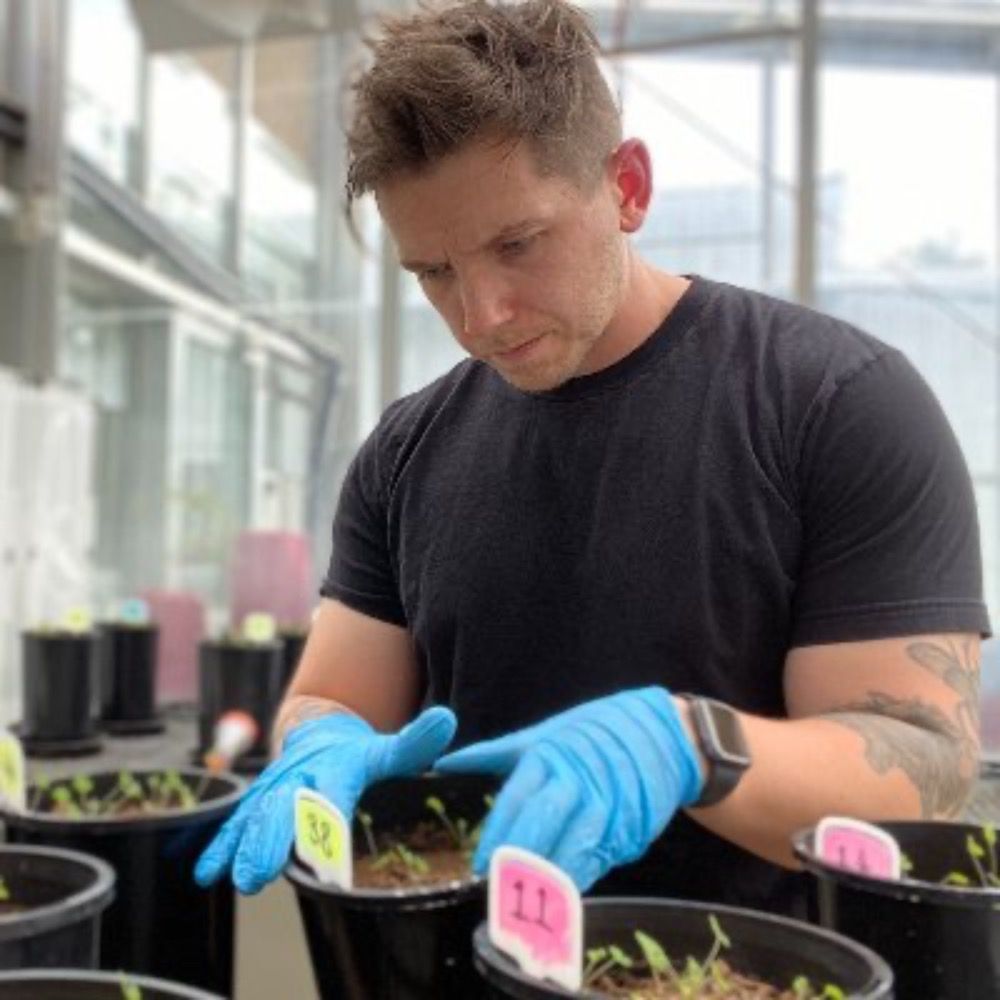
My 2nd dissertation chapter is out in Plant, Cell, & Environment!
We use a model legume to assess how plant host genotype and microbes non-additively interact to shape plant growth and disease ecology.
Check it out here: doi.org/10.1111/pce....
We use a model legume to assess how plant host genotype and microbes non-additively interact to shape plant growth and disease ecology.
Check it out here: doi.org/10.1111/pce....
June 2, 2025 at 1:12 PM
My 2nd dissertation chapter is out in Plant, Cell, & Environment!
We use a model legume to assess how plant host genotype and microbes non-additively interact to shape plant growth and disease ecology.
Check it out here: doi.org/10.1111/pce....
We use a model legume to assess how plant host genotype and microbes non-additively interact to shape plant growth and disease ecology.
Check it out here: doi.org/10.1111/pce....
Reposted by Anne Katula

“…that's the cool thing about basic science: you just don't know what information or knowledge it will generate in the future”
Our new open mycorrhizal fungal trait database is published! Read about our science journey:
fas.dartmouth.edu/news/2025/05...
Our new open mycorrhizal fungal trait database is published! Read about our science journey:
fas.dartmouth.edu/news/2025/05...

Dartmouth Team Launches Public Database on Soil Fungi | Faculty of Arts and Sciences
fas.dartmouth.edu
May 28, 2025 at 4:26 PM
“…that's the cool thing about basic science: you just don't know what information or knowledge it will generate in the future”
Our new open mycorrhizal fungal trait database is published! Read about our science journey:
fas.dartmouth.edu/news/2025/05...
Our new open mycorrhizal fungal trait database is published! Read about our science journey:
fas.dartmouth.edu/news/2025/05...
Reposted by Anne Katula
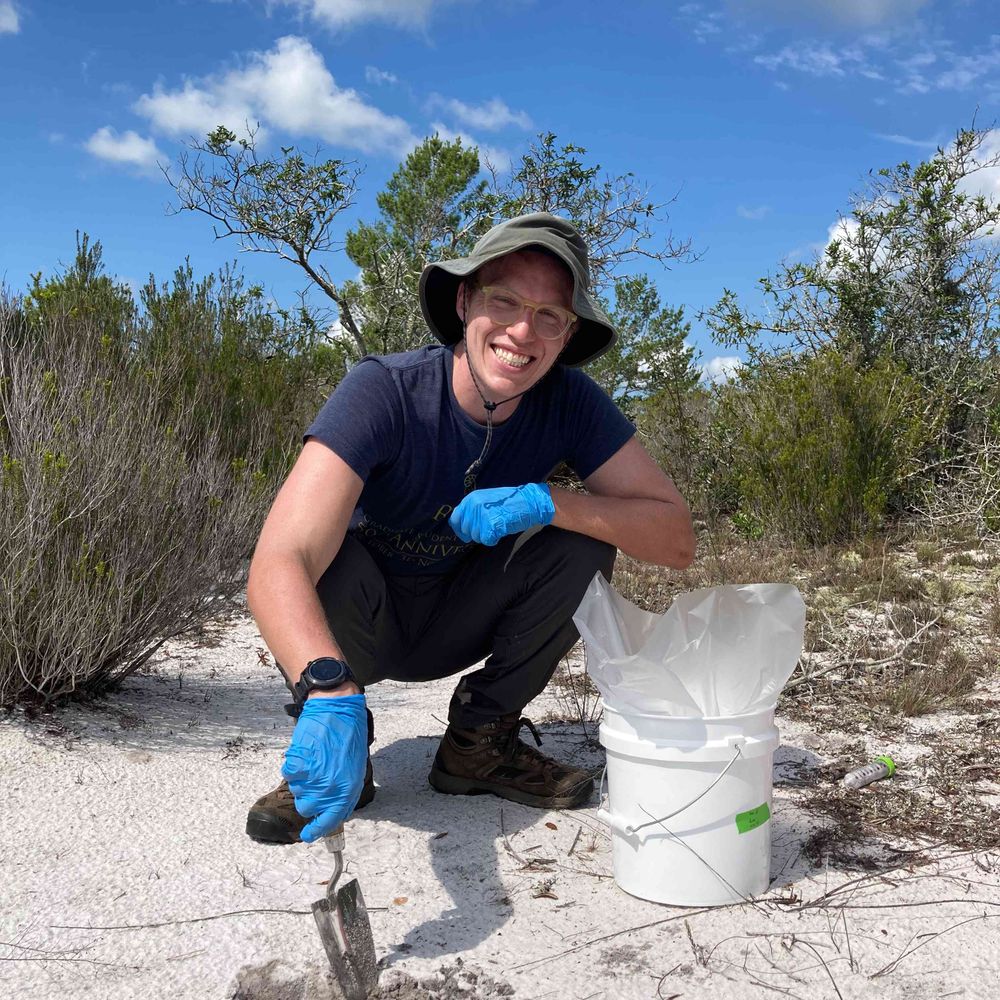
Hot off the digital presses of the Highlands News-Sun: www.midfloridanewspapers.com/highlands_ne...

Florida citrus lands offer hope for habitat recovery
Florida citrus production has been in decline due to widespread citrus greening disease introduced as early as 2004, also known as Huanglongbing (HLB). But is there some lemonade to be
www.midfloridanewspapers.com
April 22, 2025 at 5:19 PM
Hot off the digital presses of the Highlands News-Sun: www.midfloridanewspapers.com/highlands_ne...
Reposted by Anne Katula

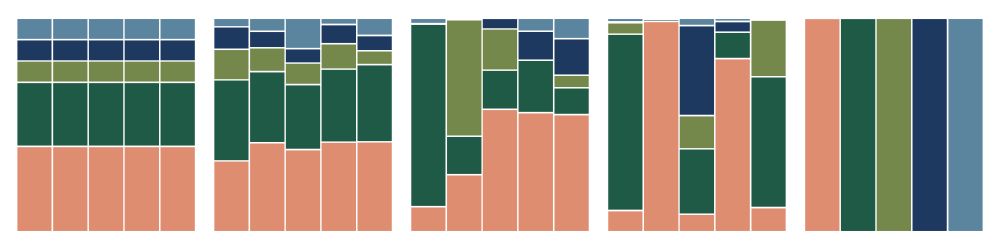
Microbial ecologists, do you ever want to quantify the stability of a community over time, or the amount of spatial heterogeneity across sites?
Check out FAVA, developed by @maikemorrison.bsky.social. With FAVA, you can quantify compositional variability across many microbiome samples.
Check out FAVA, developed by @maikemorrison.bsky.social. With FAVA, you can quantify compositional variability across many microbiome samples.

1/ Hey y'all, I'm excited to share my latest paper, which is out now in PNAS! We introduce FAVA, a statistical framework to measure compositional variability across microbiome samples. If you want to measure variability across a stacked bar plot, FAVA is for you! Paper: doi.org/10.1073/pnas...
March 15, 2025 at 5:58 PM
Microbial ecologists, do you ever want to quantify the stability of a community over time, or the amount of spatial heterogeneity across sites?
Check out FAVA, developed by @maikemorrison.bsky.social. With FAVA, you can quantify compositional variability across many microbiome samples.
Check out FAVA, developed by @maikemorrison.bsky.social. With FAVA, you can quantify compositional variability across many microbiome samples.
Reposted by Anne Katula

Why intraspecific trait variation matters in community ecology www.cell.com/trends/ecolo...

Why intraspecific trait variation matters in community ecology
Natural populations consist of phenotypically diverse individuals that exhibit variation
in their demographic parameters and intra- and inter-specific interactions. Recent
experimental work indicates ...
www.cell.com
March 10, 2025 at 2:51 PM
Why intraspecific trait variation matters in community ecology www.cell.com/trends/ecolo...
Reposted by Anne Katula
Compartmentalization drives the evolution of symbiotic cooperation royalsocietypublishing.org/doi/10.1098/...

Compartmentalization drives the evolution of symbiotic cooperation | Philosophical Transactions of the Royal Society B: Biological Sciences
Across the tree of life, hosts have evolved mechanisms to control and mediate interactions with symbiotic partners. We suggest that the evolution of physical structures that allow hosts to spatially separate symbionts, termed compartmentalization, is a ...
royalsocietypublishing.org
March 6, 2025 at 11:37 AM
Compartmentalization drives the evolution of symbiotic cooperation royalsocietypublishing.org/doi/10.1098/...
Reposted by Anne Katula
Spores from two different AM fungal species, Ac. elegans on the left and Gi. albida on the right. Tell me spore traits don’t affect the ecology of these amazing microbes! #mycorrhiza

March 6, 2025 at 2:32 AM
Spores from two different AM fungal species, Ac. elegans on the left and Gi. albida on the right. Tell me spore traits don’t affect the ecology of these amazing microbes! #mycorrhiza
Reposted by Anne Katula
Racial affinity groups are under attack. Now is the time to redouble our commitments to these vital organizations that make science better for all. Proud to pen this letter with @khadlily.bsky.social and many @wocineeb.bsky.social colleagues
www.science.org/doi/10.1126/...
www.science.org/doi/10.1126/...

Protect US racial affinity groups
On its first day, the Trump administration released several executive orders terminating diversity, equity, and inclusion (DEI) programs, calling them “illegal,” “immoral,” and “discriminatory” (1, 2)...
www.science.org
February 28, 2025 at 3:32 AM
Racial affinity groups are under attack. Now is the time to redouble our commitments to these vital organizations that make science better for all. Proud to pen this letter with @khadlily.bsky.social and many @wocineeb.bsky.social colleagues
www.science.org/doi/10.1126/...
www.science.org/doi/10.1126/...
Reposted by Anne Katula
Two of our papers published in one day!
1) @nature.com Robotics in the service of #Arbuscular #mycorrhizal fungi! Hyphal spatiotemporal growth, biderectional cytoplasmic flows, adaptive trade routes, and a travelling-wave for an optimized symbiosis. Open access link: www.nature.com/articles/s41...
1) @nature.com Robotics in the service of #Arbuscular #mycorrhizal fungi! Hyphal spatiotemporal growth, biderectional cytoplasmic flows, adaptive trade routes, and a travelling-wave for an optimized symbiosis. Open access link: www.nature.com/articles/s41...

A travelling-wave strategy for plant–fungal trade - Nature
Symbiotic fungi control network-level structure and flows to meet trade demands.
www.nature.com
February 27, 2025 at 7:47 PM
Two of our papers published in one day!
1) @nature.com Robotics in the service of #Arbuscular #mycorrhizal fungi! Hyphal spatiotemporal growth, biderectional cytoplasmic flows, adaptive trade routes, and a travelling-wave for an optimized symbiosis. Open access link: www.nature.com/articles/s41...
1) @nature.com Robotics in the service of #Arbuscular #mycorrhizal fungi! Hyphal spatiotemporal growth, biderectional cytoplasmic flows, adaptive trade routes, and a travelling-wave for an optimized symbiosis. Open access link: www.nature.com/articles/s41...
Reposted by Anne Katula
Our best and brightest scientists who sacrifice their own research agendas for the good of science and our nation. My colleagues and friends. We see you.
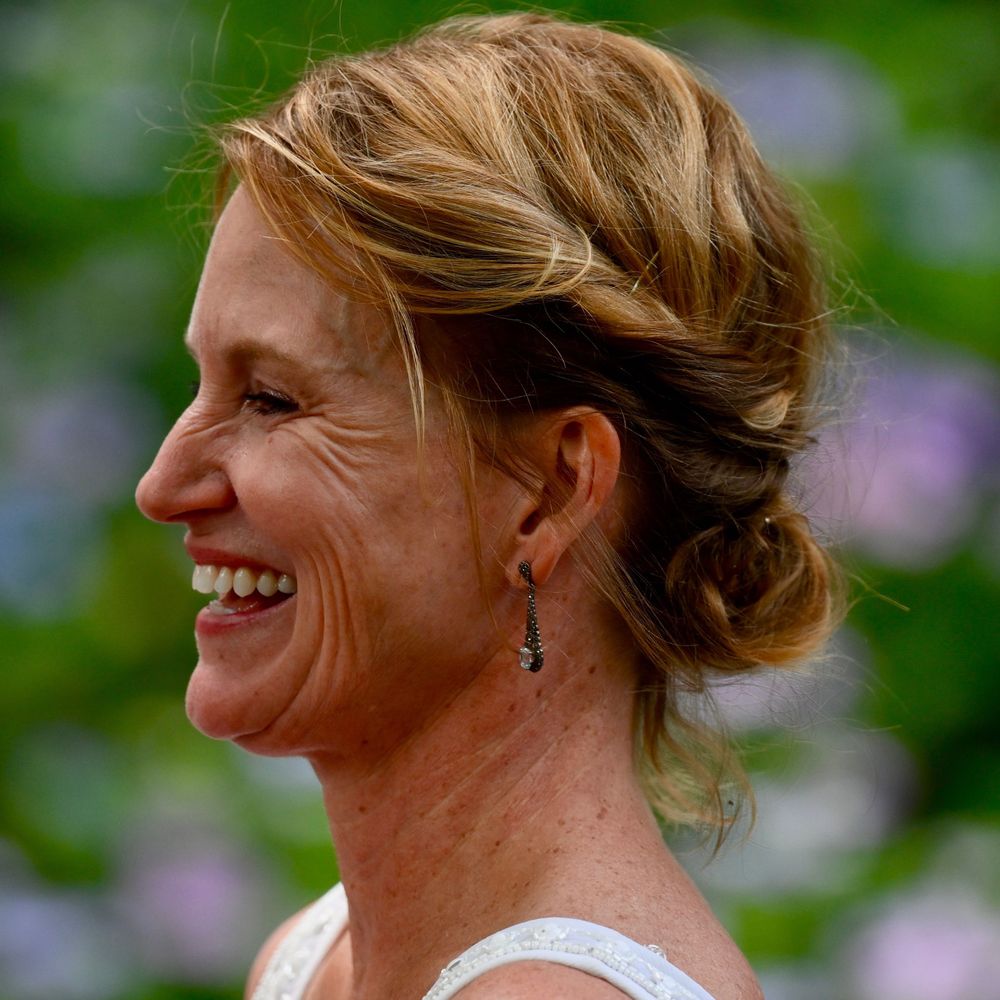
Firings happening right now at the NSF.
February 18, 2025 at 6:29 PM
Our best and brightest scientists who sacrifice their own research agendas for the good of science and our nation. My colleagues and friends. We see you.
Reposted by Anne Katula

Starting trade wars to make it easier to take over the government was literally the plot to the Star Wars prequels.
February 2, 2025 at 4:56 AM
Starting trade wars to make it easier to take over the government was literally the plot to the Star Wars prequels.
Reposted by Anne Katula

Donald Trump is scrubbing critical health information from government websites.
This is staggeringly stupid, anti-science, and will have real consequences.
www.cbsnews.com/news/cdc-std...
This is staggeringly stupid, anti-science, and will have real consequences.
www.cbsnews.com/news/cdc-std...
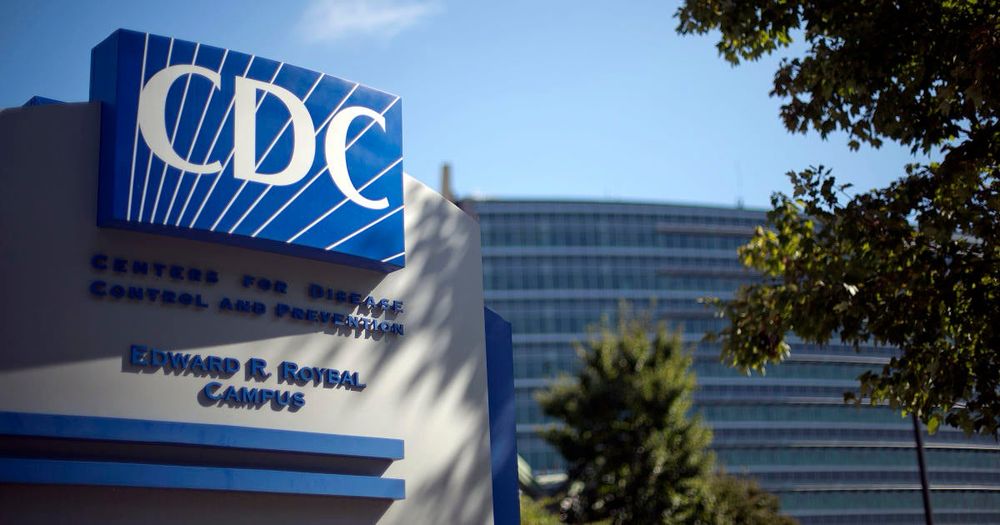
CDC purges STD and vaccine recommendations after Trump gender order
Health experts say the website purge could result in deaths.
www.cbsnews.com
February 1, 2025 at 9:49 PM
Donald Trump is scrubbing critical health information from government websites.
This is staggeringly stupid, anti-science, and will have real consequences.
www.cbsnews.com/news/cdc-std...
This is staggeringly stupid, anti-science, and will have real consequences.
www.cbsnews.com/news/cdc-std...
Reposted by Anne Katula
Email to NSF funded Primary Investigators. BTW, NSF requires us to include a Broader Impacts section in all proposals (and have forever), which is central to how proposals are scored/ranked/funded. Broader Impacts are inherently DEIA. All NSF funded PIs engage in DEIA. Get real.

January 29, 2025 at 3:47 PM
Email to NSF funded Primary Investigators. BTW, NSF requires us to include a Broader Impacts section in all proposals (and have forever), which is central to how proposals are scored/ranked/funded. Broader Impacts are inherently DEIA. All NSF funded PIs engage in DEIA. Get real.
Reposted by Anne Katula

In Nature:
Earth breaches 1.5 °C climate limit for the first time: what does it mean?
www.nature.com/articles/d41...
Earth breaches 1.5 °C climate limit for the first time: what does it mean?
www.nature.com/articles/d41...

Earth breaches 1.5 °C climate limit for the first time: what does it mean?
The threshold has been exceeded for only one year so far, but humanity is nearing the end of what many thought was a ‘safe zone’ as climate change worsens.
www.nature.com
January 11, 2025 at 12:45 PM
In Nature:
Earth breaches 1.5 °C climate limit for the first time: what does it mean?
www.nature.com/articles/d41...
Earth breaches 1.5 °C climate limit for the first time: what does it mean?
www.nature.com/articles/d41...
Reposted by Anne Katula
My dissertation chapter is in Ecology Letters!
We tested microbiome network theory empirically in nature and found central early colonisers significantly (1) enhanced biodiversity, (2) reshaped assembly trajectories and (3) increased recruitment of non-peripheral microbes.
doi.org/10.1111/ele....
We tested microbiome network theory empirically in nature and found central early colonisers significantly (1) enhanced biodiversity, (2) reshaped assembly trajectories and (3) increased recruitment of non-peripheral microbes.
doi.org/10.1111/ele....

Central Taxa Are Keystone Microbes During Early Succession
For decades, microbiome network theory has predicted that highly connected ‘hub’ taxa act as keystone species that disproportionately affect their communities. However, this has never been empiricall...
doi.org
December 31, 2024 at 8:36 PM
My dissertation chapter is in Ecology Letters!
We tested microbiome network theory empirically in nature and found central early colonisers significantly (1) enhanced biodiversity, (2) reshaped assembly trajectories and (3) increased recruitment of non-peripheral microbes.
doi.org/10.1111/ele....
We tested microbiome network theory empirically in nature and found central early colonisers significantly (1) enhanced biodiversity, (2) reshaped assembly trajectories and (3) increased recruitment of non-peripheral microbes.
doi.org/10.1111/ele....