




Anamica Bedi de Silva
@morenacientista.bsky.social
**Looking to join your lab as postdoc**
PhD in Microbial Oceanography | Viral Ecology
🦠Currently: Viral Discovery and Ecology Laboratory (ViDEL), University of Hawai’i at Mānoa
🦠Previously: Marine Viral Ecology Laboratories (MarVELs), UH Mānoa
PhD in Microbial Oceanography | Viral Ecology
🦠Currently: Viral Discovery and Ecology Laboratory (ViDEL), University of Hawai’i at Mānoa
🦠Previously: Marine Viral Ecology Laboratories (MarVELs), UH Mānoa
Pinned

Genomic diversity and global distribution of four new prasinoviruses from the tropical north Pacific | Microbiology Spectrum
The genomes analyzed here represent the first viruses from the tropical North Pacific
that infect the abundant phytoplankton order Mamiellales. Comparing isolates from
the same location demonstrates h...
journals.asm.org
In our latest paper, we introduce four new Micromonas virus genomes, compare them to previously published prasinovirus genomes, and explore metagenomes to find where similar viruses could be in the global ocean.
#MarineVirus #MicrobialOceanography #EcoGenomics
journals.asm.org/doi/full/10....
#MarineVirus #MicrobialOceanography #EcoGenomics
journals.asm.org/doi/full/10....
A big thank you to the folks at Virginia Tech for authoring a comment paper on my recent first-author publication! 🎉
Read the comment here:
journals.asm.org/doi/10.1128/...
#MarineVirus #EnvironmentalVirus #Metagenomics
Read the comment here:
journals.asm.org/doi/10.1128/...
#MarineVirus #EnvironmentalVirus #Metagenomics

Tiny giants in a big ocean | Microbiology Spectrum
Viruses are the most abundant biological entities on Earth, with an estimated 4 × 10³⁰ particles globally (1). Given that more than 70% of the planet is covered by oceans, it is unsurprising that seawater contains staggering viral loads (2). Within this immense diversity, double-stranded DNA viruses of the phylum Nucleocytoviricota, which includes many lineages of “giant viruses,” are among the most abundant in the ocean (3, 4). Among the Nucleocytoviricota, prasinoviruses play a particularly central role in surface waters by infecting members of the Mamiellophyceae, a ubiquitous class of unicellular green algae that are among the most widespread marine primary producers (5). Marine phytoplankton are fundamental to global biogeochemical cycles, contributing nearly half of Earth’s primary production. Prasinoviruses represent a substantial fraction of the marine eukaryotic virome (6). By regulating their algal hosts, they influence population dynamics, shape community composition, drive nutrient cycling, and affect carbon export to the deep sea, with outcomes depending on host interactions and ecosystem context (7, 8). Despite their ecological significance, prasinoviruses remain relatively understudied when compared to other abundant oceanic viruses, such as cyanophages.
journals.asm.org
January 8, 2026 at 10:51 PM
A big thank you to the folks at Virginia Tech for authoring a comment paper on my recent first-author publication! 🎉
Read the comment here:
journals.asm.org/doi/10.1128/...
#MarineVirus #EnvironmentalVirus #Metagenomics
Read the comment here:
journals.asm.org/doi/10.1128/...
#MarineVirus #EnvironmentalVirus #Metagenomics
This looks exciting!

Community college, junior college & city college faculty, are you interested in going to sea for eight days on an Alaska-to-Bay Area route with STEMSEAS? Join me! stemseas.org/2026-2yc-fac...
We have an informational webinar this Friday afternoon. ⚒️🌊
We have an informational webinar this Friday afternoon. ⚒️🌊
2026 2YC Faculty Expedition
stemseas.org
January 6, 2026 at 1:31 AM
This looks exciting!
In our latest paper, we introduce four new Micromonas virus genomes, compare them to previously published prasinovirus genomes, and explore metagenomes to find where similar viruses could be in the global ocean.
#MarineVirus #MicrobialOceanography #EcoGenomics
journals.asm.org/doi/full/10....
#MarineVirus #MicrobialOceanography #EcoGenomics
journals.asm.org/doi/full/10....
Genomic diversity and global distribution of four new prasinoviruses from the tropical north Pacific | Microbiology Spectrum
The genomes analyzed here represent the first viruses from the tropical North Pacific
that infect the abundant phytoplankton order Mamiellales. Comparing isolates from
the same location demonstrates h...
journals.asm.org
December 20, 2025 at 5:53 AM
In our latest paper, we introduce four new Micromonas virus genomes, compare them to previously published prasinovirus genomes, and explore metagenomes to find where similar viruses could be in the global ocean.
#MarineVirus #MicrobialOceanography #EcoGenomics
journals.asm.org/doi/full/10....
#MarineVirus #MicrobialOceanography #EcoGenomics
journals.asm.org/doi/full/10....
Reposted by Anamica Bedi de Silva

If you are in the US and you would like to send a message to your elected representative about the proposed dissolution of the National Center for Atmospheric Research, @agu.org makes it easy with a template here: agu.quorum.us/campaign/151... #AGU25

Save NCAR from being dismantled today!
The Trump Administration has vowed to dissolve the center that provides critical extreme weather and climate data for our nation.
agu.quorum.us
December 18, 2025 at 8:01 PM
If you are in the US and you would like to send a message to your elected representative about the proposed dissolution of the National Center for Atmospheric Research, @agu.org makes it easy with a template here: agu.quorum.us/campaign/151... #AGU25
Reposted by Anamica Bedi de Silva
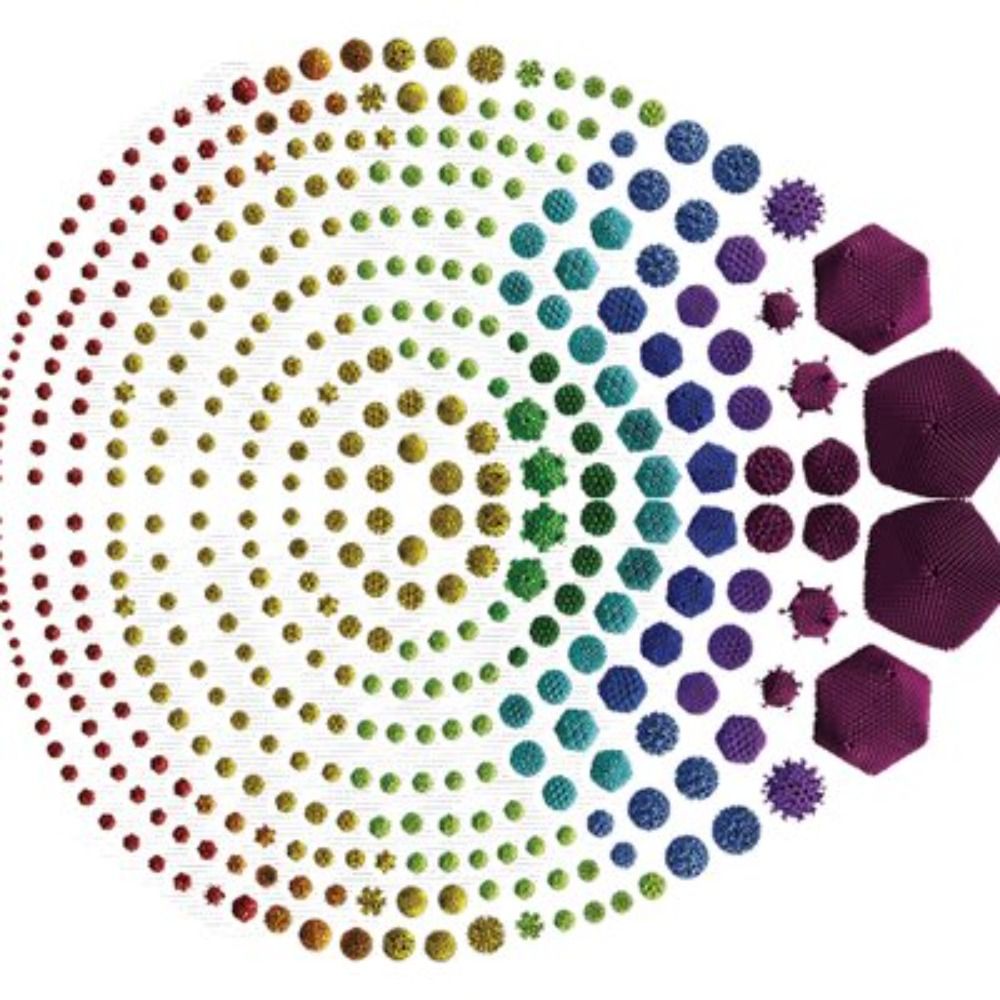
Before this hysteria spreads any further, a graphical explanation of what ICTV does and doesn't do. None of the virus names have been changed or will ever be changed by ICTV (it's outside the remit). Only species names have changed. This has been explained so many times... doi.org/10.1007/s007...

December 12, 2024 at 3:27 PM
Before this hysteria spreads any further, a graphical explanation of what ICTV does and doesn't do. None of the virus names have been changed or will ever be changed by ICTV (it's outside the remit). Only species names have changed. This has been explained so many times... doi.org/10.1007/s007...
I was so excited to learn that there was a #SyntheticBiology conference on the UH Manoa campus! Thanks @jcvi.org for letting me register last minute.
#SynBYSS
#SynBYSS

December 11, 2024 at 2:07 AM
I was so excited to learn that there was a #SyntheticBiology conference on the UH Manoa campus! Thanks @jcvi.org for letting me register last minute.
#SynBYSS
#SynBYSS