



Marmot Recovery Foundation
@marmotrecovery.bsky.social
The Vancouver Island marmot is one of the rarest mammals on the planet. Our mission is to save the wild population from extinction. Your support makes it possible for us to save this species!
During these short, grey days hibernation seems like a great idea! Dreaming away the winter months snuggled with your family and friends? Sounds fantastic! We should all do it!

December 4, 2025 at 11:13 PM
During these short, grey days hibernation seems like a great idea! Dreaming away the winter months snuggled with your family and friends? Sounds fantastic! We should all do it!
While reaching over 400 wild Vancouver Island marmots is a milestone, there is still a long way to go before the species is safe. But we know now we can do it, and that the work we do, like conservation breeding and translocations, helps the wild marmot population grow.
November 28, 2025 at 10:10 PM
While reaching over 400 wild Vancouver Island marmots is a milestone, there is still a long way to go before the species is safe. But we know now we can do it, and that the work we do, like conservation breeding and translocations, helps the wild marmot population grow.
The following year, we released seven more marmots. Two of those were Haida and Onslo, a pair that would go to be the first released marmots to breed in the wild, and both survived for more than 10 years!

November 28, 2025 at 10:10 PM
The following year, we released seven more marmots. Two of those were Haida and Onslo, a pair that would go to be the first released marmots to breed in the wild, and both survived for more than 10 years!
Those first marmots we released? Three of four were eaten by a cougar within weeks, and we recaught the fourth to make sure it did not suffer the same fate. It was upsetting and discouraging, but we persevered.
November 28, 2025 at 10:10 PM
Those first marmots we released? Three of four were eaten by a cougar within weeks, and we recaught the fourth to make sure it did not suffer the same fate. It was upsetting and discouraging, but we persevered.
But with the support of people from across the country, we were able to begin the next stage of an ambitious recovery effort. In 2003, we released the first four Vancouver Island marmots from the conservation breeding program back to the wild.
November 28, 2025 at 10:10 PM
But with the support of people from across the country, we were able to begin the next stage of an ambitious recovery effort. In 2003, we released the first four Vancouver Island marmots from the conservation breeding program back to the wild.
Just 427 marmots may not seem like a large population, and it is not. But when we started releasing marmots to the wild, we could only find 22 wild Vancouver Island marmots left. That was in 2003, and there was a lot of doubt at that time that the species could be saved from extinction.

November 28, 2025 at 10:10 PM
Just 427 marmots may not seem like a large population, and it is not. But when we started releasing marmots to the wild, we could only find 22 wild Vancouver Island marmots left. That was in 2003, and there was a lot of doubt at that time that the species could be saved from extinction.
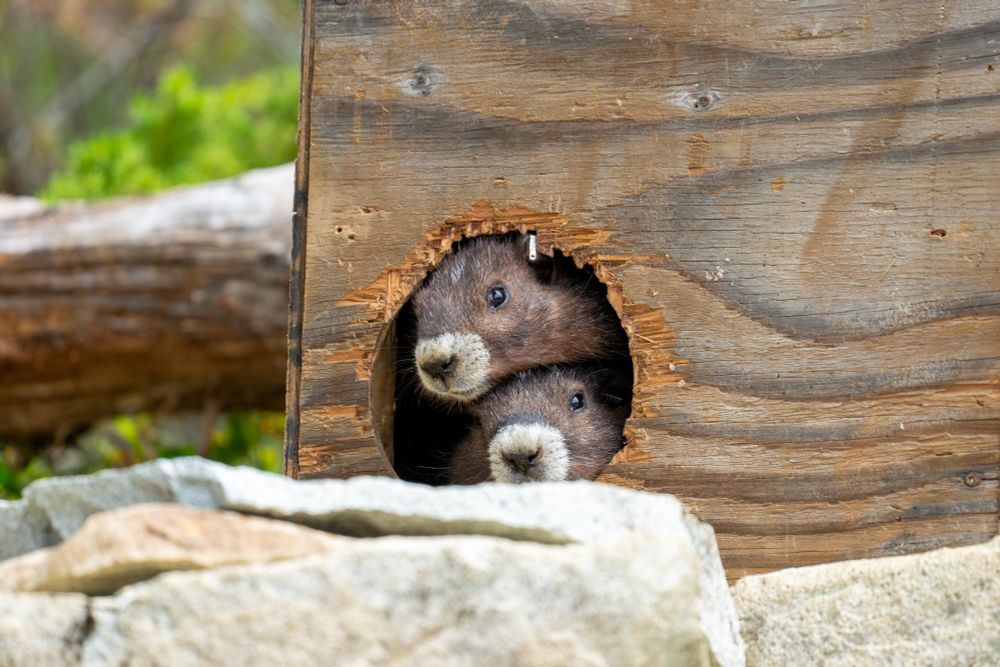
Following the end of the field season, our small team has spent the past few weeks reviewing all the data we collected during this year, and I am thrilled to announce that the wild population of this critically endangered species reached a new high this year - 427 marmots!
November 28, 2025 at 10:10 PM
Following the end of the field season, our small team has spent the past few weeks reviewing all the data we collected during this year, and I am thrilled to announce that the wild population of this critically endangered species reached a new high this year - 427 marmots!
Here you go! This one is from a few years ago, but the bear was very accommodating in providing an excellent view of itself.
November 21, 2025 at 9:19 PM
Here you go! This one is from a few years ago, but the bear was very accommodating in providing an excellent view of itself.
The trail camera footage is in, and we are close to finishing our counts for 2025. While we wait for the final population numbers for the critically endangered Vancouver Island marmot, please enjoy this highlight from the footage we reviewed.
November 20, 2025 at 9:53 PM
The trail camera footage is in, and we are close to finishing our counts for 2025. While we wait for the final population numbers for the critically endangered Vancouver Island marmot, please enjoy this highlight from the footage we reviewed.
We aren’t doing this alone. Our work is possible because of people like you donate, and our partners, like Mount Washington Alpine Resort, Mosaic Forest Management, the Wilder Institute, and the Toronto Zoo. Thank you for being a part of this remarkable success story.
November 13, 2025 at 9:06 PM
We aren’t doing this alone. Our work is possible because of people like you donate, and our partners, like Mount Washington Alpine Resort, Mosaic Forest Management, the Wilder Institute, and the Toronto Zoo. Thank you for being a part of this remarkable success story.
Our mission is to save the Vancouver Island marmot. Huge progress has been made in the past 20 years. The population has increased more than 10 fold, they have expanded from just 5 colonies to over 30. But there is much to be done before the species is secure.
November 13, 2025 at 9:06 PM
Our mission is to save the Vancouver Island marmot. Huge progress has been made in the past 20 years. The population has increased more than 10 fold, they have expanded from just 5 colonies to over 30. But there is much to be done before the species is secure.
This is one of the most endangered mammals in the world – there are fewer than 400 alive in the wild right now – so it is pretty special to watch this mom and her two pups emerge from their burrow. Kids will be kids, no matter how rare your species!
P.S. they are Vancouver Island marmots
P.S. they are Vancouver Island marmots
November 13, 2025 at 9:06 PM
This is one of the most endangered mammals in the world – there are fewer than 400 alive in the wild right now – so it is pretty special to watch this mom and her two pups emerge from their burrow. Kids will be kids, no matter how rare your species!
P.S. they are Vancouver Island marmots
P.S. they are Vancouver Island marmots
A Marmot’s Guide to Yawning. Your yawn should start at the hind end, traveling up to your head and culminating in a dramatic silent scream. Complete with lip smacking to communicate how deeply satisfying this was. Strike a dramatic pose while receiving yawning admiration from onlookers.
November 6, 2025 at 6:27 PM
A Marmot’s Guide to Yawning. Your yawn should start at the hind end, traveling up to your head and culminating in a dramatic silent scream. Complete with lip smacking to communicate how deeply satisfying this was. Strike a dramatic pose while receiving yawning admiration from onlookers.
“Booo!”? Vancouver Island marmots have a unique vocalization we call a “keaw.” It appears to be a special call between parents and their young. Here, a yearling is calling, and likely that’s one of its parents we see at the edge of the frame.
October 31, 2025 at 8:41 PM
“Booo!”? Vancouver Island marmots have a unique vocalization we call a “keaw.” It appears to be a special call between parents and their young. Here, a yearling is calling, and likely that’s one of its parents we see at the edge of the frame.
Soren is demonstrating one of the final steps for Vancouver Island marmots as they prepare for hibernation where they seal off the entrance to their burrow with a mix of mud and grass. Often they will have two “plugs,” one near the surface, and second deeper into the burrow.
October 30, 2025 at 8:03 PM
Soren is demonstrating one of the final steps for Vancouver Island marmots as they prepare for hibernation where they seal off the entrance to their burrow with a mix of mud and grass. Often they will have two “plugs,” one near the surface, and second deeper into the burrow.
Sometimes you yawn so big it worries the kids.
October 23, 2025 at 8:44 PM
Sometimes you yawn so big it worries the kids.
Play time is learning time! These year-old marmots are learning social skills they will need as adults to be part of a successful colony. Wrestling can be a pair bonding or a territorial activity. Sometime the difference is knowing how hard to bite.
October 22, 2025 at 8:55 PM
Play time is learning time! These year-old marmots are learning social skills they will need as adults to be part of a successful colony. Wrestling can be a pair bonding or a territorial activity. Sometime the difference is knowing how hard to bite.
While most of marmots are in hibernation, a few are still active gathering some grasses for their burrows and snacking on wildflowers. Dolly was our 1st marmot into hibernation. She had plugged her burrow but apparently she needed a “midnight snack” because she dug her way out a few days later!

October 17, 2025 at 7:07 PM
While most of marmots are in hibernation, a few are still active gathering some grasses for their burrows and snacking on wildflowers. Dolly was our 1st marmot into hibernation. She had plugged her burrow but apparently she needed a “midnight snack” because she dug her way out a few days later!
For the past 4 days, our crew has been camped at this remote site, working during the day while the weather is still warm. This mountain is expecting 20 cm of snow tomorrow, so we are on the clock to complete our work and return to town before the weather turns on us.

October 17, 2025 at 7:07 PM
For the past 4 days, our crew has been camped at this remote site, working during the day while the weather is still warm. This mountain is expecting 20 cm of snow tomorrow, so we are on the clock to complete our work and return to town before the weather turns on us.
For marmots, autumn is the start of hibernation, but for us it is restoration season! In northern parts of the marmots’ range most are already underground for the winter. Which is when we come to do some house cleaning; restoring the marmots’ meadows to maintain habitat these animals rely on.

October 17, 2025 at 7:07 PM
For marmots, autumn is the start of hibernation, but for us it is restoration season! In northern parts of the marmots’ range most are already underground for the winter. Which is when we come to do some house cleaning; restoring the marmots’ meadows to maintain habitat these animals rely on.
But the end result is worth it - a species returning from the brink of extinction! Photo Kevin Gourlay

October 3, 2025 at 8:37 PM
But the end result is worth it - a species returning from the brink of extinction! Photo Kevin Gourlay
The insects can be intense, both for us and the marmots! Video Adam Taylor
October 3, 2025 at 8:37 PM
The insects can be intense, both for us and the marmots! Video Adam Taylor
The marmots are most active at dawn and dusk, and often disappear during the heat of the day. At least it provides an opportunity for a little rest. Photo Heather Heim.

October 3, 2025 at 8:37 PM
The marmots are most active at dawn and dusk, and often disappear during the heat of the day. At least it provides an opportunity for a little rest. Photo Heather Heim.
Often that means being self-contained in the backcountry for several days, responsible for both your kit and additional field gear. Photo Heather Heim.

October 3, 2025 at 8:37 PM
Often that means being self-contained in the backcountry for several days, responsible for both your kit and additional field gear. Photo Heather Heim.
Normally I post about the marmots, but this time I’d like to take a moment and some photos of the people who do the on-the-ground recovery work to recover this species. We work where the marmots live: remote, high elevation. Photo Heather Heim

October 3, 2025 at 8:37 PM
Normally I post about the marmots, but this time I’d like to take a moment and some photos of the people who do the on-the-ground recovery work to recover this species. We work where the marmots live: remote, high elevation. Photo Heather Heim