


Maria Rodó Zárate
@mariarodo.bsky.social
Investigant des dels feminismes.
Prof. a @PolitiquesUPF
Prof. a @PolitiquesUPF
Reposted by Maria Rodó Zárate

En l'estudi, @marcollplanell.bsky.social i @mariarodo.bsky.social evidencien efectes físics (marejos, fatiga) i emocionals (ecoansietat) per altes temperatures, així com alteracions en rutines com dormir, treballar i socialitzar.
➡️ doi.org/10.1007/s132...
➡️ doi.org/10.1007/s132...

Climate Relief Maps: A methodological framework for exploring everyday experiences of climate change through an intersectional lens - Ambio
The lived, everyday dimensions of climate change have generally been ignored in mainstream climate research, despite their ability to reveal new insights on this phenomenon. Capturing everyday lived e...
doi.org
November 19, 2025 at 7:31 AM
En l'estudi, @marcollplanell.bsky.social i @mariarodo.bsky.social evidencien efectes físics (marejos, fatiga) i emocionals (ecoansietat) per altes temperatures, així com alteracions en rutines com dormir, treballar i socialitzar.
➡️ doi.org/10.1007/s132...
➡️ doi.org/10.1007/s132...
Reposted by Maria Rodó Zárate
@marcollplanell.bsky.social & @mariarodo.bsky.social show physical (dizziness, fatigue) and emotional (echo-anxiety) effects due to high temperatures, as well as alterations in routines such as sleeping, working and socializing.
➡️
➡️

Climate Relief Maps: A methodological framework for exploring everyday experiences of climate change through an intersectional lens - Ambio
The lived, everyday dimensions of climate change have generally been ignored in mainstream climate research, despite their ability to reveal new insights on this phenomenon. Capturing everyday lived experiences of climate change requires methodologies that go beyond traditional approaches, combining robust theoretical foundations with innovative technological solutions. This paper addresses this gap by introducing Climate Relief Maps (CRM), an innovative methodology designed to capture, analyze, and visualize everyday climate experiences through an intersectional lens. CRM integrates qualitative and quantitative techniques with digital tools and GIS technology, offering a multi-layered approach that highlights social, emotional, and spatial dimensions of climate change. By centering lived experiences, this methodology enables a deeper understanding of how intersecting social positions shape climate vulnerabilities and adaptation strategies. CRM advances the study of climate change by bridging the gap between environmental science and social inquiry, fostering new insights into the human dimensions of the climate crisis.
doi.org
November 26, 2025 at 2:01 PM
@marcollplanell.bsky.social & @mariarodo.bsky.social show physical (dizziness, fatigue) and emotional (echo-anxiety) effects due to high temperatures, as well as alterations in routines such as sleeping, working and socializing.
➡️
➡️
Reposted by Maria Rodó Zárate

📍 What’s new in our approach?
– Non-linear, iterative validation
– Mixed methods
– Grounded in standpoint theory & data feminism
– Centered on ethics, positionality & reflexivity
#feministresearch #intersectionality
– Non-linear, iterative validation
– Mixed methods
– Grounded in standpoint theory & data feminism
– Centered on ethics, positionality & reflexivity
#feministresearch #intersectionality
April 10, 2025 at 10:00 AM
📍 What’s new in our approach?
– Non-linear, iterative validation
– Mixed methods
– Grounded in standpoint theory & data feminism
– Centered on ethics, positionality & reflexivity
#feministresearch #intersectionality
– Non-linear, iterative validation
– Mixed methods
– Grounded in standpoint theory & data feminism
– Centered on ethics, positionality & reflexivity
#feministresearch #intersectionality
Reposted by Maria Rodó Zárate
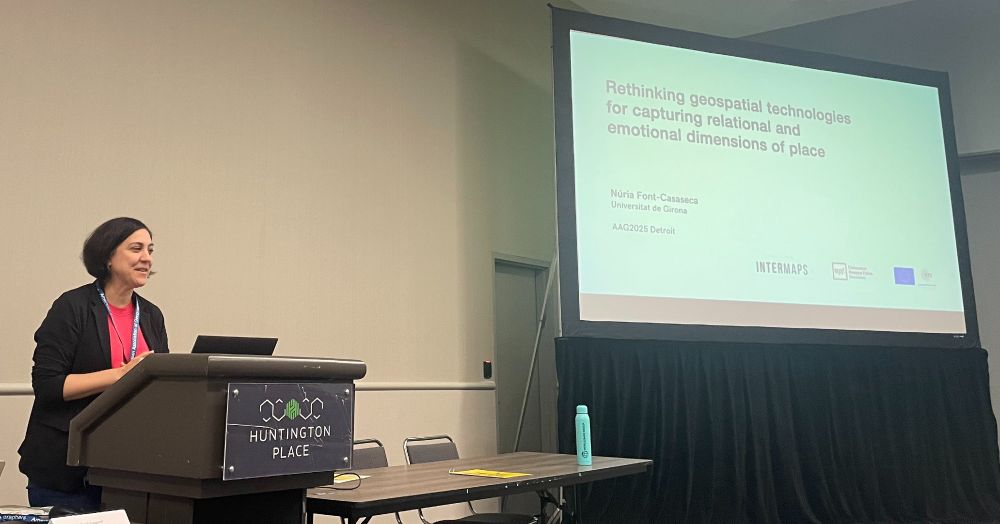
Through critical tools, theories & collaborations, INTERMAPS continues to push geography beyond its boundaries. From GIS histories to climate futures, our work at #AAG2025 reflects mapping as a key tool for justice. 🗺️💜
#INTERMAPS #AAG2025
#INTERMAPS #AAG2025
March 31, 2025 at 10:50 AM
Through critical tools, theories & collaborations, INTERMAPS continues to push geography beyond its boundaries. From GIS histories to climate futures, our work at #AAG2025 reflects mapping as a key tool for justice. 🗺️💜
#INTERMAPS #AAG2025
#INTERMAPS #AAG2025
Reposted by Maria Rodó Zárate
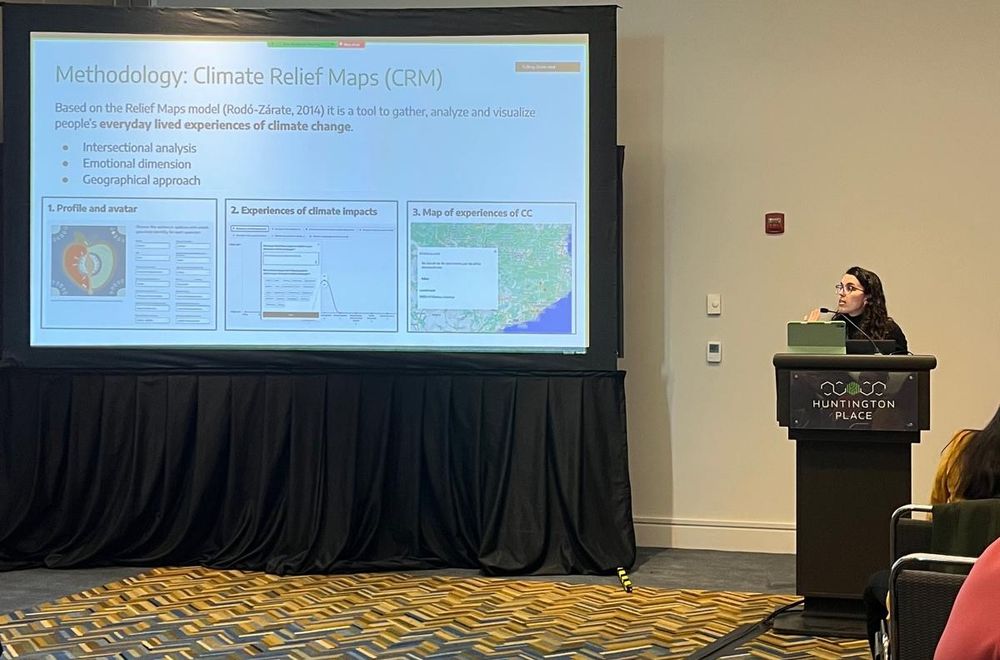
🌿 Also on March 27, @marcollplanell.bsky.social ll presented her PhD work on climate change in Catalonia in the session Intersectional Feminist Approaches to Climate Justice.
#ClimateJustice #Intersectionality
#ClimateJustice #Intersectionality
March 31, 2025 at 10:50 AM
🌿 Also on March 27, @marcollplanell.bsky.social ll presented her PhD work on climate change in Catalonia in the session Intersectional Feminist Approaches to Climate Justice.
#ClimateJustice #Intersectionality
#ClimateJustice #Intersectionality
Reposted by Maria Rodó Zárate
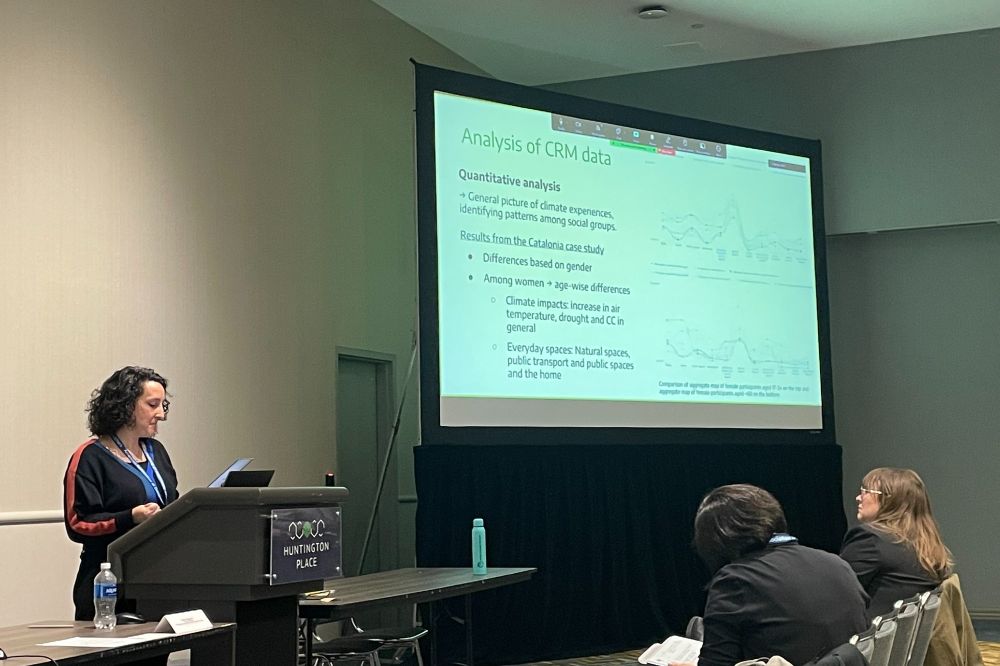
🛠️ On March 27, @mariarodo.bsky.social and @mapasurbanos.bsky.social co-organized 3 sessions on Building Feminist Mapping Tools & Praxis, along with Meghan Kelly.
Maria presented Mapping Climate Impacts using Relief Maps and Núria explored emotional & relational dimensions of place in GIS.
Maria presented Mapping Climate Impacts using Relief Maps and Núria explored emotional & relational dimensions of place in GIS.
March 31, 2025 at 10:49 AM
🛠️ On March 27, @mariarodo.bsky.social and @mapasurbanos.bsky.social co-organized 3 sessions on Building Feminist Mapping Tools & Praxis, along with Meghan Kelly.
Maria presented Mapping Climate Impacts using Relief Maps and Núria explored emotional & relational dimensions of place in GIS.
Maria presented Mapping Climate Impacts using Relief Maps and Núria explored emotional & relational dimensions of place in GIS.
Reposted by Maria Rodó Zárate
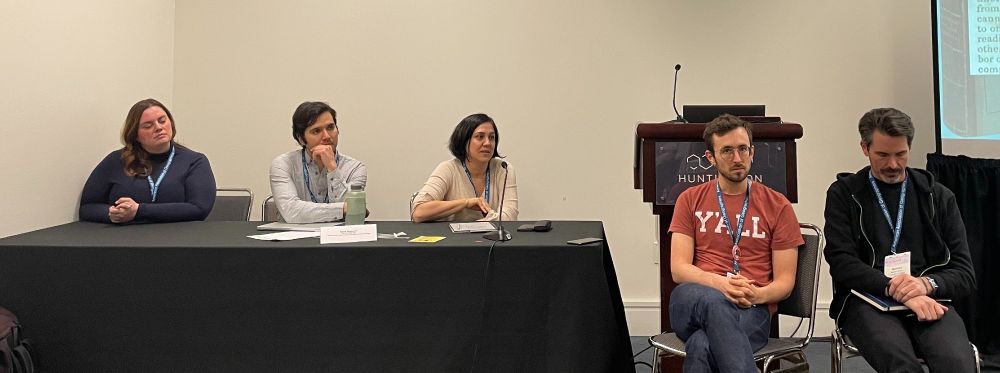
🧭 On March 26, @mapasurbanos.bsky.social joined the panel Minor Histories of GIS as a discussant. She spoke on the need to draw from other disciplines to rethink GIS through a critical lens—highlighting “minor GISciences.”
#GIS #CriticalGeographies
#GIS #CriticalGeographies
March 31, 2025 at 10:48 AM
🧭 On March 26, @mapasurbanos.bsky.social joined the panel Minor Histories of GIS as a discussant. She spoke on the need to draw from other disciplines to rethink GIS through a critical lens—highlighting “minor GISciences.”
#GIS #CriticalGeographies
#GIS #CriticalGeographies