



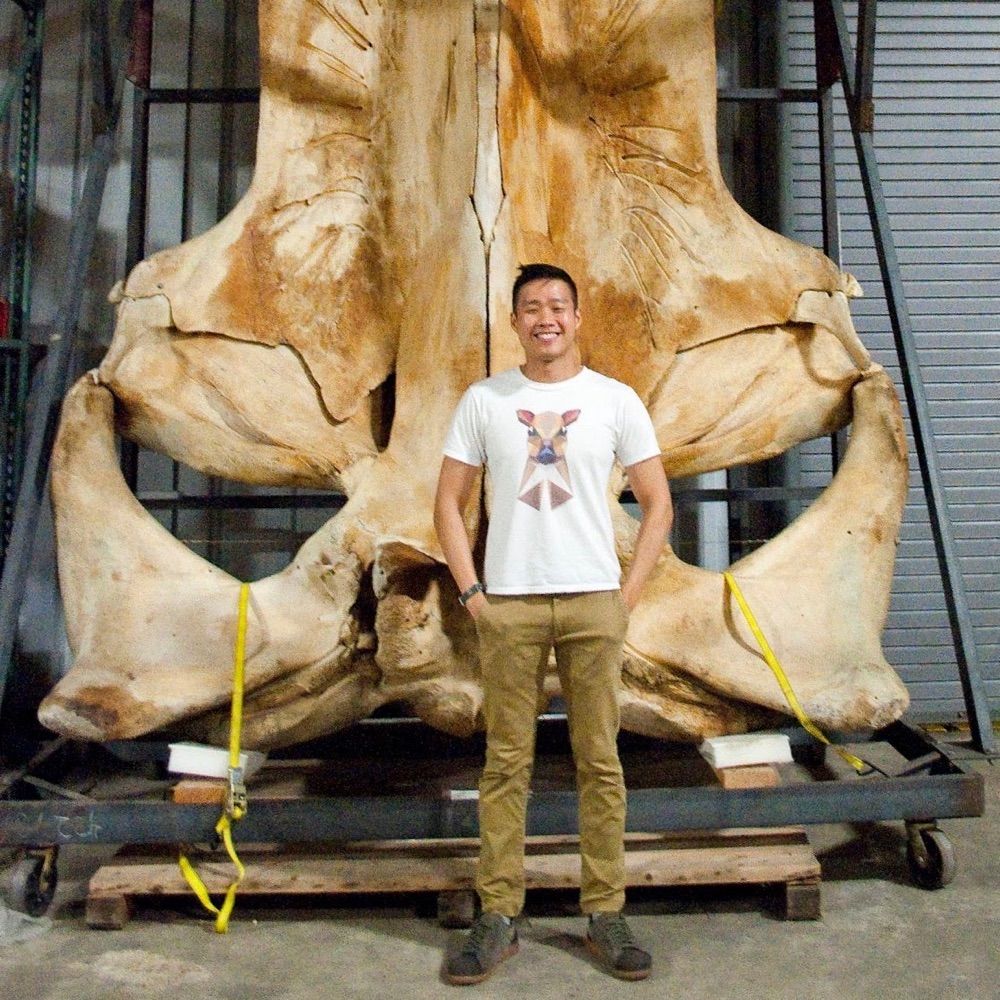
Marcus Chua
@marcuschua.bsky.social
Studies and curates mammals of SE Asia. Biodiversity, conservation, and natural history museums. Also swims, hifi, and ramen.
Same handle on the x-bird app.
🇸🇬
https://sites.google.com/view/marcuschua
Same handle on the x-bird app.
🇸🇬
https://sites.google.com/view/marcuschua
Methods tip: Transects are cheaper and more precise at high densities; camera traps cost more but detect rare/low-abundance species and run 24/7.
This study was part of my PhD work advised by Haw Chuan Lim & collab with NParks.
www.sciencedirect.com/science/arti...
This study was part of my PhD work advised by Haw Chuan Lim & collab with NParks.
www.sciencedirect.com/science/arti...

Rapid population growth of greater mouse-deer after active forest restoration and African Swine Fever outbreak
Even as a highly urbanized city-state, Singapore has seen the recolonization of extirpated wildlife amidst habitat restoration efforts and ecological …
www.sciencedirect.com
November 28, 2025 at 7:27 PM
Methods tip: Transects are cheaper and more precise at high densities; camera traps cost more but detect rare/low-abundance species and run 24/7.
This study was part of my PhD work advised by Haw Chuan Lim & collab with NParks.
www.sciencedirect.com/science/arti...
This study was part of my PhD work advised by Haw Chuan Lim & collab with NParks.
www.sciencedirect.com/science/arti...
Why it matters: Losing a dominant generalist (wild pig) can trigger ecological cascades—altered understory, seed dispersal and species interactions. We saw diet overlap (fallen 🌼) suggesting competition.
Long-term monitoring of forest habitats is essential as wild pigs recover.
Long-term monitoring of forest habitats is essential as wild pigs recover.

November 28, 2025 at 7:27 PM
Why it matters: Losing a dominant generalist (wild pig) can trigger ecological cascades—altered understory, seed dispersal and species interactions. We saw diet overlap (fallen 🌼) suggesting competition.
Long-term monitoring of forest habitats is essential as wild pigs recover.
Long-term monitoring of forest habitats is essential as wild pigs recover.
15-year trend: mouse-deer encounter rates rose 2.4x from 2009→2019, then 5.5x from 2019→2024 post-ASF.
Predicted densities: ~31/km2 (2009), ~67/km2 (2019), measured 293/km2 (2024).
Wild pigs vanished from transects in 2024 but camera traps show re-establishment at ~30/km2.
Predicted densities: ~31/km2 (2009), ~67/km2 (2019), measured 293/km2 (2024).
Wild pigs vanished from transects in 2024 but camera traps show re-establishment at ~30/km2.

November 28, 2025 at 7:27 PM
15-year trend: mouse-deer encounter rates rose 2.4x from 2009→2019, then 5.5x from 2019→2024 post-ASF.
Predicted densities: ~31/km2 (2009), ~67/km2 (2019), measured 293/km2 (2024).
Wild pigs vanished from transects in 2024 but camera traps show re-establishment at ~30/km2.
Predicted densities: ~31/km2 (2009), ~67/km2 (2019), measured 293/km2 (2024).
Wild pigs vanished from transects in 2024 but camera traps show re-establishment at ~30/km2.
How we measured it: Intensive night transects and camera trap distance sampling.
Both estimates converged—transects: 293/km2 (CV 0.12), cameras: 264/km2 (CV 0.22)
We also validated a model linking encounter rates to density to track trends when full surveys aren’t feasible.
Both estimates converged—transects: 293/km2 (CV 0.12), cameras: 264/km2 (CV 0.22)
We also validated a model linking encounter rates to density to track trends when full surveys aren’t feasible.

November 28, 2025 at 7:27 PM
How we measured it: Intensive night transects and camera trap distance sampling.
Both estimates converged—transects: 293/km2 (CV 0.12), cameras: 264/km2 (CV 0.22)
We also validated a model linking encounter rates to density to track trends when full surveys aren’t feasible.
Both estimates converged—transects: 293/km2 (CV 0.12), cameras: 264/km2 (CV 0.22)
We also validated a model linking encounter rates to density to track trends when full surveys aren’t feasible.
Also, practically smelling like rotting whale everyday. But so grateful for my LKCNHM colleagues who have shown up to help with this massively smelly and laborious process. Many weeks to go!
Thanks Ang Qing for the story about our salvage efforts (so far)!
www.straitstimes.com/singapore/en...
Thanks Ang Qing for the story about our salvage efforts (so far)!
www.straitstimes.com/singapore/en...
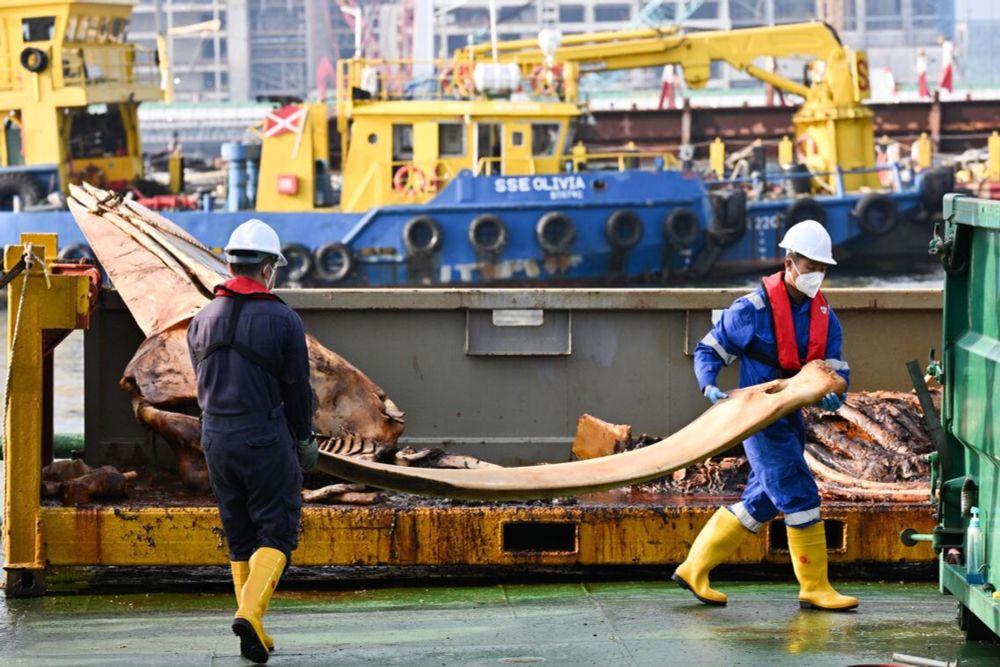
Baleen whale found dead in waters off Tanjong Pagar likely struck by ship
Based on its skull, the decomposing whale would have measured about 10.6m long when alive. Read more at straitstimes.com. Read more at straitstimes.com.
www.straitstimes.com
September 28, 2025 at 8:37 AM
Also, practically smelling like rotting whale everyday. But so grateful for my LKCNHM colleagues who have shown up to help with this massively smelly and laborious process. Many weeks to go!
Thanks Ang Qing for the story about our salvage efforts (so far)!
www.straitstimes.com/singapore/en...
Thanks Ang Qing for the story about our salvage efforts (so far)!
www.straitstimes.com/singapore/en...
The organizing committee created a fun photo booth with “Team Vert” and “Team Invert”—what a way to start a war!

September 6, 2025 at 2:16 AM
The organizing committee created a fun photo booth with “Team Vert” and “Team Invert”—what a way to start a war!
Key takeaway: While SE Asian small cats evolved to coexist, the introduced domestic cat creates a concerning niche overlap. This poses a new, understudied conservation threat to wild species, and more research on this impact is needed.
Full paper: doi.org/10.1038/s415...
Full paper: doi.org/10.1038/s415...

Craniological differentiation amongst Southeast Asian small cats - Scientific Reports
Scientific Reports - Craniological differentiation amongst Southeast Asian small cats
doi.org
August 15, 2025 at 6:06 PM
Key takeaway: While SE Asian small cats evolved to coexist, the introduced domestic cat creates a concerning niche overlap. This poses a new, understudied conservation threat to wild species, and more research on this impact is needed.
Full paper: doi.org/10.1038/s415...
Full paper: doi.org/10.1038/s415...
Enter the introduced domestic cat. 🐈
Our analysis shows their skulls overlap significantly with SE Asian native species, especially female leopard cats and marbled cats. This creates a new, direct threat of competition for food and space.
Our analysis shows their skulls overlap significantly with SE Asian native species, especially female leopard cats and marbled cats. This creates a new, direct threat of competition for food and space.

August 15, 2025 at 6:06 PM
Enter the introduced domestic cat. 🐈
Our analysis shows their skulls overlap significantly with SE Asian native species, especially female leopard cats and marbled cats. This creates a new, direct threat of competition for food and space.
Our analysis shows their skulls overlap significantly with SE Asian native species, especially female leopard cats and marbled cats. This creates a new, direct threat of competition for food and space.
For other cats, it's more complex. We found clear skull morphology overlap, suggesting competition for similar food.
Female Asian golden cats & male jungle cats have similar skulls, pointing to niche overlap.
But they seem to avoid competition by using different habitats.
Female Asian golden cats & male jungle cats have similar skulls, pointing to niche overlap.
But they seem to avoid competition by using different habitats.

August 15, 2025 at 6:06 PM
For other cats, it's more complex. We found clear skull morphology overlap, suggesting competition for similar food.
Female Asian golden cats & male jungle cats have similar skulls, pointing to niche overlap.
But they seem to avoid competition by using different habitats.
Female Asian golden cats & male jungle cats have similar skulls, pointing to niche overlap.
But they seem to avoid competition by using different habitats.
Some cats are specialists. The fishing cat and flat-headed cat have highly distinct skulls, adapted for hunting fish. 🐟
This unique diet means they seldom compete with other native cats for food, occupying their own ecological niche.
This unique diet means they seldom compete with other native cats for food, occupying their own ecological niche.

August 15, 2025 at 6:06 PM
Some cats are specialists. The fishing cat and flat-headed cat have highly distinct skulls, adapted for hunting fish. 🐟
This unique diet means they seldom compete with other native cats for food, occupying their own ecological niche.
This unique diet means they seldom compete with other native cats for food, occupying their own ecological niche.