



James Davies
@james-s-davies.bsky.social
Researcher interested in how molecules traverse membranes. Structural biology, biochemistry and biophysics. 🥝
Pinned

Structural basis of sodium ion-dependent carnitine transport by OCTN2
Nature Communications - Carnitine uptake by OCTN2 supports fatty acid metabolism. Here, authors report cryo-EM structures of human OCTN2, revealing the mechanism of sodium ion-dependent carnitine...
rdcu.be
Our paper on the human carnitine transporter OCTN2 (SLC22A5) is out in @natcomms.nature.com! We solved structures of OCTN2 in multiple states and explored how carnitine transport is Na⁺-dependent, providing a framework for understanding SPCD disease causing variants and drug interactions.
Reposted by James Davies
I’ve officially started my lab at Monash University! 🎉
We’re diving into #cellgrowth and #lysosome biology, through the lens of molecular #structure and mechanism.
I’m thrilled to say that PhD student scholarships are available—so please share widely and get in touch if you’re interested. 🤩
We’re diving into #cellgrowth and #lysosome biology, through the lens of molecular #structure and mechanism.
I’m thrilled to say that PhD student scholarships are available—so please share widely and get in touch if you’re interested. 🤩
February 18, 2026 at 8:35 AM
I’ve officially started my lab at Monash University! 🎉
We’re diving into #cellgrowth and #lysosome biology, through the lens of molecular #structure and mechanism.
I’m thrilled to say that PhD student scholarships are available—so please share widely and get in touch if you’re interested. 🤩
We’re diving into #cellgrowth and #lysosome biology, through the lens of molecular #structure and mechanism.
I’m thrilled to say that PhD student scholarships are available—so please share widely and get in touch if you’re interested. 🤩
A tour de force!
Session 7 ⚡️🌩 talks time!! Jack Zeng Unravelling Promiscuity - OCT1 gating - structures of ligand bound states. Interrogating binding and transport specificity and mechanism.
#lorneproteins2026
#lorneproteins2026


February 10, 2026 at 3:05 AM
A tour de force!
Reposted by James Davies

Internationally renowned as one of the leaders in neurotransmitter transport research, don't miss Professor Renae Ryan (@renaeryan.bsky.social) present her #BiochemSoc International Award Lecture at Membrane #Proteins Conference 2026! 🧪

February 6, 2026 at 4:54 PM
Internationally renowned as one of the leaders in neurotransmitter transport research, don't miss Professor Renae Ryan (@renaeryan.bsky.social) present her #BiochemSoc International Award Lecture at Membrane #Proteins Conference 2026! 🧪
Reposted by James Davies

Beginning 2026 with a flipping good paper🚀 OSCA/TMEM63 proteins do double duty: they’re ion channels and mechanically activated lipid scramblases helping reshape membranes and survive mechanical stress. 👏 @yiechanglin.bsky.social @charlesdcox.bsky.social doi.org/10.1038/s414...

February 2, 2026 at 10:30 PM
Beginning 2026 with a flipping good paper🚀 OSCA/TMEM63 proteins do double duty: they’re ion channels and mechanically activated lipid scramblases helping reshape membranes and survive mechanical stress. 👏 @yiechanglin.bsky.social @charlesdcox.bsky.social doi.org/10.1038/s414...
Reposted by James Davies

Countdown to Lorne Proteins 🏖️ Session 6: Invited speakers Nieng Yan, Tsinghua University, on the structural pharmacology of Voltage-gated sodium channels; closing with Simon Newstead, University of Oxford, on plasma membrane polyamine transporters in chronic pain.
🔗 www.lorneproteins.org
🔗 www.lorneproteins.org

February 2, 2026 at 7:00 AM
Countdown to Lorne Proteins 🏖️ Session 6: Invited speakers Nieng Yan, Tsinghua University, on the structural pharmacology of Voltage-gated sodium channels; closing with Simon Newstead, University of Oxford, on plasma membrane polyamine transporters in chronic pain.
🔗 www.lorneproteins.org
🔗 www.lorneproteins.org
Reposted by James Davies
💊 We are excited to share our preprint that describes an inhibitor of the widespread and highly conserved Two-Partner Secretion (TPS) system that is critical for Gram-negative pathogens to export a multitude of diverse virulence factors.
(1/6)
www.biorxiv.org/content/10.6...
(1/6)
www.biorxiv.org/content/10.6...

First inhibitor of a bacterial two-partner secretion system.
Two-partner secretion system transporter proteins (TpsB) are widely conserved across Gram-negative pathogens. TpsB family proteins secrete exoprotein virulence factors that perform a myriad of functions such as adhesion and immune modulation. Despite their incredible importance in bacterial infectious disease, TpsB inhibitors have not yet been discovered. Here, we describe a potent inhibitor of FhaC, a TpsB protein produced by Bordetella spp . FhaC secretes the exoprotein FhaB that is essential for the establishment of whooping cough. We designed a peptide called P1 that we predicted would prevent substrate binding and lock FhaC in a secretion-inactive state. Simulations and biochemical assays supported our hypothesis and identified interactions important for P1 binding to FhaC. Strikingly, we observed that the peptide strongly inhibited FhaB secretion from clinical isolates and broadly reduced correlates of virulence. Together, this work provides a strong case for further development of a novel class of anti-TpsB anti-virulence compounds. ### Competing Interest Statement The authors have declared no competing interest. National Institute of Allergy and Infectious Diseases, R21AI180112
www.biorxiv.org
January 13, 2026 at 7:02 AM
💊 We are excited to share our preprint that describes an inhibitor of the widespread and highly conserved Two-Partner Secretion (TPS) system that is critical for Gram-negative pathogens to export a multitude of diverse virulence factors.
(1/6)
www.biorxiv.org/content/10.6...
(1/6)
www.biorxiv.org/content/10.6...
Our paper on the human carnitine transporter OCTN2 (SLC22A5) is out in @natcomms.nature.com! We solved structures of OCTN2 in multiple states and explored how carnitine transport is Na⁺-dependent, providing a framework for understanding SPCD disease causing variants and drug interactions.
Structural basis of sodium ion-dependent carnitine transport by OCTN2
Nature Communications - Carnitine uptake by OCTN2 supports fatty acid metabolism. Here, authors report cryo-EM structures of human OCTN2, revealing the mechanism of sodium ion-dependent carnitine...
rdcu.be
January 8, 2026 at 12:05 AM
Our paper on the human carnitine transporter OCTN2 (SLC22A5) is out in @natcomms.nature.com! We solved structures of OCTN2 in multiple states and explored how carnitine transport is Na⁺-dependent, providing a framework for understanding SPCD disease causing variants and drug interactions.
Reposted by James Davies
🚨My lab is hiring a postdoc!🚨
If you’re interested in working out the mechanism and physiological impact of bacterial lipid transport processes then please apply!
Job advert is here: tinyurl.com/4swddfda
Get in touch by email ([email protected]) for informal enquiries
Please repost!
Thanks!
If you’re interested in working out the mechanism and physiological impact of bacterial lipid transport processes then please apply!
Job advert is here: tinyurl.com/4swddfda
Get in touch by email ([email protected]) for informal enquiries
Please repost!
Thanks!
December 17, 2025 at 2:41 PM
🚨My lab is hiring a postdoc!🚨
If you’re interested in working out the mechanism and physiological impact of bacterial lipid transport processes then please apply!
Job advert is here: tinyurl.com/4swddfda
Get in touch by email ([email protected]) for informal enquiries
Please repost!
Thanks!
If you’re interested in working out the mechanism and physiological impact of bacterial lipid transport processes then please apply!
Job advert is here: tinyurl.com/4swddfda
Get in touch by email ([email protected]) for informal enquiries
Please repost!
Thanks!
Reposted by James Davies

Thrilled to announce a new @natcomms.nature.com paper led by Alastair Stewart and team @victorchang.edu.au with contributions from @mcdevittlab.bsky.social
Using #cryoEM we discovered unique features of the #Pseudomonas aeruginosa ATP synthase including an unexpected role for #zinc in the complex 🦠🔬
Using #cryoEM we discovered unique features of the #Pseudomonas aeruginosa ATP synthase including an unexpected role for #zinc in the complex 🦠🔬
Distinct structural features of Pseudomonas aeruginosa ATP synthase revealed by cryo-electron microscopy - Nature Communications
ATP synthase powers cells by converting proton translocation into energy. Here, authors reveal distinct structural features of the P. aeruginosa ATP synthase that regulate activity and may serve as ta...
doi.org
December 11, 2025 at 1:12 AM
Thrilled to announce a new @natcomms.nature.com paper led by Alastair Stewart and team @victorchang.edu.au with contributions from @mcdevittlab.bsky.social
Using #cryoEM we discovered unique features of the #Pseudomonas aeruginosa ATP synthase including an unexpected role for #zinc in the complex 🦠🔬
Using #cryoEM we discovered unique features of the #Pseudomonas aeruginosa ATP synthase including an unexpected role for #zinc in the complex 🦠🔬
Check out our new paper:
🔗 www.cell.com/structure/fu...
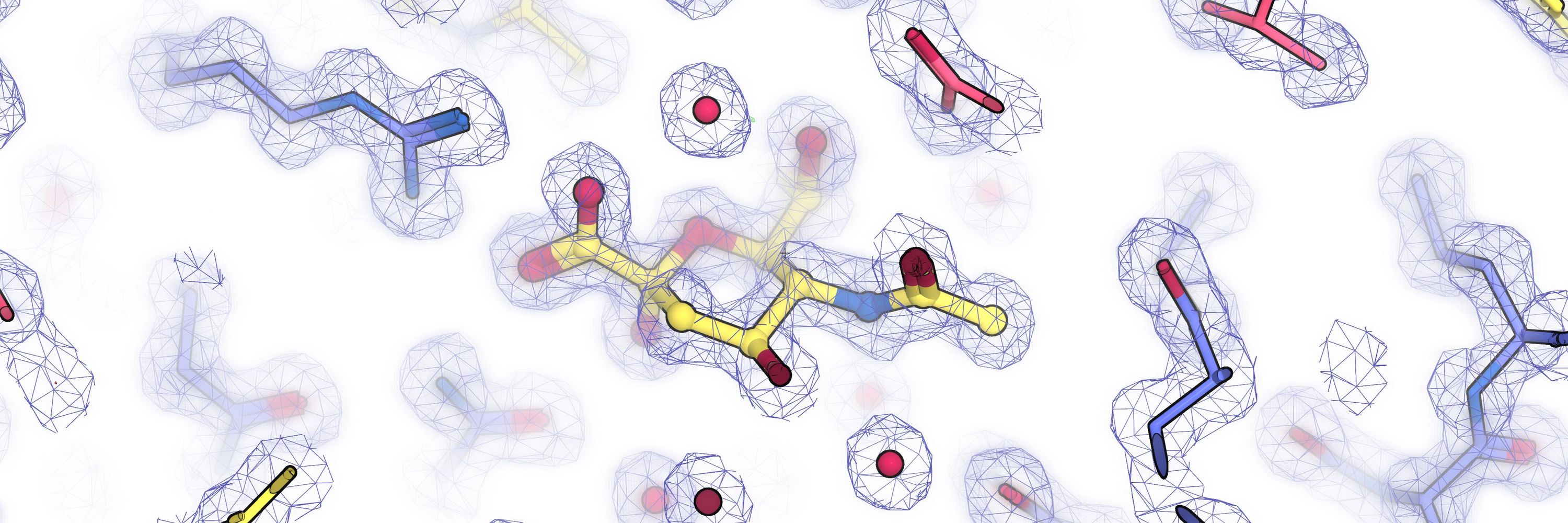
We explored how sulfate-reducing bacteria import isethionate, a sulfur-containing molecule found in the environment and produced by microbes in the human gut. We captured a structure of the IseQM TRAP transporter in a substrate-bound state.
🔗 www.cell.com/structure/fu...
We explored how sulfate-reducing bacteria import isethionate, a sulfur-containing molecule found in the environment and produced by microbes in the human gut. We captured a structure of the IseQM TRAP transporter in a substrate-bound state.

Structural basis of isethionate transport by a TRAP transporter from a sulfate-reducing bacterium
Newton-Vesty et al. used a megabody fiducial to determine the cryo-EM structure of
an isethionate TRAP transporter, revealing the substrate and Na+-binding sites. Transport
is dependent on Na+ and the...
www.cell.com
November 9, 2025 at 8:45 PM
Check out our new paper:
🔗 www.cell.com/structure/fu...
We explored how sulfate-reducing bacteria import isethionate, a sulfur-containing molecule found in the environment and produced by microbes in the human gut. We captured a structure of the IseQM TRAP transporter in a substrate-bound state.
🔗 www.cell.com/structure/fu...
We explored how sulfate-reducing bacteria import isethionate, a sulfur-containing molecule found in the environment and produced by microbes in the human gut. We captured a structure of the IseQM TRAP transporter in a substrate-bound state.
Reposted by James Davies
#microsky finally a TRAP transporter that is *not* the Neu5Ac-transporting SiaPQM ;-)
www.cell.com/structure/fu...
www.cell.com/structure/fu...

Structural basis of isethionate transport by a TRAP transporter from a sulfate-reducing bacterium
Newton-Vesty et al. used a megabody fiducial to determine the cryo-EM structure of
an isethionate TRAP transporter, revealing the substrate and Na+-binding sites. Transport
is dependent on Na+ and the...
www.cell.com
November 6, 2025 at 1:29 AM
#microsky finally a TRAP transporter that is *not* the Neu5Ac-transporting SiaPQM ;-)
www.cell.com/structure/fu...
www.cell.com/structure/fu...