


Fossil Record
@fr.pensoft.net
Open-access, peer-reviewed journal devoted to all areas of palaeontology.
Published by @pensoft.net on behalf of @mfnberlin.bsky.social. Powered by ARPHA.
Website: https://fr.pensoft.net/
Published by @pensoft.net on behalf of @mfnberlin.bsky.social. Powered by ARPHA.
Website: https://fr.pensoft.net/
🦣🐎Using multi-proxy geochemical analyses, this study uncovers the feeding strategies of proboscideans and equids, along with past #climate conditions, at a newly documented Blancan (Pliocene-Pleistocene) site in north-western Mexico.
doi.org/10.3897/fr.2...
#palaeoecology
doi.org/10.3897/fr.2...
#palaeoecology

Blancan climate and feeding strategies of proboscideans and equids revealed by a multi-proxy geochemical analysis from a new locality in north-western Mexico
We present a multi-proxy geochemical analysis of proboscidean and equid teeth from a newly-documented Blancan (Pliocene–Pleistocene) locality in north-western Mexico. Eleven dental elements (six from ...
doi.org
January 16, 2026 at 1:45 PM
🦣🐎Using multi-proxy geochemical analyses, this study uncovers the feeding strategies of proboscideans and equids, along with past #climate conditions, at a newly documented Blancan (Pliocene-Pleistocene) site in north-western Mexico.
doi.org/10.3897/fr.2...
#palaeoecology
doi.org/10.3897/fr.2...
#palaeoecology
🕷️Preserved in #Eocene Baltic amber, an impressive new #fossil of a harvestman (Arachnida, Opiliones) with unique features on its pedipalps emerges!
➡ Dive into the full study here: doi.org/10.3897/fr.2...
#paleontology
➡ Dive into the full study here: doi.org/10.3897/fr.2...
#paleontology

January 8, 2026 at 10:46 AM
🕷️Preserved in #Eocene Baltic amber, an impressive new #fossil of a harvestman (Arachnida, Opiliones) with unique features on its pedipalps emerges!
➡ Dive into the full study here: doi.org/10.3897/fr.2...
#paleontology
➡ Dive into the full study here: doi.org/10.3897/fr.2...
#paleontology
Reposted by Fossil Record

As 2025 draws to a close, we at Pensoft want to extend our warmest wishes to our editors, reviewers, researchers, partners, and followers. Thank you for being part of our journey this year.
Wishing you all a joyful holiday season and a bright start to the new year! 🎄✨
Wishing you all a joyful holiday season and a bright start to the new year! 🎄✨

December 23, 2025 at 9:11 AM
As 2025 draws to a close, we at Pensoft want to extend our warmest wishes to our editors, reviewers, researchers, partners, and followers. Thank you for being part of our journey this year.
Wishing you all a joyful holiday season and a bright start to the new year! 🎄✨
Wishing you all a joyful holiday season and a bright start to the new year! 🎄✨

This systematic review compiles 726 fossil records of Chilean insects, arachnids and myriapods from Carboniferous to Quaternary, exposing key gaps in South America's paleoentomology.
🔗 doi.org/10.3897/fr.2...
🔗 doi.org/10.3897/fr.2...

December 8, 2025 at 7:18 AM
This systematic review compiles 726 fossil records of Chilean insects, arachnids and myriapods from Carboniferous to Quaternary, exposing key gaps in South America's paleoentomology.
🔗 doi.org/10.3897/fr.2...
🔗 doi.org/10.3897/fr.2...
Many Jurassic–Cretaceous dips in plesiosaur diversity are artefacts of uneven rock and collection sampling, and the Aalenian–Bathonian, Valanginian and Coniacian are prime targets for discovering “hidden” plesiosaur species: doi.org/10.3897/fr.2...

Assessing the effect of sampling proxies on plesiosaur taxic diversity with comments on implications for Mesozoic sampling design
The fossil record of plesiosaurs, while extensive, is strongly affected by geological and anthropogenic biases that may obscure true diversity patterns. This study evaluates the influence of rock avai...
doi.org
December 5, 2025 at 1:06 PM
Many Jurassic–Cretaceous dips in plesiosaur diversity are artefacts of uneven rock and collection sampling, and the Aalenian–Bathonian, Valanginian and Coniacian are prime targets for discovering “hidden” plesiosaur species: doi.org/10.3897/fr.2...
A newly described Late Miocene small-vertebrate assemblage from the Ouarzazate Basin refines North Africa’s biochronological framework and paints a picture of temperate freshwater habitats in an open, semi‑arid landscape ~8.7 Ma ago.
🔗 doi.org/10.3897/fr.2...
🔗 doi.org/10.3897/fr.2...

December 3, 2025 at 8:18 AM
A newly described Late Miocene small-vertebrate assemblage from the Ouarzazate Basin refines North Africa’s biochronological framework and paints a picture of temperate freshwater habitats in an open, semi‑arid landscape ~8.7 Ma ago.
🔗 doi.org/10.3897/fr.2...
🔗 doi.org/10.3897/fr.2...
Fossil shark teeth from Pliocene Tuscany show the first evidence that 𝑂𝑠𝑒𝑑𝑎𝑥 "zombie worms" exploit shark tooth dentine in the wild.
🔗 doi.org/10.3897/fr.2...
🔗 doi.org/10.3897/fr.2...

November 7, 2025 at 7:38 AM
Fossil shark teeth from Pliocene Tuscany show the first evidence that 𝑂𝑠𝑒𝑑𝑎𝑥 "zombie worms" exploit shark tooth dentine in the wild.
🔗 doi.org/10.3897/fr.2...
🔗 doi.org/10.3897/fr.2...
Apidorhynchid fossils from the Late-Jurassic Solnhofen Archipelago include specimens with prey fish stuck in their mouths and stomachs.
🔗 doi.org/10.3897/fr.2...
🔗 doi.org/10.3897/fr.2...

October 31, 2025 at 6:50 AM
Apidorhynchid fossils from the Late-Jurassic Solnhofen Archipelago include specimens with prey fish stuck in their mouths and stomachs.
🔗 doi.org/10.3897/fr.2...
🔗 doi.org/10.3897/fr.2...
Discovery of a new dwarf crocodylomorph specimen from Portugal’s Upper Jurassic provides the first neuroanatomical insights into Atoposauridae, reshaping their evolutionary history.
🔗 doi.org/10.3897/fr.2...
🔗 doi.org/10.3897/fr.2...

New dwarf crocodylomorph from the Upper Jurassic of Portugal and the first neuroanatomical data for Atoposauridae
A new crocodylomorph fossil specimen (ML2631) from the Upper Jurassic of Lourinhã (Portugal) is described, based on a partially preserved skull table and braincase. The specimen was recovered from the...
doi.org
October 30, 2025 at 9:19 AM
Discovery of a new dwarf crocodylomorph specimen from Portugal’s Upper Jurassic provides the first neuroanatomical insights into Atoposauridae, reshaping their evolutionary history.
🔗 doi.org/10.3897/fr.2...
🔗 doi.org/10.3897/fr.2...
A unique small alligatoroid fossil from the Middle Eocene Clarno Formation in Oregon provides insights into alligatoroid diversity and biogeography, suggesting potential Asian ties.
🔗 doi.org/10.3897/fr.2...
🔗 doi.org/10.3897/fr.2...


October 24, 2025 at 6:33 AM
A unique small alligatoroid fossil from the Middle Eocene Clarno Formation in Oregon provides insights into alligatoroid diversity and biogeography, suggesting potential Asian ties.
🔗 doi.org/10.3897/fr.2...
🔗 doi.org/10.3897/fr.2...
Reposted by Fossil Record

The oldest Jurassic anurans from continental Africa (Tendaguru Hill, Tanzania).
🔗 doi.org/10.3897/arph...
@fr.pensoft.net
🔗 doi.org/10.3897/arph...
@fr.pensoft.net

The oldest Jurassic anurans from continental Africa (Tendaguru Hill, Tanzania)
Anurans are a diverse clade of tetrapods with a rich evolutionary history beginning ~250 Ma. Most time-calibrated molecular phylogenetic analyses place the early diversification of anurans during the ...
doi.org
October 21, 2025 at 6:06 AM
The oldest Jurassic anurans from continental Africa (Tendaguru Hill, Tanzania).
🔗 doi.org/10.3897/arph...
@fr.pensoft.net
🔗 doi.org/10.3897/arph...
@fr.pensoft.net
Reposted by Fossil Record
A new Upper Franconian ichthyosaur species has been discovered from Mistelgau. Learn all about it on the @pensoft.net blog!
🔗 blog.pensoft.net/2025/09/26/n...
@spichergael.bsky.social @feikosaur.bsky.social @mfnberlin.bsky.social
Artwork: @olorotitan.bsky.social
🔗 blog.pensoft.net/2025/09/26/n...
@spichergael.bsky.social @feikosaur.bsky.social @mfnberlin.bsky.social
Artwork: @olorotitan.bsky.social

New Jurassic ichthyosaur species discovered in Mistelgau
Ichthyosaurs were marine reptiles, with dolphin-like bodies, that lived during the time of the dinosaurs.
blog.pensoft.net
September 26, 2025 at 6:52 AM
A new Upper Franconian ichthyosaur species has been discovered from Mistelgau. Learn all about it on the @pensoft.net blog!
🔗 blog.pensoft.net/2025/09/26/n...
@spichergael.bsky.social @feikosaur.bsky.social @mfnberlin.bsky.social
Artwork: @olorotitan.bsky.social
🔗 blog.pensoft.net/2025/09/26/n...
@spichergael.bsky.social @feikosaur.bsky.social @mfnberlin.bsky.social
Artwork: @olorotitan.bsky.social
Researchers report the first fossil record of frogs and snakes from Taiwan, based on Middle Pleistocene vertebrate assemblage recovered from the Chochen–Tsailiao area.
🔗 doi.org/10.3897/fr.2...
🔗 doi.org/10.3897/fr.2...

October 1, 2025 at 6:56 AM
Researchers report the first fossil record of frogs and snakes from Taiwan, based on Middle Pleistocene vertebrate assemblage recovered from the Chochen–Tsailiao area.
🔗 doi.org/10.3897/fr.2...
🔗 doi.org/10.3897/fr.2...
A new Upper Franconian ichthyosaur species has been discovered from Mistelgau. Learn all about it on the @pensoft.net blog!
🔗 blog.pensoft.net/2025/09/26/n...
@spichergael.bsky.social @feikosaur.bsky.social @mfnberlin.bsky.social
Artwork: @olorotitan.bsky.social
🔗 blog.pensoft.net/2025/09/26/n...
@spichergael.bsky.social @feikosaur.bsky.social @mfnberlin.bsky.social
Artwork: @olorotitan.bsky.social
New Jurassic ichthyosaur species discovered in Mistelgau
Ichthyosaurs were marine reptiles, with dolphin-like bodies, that lived during the time of the dinosaurs.
blog.pensoft.net
September 26, 2025 at 6:52 AM
A new Upper Franconian ichthyosaur species has been discovered from Mistelgau. Learn all about it on the @pensoft.net blog!
🔗 blog.pensoft.net/2025/09/26/n...
@spichergael.bsky.social @feikosaur.bsky.social @mfnberlin.bsky.social
Artwork: @olorotitan.bsky.social
🔗 blog.pensoft.net/2025/09/26/n...
@spichergael.bsky.social @feikosaur.bsky.social @mfnberlin.bsky.social
Artwork: @olorotitan.bsky.social
Reposted by Fossil Record
It's day two of #Ento25 in Glasgow! 🏴
Head up to our stand on 𝐥𝐞𝐯𝐞𝐥 𝐭𝐡𝐫𝐞𝐞 to learn all about our entomology journals and EU projects. 🐜🐝
@royentsoc.bsky.social
Head up to our stand on 𝐥𝐞𝐯𝐞𝐥 𝐭𝐡𝐫𝐞𝐞 to learn all about our entomology journals and EU projects. 🐜🐝
@royentsoc.bsky.social

September 10, 2025 at 9:45 AM
It's day two of #Ento25 in Glasgow! 🏴
Head up to our stand on 𝐥𝐞𝐯𝐞𝐥 𝐭𝐡𝐫𝐞𝐞 to learn all about our entomology journals and EU projects. 🐜🐝
@royentsoc.bsky.social
Head up to our stand on 𝐥𝐞𝐯𝐞𝐥 𝐭𝐡𝐫𝐞𝐞 to learn all about our entomology journals and EU projects. 🐜🐝
@royentsoc.bsky.social
A new mite genus and species, found in Cretaceous amber in Myanmar, represents the first formally described fossil species in Chyzeriidae and displays an unusual feature likely used for defense.
🔗 doi.org/10.3897/fr.2...
🔗 doi.org/10.3897/fr.2...


August 5, 2025 at 8:35 AM
A new mite genus and species, found in Cretaceous amber in Myanmar, represents the first formally described fossil species in Chyzeriidae and displays an unusual feature likely used for defense.
🔗 doi.org/10.3897/fr.2...
🔗 doi.org/10.3897/fr.2...
We are no longer posting on X, so be sure to follow us here!
𝑭𝒐𝒔𝒔𝒊𝒍 𝑹𝒆𝒄𝒐𝒓𝒅 publishes original papers in all areas of palaeontology including the taxonomy and systematics of fossil organisms, biostratigraphy, palaeoecology, and evolution.
Follow 𝐹𝑜𝑠𝑠𝑖𝑙 𝑅𝑒𝑐𝑜𝑟𝑑: @fr.pensoft.net 🧵(3/4)
Follow 𝐹𝑜𝑠𝑠𝑖𝑙 𝑅𝑒𝑐𝑜𝑟𝑑: @fr.pensoft.net 🧵(3/4)

August 4, 2025 at 12:26 PM
We are no longer posting on X, so be sure to follow us here!
Reposted by Fossil Record

Two Jurrasic fish species belonging to the poorly known genus Thrissops have been discovered in England and Germany.
doi.org/10.3897/zitt...
doi.org/10.3897/zitt...

August 4, 2025 at 10:23 AM
Two Jurrasic fish species belonging to the poorly known genus Thrissops have been discovered in England and Germany.
doi.org/10.3897/zitt...
doi.org/10.3897/zitt...
Reposted by Fossil Record
We have moved to Bluesky! Follow us here to stay up to date with the latest studies from our journal.

August 4, 2025 at 8:22 AM
We have moved to Bluesky! Follow us here to stay up to date with the latest studies from our journal.
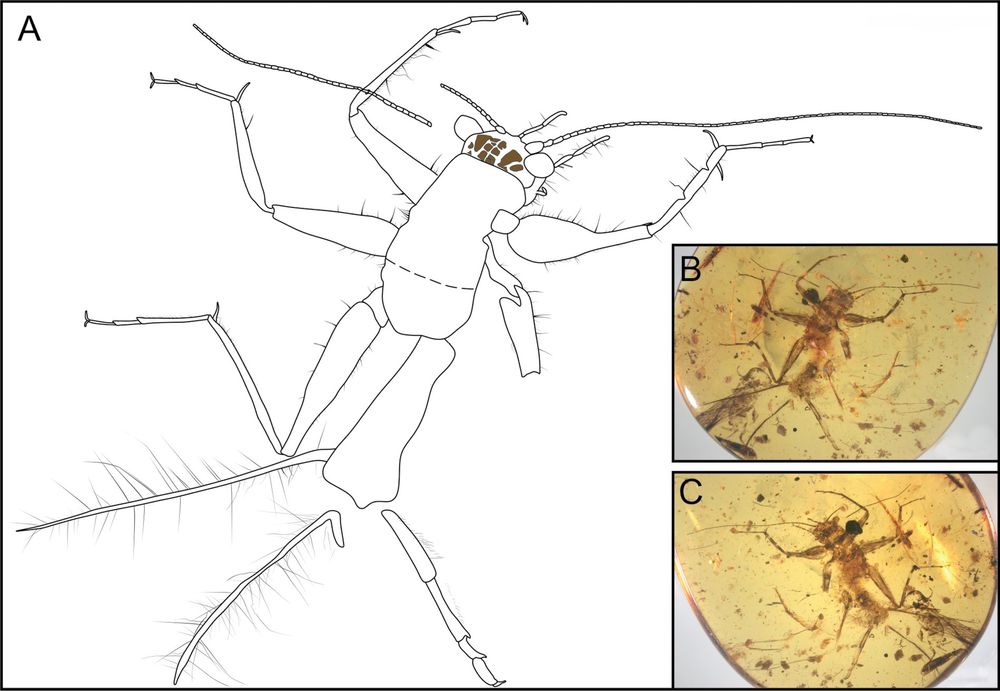
Researchers describe a unique, 'weird' Mesozoic cricket based on a well-preserved specimen from mid-Cretaceous Kachin amber in northern Myanmar.
🔗 doi.org/10.3897/fr.2...
🔗 doi.org/10.3897/fr.2...
July 28, 2025 at 6:28 AM
Researchers describe a unique, 'weird' Mesozoic cricket based on a well-preserved specimen from mid-Cretaceous Kachin amber in northern Myanmar.
🔗 doi.org/10.3897/fr.2...
🔗 doi.org/10.3897/fr.2...
Researchers report a new species of Hypsodontus from the Dongxiang Formation at the Citan locality, China, dating to the late Early Miocene, marking the first definitive record of the type genus in China and the oldest record of this bovid genus.
doi.org/10.3897/fr.2...
doi.org/10.3897/fr.2...
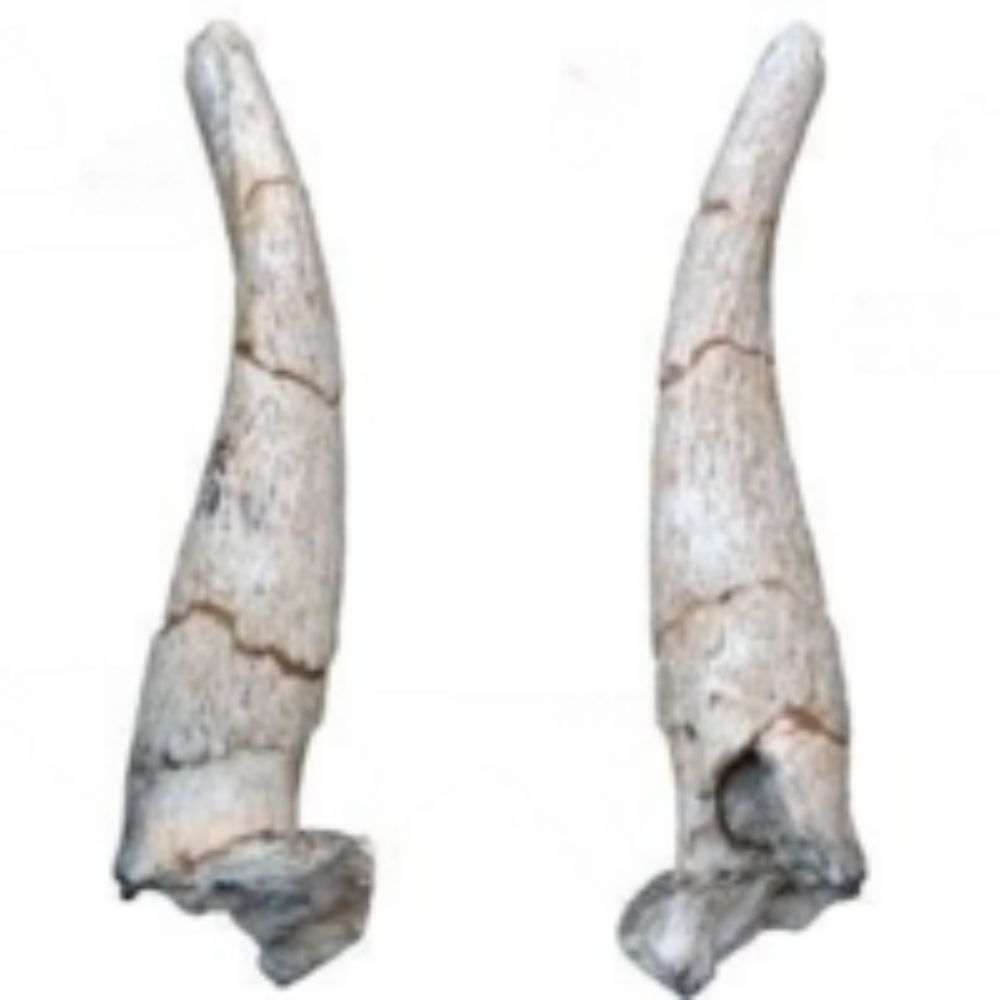
The first discovery of Hypsodontus (Artiodactyla, Bovidae) from the Early Miocene of Linxia Basin, Gansu Province, China
Hypsodontinae is a highly specialized subfamily of Bovidae, primarily distributed across East and West Asia as well as Eastern Europe during the Miocene; however, the type genus Hypsodontus had not be...
doi.org
July 25, 2025 at 10:43 AM
Researchers report a new species of Hypsodontus from the Dongxiang Formation at the Citan locality, China, dating to the late Early Miocene, marking the first definitive record of the type genus in China and the oldest record of this bovid genus.
doi.org/10.3897/fr.2...
doi.org/10.3897/fr.2...
Fossil Record's Journal Impact Factor has risen from 1.9 to 2.1, remaining in Q1 for Paleontology.
fr.pensoft.net/news/908
fr.pensoft.net/news/908

Fossil Record Receives Improved Journal Impact Factor
The 2024 Journal Impact Factor (JIF) for Fossil Record stands at 2.1, up from 1.9, according to the latest Web of Science data, reports ARPHA Platform’s Indexing team.The journal, published by P...
fr.pensoft.net
June 25, 2025 at 6:13 AM
Fossil Record's Journal Impact Factor has risen from 1.9 to 2.1, remaining in Q1 for Paleontology.
fr.pensoft.net/news/908
fr.pensoft.net/news/908
The Early Miocene muroid fossils from the Ribesalbes-Alcora Basin reveal a diverse and abundant rodent assemblage, suggesting the region served as an ecological refuge and corridor during a period of widespread mammalian migrations across Iberia.
doi.org/10.3897/fr.2...
doi.org/10.3897/fr.2...

The Early Miocene muroids (Muroidea, Rodentia) of the Ribesalbes-Alcora Basin (Spain): A thriving haven during a time of migration
The Campisano Ravine in the Ribesalbes-Alcora Basin (Spain, Early Miocene, Biozone C, MN 4) yielded a diverse and abundant assemblage of muroids, comprising five distinct taxa, and nearly 700 remains....
doi.org
June 13, 2025 at 10:00 AM
The Early Miocene muroid fossils from the Ribesalbes-Alcora Basin reveal a diverse and abundant rodent assemblage, suggesting the region served as an ecological refuge and corridor during a period of widespread mammalian migrations across Iberia.
doi.org/10.3897/fr.2...
doi.org/10.3897/fr.2...
