



@fabqc.bsky.social
Reposted
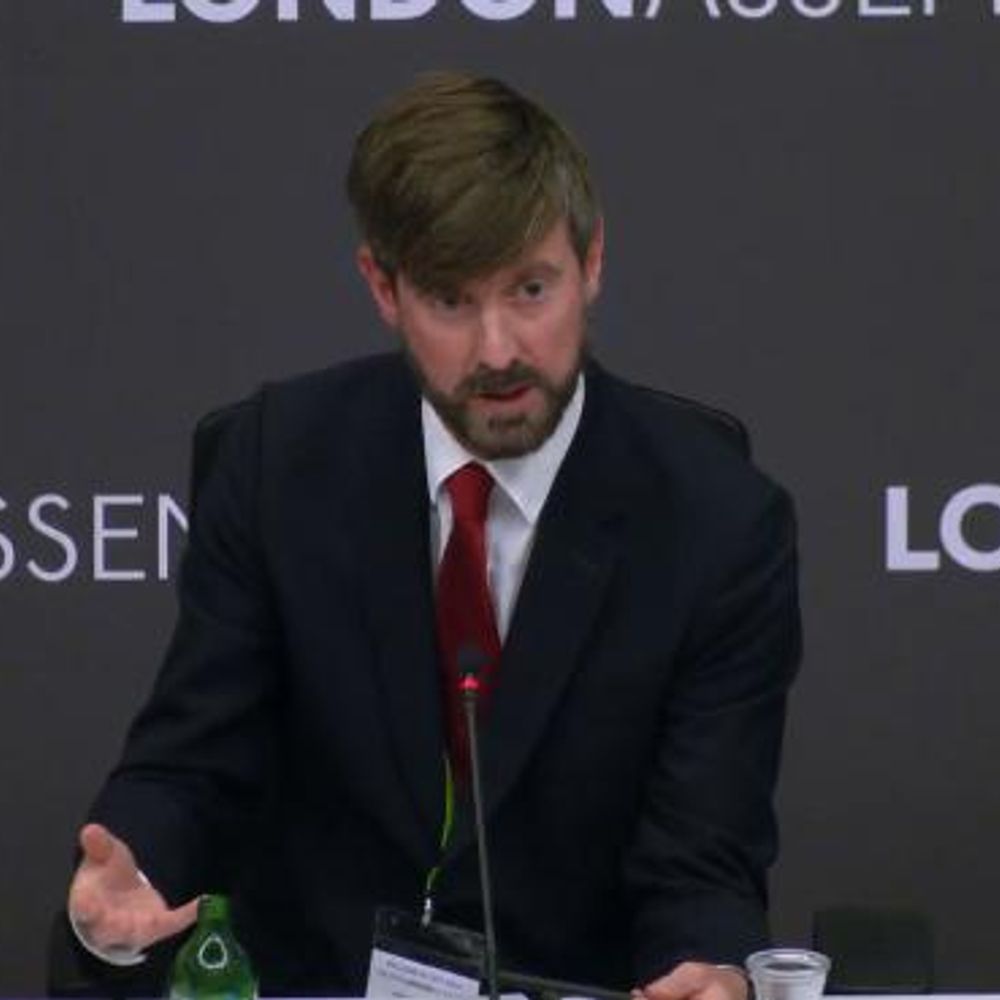
There is lots of debate about the risks and benefits that AI will bring to policing and criminal justice. One danger I've recently discovered is police officers using online AI tools to interpret or apply the law for them. Needless to say, the AI often gets the law wrong.
November 28, 2024 at 9:55 AM
There is lots of debate about the risks and benefits that AI will bring to policing and criminal justice. One danger I've recently discovered is police officers using online AI tools to interpret or apply the law for them. Needless to say, the AI often gets the law wrong.
Reposted

Read one of our latest blogs by our Associated Postgraduate Researcher Sat Kartar Kaur Chandan, who reflects on themes from the @vp-centre.bsky.social inaugural conference “Reshaping the relationship between vulnerability and policing”.
vulnerabilitypolicing.org.uk/reshaping-vu...
vulnerabilitypolicing.org.uk/reshaping-vu...

Reshaping Vulnerability in Policing: Conference Insights - Vulnerability & Policing Futures Research Centre
This blog, by Sat Kartar Kaur Chandan, shares learnings from the Centre's inaugural annual conference "Reshaping Vulnerability in Policing".
vulnerabilitypolicing.org.uk
November 28, 2024 at 2:06 PM
Read one of our latest blogs by our Associated Postgraduate Researcher Sat Kartar Kaur Chandan, who reflects on themes from the @vp-centre.bsky.social inaugural conference “Reshaping the relationship between vulnerability and policing”.
vulnerabilitypolicing.org.uk/reshaping-vu...
vulnerabilitypolicing.org.uk/reshaping-vu...
Reposted

Some reflections on the question of racial disproportionality in policing, based on a long-standing interest in the subject. 🧵
1/ Disproportionality is easy to identify but the causes are hard to pin down, including their relative contributions.
1/ Disproportionality is easy to identify but the causes are hard to pin down, including their relative contributions.
October 24, 2024 at 5:45 PM
Some reflections on the question of racial disproportionality in policing, based on a long-standing interest in the subject. 🧵
1/ Disproportionality is easy to identify but the causes are hard to pin down, including their relative contributions.
1/ Disproportionality is easy to identify but the causes are hard to pin down, including their relative contributions.
Reposted

One of my favorite pieces of sociology/criminology writing was "Crime in a Convict Republic" by John Braithwaite, focusing on Australia's experience of incorporating criminals into society.

May 8, 2024 at 7:58 PM
One of my favorite pieces of sociology/criminology writing was "Crime in a Convict Republic" by John Braithwaite, focusing on Australia's experience of incorporating criminals into society.
Reposted

This paper, which uses time series modelling, explores the extent to which Thatcherism started social and economic 'storms' which were associated with changes in the crime rates in England & Wales.
onlinelibrary.wiley.com/doi/10.1111/...
onlinelibrary.wiley.com/doi/10.1111/...

Thatcherism, Crime and the Legacy of the Social and Economic ‘Storms’ of the 1980s
Using insights from the classical sociology of deviance and social structure (notably Durkheim and Merton) we explore the enduring impact of the social and economic changes which started in the UK in....
onlinelibrary.wiley.com
September 17, 2024 at 1:02 PM
This paper, which uses time series modelling, explores the extent to which Thatcherism started social and economic 'storms' which were associated with changes in the crime rates in England & Wales.
onlinelibrary.wiley.com/doi/10.1111/...
onlinelibrary.wiley.com/doi/10.1111/...
Reposted

It's amazing to see so many colleagues/friends on here! I will be posting more here about our #2024FirearmResearchConf in the coming days/weeks and as our conference approaches! Please do continue to refer to our website for details in the meantime: www.firearmresearchsociety.org

Research Society for the Prevention of Firearm-Related Harms
www.firearmresearchsociety.org
November 15, 2024 at 4:18 PM
It's amazing to see so many colleagues/friends on here! I will be posting more here about our #2024FirearmResearchConf in the coming days/weeks and as our conference approaches! Please do continue to refer to our website for details in the meantime: www.firearmresearchsociety.org
Reposted

OK, I'm not getting much traction here so let's get down to it. We need to talk about prevention to reduce crime and violence. Most causes of the 1990s crime decline were prevention--less lead in the air and cash in circulation, new MH drugs, and Medicaid... www.vitalcitynyc.org/articles/twe...

Vital City | 20 Strategies for Reducing Crime in Cities
Complements, not substitutes, to policing
www.vitalcitynyc.org
October 10, 2023 at 9:37 PM
OK, I'm not getting much traction here so let's get down to it. We need to talk about prevention to reduce crime and violence. Most causes of the 1990s crime decline were prevention--less lead in the air and cash in circulation, new MH drugs, and Medicaid... www.vitalcitynyc.org/articles/twe...
Reposted

U.S. homicide rates increase when resources are scarce and unequally distributed | “…we find that the interaction of poverty (scarcity) and inequality (unequal distribution) best explains variation in U.S. homicide rates.”
U.S. homicide rates increase when resources are scarce and unequally distributed | Evolutionary Huma...
U.S. homicide rates increase when resources are scarce and unequally distributed
www.cambridge.org
December 17, 2023 at 2:20 PM
U.S. homicide rates increase when resources are scarce and unequally distributed | “…we find that the interaction of poverty (scarcity) and inequality (unequal distribution) best explains variation in U.S. homicide rates.”
Reposted
Crime and violence plummeted in the US last year. Why? Our favorite answers are usually aligned with our politics. But in this case, a non-partisan answer is the best explanation. Crime declined because critical local government employees went back to work. johnkroman.substack.com/p/why-did-cr...

January 1, 2024 at 1:19 PM
Crime and violence plummeted in the US last year. Why? Our favorite answers are usually aligned with our politics. But in this case, a non-partisan answer is the best explanation. Crime declined because critical local government employees went back to work. johnkroman.substack.com/p/why-did-cr...