


Kenneth De Baets
@djbirddanerd.bsky.social
Paleobiologist @IBE_Warszawa into cephalopods, parasites, funny tees and movies; Paleontology/Evolution Section Editor @PeerJLife
; previously @palaeofau. Avatar after Jacek Yerka also on @[email protected]
; previously @palaeofau. Avatar after Jacek Yerka also on @[email protected]
Decoding the bare necessities of decapod crustacean nomenclature through the ages
peerj.com/articles/203...
@peerj.bsky.social
peerj.com/articles/203...
@peerj.bsky.social


November 12, 2025 at 12:21 PM
Decoding the bare necessities of decapod crustacean nomenclature through the ages
peerj.com/articles/203...
@peerj.bsky.social
peerj.com/articles/203...
@peerj.bsky.social
From trace to trace maker: #Oligocene–Miocene #coprolites of southern #Poland and their potential #producers
peerj.com/articles/202...
@peerj.bsky.social
peerj.com/articles/202...
@peerj.bsky.social


November 3, 2025 at 10:26 AM
From trace to trace maker: #Oligocene–Miocene #coprolites of southern #Poland and their potential #producers
peerj.com/articles/202...
@peerj.bsky.social
peerj.com/articles/202...
@peerj.bsky.social
Biogeography after #Permian #Triassic boundary crisis resulted from a complex combination of functional and dispersal mechanisms doi.org/10.18261/let...
#Ammonoids limited by #dispersal in Griesbachian/Spathian, by niche in Smithian; #conodonts by #niche in Griesbachian, mixed in Dienerian–Spathian
#Ammonoids limited by #dispersal in Griesbachian/Spathian, by niche in Smithian; #conodonts by #niche in Griesbachian, mixed in Dienerian–Spathian


October 29, 2025 at 9:15 AM
Biogeography after #Permian #Triassic boundary crisis resulted from a complex combination of functional and dispersal mechanisms doi.org/10.18261/let...
#Ammonoids limited by #dispersal in Griesbachian/Spathian, by niche in Smithian; #conodonts by #niche in Griesbachian, mixed in Dienerian–Spathian
#Ammonoids limited by #dispersal in Griesbachian/Spathian, by niche in Smithian; #conodonts by #niche in Griesbachian, mixed in Dienerian–Spathian
It was a pleasure to review this work. I highly recommend it for everyone interested in phylogenetic and macroevolutionary inferences from fossil data. It is available #OpenAccess:
doi.org/10.1111/pala...
doi.org/10.1111/pala...

October 29, 2025 at 8:29 AM
It was a pleasure to review this work. I highly recommend it for everyone interested in phylogenetic and macroevolutionary inferences from fossil data. It is available #OpenAccess:
doi.org/10.1111/pala...
doi.org/10.1111/pala...
Lin & O’Dea show #Remarkable #dominance of #myctophid #otoliths in Upper #Miocene Chagres Formation, #Caribbean #Panama: doi.org/10.7717/peer...
#Biodiversity suggests pre-Isthmus #upwelling with efficient transfer from high #PrimaryProduction to predators shaping Ecosystem. #Paleontology #Taxonomy
#Biodiversity suggests pre-Isthmus #upwelling with efficient transfer from high #PrimaryProduction to predators shaping Ecosystem. #Paleontology #Taxonomy


October 17, 2025 at 10:31 AM
Lin & O’Dea show #Remarkable #dominance of #myctophid #otoliths in Upper #Miocene Chagres Formation, #Caribbean #Panama: doi.org/10.7717/peer...
#Biodiversity suggests pre-Isthmus #upwelling with efficient transfer from high #PrimaryProduction to predators shaping Ecosystem. #Paleontology #Taxonomy
#Biodiversity suggests pre-Isthmus #upwelling with efficient transfer from high #PrimaryProduction to predators shaping Ecosystem. #Paleontology #Taxonomy
The first #leech body #fossil predates estimated hirudinidan origins by 200 million years
peerj.com/articles/199...
@peerj.bsky.social #Annelida
peerj.com/articles/199...
@peerj.bsky.social #Annelida

October 2, 2025 at 2:15 PM
The first #leech body #fossil predates estimated hirudinidan origins by 200 million years
peerj.com/articles/199...
@peerj.bsky.social #Annelida
peerj.com/articles/199...
@peerj.bsky.social #Annelida
1st chapter by Klug et al. (2015) dealt with technical #terms and #qualitative to #quantitative aspects when "Describing #Ammonoid Conchs": doi.org/10.1007/978-...
Recommendations seem to have been embraced in Paleozoic (doi.org/10.5252/geod...) to Mesozoic (doi.org/10.1016/j.cr...) communities
Recommendations seem to have been embraced in Paleozoic (doi.org/10.5252/geod...) to Mesozoic (doi.org/10.1016/j.cr...) communities


October 1, 2025 at 1:34 PM
1st chapter by Klug et al. (2015) dealt with technical #terms and #qualitative to #quantitative aspects when "Describing #Ammonoid Conchs": doi.org/10.1007/978-...
Recommendations seem to have been embraced in Paleozoic (doi.org/10.5252/geod...) to Mesozoic (doi.org/10.1016/j.cr...) communities
Recommendations seem to have been embraced in Paleozoic (doi.org/10.5252/geod...) to Mesozoic (doi.org/10.1016/j.cr...) communities
In other cases, predators may be less successful in concentrating belemnite remains and (mass) #mortality at #spawning grounds after #reproduction may concentrate belemnite rostra. This is the basic of another model developed by Doyle and Macdonald (1993): doi.org/10.1111/j.15...


August 29, 2025 at 3:13 PM
In other cases, predators may be less successful in concentrating belemnite remains and (mass) #mortality at #spawning grounds after #reproduction may concentrate belemnite rostra. This is the basic of another model developed by Doyle and Macdonald (1993): doi.org/10.1111/j.15...
In the #predation concentration model, #bromalites = fossilized remains of material sources from the digestive system of predators (regurgitates, gastric masses) may play an important role in concentrating belemnite rostra. The Hybodus #shark specimen shows this quite nicely: doi.org/10.1186/s133...


August 29, 2025 at 3:13 PM
In the #predation concentration model, #bromalites = fossilized remains of material sources from the digestive system of predators (regurgitates, gastric masses) may play an important role in concentrating belemnite rostra. The Hybodus #shark specimen shows this quite nicely: doi.org/10.1186/s133...
Talking about another true #invertefest: belemnite "battlefields" or "Schlachtfelder". Despite the name, they are generally used to refer to dense accumulations of #fossil #cephalopod rostra, which can be formed under various mechanisms. Irrespectively, they are a great way to obtain large samples.

August 29, 2025 at 10:50 AM
Talking about another true #invertefest: belemnite "battlefields" or "Schlachtfelder". Despite the name, they are generally used to refer to dense accumulations of #fossil #cephalopod rostra, which can be formed under various mechanisms. Irrespectively, they are a great way to obtain large samples.
I´m Kenneth. I am a paleontologist at the University of Warsaw. Our team works on the evolution and fossil record of mollusks and wormy parasites. This includes looking at shell morphology, traces and pathologies in skeletons as well as fossilized poop and other fossils. www.paradivelab.com


August 22, 2025 at 11:31 AM
I´m Kenneth. I am a paleontologist at the University of Warsaw. Our team works on the evolution and fossil record of mollusks and wormy parasites. This includes looking at shell morphology, traces and pathologies in skeletons as well as fossilized poop and other fossils. www.paradivelab.com
🐙 Key evolutionary insights:
• Different lineages show distinct long-term size #trends
• Responses to mass extinctions varied
• Most groups evolved giants >1 m ( #marine #megafauna)
• Size ceilings: ~100 L for nautilids/orthocones vs. ~500 L for ammonoids/neocoleoids
See: doi.org/10.1038/s415...
• Different lineages show distinct long-term size #trends
• Responses to mass extinctions varied
• Most groups evolved giants >1 m ( #marine #megafauna)
• Size ceilings: ~100 L for nautilids/orthocones vs. ~500 L for ammonoids/neocoleoids
See: doi.org/10.1038/s415...


August 21, 2025 at 4:05 PM
🐙 Key evolutionary insights:
• Different lineages show distinct long-term size #trends
• Responses to mass extinctions varied
• Most groups evolved giants >1 m ( #marine #megafauna)
• Size ceilings: ~100 L for nautilids/orthocones vs. ~500 L for ammonoids/neocoleoids
See: doi.org/10.1038/s415...
• Different lineages show distinct long-term size #trends
• Responses to mass extinctions varied
• Most groups evolved giants >1 m ( #marine #megafauna)
• Size ceilings: ~100 L for nautilids/orthocones vs. ~500 L for ammonoids/neocoleoids
See: doi.org/10.1038/s415...
🌊🦑 For 500+ million years, #cephalopods have shaped ocean ecosystems as active predators.
In our study, we trace body #size fluctuations of cephalopods—from ancient shelled cephalopods to today’s squids & octopuses—using maximum body volume for comparability across groups. doi.org/10.1038/s415...
In our study, we trace body #size fluctuations of cephalopods—from ancient shelled cephalopods to today’s squids & octopuses—using maximum body volume for comparability across groups. doi.org/10.1038/s415...


August 21, 2025 at 4:05 PM
🌊🦑 For 500+ million years, #cephalopods have shaped ocean ecosystems as active predators.
In our study, we trace body #size fluctuations of cephalopods—from ancient shelled cephalopods to today’s squids & octopuses—using maximum body volume for comparability across groups. doi.org/10.1038/s415...
In our study, we trace body #size fluctuations of cephalopods—from ancient shelled cephalopods to today’s squids & octopuses—using maximum body volume for comparability across groups. doi.org/10.1038/s415...
Our study examines historical & modern examples, proposes hosts can ease transitions, and links such shifts to diversification, with implications for biodiversity under global change. doi.org/10.1093/icb/...


August 13, 2025 at 3:34 PM
Our study examines historical & modern examples, proposes hosts can ease transitions, and links such shifts to diversification, with implications for biodiversity under global change. doi.org/10.1093/icb/...
Final days (Deadline: August 15) to apply for a 4-year #PhD position to work on inclusions in Permian-Triassic coprolites and how they can inform us on the impact of mass #extinction of parasite-host associations.

August 12, 2025 at 9:39 AM
Final days (Deadline: August 15) to apply for a 4-year #PhD position to work on inclusions in Permian-Triassic coprolites and how they can inform us on the impact of mass #extinction of parasite-host associations.
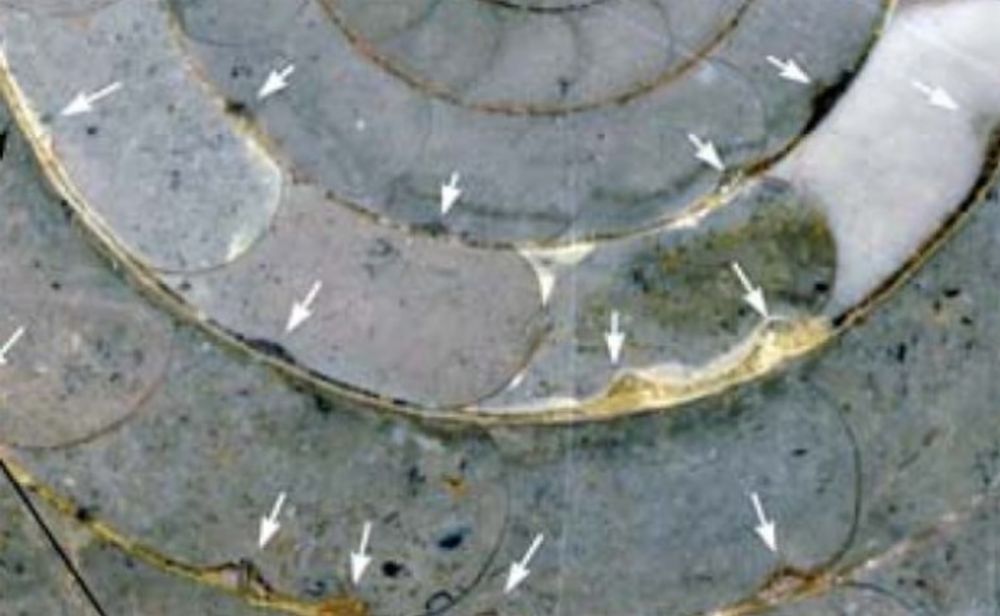
The answer is both fossil types are #underdogs to study #evolution and i discovered parasitic remains in #ammonoid shell pathologies during my PhD research: doi.org/10.4202/app..... I saw the potential in both; one things led to another. Now i am a #malacologist and a #paleoparasitologist
May 21, 2025 at 8:55 AM
The answer is both fossil types are #underdogs to study #evolution and i discovered parasitic remains in #ammonoid shell pathologies during my PhD research: doi.org/10.4202/app..... I saw the potential in both; one things led to another. Now i am a #malacologist and a #paleoparasitologist
Taphonomic and reworking processes isolating #cephalopod septa and chamber #fillings: doi.org/10.18261/let...
#paleontology #paleobiology #taphonomy #phragmocone #cephalopods
#paleontology #paleobiology #taphonomy #phragmocone #cephalopods

April 29, 2025 at 1:10 PM
Taphonomic and reworking processes isolating #cephalopod septa and chamber #fillings: doi.org/10.18261/let...
#paleontology #paleobiology #taphonomy #phragmocone #cephalopods
#paleontology #paleobiology #taphonomy #phragmocone #cephalopods
Perturbations in plate #microstructure and the overproduction of skeletal material in specific regions, together with reduced #size, negatively impact the host’s #growth suggesting a parasitic interaction. rdcu.be/ei75y

April 24, 2025 at 2:49 PM
Perturbations in plate #microstructure and the overproduction of skeletal material in specific regions, together with reduced #size, negatively impact the host’s #growth suggesting a parasitic interaction. rdcu.be/ei75y
These unusual #structures have not been previously documented from #Cambrian echinoderms and their lack of #consistency across various morphological parameters, supports the interpretation that a #biotic interaction generated these unique structures. rdcu.be/ei75y

April 24, 2025 at 2:49 PM
These unusual #structures have not been previously documented from #Cambrian echinoderms and their lack of #consistency across various morphological parameters, supports the interpretation that a #biotic interaction generated these unique structures. rdcu.be/ei75y
Based on qualitative and quantitative analyses, we report evidence of a biotic interaction between an echinoderm host and its symbiont, probably a parasitic epibiont, from the Cambrian Wuliuan Stage of Australia. The echinoderm plates bear external outgrowths with a median pit at their distal end.

April 24, 2025 at 2:49 PM
Based on qualitative and quantitative analyses, we report evidence of a biotic interaction between an echinoderm host and its symbiont, probably a parasitic epibiont, from the Cambrian Wuliuan Stage of Australia. The echinoderm plates bear external outgrowths with a median pit at their distal end.
Further evidence to test these hypotheses could be obtained by conducting systematic screenings for resistant remains of platyhelminths such as hooks and eggs as well as characteristic traces such as trails or shell concretions preserved with their producers.

December 6, 2024 at 9:40 PM
Further evidence to test these hypotheses could be obtained by conducting systematic screenings for resistant remains of platyhelminths such as hooks and eggs as well as characteristic traces such as trails or shell concretions preserved with their producers.
This relative order of appearance is most consistent with the hypotheses placing the divergence of Monopisthocotylea from the rest of Neodermata before the divergence of Cestoda from a clade of Trematoda and Polyopisthocotylea.

December 6, 2024 at 9:40 PM
This relative order of appearance is most consistent with the hypotheses placing the divergence of Monopisthocotylea from the rest of Neodermata before the divergence of Cestoda from a clade of Trematoda and Polyopisthocotylea.
Species/genera attributable to modern families could not be confidently traced back beyond the #Quaternary with the exception of #Gymnophallidae (if we consider traces characteristic for them today to be equally characteristic in the deep time). doi.org/10.1590/S198...

December 6, 2024 at 3:15 PM
Species/genera attributable to modern families could not be confidently traced back beyond the #Quaternary with the exception of #Gymnophallidae (if we consider traces characteristic for them today to be equally characteristic in the deep time). doi.org/10.1590/S198...
The fossil finds are surprising for #trematodes which so far are recovered from #terrestrial/freshwater environments older than from #marine environments both in the case of eggs in vertebrate coprolites or characteristic traces in bivalve shells.

December 6, 2024 at 3:10 PM
The fossil finds are surprising for #trematodes which so far are recovered from #terrestrial/freshwater environments older than from #marine environments both in the case of eggs in vertebrate coprolites or characteristic traces in bivalve shells.
Although the #fossil record is patchy and some clades lack one, the finds which are available are surprisingly concordant with some of the latest molecular #phylogenies (free-living forms > Monopisthocotylea > Cestoda > Trematoda) 10.0.3.248/j.cub.2023.0...

December 6, 2024 at 3:10 PM
Although the #fossil record is patchy and some clades lack one, the finds which are available are surprisingly concordant with some of the latest molecular #phylogenies (free-living forms > Monopisthocotylea > Cestoda > Trematoda) 10.0.3.248/j.cub.2023.0...