


Cortical Bionics Research Group
@corticalbionics.bsky.social
Collaboration between University of Pittsburgh, University of Chicago and Northwestern researchers to develop a brain-computer interface for prosthetic arm and hand control with sensory feedback.
This work was led by Charles Greenspon, Taylor Hobbs and Rob Gaunt with help from many other CBRG researchers including, on Bluesky: @jenpitt.bsky.social @johndowney.bsky.social @giacomovalle.bsky.social @jeffweiss.bsky.social @joelye.bsky.social
August 13, 2025 at 4:50 PM
This work was led by Charles Greenspon, Taylor Hobbs and Rob Gaunt with help from many other CBRG researchers including, on Bluesky: @jenpitt.bsky.social @johndowney.bsky.social @giacomovalle.bsky.social @jeffweiss.bsky.social @joelye.bsky.social
We saw zero serious adverse events. Moreover, delivering millions of pulses had no effect on electrode health or changes in neural excitability.
This is the first long term study of ICMS in humans and shows that it can be safe to use for clinical devices.
This is the first long term study of ICMS in humans and shows that it can be safe to use for clinical devices.
August 13, 2025 at 4:50 PM
We saw zero serious adverse events. Moreover, delivering millions of pulses had no effect on electrode health or changes in neural excitability.
This is the first long term study of ICMS in humans and shows that it can be safe to use for clinical devices.
This is the first long term study of ICMS in humans and shows that it can be safe to use for clinical devices.
These results are an important step towards invoking accurate sensation of touch on a person’s paralyzed hand and creating an artificial limb that seamlessly integrates into a person’s unique sensory world.
Great work by the whole CBRG team, and a big thank you to our dedicated participants.
Great work by the whole CBRG team, and a big thank you to our dedicated participants.
May 7, 2025 at 3:35 PM
These results are an important step towards invoking accurate sensation of touch on a person’s paralyzed hand and creating an artificial limb that seamlessly integrates into a person’s unique sensory world.
Great work by the whole CBRG team, and a big thank you to our dedicated participants.
Great work by the whole CBRG team, and a big thank you to our dedicated participants.
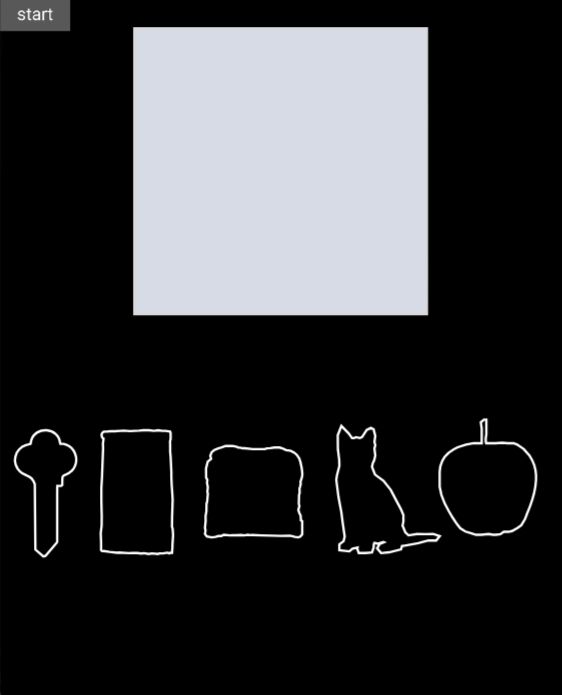
The sensations were then replayed, without seeing the object, and they could still identify the object, albeit with mistakes. They often mistakenly selected objects with similar properties (cats and towels are both soft), suggesting that the sensations contained intuitive object features.
May 7, 2025 at 3:35 PM
The sensations were then replayed, without seeing the object, and they could still identify the object, albeit with mistakes. They often mistakenly selected objects with similar properties (cats and towels are both soft), suggesting that the sensations contained intuitive object features.
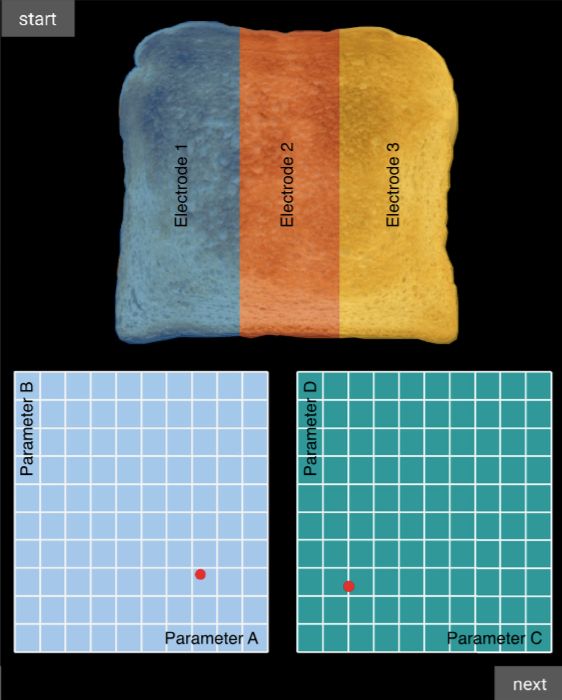
Participants saw an object and edited parameters of their artificially created sense of touch to match. Participants described, e.g., the warm fur of a purring cat, or the smooth rigid surface of a door key.
May 7, 2025 at 3:35 PM
Participants saw an object and edited parameters of their artificially created sense of touch to match. Participants described, e.g., the warm fur of a purring cat, or the smooth rigid surface of a door key.
This was a big team effort by the labs, and especially the study participants, across three universities (UChicago, Pitt, and a guest appearance from Case Western). These results a big step forward as we continue to improve the capabilities of ICMS to restore tactile sensations post-injury.
December 9, 2024 at 3:27 PM
This was a big team effort by the labs, and especially the study participants, across three universities (UChicago, Pitt, and a guest appearance from Case Western). These results a big step forward as we continue to improve the capabilities of ICMS to restore tactile sensations post-injury.
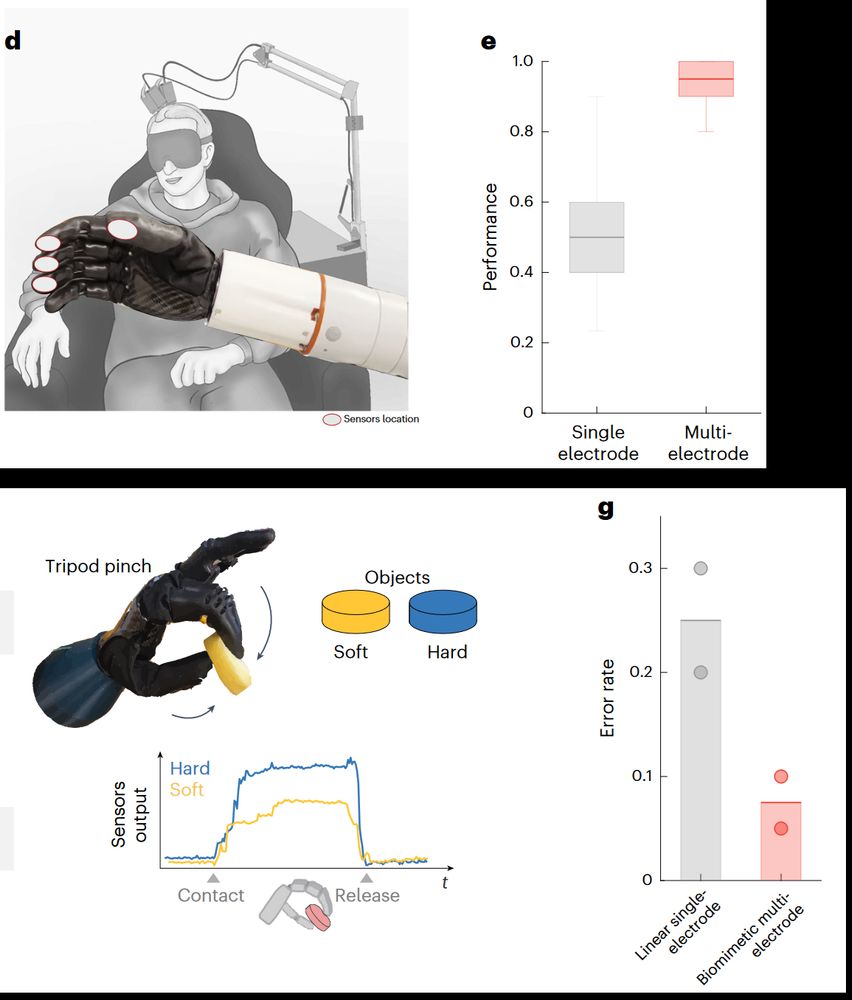
These interactions allowed us to improve the ability of participants to both locate which finger an object was contacting as well as how much force was being applied to it.
December 9, 2024 at 3:27 PM
These interactions allowed us to improve the ability of participants to both locate which finger an object was contacting as well as how much force was being applied to it.
Given that some electrodes overlapped, we examined the interaction and found that they generally summed together making more intense sensations.
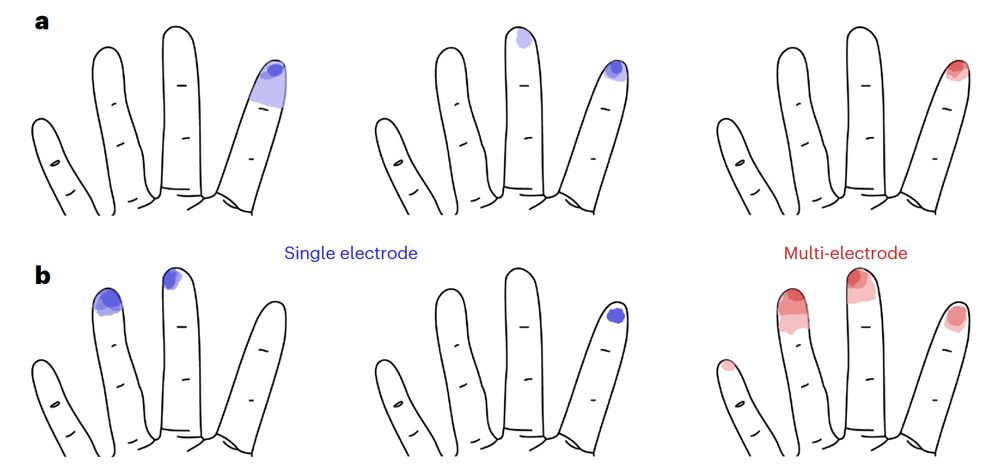
December 9, 2024 at 3:27 PM
Given that some electrodes overlapped, we examined the interaction and found that they generally summed together making more intense sensations.
We compared the percept locations with receptive field locations (area on the hand that when touched evokes neural activity near an electrode) when possible and found that the vast majority of percepts fell within the matched receptive fields.
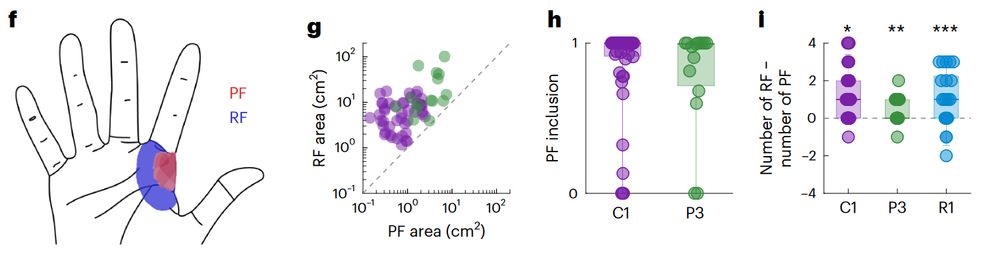
December 9, 2024 at 3:27 PM
We compared the percept locations with receptive field locations (area on the hand that when touched evokes neural activity near an electrode) when possible and found that the vast majority of percepts fell within the matched receptive fields.
We first looked to see if ICMS-evoked percepts (a sensation caused by stimulation on an electrode) were in consistent locations across the duration of the study and found that across 2-7 years they were.
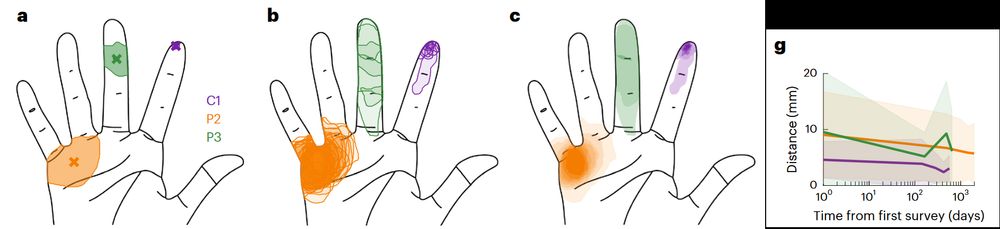
December 9, 2024 at 3:27 PM
We first looked to see if ICMS-evoked percepts (a sensation caused by stimulation on an electrode) were in consistent locations across the duration of the study and found that across 2-7 years they were.