



@c-wang.bsky.social
Reposted
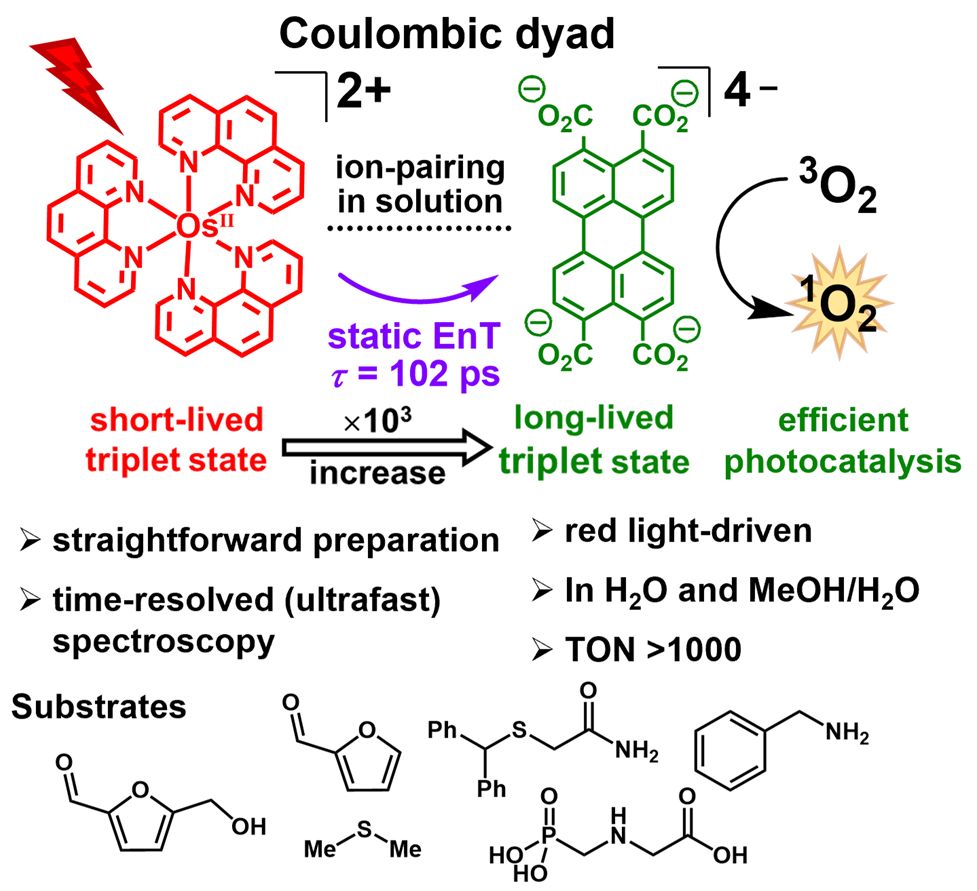
The next masterpiece from Matthias focusing on Coulombic dyads as new #photocatalyst class has been accepted in ACIE. Higher quantum yields in red-light catalysis by adding an inexpensive salt to use #Os as efficiently as possible. onlinelibrary.wiley.com/doi/10.1002/... @labheinze.bsky.social
June 24, 2025 at 6:41 PM
The next masterpiece from Matthias focusing on Coulombic dyads as new #photocatalyst class has been accepted in ACIE. Higher quantum yields in red-light catalysis by adding an inexpensive salt to use #Os as efficiently as possible. onlinelibrary.wiley.com/doi/10.1002/... @labheinze.bsky.social
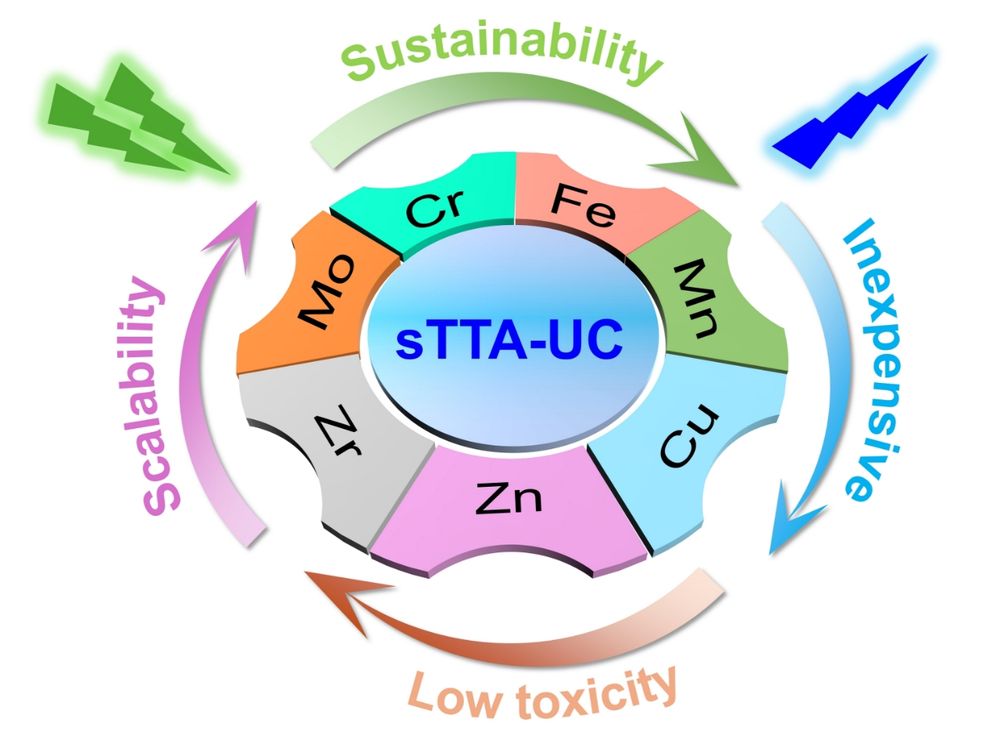
Our review article about "Photon upconversion sensitized by earth-abundant transition metal complexes", is now online!
pubs.rsc.org/en/content/a...
pubs.rsc.org/en/content/a...
June 20, 2025 at 1:44 PM
Our review article about "Photon upconversion sensitized by earth-abundant transition metal complexes", is now online!
pubs.rsc.org/en/content/a...
pubs.rsc.org/en/content/a...
Happy to share that our Concept for designing luminescent chromium(III) dimers with ferromagnetic coupling is published on ChemPhotoChem, congrats to Dennis!
chemistry-europe.onlinelibrary.wiley.com/doi/10.1002/...
chemistry-europe.onlinelibrary.wiley.com/doi/10.1002/...
April 30, 2025 at 6:47 AM
Happy to share that our Concept for designing luminescent chromium(III) dimers with ferromagnetic coupling is published on ChemPhotoChem, congrats to Dennis!
chemistry-europe.onlinelibrary.wiley.com/doi/10.1002/...
chemistry-europe.onlinelibrary.wiley.com/doi/10.1002/...
Reposted
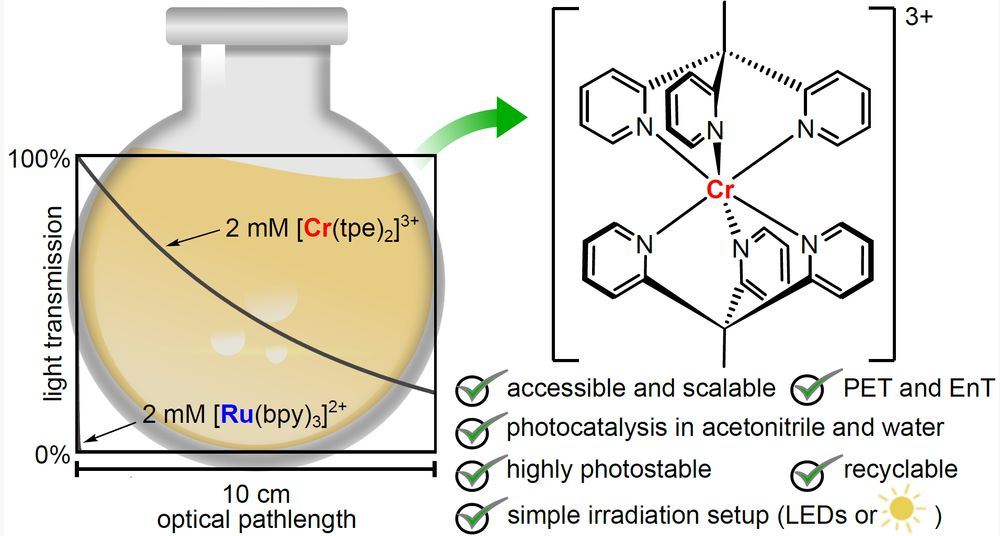
Can you #recyle your molecular #photocatalyst? Can you use #water in your #photocatalysis? Can you use #sunlight? Can undergrads prepare the photocatalyst on >12 g scale? Out now in Advanced Synthesis and Catalysis lmy.de/BgahY. Thanks to @dfg.de for funding.
April 10, 2025 at 7:49 PM
Can you #recyle your molecular #photocatalyst? Can you use #water in your #photocatalysis? Can you use #sunlight? Can undergrads prepare the photocatalyst on >12 g scale? Out now in Advanced Synthesis and Catalysis lmy.de/BgahY. Thanks to @dfg.de for funding.
Reposted

A simple guide to the design of metal complexes in luminescence and photoredox catalysis.
With Giacomo Morselli and Christian Reber in JACS @jacs.acspublications.org
pubs.acs.org/doi/10.1021/...
With Giacomo Morselli and Christian Reber in JACS @jacs.acspublications.org
pubs.acs.org/doi/10.1021/...
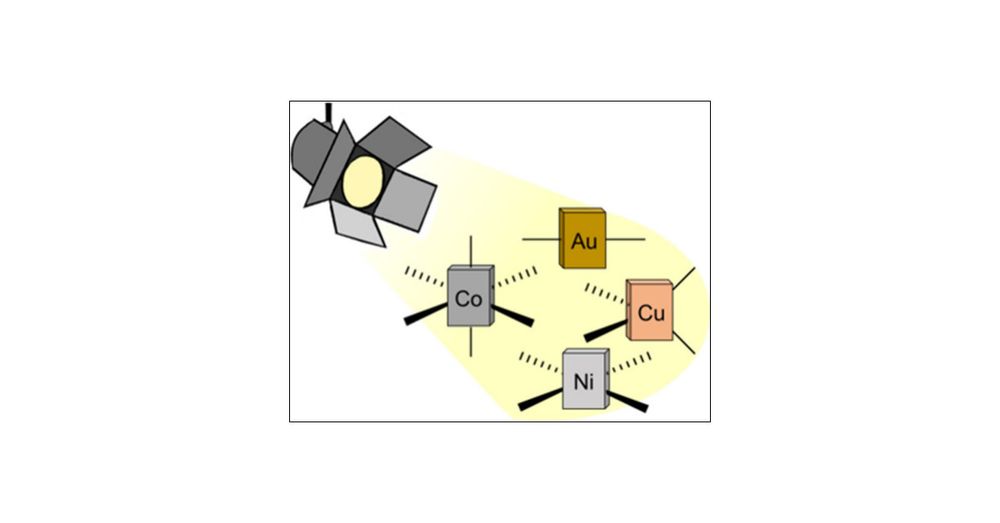
Molecular Design Principles for Photoactive Transition Metal Complexes: A Guide for “Photo-Motivated” Chemists
Luminescence and photochemistry involve electronically excited states that are inherently unstable and therefore spontaneously decay to electronic ground states, in most cases by nonradiative energy release that generates heat. This energy dissipation can occur on a time scale of 100 fs (∼10–13 s) and usually needs to be slowed down to at least the nanosecond (∼10–9 s) time scale for luminescence and intermolecular photochemistry to occur. This is a challenging task with many different factors to consider. An alternative emerging strategy is to target dissociative excited states that lead to metal–ligand bond homolysis on the subnanosecond time scale to access synthetically useful radicals. Based on a thorough review at the most recent advances in the field, this article aims to provide a concise guide to obtaining luminescent and photochemically useful coordination compounds with d-block elements. We hope to encourage “photo-motivated” chemists who have been reluctant to apply their synthetic and other knowledge to photophysics and photochemistry, and we intend to stimulate new approaches to the synthetic control of excited state behavior.
pubs.acs.org
March 27, 2025 at 10:18 PM
A simple guide to the design of metal complexes in luminescence and photoredox catalysis.
With Giacomo Morselli and Christian Reber in JACS @jacs.acspublications.org
pubs.acs.org/doi/10.1021/...
With Giacomo Morselli and Christian Reber in JACS @jacs.acspublications.org
pubs.acs.org/doi/10.1021/...
Reposted
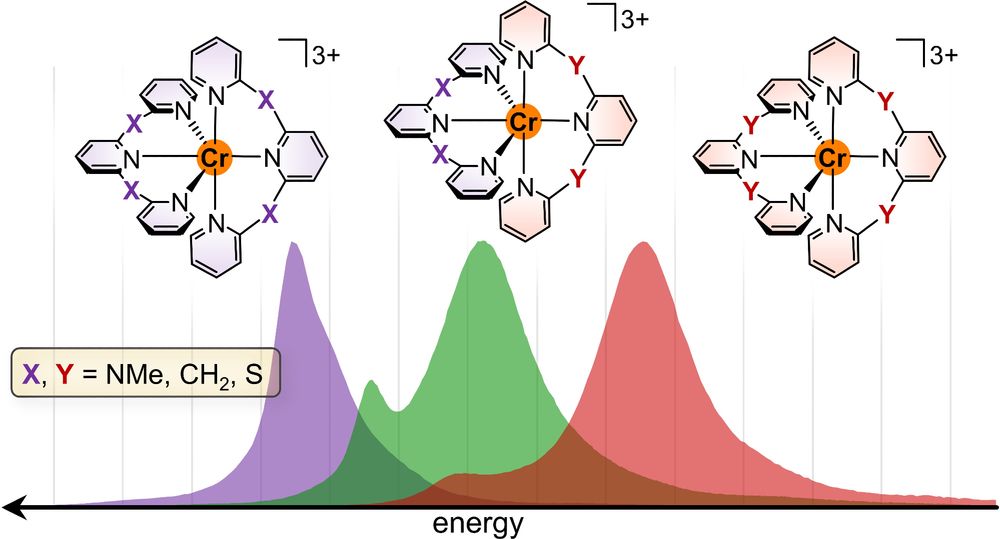
Factorizing the Nephelauxetic Effect in Heteroleptic Molecular Rubies #chromium #spin_flip #NIR #photochemistry (doi.org/10.1021/acs.inorgchem.4c04167) funded by @dfgpublic.bsky.social including a new prep route to heteroleptic complexes. Thank you @bhkenlo.bsky.social for featuring our article.
December 2, 2024 at 11:47 AM
Factorizing the Nephelauxetic Effect in Heteroleptic Molecular Rubies #chromium #spin_flip #NIR #photochemistry (doi.org/10.1021/acs.inorgchem.4c04167) funded by @dfgpublic.bsky.social including a new prep route to heteroleptic complexes. Thank you @bhkenlo.bsky.social for featuring our article.
Reposted
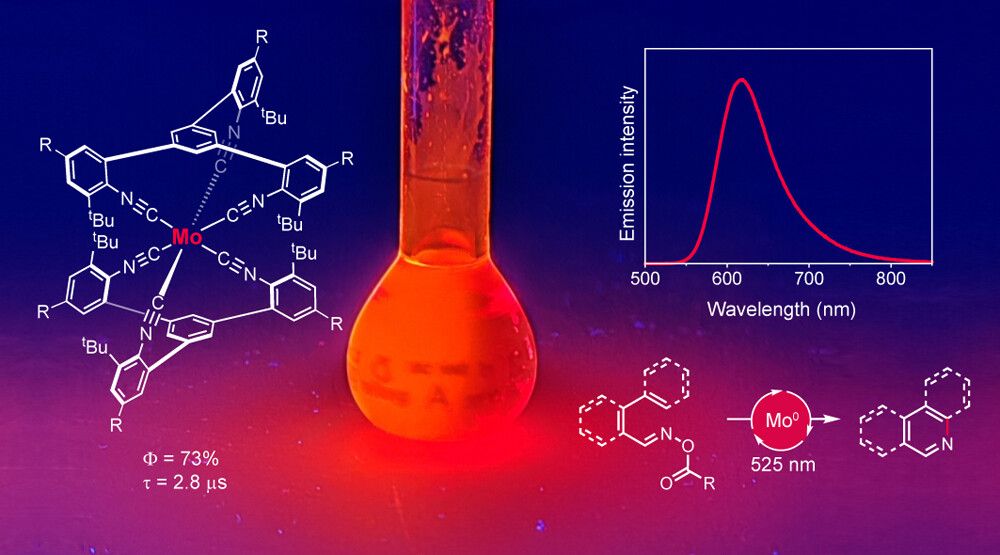
Making Mo(0) a Competitive Alternative to Ir(III) in Phosphors and Photocatalysts
Just published in the Journal of the Americal Chemical Society
pubs.acs.org/doi/10.1021/...
Just published in the Journal of the Americal Chemical Society
pubs.acs.org/doi/10.1021/...
January 23, 2025 at 6:21 PM
Making Mo(0) a Competitive Alternative to Ir(III) in Phosphors and Photocatalysts
Just published in the Journal of the Americal Chemical Society
pubs.acs.org/doi/10.1021/...
Just published in the Journal of the Americal Chemical Society
pubs.acs.org/doi/10.1021/...