



James Harding-Morris
@bsbicountries.bsky.social
BSBI Countries Manager. Supporting our network of recorders across Britain and Ireland and working to engage people with plants through education and recording.
Excellent advocating - all good questions to explore (and I can't claim authority on the answers!).
December 4, 2025 at 7:06 PM
Excellent advocating - all good questions to explore (and I can't claim authority on the answers!).
Presumably Puccinia lagenophorae which is typically found on Groundsel (one parent of this species) and sometimes on Oxford Ragwort (the other parent of this species). When I've grown York Groundsel I've found it's susceptible to it too.
December 4, 2025 at 11:18 AM
Presumably Puccinia lagenophorae which is typically found on Groundsel (one parent of this species) and sometimes on Oxford Ragwort (the other parent of this species). When I've grown York Groundsel I've found it's susceptible to it too.
I didn't write about endemic orchids in my book (orchids are so popular that I felt they were well covered elsewhere) and instead focused on stories of endemic species I didn't think had been told before.
Interested? You can get a copy here: share.google/ptOhpUquZmxI...
Interested? You can get a copy here: share.google/ptOhpUquZmxI...

Endemic
Meet the rare, obscure and utterly British species found nowhere else on earth.Around 70,000 species call Britain home, but how many of them can be found here a…
share.google
December 4, 2025 at 9:03 AM
I didn't write about endemic orchids in my book (orchids are so popular that I felt they were well covered elsewhere) and instead focused on stories of endemic species I didn't think had been told before.
Interested? You can get a copy here: share.google/ptOhpUquZmxI...
Interested? You can get a copy here: share.google/ptOhpUquZmxI...
However, it would not surprise me to see this species 'lumped in' with Dune Helleborine in the future (which is a British and Irish endemic anyway, so lumping a narrow endemic within a broader endemic).

December 4, 2025 at 9:03 AM
However, it would not surprise me to see this species 'lumped in' with Dune Helleborine in the future (which is a British and Irish endemic anyway, so lumping a narrow endemic within a broader endemic).
All that said, endemic species in Britain and Ireland reflect the very edge of our understanding about species, taxonomy and classification and it would not surprise me to see these boundaries shift in future. We've already got two new invertebrates since my book came out!
December 4, 2025 at 8:52 AM
All that said, endemic species in Britain and Ireland reflect the very edge of our understanding about species, taxonomy and classification and it would not surprise me to see these boundaries shift in future. We've already got two new invertebrates since my book came out!
I think apomictic species could also be - forgive me for sounding utilitarian - a useful 'tool' for conservation. If a gorge, cliff, mountain has its own unique species then that feels like message more likely to resonate with people than more general messaging about species found elsewhere.
December 4, 2025 at 8:52 AM
I think apomictic species could also be - forgive me for sounding utilitarian - a useful 'tool' for conservation. If a gorge, cliff, mountain has its own unique species then that feels like message more likely to resonate with people than more general messaging about species found elsewhere.
But, as for overvalued, I don't think so. If they were even 'valued' I think we'd have fewer critically endangered species, more species grown in cultivation for security, more funding for surveys etc.,
December 4, 2025 at 8:52 AM
But, as for overvalued, I don't think so. If they were even 'valued' I think we'd have fewer critically endangered species, more species grown in cultivation for security, more funding for surveys etc.,
As for genetic difference - I'd love to see genetic work done on the whole group. I expect that between some species we'd see small differences and between others we'd see larger differences. Maybe that would be a more useful tool in helping segment 'species'?
December 4, 2025 at 8:52 AM
As for genetic difference - I'd love to see genetic work done on the whole group. I expect that between some species we'd see small differences and between others we'd see larger differences. Maybe that would be a more useful tool in helping segment 'species'?
I see what you're saying about apomicts, but if you don't draw the species boundaries in, say, hawkweeds where they are now, where do you draw them? You couldn't (reasonably) class them all as one variable species as there's so much variation across the group - you'd have to segment them somehow.
December 4, 2025 at 8:52 AM
I see what you're saying about apomicts, but if you don't draw the species boundaries in, say, hawkweeds where they are now, where do you draw them? You couldn't (reasonably) class them all as one variable species as there's so much variation across the group - you'd have to segment them somehow.
I'm very glad you enjoyed it!
December 4, 2025 at 8:31 AM
I'm very glad you enjoyed it!
Also great (and concerning) to see @trevorthebotanist.bsky.social work on our dwindling endemic Welsh Groundsel.

November 30, 2025 at 9:44 AM
Also great (and concerning) to see @trevorthebotanist.bsky.social work on our dwindling endemic Welsh Groundsel.
Open for everyone! The project organises a lot of events on the ground during the year, so it's nice to throw these online events open for everyone to enjoy 😁
November 23, 2025 at 9:37 AM
Open for everyone! The project organises a lot of events on the ground during the year, so it's nice to throw these online events open for everyone to enjoy 😁
And, as a final note, Wikipedia's article on Edmondston's Chickweed is not up to date, stating that Cerastium nigrescens is the endemic, not var. nigrescens!
I'll try and edit it for accuracy.
I'll try and edit it for accuracy.
November 22, 2025 at 12:08 PM
And, as a final note, Wikipedia's article on Edmondston's Chickweed is not up to date, stating that Cerastium nigrescens is the endemic, not var. nigrescens!
I'll try and edit it for accuracy.
I'll try and edit it for accuracy.
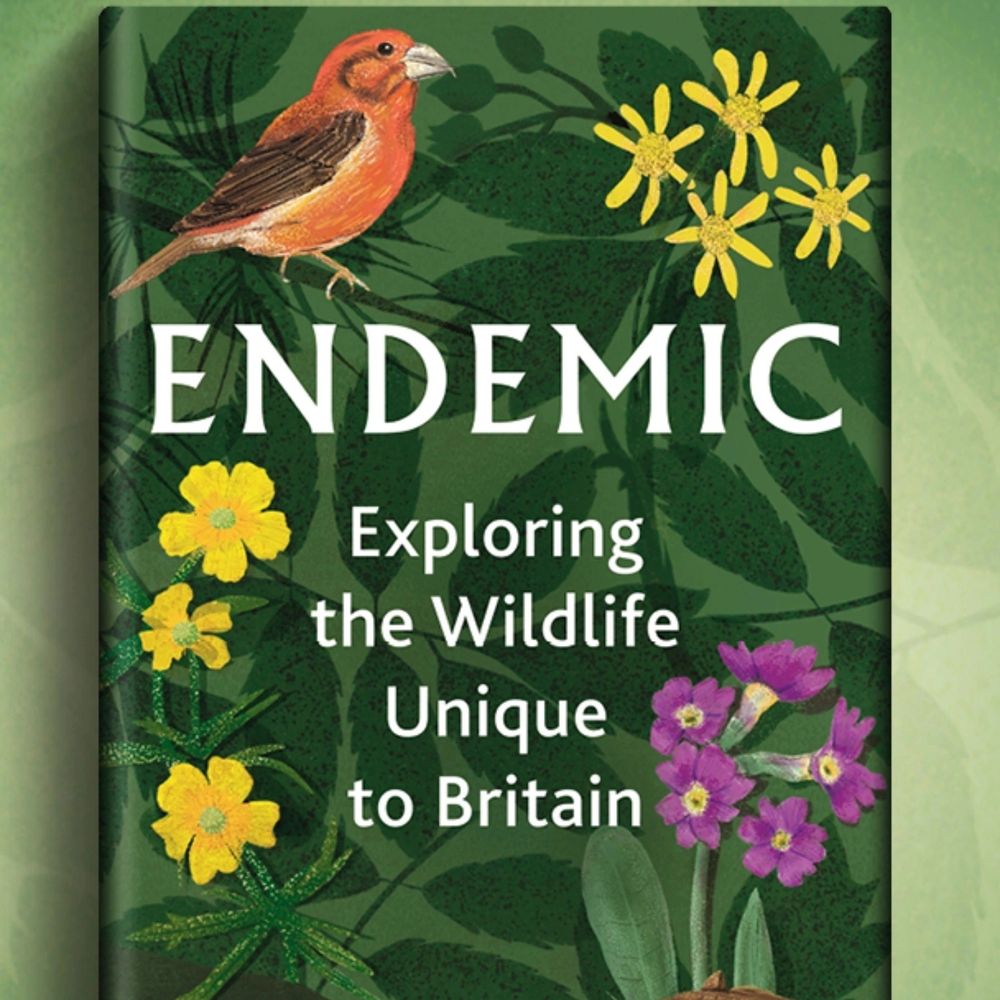
Even though I visited Unst and saw Edmondston's Chickweed whilst researching my book Endemic, I ended up not including it to make space for more evolutionary distinct endemics.
November 22, 2025 at 12:08 PM
Even though I visited Unst and saw Edmondston's Chickweed whilst researching my book Endemic, I ended up not including it to make space for more evolutionary distinct endemics.