




Biodiversity Heritage Library
@biodivlibrary.bsky.social
The Biodiversity Heritage Library provides free & #OpenAccess to 63+ million pages of #biodiversity literature online. 🔗 biodiversitylibrary.org
🕊️ The countdown continues! There’s still time to help #GiveBHLWings before BHL becomes independent on 1 January 2026. Your support keeps this global library flying high into the future. #ILoveBHL #BHLTransition 🧪 📖 🌏 🐟 💸
💚 Donate: ancrywkv.donorsupport.co/page/GiveBHL...
💚 Donate: ancrywkv.donorsupport.co/page/GiveBHL...

December 8, 2025 at 3:31 PM
🕊️ The countdown continues! There’s still time to help #GiveBHLWings before BHL becomes independent on 1 January 2026. Your support keeps this global library flying high into the future. #ILoveBHL #BHLTransition 🧪 📖 🌏 🐟 💸
💚 Donate: ancrywkv.donorsupport.co/page/GiveBHL...
💚 Donate: ancrywkv.donorsupport.co/page/GiveBHL...
💚 Thank you for helping us #GiveBHLWings!
Your support this #GivingTuesday brings BHL closer to independence on 1 Jan 2026 and keeps the world’s biodiversity knowledge open for all. #ILoveBHL #BHLTransition 🧪 📖 🌏 🐟 💸 ancrywkv.donorsupport.co/page/GiveBHL...
Your support this #GivingTuesday brings BHL closer to independence on 1 Jan 2026 and keeps the world’s biodiversity knowledge open for all. #ILoveBHL #BHLTransition 🧪 📖 🌏 🐟 💸 ancrywkv.donorsupport.co/page/GiveBHL...

December 3, 2025 at 4:27 PM
💚 Thank you for helping us #GiveBHLWings!
Your support this #GivingTuesday brings BHL closer to independence on 1 Jan 2026 and keeps the world’s biodiversity knowledge open for all. #ILoveBHL #BHLTransition 🧪 📖 🌏 🐟 💸 ancrywkv.donorsupport.co/page/GiveBHL...
Your support this #GivingTuesday brings BHL closer to independence on 1 Jan 2026 and keeps the world’s biodiversity knowledge open for all. #ILoveBHL #BHLTransition 🧪 📖 🌏 🐟 💸 ancrywkv.donorsupport.co/page/GiveBHL...
Happy #WorldCoatiDay! This coati is from "Dictionnaire pittoresque d'histoire naturelle et des phénomènes de la nature" (1833-1840), digitised for BHL by @nhm-london.bsky.social. www.biodiversitylibrary.org/page/35962483 🧪 📖 🌎 #Coatimundi #ILoveBHL

December 3, 2025 at 2:31 PM
Happy #WorldCoatiDay! This coati is from "Dictionnaire pittoresque d'histoire naturelle et des phénomènes de la nature" (1833-1840), digitised for BHL by @nhm-london.bsky.social. www.biodiversitylibrary.org/page/35962483 🧪 📖 🌎 #Coatimundi #ILoveBHL
💚 Just 2 days to go until #GivingTuesday! 🌿 BHL must transition to independence by 1 January 2026 – your gift can help #GiveBHLWings and keep biodiversity knowledge open and free. 🧪 📖 🌏 🐟 #BHLTransition #ILoveBHL #OpenAccess
🔗 ancrywkv.donorsupport.co/page/GiveBHL...
🔗 ancrywkv.donorsupport.co/page/GiveBHL...

November 30, 2025 at 3:31 PM
💚 Just 2 days to go until #GivingTuesday! 🌿 BHL must transition to independence by 1 January 2026 – your gift can help #GiveBHLWings and keep biodiversity knowledge open and free. 🧪 📖 🌏 🐟 #BHLTransition #ILoveBHL #OpenAccess
🔗 ancrywkv.donorsupport.co/page/GiveBHL...
🔗 ancrywkv.donorsupport.co/page/GiveBHL...
#InternationalJaguarDay is celebrated annually on November 29 to raise awareness about jaguar conservation. In 1758, Carl Linnaeus described the jaguar in his Systema Naturae. He gave it the scientific name Felis onca: www.biodiversitylibrary.org/page/726937 #SaveTheJaguar #Jaguar2030 #IloveBHL 🧪 🌎

November 29, 2025 at 2:31 PM
#InternationalJaguarDay is celebrated annually on November 29 to raise awareness about jaguar conservation. In 1758, Carl Linnaeus described the jaguar in his Systema Naturae. He gave it the scientific name Felis onca: www.biodiversitylibrary.org/page/726937 #SaveTheJaguar #Jaguar2030 #IloveBHL 🧪 🌎
It's #WorldTamanduaDay! Tamandua is a genus of anteaters. This northern tamandua (Tamandua mexicana) is from "Manual para el rastreo de mamíferos silvestres de México" (2012) by J.M.A. Sánchez, in #BHLib via #BHLMexico & #Conabio www.biodiversitylibrary.org/page/49770915 #SciArt #OpenAccess 🧪 🌎 📖

November 29, 2025 at 11:32 AM
It's #WorldTamanduaDay! Tamandua is a genus of anteaters. This northern tamandua (Tamandua mexicana) is from "Manual para el rastreo de mamíferos silvestres de México" (2012) by J.M.A. Sánchez, in #BHLib via #BHLMexico & #Conabio www.biodiversitylibrary.org/page/49770915 #SciArt #OpenAccess 🧪 🌎 📖
Carnivorous plants obtain nutrients from animals or protozoans, which they trap & digest. This #SciArt of "insektenfressnde pflanzen" (insectivorous plants) is from "Meyers Konversations-Lexikon" (1890). Contributed to #BHLib by @uoftlibraries.bsky.social: www.biodiversitylibrary.org/page/55161008 🧪

November 27, 2025 at 2:31 PM
Carnivorous plants obtain nutrients from animals or protozoans, which they trap & digest. This #SciArt of "insektenfressnde pflanzen" (insectivorous plants) is from "Meyers Konversations-Lexikon" (1890). Contributed to #BHLib by @uoftlibraries.bsky.social: www.biodiversitylibrary.org/page/55161008 🧪
🐠 Help #GiveBHLWings. After nearly two decades under the Smithsonian, BHL must become independent by 1 Jan. Your donation helps us take flight and keep 500 years of biodiversity knowledge accessible. 🧪 📖 #GivingTuesday #ILoveBHL #BHLTransition 💚 Give today: ancrywkv.donorsupport.co/page/GiveBHL...

November 25, 2025 at 3:54 PM
🐠 Help #GiveBHLWings. After nearly two decades under the Smithsonian, BHL must become independent by 1 Jan. Your donation helps us take flight and keep 500 years of biodiversity knowledge accessible. 🧪 📖 #GivingTuesday #ILoveBHL #BHLTransition 💚 Give today: ancrywkv.donorsupport.co/page/GiveBHL...
Narwhals (Monodon monoceros) are called the unicorn of the sea — for obvious reasons.
This illustration by Louis A. Sargent comes from "The wild beasts of the world", v. 2 (1909), contributed to BHL by @uoftlibraries.bsky.social: www.biodiversitylibrary.org/page/19657038 #SciArt #ILoveBHL 🧪 📖 🌊
This illustration by Louis A. Sargent comes from "The wild beasts of the world", v. 2 (1909), contributed to BHL by @uoftlibraries.bsky.social: www.biodiversitylibrary.org/page/19657038 #SciArt #ILoveBHL 🧪 📖 🌊

November 22, 2025 at 12:25 PM
Narwhals (Monodon monoceros) are called the unicorn of the sea — for obvious reasons.
This illustration by Louis A. Sargent comes from "The wild beasts of the world", v. 2 (1909), contributed to BHL by @uoftlibraries.bsky.social: www.biodiversitylibrary.org/page/19657038 #SciArt #ILoveBHL 🧪 📖 🌊
This illustration by Louis A. Sargent comes from "The wild beasts of the world", v. 2 (1909), contributed to BHL by @uoftlibraries.bsky.social: www.biodiversitylibrary.org/page/19657038 #SciArt #ILoveBHL 🧪 📖 🌊
Happy #WorldAnteaterDay! This Giant Anteater (Myrmecophaga tridactyla) #SciArt is by Édouard Traviès for Charles Dessalines d'Orbigny, Dictionnaire d'Histoire Naturelle (1849). Contributed to BHL by @ncsulibraries.bsky.social: www.biodiversitylibrary.org/page/19538021 🧪 📖 🌎 🐜 #ILoveBHL

November 19, 2025 at 4:27 PM
Happy #WorldAnteaterDay! This Giant Anteater (Myrmecophaga tridactyla) #SciArt is by Édouard Traviès for Charles Dessalines d'Orbigny, Dictionnaire d'Histoire Naturelle (1849). Contributed to BHL by @ncsulibraries.bsky.social: www.biodiversitylibrary.org/page/19538021 🧪 📖 🌎 🐜 #ILoveBHL
This beautiful Fairy Shrimp #SciArt is by Christine Etiennette Pernette Jurine for "Histoire des monocles qui se trouvent aux environs de Genève" (1820), authored by her father Louis Jurine. Contributed to BHL by Ernst Mayr Library Harvard www.biodiversitylibrary.org/page/10664230 #HerNaturalHistory

November 13, 2025 at 2:31 PM
This beautiful Fairy Shrimp #SciArt is by Christine Etiennette Pernette Jurine for "Histoire des monocles qui se trouvent aux environs de Genève" (1820), authored by her father Louis Jurine. Contributed to BHL by Ernst Mayr Library Harvard www.biodiversitylibrary.org/page/10664230 #HerNaturalHistory
BHL is experiencing intermittent technical issues that are affecting PDF generation. Thank you for your patience!
@archive.org
Image: biodiversitylibrary.org/page/14994771
@archive.org
Image: biodiversitylibrary.org/page/14994771

November 13, 2025 at 1:58 AM
BHL is experiencing intermittent technical issues that are affecting PDF generation. Thank you for your patience!
@archive.org
Image: biodiversitylibrary.org/page/14994771
@archive.org
Image: biodiversitylibrary.org/page/14994771
Mary Cynthia Dickerson was the 1st curator of herpetology at @amnh.org. She authored "The Frog Book" (1906), describing North American toads & frogs. Explore it in #BHLib thanks to the @uoftlibraries.bsky.social Robarts Library: www.biodiversitylibrary.org/page/31830673 #HerNaturalHistory #HERpers 🐸

November 10, 2025 at 2:58 PM
Mary Cynthia Dickerson was the 1st curator of herpetology at @amnh.org. She authored "The Frog Book" (1906), describing North American toads & frogs. Explore it in #BHLib thanks to the @uoftlibraries.bsky.social Robarts Library: www.biodiversitylibrary.org/page/31830673 #HerNaturalHistory #HERpers 🐸
November is #ManateeAwarenessMonth! This beautiful Manatee #SciArt is from Biologia Centrali-Americana (1879-1882), illustrated by Josef Wolf. www.biodiversitylibrary.org/page/570882 #ILoveBHL #OpenAccess #SaveTheManatee #SeaCow 🧪 🌎 📖 🌱

November 8, 2025 at 6:32 AM
November is #ManateeAwarenessMonth! This beautiful Manatee #SciArt is from Biologia Centrali-Americana (1879-1882), illustrated by Josef Wolf. www.biodiversitylibrary.org/page/570882 #ILoveBHL #OpenAccess #SaveTheManatee #SeaCow 🧪 🌎 📖 🌱
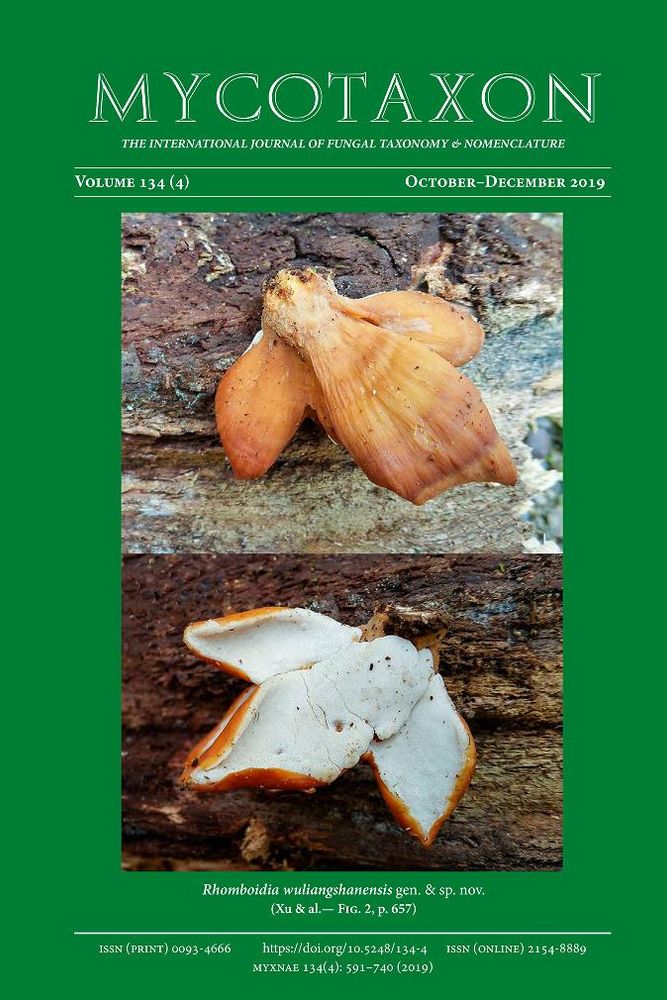
All issues of Mycotaxon (1974–2024) are now digitised, #OpenAccess & discoverable in BHL! Thx to the work of Diane Rielinger & BHL’s Team #RetroPIDs, every article now has a DOI, connecting 50 years of #Mycology to today’s scholarly network. #Fungi 🍄 🧪
🔗 www.biodiversitylibrary.org/bibliography...
🔗 www.biodiversitylibrary.org/bibliography...

November 5, 2025 at 1:24 AM
All issues of Mycotaxon (1974–2024) are now digitised, #OpenAccess & discoverable in BHL! Thx to the work of Diane Rielinger & BHL’s Team #RetroPIDs, every article now has a DOI, connecting 50 years of #Mycology to today’s scholarly network. #Fungi 🍄 🧪
🔗 www.biodiversitylibrary.org/bibliography...
🔗 www.biodiversitylibrary.org/bibliography...
Alfred Mayor's "Medusae of the world" (1910) attempted to describe all known forms from all parts of the world. The #SciArt is based on drawings, from life, by William K. Brooks and Louis Murbach. View it in #BHLib: www.biodiversitylibrary.org/bibliography... #WorldJellyfishDay #ILoveBHL


November 3, 2025 at 7:40 AM
Alfred Mayor's "Medusae of the world" (1910) attempted to describe all known forms from all parts of the world. The #SciArt is based on drawings, from life, by William K. Brooks and Louis Murbach. View it in #BHLib: www.biodiversitylibrary.org/bibliography... #WorldJellyfishDay #ILoveBHL
Meet the Numbat, Australia's only truly diurnal marsupial. This beautiful #SciArt is from John Gould's "Mammals of Australia" (1863): "with its beautiful tail spread out to the full extent, it offers a great resemblance to the Squirrels". doi.org/10.5962/p.31... #InternationalNumbatDay #ILoveBHL 🧪

November 1, 2025 at 3:54 AM
Meet the Numbat, Australia's only truly diurnal marsupial. This beautiful #SciArt is from John Gould's "Mammals of Australia" (1863): "with its beautiful tail spread out to the full extent, it offers a great resemblance to the Squirrels". doi.org/10.5962/p.31... #InternationalNumbatDay #ILoveBHL 🧪
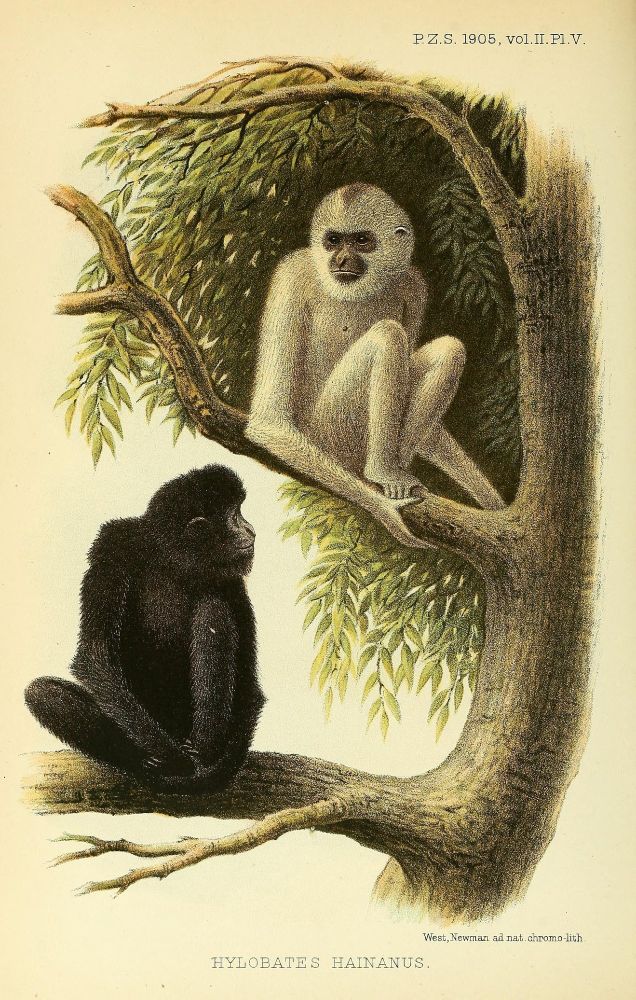
#InternationalGibbonDay is dedicated to raising awareness of our overlooked, under-protected "lesser" apes. This Hainan gibbon #SciArt is from the Proceedings of the Zoological Society of London (1905). This species is now critically endangered. www.biodiversitylibrary.org/page/31887889 🧪 📖 🌱
October 24, 2025 at 7:05 PM
#InternationalGibbonDay is dedicated to raising awareness of our overlooked, under-protected "lesser" apes. This Hainan gibbon #SciArt is from the Proceedings of the Zoological Society of London (1905). This species is now critically endangered. www.biodiversitylibrary.org/page/31887889 🧪 📖 🌱
In celebration of #WorldKangarooDay 🦘, we present the first scientific description of "The Great Kanguroo, Macropus giganteus", from Shaw's The Naturalist's Miscellany (1790), which begins "the Kanguroo is a very anomalous and extraordinary quadruped". doi.org/10.5962/p.31... 🧪 📖 🌏 #ILoveBHL

October 24, 2025 at 11:31 AM
In celebration of #WorldKangarooDay 🦘, we present the first scientific description of "The Great Kanguroo, Macropus giganteus", from Shaw's The Naturalist's Miscellany (1790), which begins "the Kanguroo is a very anomalous and extraordinary quadruped". doi.org/10.5962/p.31... 🧪 📖 🌏 #ILoveBHL
The Snow Leopard (Panthera uncia, originally Felis uncia) was scientifically described by Schreber in 1778. 🧪 ❄️ 🐆
Plate: www.biodiversitylibrary.org/page/31064602
Text: www.biodiversitylibrary.org/page/42529094
#SnowLeopardDay #23for23 #SaveSnowLeopards #ILoveBHL
Plate: www.biodiversitylibrary.org/page/31064602
Text: www.biodiversitylibrary.org/page/42529094
#SnowLeopardDay #23for23 #SaveSnowLeopards #ILoveBHL

October 23, 2025 at 11:31 AM
The Snow Leopard (Panthera uncia, originally Felis uncia) was scientifically described by Schreber in 1778. 🧪 ❄️ 🐆
Plate: www.biodiversitylibrary.org/page/31064602
Text: www.biodiversitylibrary.org/page/42529094
#SnowLeopardDay #23for23 #SaveSnowLeopards #ILoveBHL
Plate: www.biodiversitylibrary.org/page/31064602
Text: www.biodiversitylibrary.org/page/42529094
#SnowLeopardDay #23for23 #SaveSnowLeopards #ILoveBHL
If you’re at #LivingData2025, visit us at the Biodiversity Heritage Library booth. Ask us about the 63 million pages of #BiodiversityKnowledge we’ve made accessible & discoverable online, and how we’re transitioning to become an independent, global and sustainable consortium. #ILoveBHL

October 22, 2025 at 7:59 PM
If you’re at #LivingData2025, visit us at the Biodiversity Heritage Library booth. Ask us about the 63 million pages of #BiodiversityKnowledge we’ve made accessible & discoverable online, and how we’re transitioning to become an independent, global and sustainable consortium. #ILoveBHL
For those eager to see @siobhanleachman.bsky.social's wonderful #LivingData2025 #Wikidata presentation (there was a technical hiccup at the conference), you can find it here: Video: youtu.be/ySyiwfIi_Wc
Slides: bit.ly/LivingDataEx...
Documentation: bit.ly/BHLWikidataW...
#DatosVivos2025. 📖 👩💻 🔗
Slides: bit.ly/LivingDataEx...
Documentation: bit.ly/BHLWikidataW...
#DatosVivos2025. 📖 👩💻 🔗

October 22, 2025 at 4:53 PM
For those eager to see @siobhanleachman.bsky.social's wonderful #LivingData2025 #Wikidata presentation (there was a technical hiccup at the conference), you can find it here: Video: youtu.be/ySyiwfIi_Wc
Slides: bit.ly/LivingDataEx...
Documentation: bit.ly/BHLWikidataW...
#DatosVivos2025. 📖 👩💻 🔗
Slides: bit.ly/LivingDataEx...
Documentation: bit.ly/BHLWikidataW...
#DatosVivos2025. 📖 👩💻 🔗
Happy #WombatDay! "This animal has not any claim to swiftness of foot". This is one of our favourite quotes from the historic literature ("An account of the English colony in New South Wales", David Collins, 1804) biodiversitylibrary.org/page/45924805 via
#MuseumsVictoria #Wombat #ILoveBHL 📖 🧪
#MuseumsVictoria #Wombat #ILoveBHL 📖 🧪

October 22, 2025 at 4:25 PM
Happy #WombatDay! "This animal has not any claim to swiftness of foot". This is one of our favourite quotes from the historic literature ("An account of the English colony in New South Wales", David Collins, 1804) biodiversitylibrary.org/page/45924805 via
#MuseumsVictoria #Wombat #ILoveBHL 📖 🧪
#MuseumsVictoria #Wombat #ILoveBHL 📖 🧪
Errata: the above illustration is from 1804 "An account of the English colony in New South Wales" www.biodiversitylibrary.org/page/45924805. The 1800 link is for the original version from "A general history of quadrupeds: the figures engraved on wood": www.biodiversitylibrary.org/page/25448864

October 22, 2025 at 4:20 PM
Errata: the above illustration is from 1804 "An account of the English colony in New South Wales" www.biodiversitylibrary.org/page/45924805. The 1800 link is for the original version from "A general history of quadrupeds: the figures engraved on wood": www.biodiversitylibrary.org/page/25448864
It's #WombatDay! The Wombat was first described in 1800 as "the largest of all the Opossums: size of a Badger: colour pale yellow: fur longish and sub-erect: nose strongly divided by a furrow" www.biodiversitylibrary.org/page/19632636.
(#SciArt 1798: www.biodiversitylibrary.org/page/25448864) 🧪 📖 🌏
(#SciArt 1798: www.biodiversitylibrary.org/page/25448864) 🧪 📖 🌏

October 22, 2025 at 2:50 PM
It's #WombatDay! The Wombat was first described in 1800 as "the largest of all the Opossums: size of a Badger: colour pale yellow: fur longish and sub-erect: nose strongly divided by a furrow" www.biodiversitylibrary.org/page/19632636.
(#SciArt 1798: www.biodiversitylibrary.org/page/25448864) 🧪 📖 🌏
(#SciArt 1798: www.biodiversitylibrary.org/page/25448864) 🧪 📖 🌏