


Alejandro S. Borlaff
@asborlaff.bsky.social
Investigador en @NASA. Astrofísico. Desarrollando telescopios espaciales en @NASAAmes. Galaxies and rocket science. @ESA @unicomplutense @IAC_astrofisica.
It was absolutely amazing to participate in your podcast. Thank you so much!
December 4, 2025 at 2:09 AM
It was absolutely amazing to participate in your podcast. Thank you so much!
Oh my god, @astrokatie.com is going to listen to our podcast 🥰!
December 4, 2025 at 2:07 AM
Oh my god, @astrokatie.com is going to listen to our podcast 🥰!
The main problem is that space telescopes in Low Earth Orbit share the similar orbits as the telecommunication satellites.
Here we show a simplified representation of the increased orbital crowding between 1958 (Sputnik) and the projected satellite population at the end of the next decade.
Here we show a simplified representation of the increased orbital crowding between 1958 (Sputnik) and the projected satellite population at the end of the next decade.
December 4, 2025 at 2:02 AM
The main problem is that space telescopes in Low Earth Orbit share the similar orbits as the telecommunication satellites.
Here we show a simplified representation of the increased orbital crowding between 1958 (Sputnik) and the projected satellite population at the end of the next decade.
Here we show a simplified representation of the increased orbital crowding between 1958 (Sputnik) and the projected satellite population at the end of the next decade.
I would love to! Unfortunately this time we will be on the other side of the Atlantic, but we won't miss the next opportunity, I promise.
December 4, 2025 at 12:49 AM
I would love to! Unfortunately this time we will be on the other side of the Atlantic, but we won't miss the next opportunity, I promise.
That is one of the greatest strengths of ARRAKIHS: the combination of multiple images reduces specific systematics, like cosmic rays or satellite trails.
Deep combined mosaics will likely not show residuals from trails. In our article we focus specifically on the number of trails per exposure.
Deep combined mosaics will likely not show residuals from trails. In our article we focus specifically on the number of trails per exposure.
December 3, 2025 at 11:24 PM
That is one of the greatest strengths of ARRAKIHS: the combination of multiple images reduces specific systematics, like cosmic rays or satellite trails.
Deep combined mosaics will likely not show residuals from trails. In our article we focus specifically on the number of trails per exposure.
Deep combined mosaics will likely not show residuals from trails. In our article we focus specifically on the number of trails per exposure.
Humankind has launch more satellites in the past four years (2021 - 2025) than in the previous seven decades.
75% of the currently active satellites belong to a single operator (SpaceX).
75% of the currently active satellites belong to a single operator (SpaceX).
December 3, 2025 at 9:06 PM
Humankind has launch more satellites in the past four years (2021 - 2025) than in the previous seven decades.
75% of the currently active satellites belong to a single operator (SpaceX).
75% of the currently active satellites belong to a single operator (SpaceX).
Fixed! Thank you so much :)
December 3, 2025 at 9:05 PM
Fixed! Thank you so much :)
You can access the article for free here:
www.nature.com/articles/s41...
(Sorry for the previous link which is broken!)
www.nature.com/articles/s41...
(Sorry for the previous link which is broken!)

Satellite megaconstellations will threaten space-based astronomy - Nature
Rapidly growing satellite constellations pose a substantial threat to astronomical observations, with projections indicating that future space telescopes will have more than 96% of their exposures aff...
www.nature.com
December 3, 2025 at 9:05 PM
You can access the article for free here:
www.nature.com/articles/s41...
(Sorry for the previous link which is broken!)
www.nature.com/articles/s41...
(Sorry for the previous link which is broken!)
Reposted by Alejandro S. Borlaff

3/4. En esta imagen se muestra el mismo campo estelar del Cometa C/2025 A6 (Lemmon) sin limpiar.
En solo 15 minutos de adquisición, contamos 1659 trazas de satélites (unos 400 individuales).
Sobran las palabras para describir la contaminación del espacio cercano.
En solo 15 minutos de adquisición, contamos 1659 trazas de satélites (unos 400 individuales).
Sobran las palabras para describir la contaminación del espacio cercano.

November 28, 2025 at 7:26 PM
3/4. En esta imagen se muestra el mismo campo estelar del Cometa C/2025 A6 (Lemmon) sin limpiar.
En solo 15 minutos de adquisición, contamos 1659 trazas de satélites (unos 400 individuales).
Sobran las palabras para describir la contaminación del espacio cercano.
En solo 15 minutos de adquisición, contamos 1659 trazas de satélites (unos 400 individuales).
Sobran las palabras para describir la contaminación del espacio cercano.

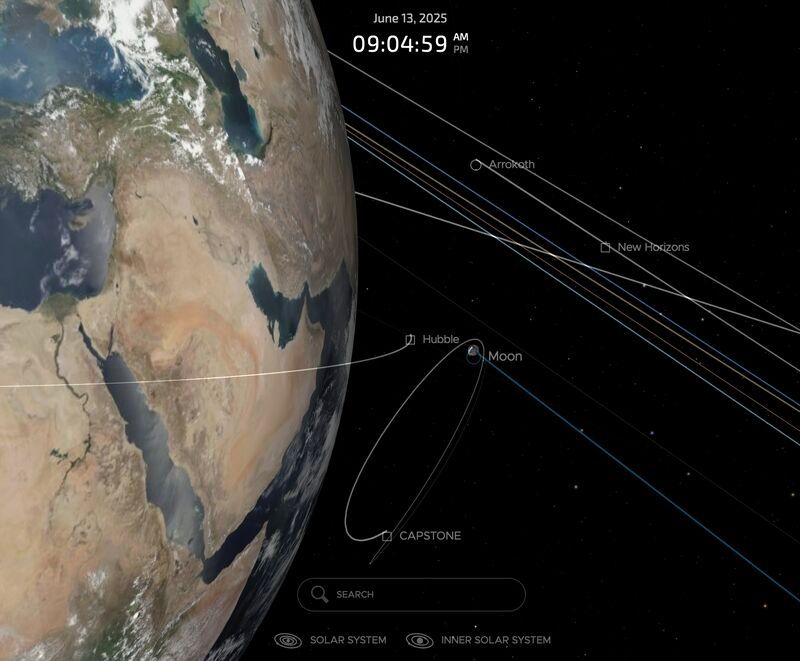
I have to admit it, working here is a dream job.
June 13, 2025 at 4:16 PM
I have to admit it, working here is a dream job.