



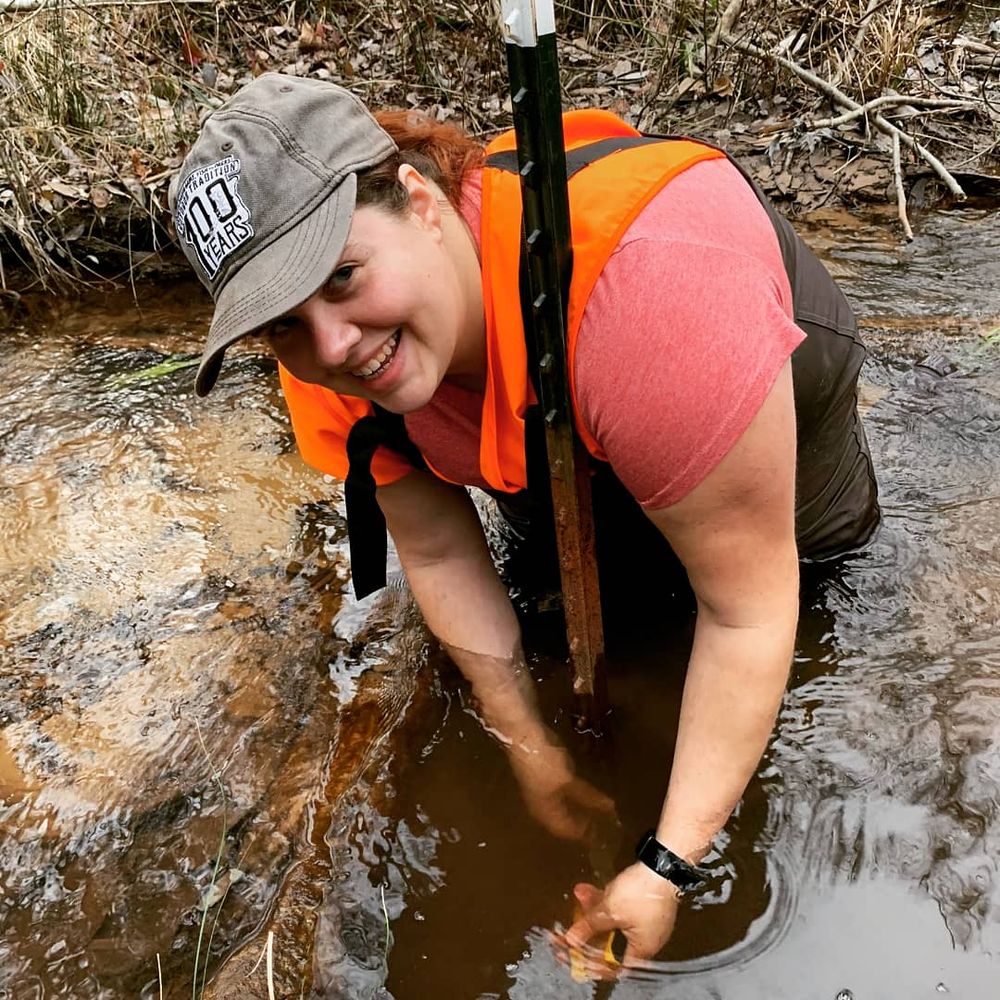
Lee = MS squared 🐟🌊🏳️⚧️
@aquaticenby.bsky.social
Nonbinary by birth (they/them) 🏳️⚧️🏳️🌈
Aquatic ecologist by profession 🐟🐠🐡
Kind by choice
Fisheries, human impacts, sustainability, all things water
Currently studying how environmental stressors affect aquatic-terrestrial linkages in Germany 🇩🇪
Aquatic ecologist by profession 🐟🐠🐡
Kind by choice
Fisheries, human impacts, sustainability, all things water
Currently studying how environmental stressors affect aquatic-terrestrial linkages in Germany 🇩🇪
Braiding Sweetgrass is an amazing book! I actually brought it to Germany with me because I was reading it and couldn't leave it behind
December 20, 2025 at 5:22 AM
Braiding Sweetgrass is an amazing book! I actually brought it to Germany with me because I was reading it and couldn't leave it behind
These fish are also sensitive to declining habitat quality. Loss of permanent wetlands, sedimentation, and coal ash pollution has caused extirpation, reduced growth and swimming speed, and severe fin erosion. Now isn't that more interesting than an unfortunate name?
7/7
7/7

December 12, 2025 at 8:03 PM
These fish are also sensitive to declining habitat quality. Loss of permanent wetlands, sedimentation, and coal ash pollution has caused extirpation, reduced growth and swimming speed, and severe fin erosion. Now isn't that more interesting than an unfortunate name?
7/7
7/7
And then there's the breeding tubercles. Why do males get these sharp, horny projections in spring? They're not the only fish to get them, but they are some of the most impressive I've seen. Current theory is they're used in combat or to maneuver females over spawning beds
6/7
6/7

December 12, 2025 at 8:03 PM
And then there's the breeding tubercles. Why do males get these sharp, horny projections in spring? They're not the only fish to get them, but they are some of the most impressive I've seen. Current theory is they're used in combat or to maneuver females over spawning beds
6/7
6/7
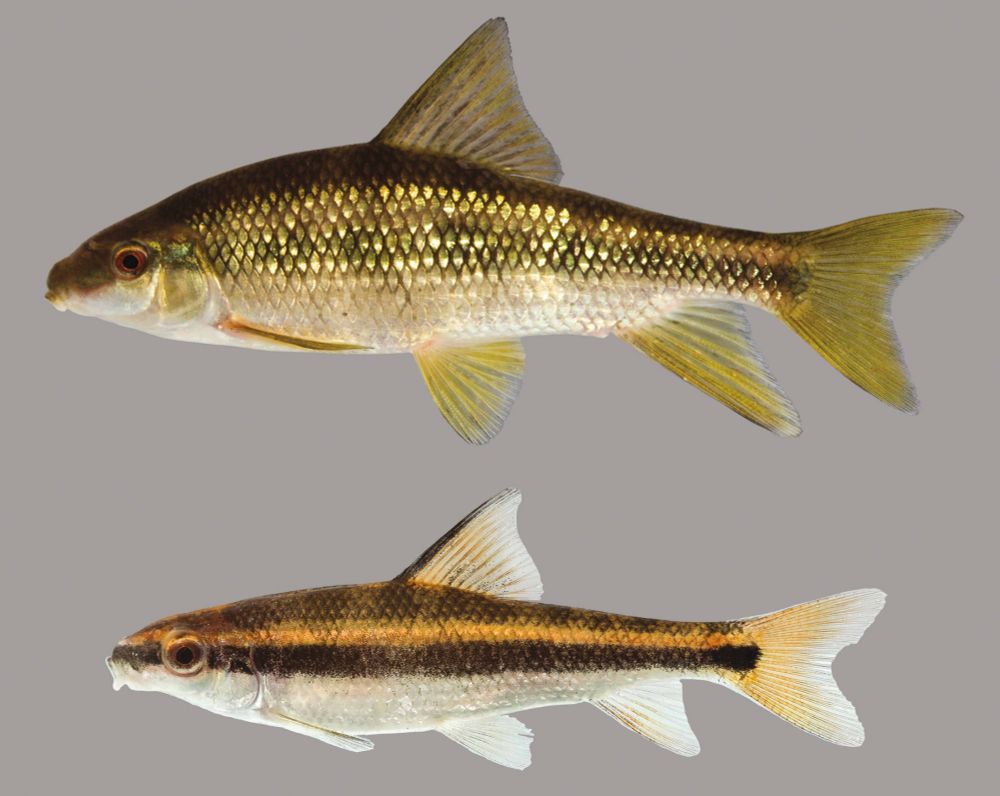
They're also an important pioneer species, moving upstream in spring. There's also a lot of unanswered questions around these guys. Like, why did they lose their lateral line? The sensory organ that let's them know when predators are swimming up to them? We have no answers to that one yet
5/7
5/7
December 12, 2025 at 8:03 PM
They're also an important pioneer species, moving upstream in spring. There's also a lot of unanswered questions around these guys. Like, why did they lose their lateral line? The sensory organ that let's them know when predators are swimming up to them? We have no answers to that one yet
5/7
5/7
And even though they're not super pretty or fun to fish for, they're really important for the ecosystems they're found in. The eggs and juveniles are very important to predators. In fact, one study found largemouth bass feeding exclusively on juvenile chubsuckers instead of sunfish
4/7
4/7
December 12, 2025 at 8:03 PM
And even though they're not super pretty or fun to fish for, they're really important for the ecosystems they're found in. The eggs and juveniles are very important to predators. In fact, one study found largemouth bass feeding exclusively on juvenile chubsuckers instead of sunfish
4/7
4/7
Chubsuckers are members of the sucker family, but they're chubbier and more stout than other suckers. Hence the 'chub' moniker. And this family is called suckers because they go along the bottom sucking up any insects and tasty bits of food they come across. Modern slang really did them dirty
3/7
3/7

December 12, 2025 at 8:03 PM
Chubsuckers are members of the sucker family, but they're chubbier and more stout than other suckers. Hence the 'chub' moniker. And this family is called suckers because they go along the bottom sucking up any insects and tasty bits of food they come across. Modern slang really did them dirty
3/7
3/7
Erimyzon comes from the Greek words eri, meaning "a lot" and myzo, meaning "to suck". So did scientists just hate these poor fish? Did they just have the bad luck of being named by a particularly horny biologist? Fortunately, the answer is no
2/7
2/7

December 12, 2025 at 8:03 PM
Erimyzon comes from the Greek words eri, meaning "a lot" and myzo, meaning "to suck". So did scientists just hate these poor fish? Did they just have the bad luck of being named by a particularly horny biologist? Fortunately, the answer is no
2/7
2/7
However, a complete moratorium on harvest in US waters in 1990 has helped the goliath grouper go from critically endangered in 2011 to now listed as vulnerable. This is a great recovery, but highlights the need to keep these fish protected as their recovery continues
6/6
6/6

December 5, 2025 at 6:41 PM
However, a complete moratorium on harvest in US waters in 1990 has helped the goliath grouper go from critically endangered in 2011 to now listed as vulnerable. This is a great recovery, but highlights the need to keep these fish protected as their recovery continues
6/6
6/6
Larval settlement is also highly vulnerable to environmental conditions, like storm patterns. An increasing concern with climate change. As with other large top predators, adults accumulate high levels of mercury. This can lead to liver damage, reduced egg viability, and death in large fish
5/6
5/6

December 5, 2025 at 6:41 PM
Larval settlement is also highly vulnerable to environmental conditions, like storm patterns. An increasing concern with climate change. As with other large top predators, adults accumulate high levels of mercury. This can lead to liver damage, reduced egg viability, and death in large fish
5/6
5/6
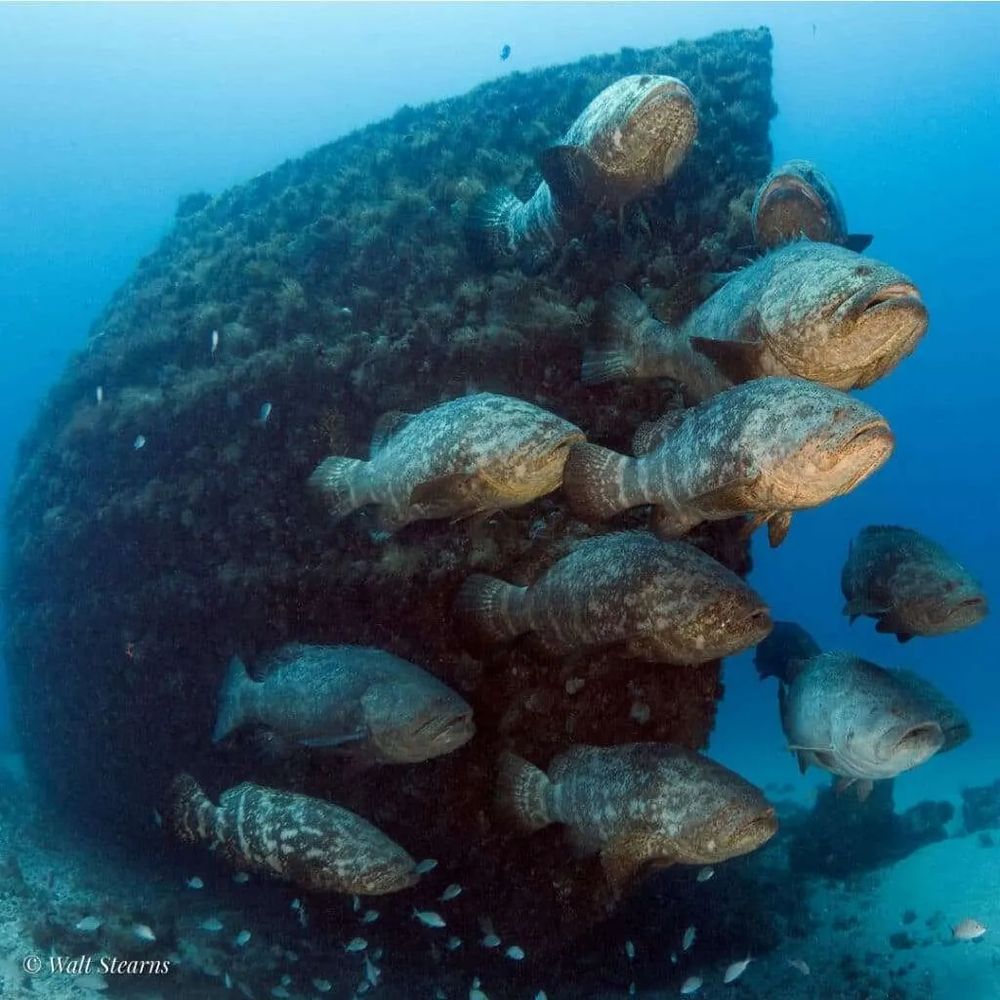
Unfortunately, they nearly went extinct. Goliath groupers are especially vulnerable to overharvest, not only because they are large fish that mature slowly, but they aggregate in groups to spawn. Which makes it easy to catch nearly all members in a population
4/6
4/6
December 5, 2025 at 6:41 PM
Unfortunately, they nearly went extinct. Goliath groupers are especially vulnerable to overharvest, not only because they are large fish that mature slowly, but they aggregate in groups to spawn. Which makes it easy to catch nearly all members in a population
4/6
4/6
They were once called jewfish, likely because they share characteristics with antisemitic caricatures. The American Fisheries Society rightfully changed their name in 2001 to the goliath grouper. A mich more fitting name for such a cool fish
3/6
3/6

December 5, 2025 at 6:41 PM
They were once called jewfish, likely because they share characteristics with antisemitic caricatures. The American Fisheries Society rightfully changed their name in 2001 to the goliath grouper. A mich more fitting name for such a cool fish
3/6
3/6
Goliath groupers are the largest grouper species, growing up to 8 feet long and weighing 800 pounds! They prefer to hang around rocky reefs, wrecks, and oil platforms, waiting for slow or injured prey to come within range. And they have been known to attack fish caught by anglers, even sharks
2/6
2/6

December 5, 2025 at 6:41 PM
Goliath groupers are the largest grouper species, growing up to 8 feet long and weighing 800 pounds! They prefer to hang around rocky reefs, wrecks, and oil platforms, waiting for slow or injured prey to come within range. And they have been known to attack fish caught by anglers, even sharks
2/6
2/6
Countershading is a great way to be invisible in open water when there's nothing to hide behind. Predators can lurk below without being seen and prey can blend into the light above and have a chance to escape. And yes, this is why orcas and penguins are black and white. Fish just have more flair
6/6
6/6

November 28, 2025 at 7:05 PM
Countershading is a great way to be invisible in open water when there's nothing to hide behind. Predators can lurk below without being seen and prey can blend into the light above and have a chance to escape. And yes, this is why orcas and penguins are black and white. Fish just have more flair
6/6
6/6
But what about fish that live in the open ocean? There's nothing there for them to camouflage against, right? Wrong. Even there, fish have found a way to be sneaky. Countershading allows fish to blend into darkness when seen from above and be indistinguishable from light when viewed from below
5/6
5/6

November 28, 2025 at 7:05 PM
But what about fish that live in the open ocean? There's nothing there for them to camouflage against, right? Wrong. Even there, fish have found a way to be sneaky. Countershading allows fish to blend into darkness when seen from above and be indistinguishable from light when viewed from below
5/6
5/6