



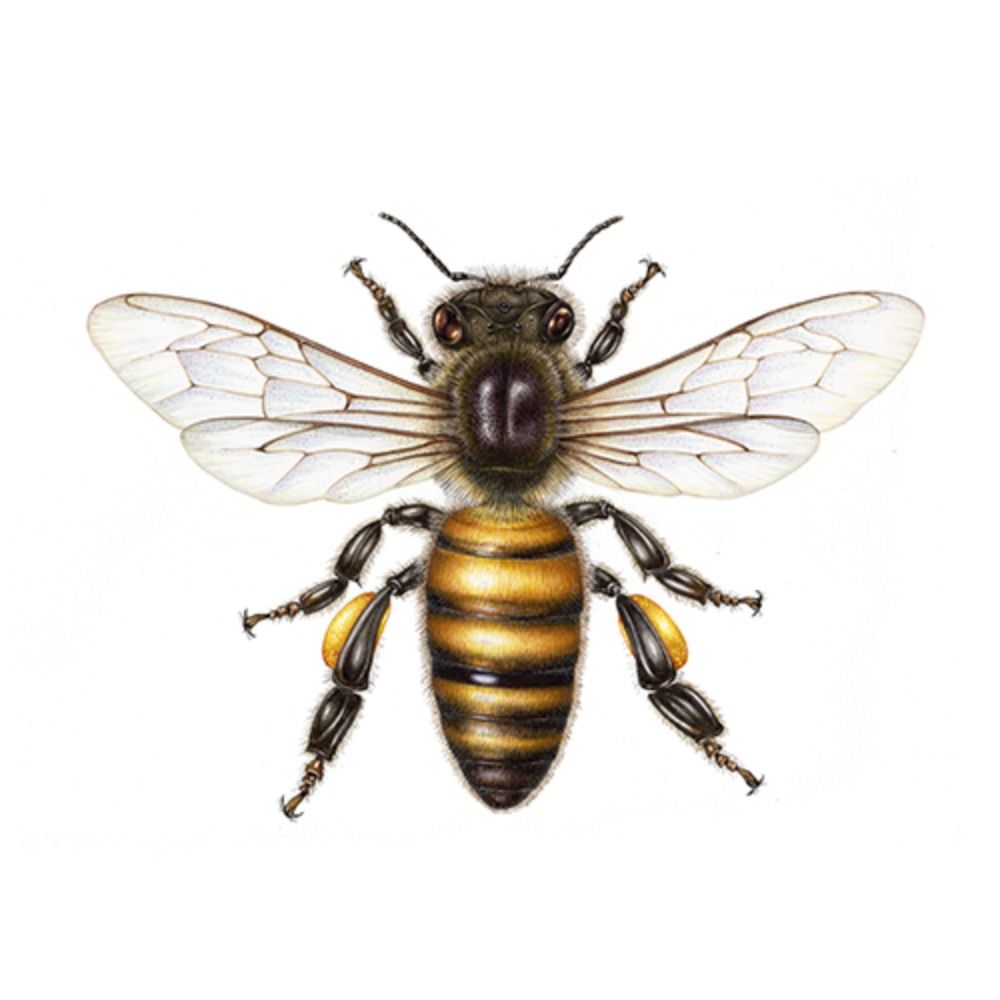
The Apiarist
@theapiarist.org
I used to be a scientist and a beekeeper, but now I'm just a beekeeper who writes (and talks) ... about bees and science. I promote local bees and honey, and responsible, sustainable beekeeping.
https://theapiarist.org
https://theapiarist.org
[New post] Most swarms carry mites, some carry foulbroods. The mites are easy to deal with, but how can you tell the risks of AFB or EFB? You need to understand how far swarms move, and where foulbroods are endemic. And you need to be vigilant.
theapiarist.org/whose-swarm-...
#beekeeping
theapiarist.org/whose-swarm-...
#beekeeping

Whose swarm is it anyway? - part 1
Swarms may carry pests and pathogens. Mites are easily managed, but the notifiable foulbrood diseases are not. It is important to consider the risks, based upon swarm behaviour and the known…
theapiarist.org
February 14, 2026 at 10:02 AM
[New post] Most swarms carry mites, some carry foulbroods. The mites are easy to deal with, but how can you tell the risks of AFB or EFB? You need to understand how far swarms move, and where foulbroods are endemic. And you need to be vigilant.
theapiarist.org/whose-swarm-...
#beekeeping
theapiarist.org/whose-swarm-...
#beekeeping
[New post] Do we consider the consequences for the colony of the manipulations we impose? Every split, artificial swarm or nuc made involves a restoration of the balanced worker population … some maniulations may be 'better' for the colony than others.
theapiarist.org/temporal-pol...
#beekeeping
theapiarist.org/temporal-pol...
#beekeeping

Temporal polyethism
The age-related division of labour. Critical to colony survival and performance, disrupted every time you perform a split, but amazingly flexible that most splits (eventually?) are successful. What…
theapiarist.org
February 7, 2026 at 10:02 AM
[New post] Do we consider the consequences for the colony of the manipulations we impose? Every split, artificial swarm or nuc made involves a restoration of the balanced worker population … some maniulations may be 'better' for the colony than others.
theapiarist.org/temporal-pol...
#beekeeping
theapiarist.org/temporal-pol...
#beekeeping
[New post] No swarming and huge honey yields? Well, perhaps 😉. The Demaree method offers this, but needs attention to make it work properly. A 'How to' guide, listing what to do … and what not to do.
theapiarist.org/how-to-the-d...
#beekeeping
theapiarist.org/how-to-the-d...
#beekeeping

How to : The Demaree method
The Demaree method offers the tempting prospect of maximising your honey production and preventing swarming. Achieving both these things needs appropriate conditions, a strong colony, timely colony…
theapiarist.org
January 31, 2026 at 10:02 AM
[New post] No swarming and huge honey yields? Well, perhaps 😉. The Demaree method offers this, but needs attention to make it work properly. A 'How to' guide, listing what to do … and what not to do.
theapiarist.org/how-to-the-d...
#beekeeping
theapiarist.org/how-to-the-d...
#beekeeping
[New post] Tin hats on! How does a pollen dearth produce hangry bees? Is it different from a nectar shortage, and why is it important to recognise these environmental determinants of colony temperament?
theapiarist.org/hangry-bees/
#beekeeping
theapiarist.org/hangry-bees/
#beekeeping

Hangry bees
Colony temperament is determined by their genetics, the amount you disturb them, and the environment. You must select the first of these when rearing queens. To do that well you need to minimise the…
theapiarist.org
January 24, 2026 at 10:02 AM
[New post] Tin hats on! How does a pollen dearth produce hangry bees? Is it different from a nectar shortage, and why is it important to recognise these environmental determinants of colony temperament?
theapiarist.org/hangry-bees/
#beekeeping
theapiarist.org/hangry-bees/
#beekeeping
[New post] Environmental conditions influence the size of the worker eggs that the queen lays. There may be ways to exploit these observations to — relatively simply — produce larger, and so better, queens.
theapiarist.org/bigger-eggs-...
#beekeeping
theapiarist.org/bigger-eggs-...
#beekeeping

Bigger eggs, better bees?
Recent studies show that queens can lay larger eggs under certain environmental conditions. This provides a fascinating insight into honey bee biology, and provides new opportunities to rear bigger,…
theapiarist.org
January 17, 2026 at 10:02 AM
[New post] Environmental conditions influence the size of the worker eggs that the queen lays. There may be ways to exploit these observations to — relatively simply — produce larger, and so better, queens.
theapiarist.org/bigger-eggs-...
#beekeeping
theapiarist.org/bigger-eggs-...
#beekeeping
[New post] Make use of these short winter days by doing the preparation for the humongous nectar flows this season … or at least tidy your supers and inexpensively protect them from wax moth damage. And some musings on predicting when swarming will start.
theapiarist.org/be-prepared/
# beekeeping
theapiarist.org/be-prepared/
# beekeeping

Be prepared
I'm prepared for a bumper honey crop in 2026. It might not happen, but my supers are ready 'just in case'. Thoughts on tidying and storing your precious drawn comb, inexpensive protection from wax…
theapiarist.org
January 10, 2026 at 10:02 AM
[New post] Make use of these short winter days by doing the preparation for the humongous nectar flows this season … or at least tidy your supers and inexpensively protect them from wax moth damage. And some musings on predicting when swarming will start.
theapiarist.org/be-prepared/
# beekeeping
theapiarist.org/be-prepared/
# beekeeping
[New Year, New post for sponsors 😄] Some pollen substitutes work better than others, and research suggests that some work (almost) as well as natural pollen. Time to get the mixing bowl and spatula out for the season ahead … Happy New Year.
theapiarist.org/better-polle...
#beekeeping
theapiarist.org/better-polle...
#beekeeping

Better pollen sub patties
Recent research suggests that there may be better protein components than brewer's yeast and soybean flour for use in pollen sub patties.
theapiarist.org
January 3, 2026 at 10:02 AM
[New Year, New post for sponsors 😄] Some pollen substitutes work better than others, and research suggests that some work (almost) as well as natural pollen. Time to get the mixing bowl and spatula out for the season ahead … Happy New Year.
theapiarist.org/better-polle...
#beekeeping
theapiarist.org/better-polle...
#beekeeping
[New post] Christmas is a time to think about those less fortunate … such as the long-suffering partners of beekeepers.
theapiarist.org/spare-a-thou...
#beekeeping
theapiarist.org/spare-a-thou...
#beekeeping

Spare a thought for …
Peace on earth, and goodwill to all men … and women. Particularly those that have to put up with a partner who keeps bees.
theapiarist.org
December 27, 2025 at 10:02 AM
[New post] Christmas is a time to think about those less fortunate … such as the long-suffering partners of beekeepers.
theapiarist.org/spare-a-thou...
#beekeeping
theapiarist.org/spare-a-thou...
#beekeeping
[New post] What's hot, and what's not? Top posts of the year, a passing reference to AI 'slop' and distinguishing between bots and beings.
theapiarist.org/the-apiarist...
#beekeeping
theapiarist.org/the-apiarist...
#beekeeping

The Apiarist in 2025
What's hot, and what's not?
theapiarist.org
December 20, 2025 at 10:02 AM
[New post] What's hot, and what's not? Top posts of the year, a passing reference to AI 'slop' and distinguishing between bots and beings.
theapiarist.org/the-apiarist...
#beekeeping
theapiarist.org/the-apiarist...
#beekeeping
[New post] Time for the annual review of the season; the good, the bad, and the ugly … plus a sprinkling of science on 'enforced supersedure'. In summary … mostly good, a little bad, and only the yellow legged hornets were really 'ugly'.
theapiarist.org/2025-in-retr...
#beekeeping
theapiarist.org/2025-in-retr...
#beekeeping

2025 in retrospect
Time for the annual review of the season; the good, the bad, and the ugly … plus a sprinkling of science on 'enforced supersedure'. In summary … mostly good, a little bad, and only the yellow legged…
theapiarist.org
December 14, 2025 at 10:02 AM
[New post] Time for the annual review of the season; the good, the bad, and the ugly … plus a sprinkling of science on 'enforced supersedure'. In summary … mostly good, a little bad, and only the yellow legged hornets were really 'ugly'.
theapiarist.org/2025-in-retr...
#beekeeping
theapiarist.org/2025-in-retr...
#beekeeping
Interesting paper on a small but mathematically significant increase in hygienic behaviour in bees treated with FormicPro. Hygienic behaviour scored with the pin-prick assay, so is this relevant to those interested in uncapping/recapping?
www.mdpi.com/2075-4450/16...
#beekeeping
www.mdpi.com/2075-4450/16...
#beekeeping

December 9, 2025 at 3:20 PM
Interesting paper on a small but mathematically significant increase in hygienic behaviour in bees treated with FormicPro. Hygienic behaviour scored with the pin-prick assay, so is this relevant to those interested in uncapping/recapping?
www.mdpi.com/2075-4450/16...
#beekeeping
www.mdpi.com/2075-4450/16...
#beekeeping
[New post] Supersedure explained, and the implications for practical beekeeping. Plus the bees' preference for dirty water, or not, and some cool bumblebee-mimicking hoverflies.
theapiarist.org/supersedure-...
#beekeeping
theapiarist.org/supersedure-...
#beekeeping

Supersedure, clean water and mimicry
How does the colony determine the queen should be superseded, and the implications this has for practical beekeeping? Plus the water preferences of honey bees, and some bumblebee-mimicking hoverflies.
theapiarist.org
December 6, 2025 at 10:02 AM
[New post] Supersedure explained, and the implications for practical beekeeping. Plus the bees' preference for dirty water, or not, and some cool bumblebee-mimicking hoverflies.
theapiarist.org/supersedure-...
#beekeeping
theapiarist.org/supersedure-...
#beekeeping
[New post] Varroxal and some ways it (or FormicPro) could be used midseason for mite control.
theapiarist.org/varroxal-and...
#beekeeping
theapiarist.org/varroxal-and...
#beekeeping

Varroxal and more midseason miticides — part 2
An introduction to Varroxal, the new/old miticide available in the UK, and discussions on how it and FormicPro can be used control mites midseason. These provide the opportunity to avoid hard…
theapiarist.org
November 29, 2025 at 2:44 PM
[New post] Varroxal and some ways it (or FormicPro) could be used midseason for mite control.
theapiarist.org/varroxal-and...
#beekeeping
theapiarist.org/varroxal-and...
#beekeeping
Reposted by The Apiarist

Wondering if insects feel pain? Here's our critique of work that looked at this in bees. We were unconvinced of the evidence, and built a model to think through these issues.
Their response is published alongside and we'll have a response to that out soon.
www.sciencedirect.com/science/arti...
Their response is published alongside and we'll have a response to that out soon.
www.sciencedirect.com/science/arti...

Motivational trade-offs as evidence for sentience in bees: a critique
www.sciencedirect.com
November 25, 2025 at 5:59 PM
Wondering if insects feel pain? Here's our critique of work that looked at this in bees. We were unconvinced of the evidence, and built a model to think through these issues.
Their response is published alongside and we'll have a response to that out soon.
www.sciencedirect.com/science/arti...
Their response is published alongside and we'll have a response to that out soon.
www.sciencedirect.com/science/arti...
[New post] Hive entrances, honey sales and queen cups … three things that can have been created or improved by 3D printing. Learn from my mistakes, don't repeat them. Save money, and have some productive fun until the weather improves.
theapiarist.org/3d-printing-...
#beekeeping #bambu #3dprinting
theapiarist.org/3d-printing-...
#beekeeping #bambu #3dprinting

3D printing for beekeeping — part 2
3D printing saved my hives during Waspageddon, improved my honey sales, and was lots of fun when queen rearing. If you were tempted by part 1 in this series, then here are the background details —…
theapiarist.org
November 22, 2025 at 10:02 AM
[New post] Hive entrances, honey sales and queen cups … three things that can have been created or improved by 3D printing. Learn from my mistakes, don't repeat them. Save money, and have some productive fun until the weather improves.
theapiarist.org/3d-printing-...
#beekeeping #bambu #3dprinting
theapiarist.org/3d-printing-...
#beekeeping #bambu #3dprinting
Reposted by The Apiarist

Two rights make a wrong. Individually, honey and chocolate are great … but chocolate-flavoured honey?
https://pubs.acs.org/doi/10.1021/acssuschemeng.5c04842
https://pubs.acs.org/doi/10.1021/acssuschemeng.5c04842
November 20, 2025 at 9:31 AM
Two rights make a wrong. Individually, honey and chocolate are great … but chocolate-flavoured honey?
https://pubs.acs.org/doi/10.1021/acssuschemeng.5c04842
https://pubs.acs.org/doi/10.1021/acssuschemeng.5c04842
Another interesting post from Scottish Pollinators on a solitary Brazilian bee competing with a weevil for pollen from a plant that only flowers for a few hours a day. It's a tough life.
scottishpollinators.wordpress.com/2025/11/17/o...
scottishpollinators.wordpress.com/2025/11/17/o...

Oh dear! Oh dear! I shall be late! (White Rabbit)
By Athayde Tonhasca As the sun rises over the coastal plains of northeastern Brazil, the daytime creatures slowly come out of their slumber to resume the daily tasks necessary for their survival. B…
scottishpollinators.wordpress.com
November 17, 2025 at 8:34 PM
Another interesting post from Scottish Pollinators on a solitary Brazilian bee competing with a weevil for pollen from a plant that only flowers for a few hours a day. It's a tough life.
scottishpollinators.wordpress.com/2025/11/17/o...
scottishpollinators.wordpress.com/2025/11/17/o...
Reposted by The Apiarist
Words matter … an interesting study of the words used to describe managed (e.g. commercial, backyard) and non-managed (e.g. wild, feral, native, endemic) bees, some of which are loaded terms with significant positive or negative connotations. These words have changed over the last few decades […]
Original post on theapiarist.org
theapiarist.org
November 16, 2025 at 11:10 PM
Words matter … an interesting study of the words used to describe managed (e.g. commercial, backyard) and non-managed (e.g. wild, feral, native, endemic) bees, some of which are loaded terms with significant positive or negative connotations. These words have changed over the last few decades […]
[New post] Matchsticks? And lashings of polystyrene? Why is there so much contradictory advice (that even contradicts what the bees are telling us) about overwintering honey bees?
theapiarist.org/ventilation-...
#beekeeping
theapiarist.org/ventilation-...
#beekeeping

Ventilation, insulation, condensation
'Matchsticks under the crownboard' … often recommended, rarely (coherently) justified, and contradicting colony behaviour. This and other topics related to winter insulation, condensation, and…
theapiarist.org
November 15, 2025 at 10:02 AM
[New post] Matchsticks? And lashings of polystyrene? Why is there so much contradictory advice (that even contradicts what the bees are telling us) about overwintering honey bees?
theapiarist.org/ventilation-...
#beekeeping
theapiarist.org/ventilation-...
#beekeeping
[New post for sponsors] Thoughts on exploiting midseason brood breaks (partial or complete) to control mites, so avoiding the need for a late summer treatment. Opportunities for those after late season nectars (heather, balsam) and/or wanting to avoid hard chemicals.
theapiarist.org/midseason-mi...
theapiarist.org/midseason-mi...

Midseason miticide musings - part 1
Strategies to exploit midseason partial or complete brood breaks to control mites without needing to also treat in late summer. These may offer advantages to those keen to abandon 'hard' chemicals,…
theapiarist.org
November 8, 2025 at 10:02 AM
[New post for sponsors] Thoughts on exploiting midseason brood breaks (partial or complete) to control mites, so avoiding the need for a late summer treatment. Opportunities for those after late season nectars (heather, balsam) and/or wanting to avoid hard chemicals.
theapiarist.org/midseason-mi...
theapiarist.org/midseason-mi...
Sloppy journalism in @the-independent.com, mixing Asian giant hornets and Yellow legged hornets (which used to be termed Asian hornets). The latter are in the UK, the former (fortunately) not.
www.independent.co.uk/asia/southea...
#notbeekeeping #pedantry
www.independent.co.uk/asia/southea...
#notbeekeeping #pedantry

Father and son killed by swarm of hornets while ziplining in Laos
Daniel Owen, 47, and his 15-year-old son Cooper, died just hours after they were taken to hospital
www.independent.co.uk
November 5, 2025 at 12:29 PM
Sloppy journalism in @the-independent.com, mixing Asian giant hornets and Yellow legged hornets (which used to be termed Asian hornets). The latter are in the UK, the former (fortunately) not.
www.independent.co.uk/asia/southea...
#notbeekeeping #pedantry
www.independent.co.uk/asia/southea...
#notbeekeeping #pedantry
[New post] The tedium of jarring & labelling honey gives me time to think. I ponder how to safely store and carry lots of heavy jars, or label them informatively for customers, or where the bees foraged to collect all that nectar in the first place.
theapiarist.org/idle-thought...
#beekeeping
theapiarist.org/idle-thought...
#beekeeping

Idle thoughts and busy foragers
The tedium of jarring and labelling honey gives me time to think about other things. I ponder how to safely store and carry lots of heavy jars, or label them informatively for customers, or where the…
theapiarist.org
November 2, 2025 at 10:02 AM
[New post] The tedium of jarring & labelling honey gives me time to think. I ponder how to safely store and carry lots of heavy jars, or label them informatively for customers, or where the bees foraged to collect all that nectar in the first place.
theapiarist.org/idle-thought...
#beekeeping
theapiarist.org/idle-thought...
#beekeeping
Reposted by The Apiarist
Interesting new paper on supersedure and the role of virus infections in suppressing pheromone production.
DWV and BQCV both reduce methyl oleate production. Lots of graphs and lipidomic analysis (😱) so I'll try to write a more digestible account in a future […]
[Original post on theapiarist.org]
DWV and BQCV both reduce methyl oleate production. Lots of graphs and lipidomic analysis (😱) so I'll try to write a more digestible account in a future […]
[Original post on theapiarist.org]

October 28, 2025 at 9:05 AM
Interesting new paper on supersedure and the role of virus infections in suppressing pheromone production.
DWV and BQCV both reduce methyl oleate production. Lots of graphs and lipidomic analysis (😱) so I'll try to write a more digestible account in a future […]
[Original post on theapiarist.org]
DWV and BQCV both reduce methyl oleate production. Lots of graphs and lipidomic analysis (😱) so I'll try to write a more digestible account in a future […]
[Original post on theapiarist.org]
[New post] Some beekeeping chores are best done in the cooler temperatures of autumn — rationalising frames, defeating wax moths and preparing soft set honey — before the onset of winter.
theapiarist.org/autumn-chores/
#beekeeping
theapiarist.org/autumn-chores/
#beekeeping

Autumn chores
The beekeeping season might be over, but the beekeeping chores never stop. Some are best done in the cooler temperatures of autumn — rationalising frames, defeating wax moths and preparing soft set…
theapiarist.org
October 27, 2025 at 10:02 AM
[New post] Some beekeeping chores are best done in the cooler temperatures of autumn — rationalising frames, defeating wax moths and preparing soft set honey — before the onset of winter.
theapiarist.org/autumn-chores/
#beekeeping
theapiarist.org/autumn-chores/
#beekeeping
[New post for sponsors] Discussion of the Varroa treatment (Norroa/vadescana) that has recently been licensed. How does it work, and — as it doesn't kill mites — is it likely to be useful? Plus toxicity for werewolves in one of the many footnotes 😉.
theapiarist.org/norroa-a-sil...
#beekeeping
theapiarist.org/norroa-a-sil...
#beekeeping

Norroa™️ : a silver bullet or costly non-essential?
Vadescana (marketed as Norroa™️) is a radically different new mite treatment. How does it work? How well does it work? Is it the silver bullet that 'solves' the problem of Varroa, or is it misnamed…
theapiarist.org
October 18, 2025 at 9:02 AM
[New post for sponsors] Discussion of the Varroa treatment (Norroa/vadescana) that has recently been licensed. How does it work, and — as it doesn't kill mites — is it likely to be useful? Plus toxicity for werewolves in one of the many footnotes 😉.
theapiarist.org/norroa-a-sil...
#beekeeping
theapiarist.org/norroa-a-sil...
#beekeeping