



Shinya Tsukiji
@shinyatsukiji.bsky.social
Chemist | PI of the Tsukiji Lab at Nagoya Institute of Technology | Pursuing new molecular concepts and tools for chemical biology, cell biology, and synthetic biology
http://tsukijilab.web.nitech.ac.jp/index-e.html
http://tsukijilab.web.nitech.ac.jp/index-e.html
Pinned

A Chemically Switchable Synthetic Condensate Platform for Reversible Protein Sequestration and Release
Creating artificial organelles that sequester and release specific proteins in response to a small molecule in mammalian cells is an attractive approach for regulating protein function. In this work, ...
pubs.acs.org
Our latest paper on a novel synthetic condensate platform, LAMA-SPREC, is out in ACS Chemical Biology! It enables chemically switchable and reversible control of protein function via sequestration and release in mammalian cells. 🔬💊🚿
pubs.acs.org/doi/full/10....
pubs.acs.org/doi/full/10....
One more paper from our lab! This ACS Synthetic Biology paper reports bottom-up construction of eukaryotic-like synthetic cells with an artificial nucleus-like organelle, enabling on-demand protein localization control by a small molecule. 💊 pubs.acs.org/doi/full/10....

Eukaryotic-like Synthetic Cells with Chemically Controlled Protein Localization
Compartmentalization by organelles and the dynamic control of protein localization within these compartmentalized spaces are key mechanisms for regulating biological processes in eukaryotic cells. Here, we present a bottom-up approach for constructing cell-sized liposomes (giant unilamellar vesicles, GUVs) encapsulating an artificial organelle with chemically controlled protein localization. In this system, proteins fused to Escherichia coli dihydrofolate reductase are rapidly recruited on demand from the inner solution to the interior of a DNA-droplet-based (“nucleus”-like) organelle within GUVs upon addition of a synthetic, DNA-binding trimethoprim derivative to the external solution. By coupling this system with a sequence-specific protease, we constructed a synthetic cell platform that enables chemically induced, multistep cascade reactions─including protein relocalization, organelle-specific enzymatic activity, and product release from the organelle─that culminate in the control of synthetic-cell phenotypes, such as pore formation in the GUV membrane. This work provides a versatile platform for the bottom-up creation of eukaryotic-like synthetic cells with sophisticated and programmable functions.
pubs.acs.org
December 16, 2025 at 6:02 AM
One more paper from our lab! This ACS Synthetic Biology paper reports bottom-up construction of eukaryotic-like synthetic cells with an artificial nucleus-like organelle, enabling on-demand protein localization control by a small molecule. 💊 pubs.acs.org/doi/full/10....
Our latest paper on a novel synthetic condensate platform, LAMA-SPREC, is out in ACS Chemical Biology! It enables chemically switchable and reversible control of protein function via sequestration and release in mammalian cells. 🔬💊🚿
pubs.acs.org/doi/full/10....
pubs.acs.org/doi/full/10....
A Chemically Switchable Synthetic Condensate Platform for Reversible Protein Sequestration and Release
Creating artificial organelles that sequester and release specific proteins in response to a small molecule in mammalian cells is an attractive approach for regulating protein function. In this work, ...
pubs.acs.org
December 16, 2025 at 5:31 AM
Our latest paper on a novel synthetic condensate platform, LAMA-SPREC, is out in ACS Chemical Biology! It enables chemically switchable and reversible control of protein function via sequestration and release in mammalian cells. 🔬💊🚿
pubs.acs.org/doi/full/10....
pubs.acs.org/doi/full/10....
An excellent new protocol from Kristina Bayer and Richard Wombacher (@wombacherlab.bsky.social)! Their lipid-mediated dual SLIPT and dual SLIPT(NVOC) system offers powerful sequential control of protein recruitment in live cells. 🔬💊🔦
bio-protocol.org/en/bpdetail?...
bio-protocol.org/en/bpdetail?...

Lipid-Mediated Sequential Recruitment of Proteins Via Dual SLIPT and Dual SLIPTNVOC in Live Cells
Cellular phenomena such as signal integration and transmission are based on the correct spatiotemporal organization of biomolecules within the cell. Therefore, the targeted manipul...
bio-protocol.org
December 5, 2025 at 2:56 AM
An excellent new protocol from Kristina Bayer and Richard Wombacher (@wombacherlab.bsky.social)! Their lipid-mediated dual SLIPT and dual SLIPT(NVOC) system offers powerful sequential control of protein recruitment in live cells. 🔬💊🔦
bio-protocol.org/en/bpdetail?...
bio-protocol.org/en/bpdetail?...
We really enjoyed the Post-BB2025 Mini-Symposium! All the talks were very stimulating, and we got to hear many exciting unpublished results. Huge thanks to Neal and all the invited speakers for making this symposium a success! 🥳

November 30, 2025 at 11:57 PM
We really enjoyed the Post-BB2025 Mini-Symposium! All the talks were very stimulating, and we got to hear many exciting unpublished results. Huge thanks to Neal and all the invited speakers for making this symposium a success! 🥳
Excellent review on induced proximity-based therapeutic modalities! Thank you, @dannomura.bsky.social, for featuring our work in the "Targeted Protein Subcellular Localization" section and in Fig. 8!
Induced proximity-based therapeutic modalities
nature.com/articles/s41...
rdcu.be/eOfBH
This new Review by @dannomura.bsky.social et al. discusses the rapidly expanding landscape of therapeutic approaches based on inducing proximity between proteins, including targeted protein degraders and more
nature.com/articles/s41...
rdcu.be/eOfBH
This new Review by @dannomura.bsky.social et al. discusses the rapidly expanding landscape of therapeutic approaches based on inducing proximity between proteins, including targeted protein degraders and more

Induced proximity-based therapeutic modalities - Nature Reviews Drug Discovery
Induced proximity modalities encompass monovalent and bifunctional agents, such as molecular glues and proteolysis-targeting chimeras, that induce an interaction between biomolecules to functionally m...
nature.com
November 25, 2025 at 10:50 PM
Excellent review on induced proximity-based therapeutic modalities! Thank you, @dannomura.bsky.social, for featuring our work in the "Targeted Protein Subcellular Localization" section and in Fig. 8!
Reposted by Shinya Tsukiji
Induced proximity-based therapeutic modalities
nature.com/articles/s41...
rdcu.be/eOfBH
This new Review by @dannomura.bsky.social et al. discusses the rapidly expanding landscape of therapeutic approaches based on inducing proximity between proteins, including targeted protein degraders and more
nature.com/articles/s41...
rdcu.be/eOfBH
This new Review by @dannomura.bsky.social et al. discusses the rapidly expanding landscape of therapeutic approaches based on inducing proximity between proteins, including targeted protein degraders and more
Induced proximity-based therapeutic modalities - Nature Reviews Drug Discovery
Induced proximity modalities encompass monovalent and bifunctional agents, such as molecular glues and proteolysis-targeting chimeras, that induce an interaction between biomolecules to functionally m...
nature.com
November 4, 2025 at 4:12 PM
Induced proximity-based therapeutic modalities
nature.com/articles/s41...
rdcu.be/eOfBH
This new Review by @dannomura.bsky.social et al. discusses the rapidly expanding landscape of therapeutic approaches based on inducing proximity between proteins, including targeted protein degraders and more
nature.com/articles/s41...
rdcu.be/eOfBH
This new Review by @dannomura.bsky.social et al. discusses the rapidly expanding landscape of therapeutic approaches based on inducing proximity between proteins, including targeted protein degraders and more
📣 We will organize the “Post-BB2025 Mini-Symposium on Lipid-Focused Chemical and Synthetic Biology” on Nov 27 at NITech!
Speakers: Prof. Neal K. Devaraj, Prof. Shohei Uchinomiya, Prof. Hao Zhu, Prof. Sayuri Higashi, Dr. Kristina V. Bayer, and Prof. Satoshi Yamaguchi.
Speakers: Prof. Neal K. Devaraj, Prof. Shohei Uchinomiya, Prof. Hao Zhu, Prof. Sayuri Higashi, Dr. Kristina V. Bayer, and Prof. Satoshi Yamaguchi.

November 25, 2025 at 12:50 AM
📣 We will organize the “Post-BB2025 Mini-Symposium on Lipid-Focused Chemical and Synthetic Biology” on Nov 27 at NITech!
Speakers: Prof. Neal K. Devaraj, Prof. Shohei Uchinomiya, Prof. Hao Zhu, Prof. Sayuri Higashi, Dr. Kristina V. Bayer, and Prof. Satoshi Yamaguchi.
Speakers: Prof. Neal K. Devaraj, Prof. Shohei Uchinomiya, Prof. Hao Zhu, Prof. Sayuri Higashi, Dr. Kristina V. Bayer, and Prof. Satoshi Yamaguchi.
Reposted by Shinya Tsukiji
🧪 The Campbell lab at UTokyo is looking to hire a postdoctoral researcher for a project focused on protein engineering for optogenetic tool development. Details here: www.s.u-tokyo.ac.jp/en/recruit/?...

Open Positions - SCHOOL OF SCIENCE THE UNIVERSITY OF TOKYO
This is the open recruitment information for School of Science, the University of Tokyo.
www.s.u-tokyo.ac.jp
November 25, 2025 at 12:40 AM
🧪 The Campbell lab at UTokyo is looking to hire a postdoctoral researcher for a project focused on protein engineering for optogenetic tool development. Details here: www.s.u-tokyo.ac.jp/en/recruit/?...
Reposted by Shinya Tsukiji
We are hiring! Excited about redox chemical biology? Help us discover what controls the redox state of the Golgi apparatus. Also, please help us spread the word by reposting this ad. Apply here: jobs.uzh.ch/job-vacancie...

UZH: PhD Position in Redox Chemical Biology
We are a dynamic, interdisciplinary, medium-size lab working at the interface of chemistry and biology. We work on the development of probes to visualize and control biological processes in living sys...
jobs.uzh.ch
October 31, 2025 at 4:36 PM
We are hiring! Excited about redox chemical biology? Help us discover what controls the redox state of the Golgi apparatus. Also, please help us spread the word by reposting this ad. Apply here: jobs.uzh.ch/job-vacancie...
Reposted by Shinya Tsukiji
Do you study lipids or lipidation, but don't know where to send your newest work?
Send us your fat papers, phat papers, and even phatty acid papers. While the special issue is not saturated, it's filling up fast, and won't be unsaturated forever!
Phase separate with us and build community!
Send us your fat papers, phat papers, and even phatty acid papers. While the special issue is not saturated, it's filling up fast, and won't be unsaturated forever!
Phase separate with us and build community!
#ACSChemBio and #Biochemistry invite submissions to a special issue on Lipids and Lipidation guest edited by @chembiobryan.bsky.social and me! Find details in the #CallforPapers and submit your exciting findings to one of these journals by May 31, 2026. axial.acs.org/chemical-bio... #lipidtime

Call for Papers: Lipids and Lipidation | ACS Publications Chemistry Blog
This Special Issue in _ACS Chemical Biology_ will highlight the latest advancements and perspectives in the chemical biology of lipids and lipidation. Submit your manuscript by May 31, 2026.
axial.acs.org
October 28, 2025 at 4:12 PM
Do you study lipids or lipidation, but don't know where to send your newest work?
Send us your fat papers, phat papers, and even phatty acid papers. While the special issue is not saturated, it's filling up fast, and won't be unsaturated forever!
Phase separate with us and build community!
Send us your fat papers, phat papers, and even phatty acid papers. While the special issue is not saturated, it's filling up fast, and won't be unsaturated forever!
Phase separate with us and build community!
Reposted by Shinya Tsukiji

#ACSChemBio and #Biochemistry invite submissions to a special issue on Lipids and Lipidation guest edited by @chembiobryan.bsky.social and me! Find details in the #CallforPapers and submit your exciting findings to one of these journals by May 31, 2026. axial.acs.org/chemical-bio... #lipidtime
Call for Papers: Lipids and Lipidation | ACS Publications Chemistry Blog
This Special Issue in _ACS Chemical Biology_ will highlight the latest advancements and perspectives in the chemical biology of lipids and lipidation. Submit your manuscript by May 31, 2026.
axial.acs.org
October 28, 2025 at 3:48 PM
#ACSChemBio and #Biochemistry invite submissions to a special issue on Lipids and Lipidation guest edited by @chembiobryan.bsky.social and me! Find details in the #CallforPapers and submit your exciting findings to one of these journals by May 31, 2026. axial.acs.org/chemical-bio... #lipidtime
Reposted by Shinya Tsukiji

When chemistry meets neurons! Game-changing paper on multifunctional fluorescent ligands. Luke and Pratik built the nerdy toys; we got to play! Jason Vevea nailed biotin-HTL for mito magic. My lab rocked the JQ1 HTL to shuffle chromatin in mins. 1st collab win for our Neuronal Cell Biology Division.

October 28, 2025 at 4:57 PM
When chemistry meets neurons! Game-changing paper on multifunctional fluorescent ligands. Luke and Pratik built the nerdy toys; we got to play! Jason Vevea nailed biotin-HTL for mito magic. My lab rocked the JQ1 HTL to shuffle chromatin in mins. 1st collab win for our Neuronal Cell Biology Division.
Reposted by Shinya Tsukiji
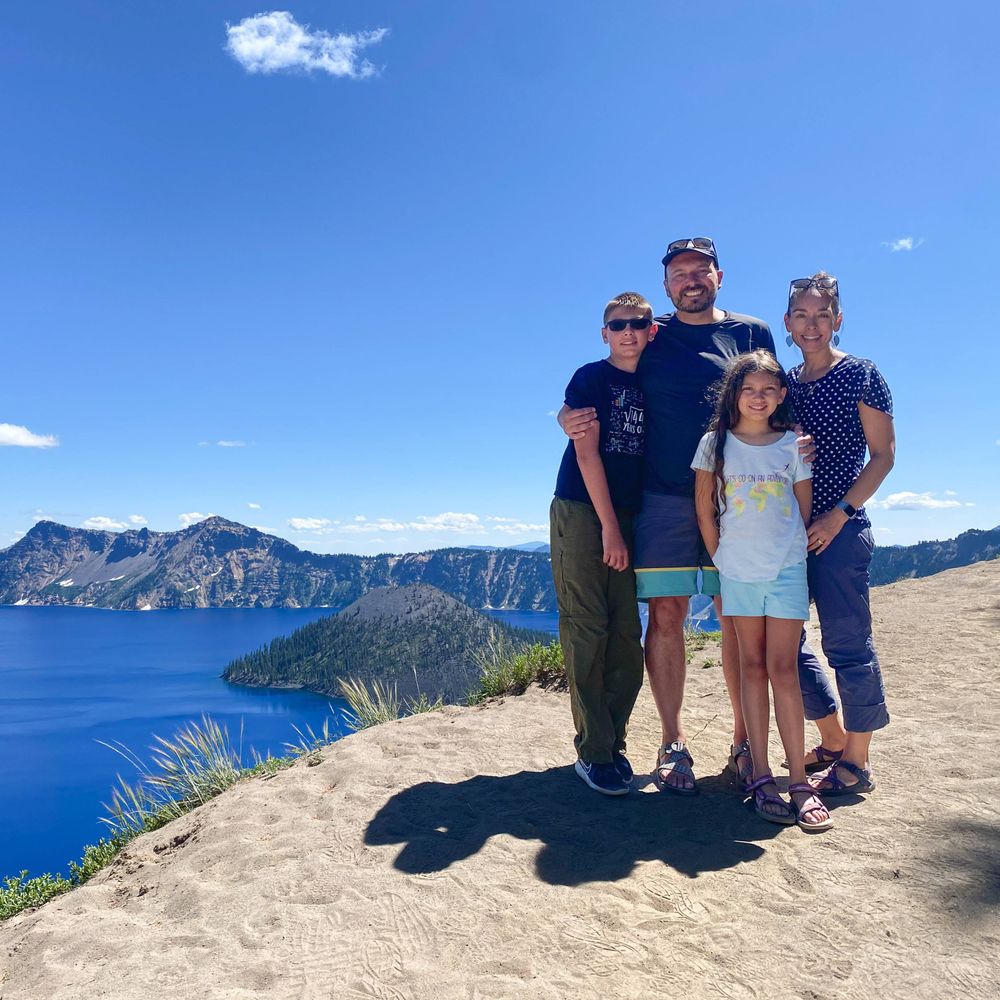
A new, nerdy paper. We figured out (some) of the rules underlying cell-permeability of probes and designed ligands that light up, grab, and move proteins around. Awesome @hhmijanelia.bsky.social x @uwmadison.bsky.social x @stjuderesearch.bsky.social collaboration! www.pnas.org/doi/10.1073/...
PNAS
Proceedings of the National Academy of Sciences (PNAS), a peer reviewed journal of the National Academy of Sciences (NAS) - an authoritative source of high-impact, original research that broadly spans...
www.pnas.org
October 27, 2025 at 9:43 PM
A new, nerdy paper. We figured out (some) of the rules underlying cell-permeability of probes and designed ligands that light up, grab, and move proteins around. Awesome @hhmijanelia.bsky.social x @uwmadison.bsky.social x @stjuderesearch.bsky.social collaboration! www.pnas.org/doi/10.1073/...
Reposted by Shinya Tsukiji
A while back we found that the lipid-binding protein PLEKHA4 boosts Wnt/β-catenin signaling and drives melanoma growth in vivo. Now, we (Nathan Frederick) identify small-molecule inhibitors of PLEKHA4 & related proteins with anticancer activity in vitro! pubs.acs.org/doi/10.1021/....

Discovery, Optimization, and Anticancer Activity of Lipid-Competitive Pleckstrin Homology Domain-Containing Family A Inhibitors
Phosphoinositide signaling is a major cellular mechanism controlling cancer cell viability, proliferation, and survival. Yet, inhibition of lipid kinases that produce oncogenic phosphoinositides has afforded only a limited number of efficacious drugs attributed in large part to on-target toxicity resulting from the pleiotropic effects of these signaling lipids. Targeting the specific phosphoinositide effector pathways via competitive inhibitors of phosphoinositide-recognizing pleckstrin homology (PH) domains represents a relatively unexplored means to achieve greater specificity. Herein, we present the discovery from in silico screening, structure–activity relationship (SAR) optimization, and cellular characterization of novel phosphoinositide-competitive inhibitors of the pleckstrin homology domain-containing A (PLEKHA) family. These compounds induce cytotoxic effects in BRAF and NRAS mutant melanoma cells, consistent with on-target inhibition, and the most potent compound is activated by endogenous esterase activity, suggesting that prodrug esters represent a viable strategy for targeting the phosphoinositide-binding pockets of the PLEKHA family of PH domains.
pubs.acs.org
October 7, 2025 at 4:06 PM
A while back we found that the lipid-binding protein PLEKHA4 boosts Wnt/β-catenin signaling and drives melanoma growth in vivo. Now, we (Nathan Frederick) identify small-molecule inhibitors of PLEKHA4 & related proteins with anticancer activity in vitro! pubs.acs.org/doi/10.1021/....
Reposted by Shinya Tsukiji
How do cells sense & respond to lipid imbalances? What happens when a disease-relevant enzyme is blocked? Shiying Huang investigates phosphoinositide lipids with the Balla lab & discovers an integrated cellular response that boosts alternate lipid synthesis pathways! www.biorxiv.org/content/10.1...


October 3, 2025 at 1:03 PM
How do cells sense & respond to lipid imbalances? What happens when a disease-relevant enzyme is blocked? Shiying Huang investigates phosphoinositide lipids with the Balla lab & discovers an integrated cellular response that boosts alternate lipid synthesis pathways! www.biorxiv.org/content/10.1...
Reposted by Shinya Tsukiji

Very excited to share new work out today in @natchembio.nature.com on a new approach - FACES - for selectively imaging of phospholipids and other biomolecules at spatial resolutions down to individual membrane leaflets (1/n) www.nature.com/articles/s41...

Leaflet-specific phospholipid imaging using genetically encoded proximity sensors - Nature Chemical Biology
An approach combining bioorthogonal chemistry with genetically encoded fluorogen-activating proteins enables subcellular imaging of phospholipids and glycans, as well as the visualization of lipid tra...
www.nature.com
September 15, 2025 at 6:03 PM
Very excited to share new work out today in @natchembio.nature.com on a new approach - FACES - for selectively imaging of phospholipids and other biomolecules at spatial resolutions down to individual membrane leaflets (1/n) www.nature.com/articles/s41...
Reposted by Shinya Tsukiji
Excited to share our most recent work out in @jacs.acspublications.org today! We combined mRNA display with macrocyclic peptide chemistry to discover novel RNA-targeting molecules. This fits into our mission to target RNA regulation with novel therapeutic modalities
pubs.acs.org/doi/10.1021/...
pubs.acs.org/doi/10.1021/...

Discovery of Macrocyclic Peptide Binders, Covalent Modifiers, and Degraders of a Structured RNA by mRNA Display
RNA targeting represents a compelling strategy for addressing challenging therapeutic targets that are otherwise intractable through traditional protein targeting. Revolutionary approaches in RNA-focused small molecule libraries have successfully identified RNA-binding ligands but generally remain limited in diversity and impeded by a dearth of structural insight into RNA and RNA complexes. Cyclic peptides are potential structural mimics of evolutionary RNA-protein interacting motifs and can be massively diversified and selected via genetically encoded libraries, offering a complementary approach. This study introduces genetically encoded thioether cyclic peptide libraries constructed through mRNA display using a dibromoxylene linker and its fluorosulfonyl derivative that can covalently engage RNA nucleophiles. Using an optimized mRNA display workflow for RNA binders, we discovered high affinity, covalent and noncovalent binders for SNCA 5′ UTR IRE, the upstream iron-responsive element that post-transcriptionally regulates the expression of α-synuclein, an intrinsically disordered protein implicated in Parkinsonism and related neurodegenerative diseases. Notably, a stringent selection strategy employing “base-paired” target analog counterselection enhanced specificity by deenriching nonspecific electrostatic interactions mediated by polycationic residues. Further engineering hit peptides with an imidazole tag yielded selective RNA degraders in which covalent degraders showed noticeably improved potency from noncovalent counterparts. This work provides a prototype framework for evolution-driven, high-throughput, RNA-targeted drug discovery using cyclic peptides.
pubs.acs.org
September 15, 2025 at 2:47 PM
Excited to share our most recent work out in @jacs.acspublications.org today! We combined mRNA display with macrocyclic peptide chemistry to discover novel RNA-targeting molecules. This fits into our mission to target RNA regulation with novel therapeutic modalities
pubs.acs.org/doi/10.1021/...
pubs.acs.org/doi/10.1021/...
Reposted by Shinya Tsukiji
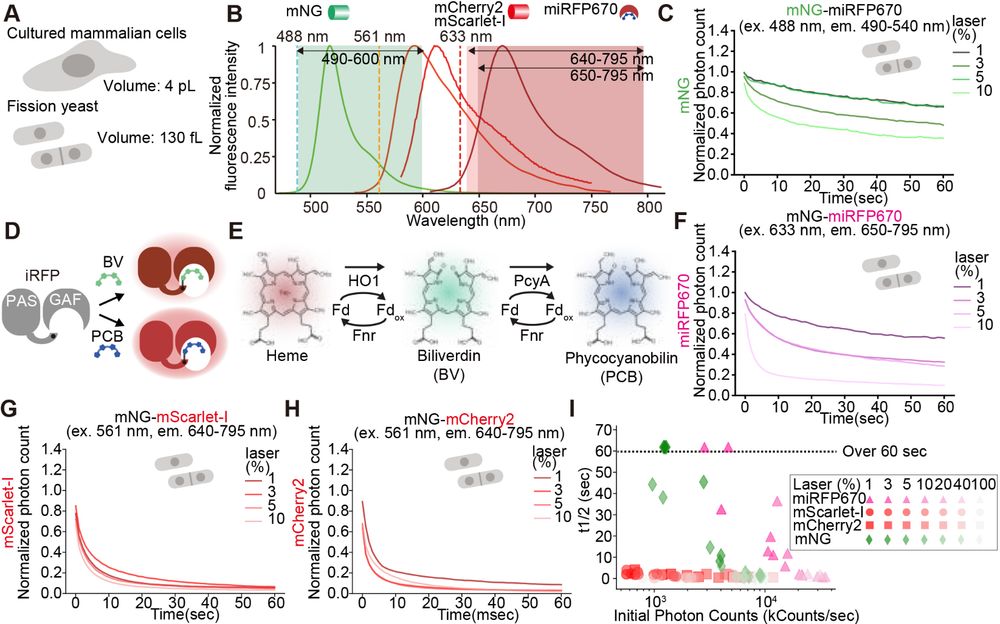
Aika Toyama, Yuhei Goto, Kazuhiro Aoki and colleagues quantify cyclin–CDK dissociation constants using FCCS with green and near-infrared fluorescent proteins.
journals.biologists.com/jcs/article/...
journals.biologists.com/jcs/article/...
September 15, 2025 at 8:54 AM
Aika Toyama, Yuhei Goto, Kazuhiro Aoki and colleagues quantify cyclin–CDK dissociation constants using FCCS with green and near-infrared fluorescent proteins.
journals.biologists.com/jcs/article/...
journals.biologists.com/jcs/article/...
Reposted by Shinya Tsukiji
Congratulations to Hen (again)! Her paper, in collaboration with Jade, Juan, and the EPFL ACCESS team was just published. The paper describes a chemigenetic gene reporter tool for time-stamping and pulse-chase-type experiments.
chemistry-europe.onlinelibrary.wiley.com/doi/10.1002/...
chemistry-europe.onlinelibrary.wiley.com/doi/10.1002/...

Two‐Color Timestamping of Gene Expression with a Chemigenetic Reporter System
A chemigenetic reporter assay is developed that enables monitoring of BiP/GRP78 expression, an important chaperone and key regulator of the unfolded protein response. The system is based on the coexp....
chemistry-europe.onlinelibrary.wiley.com
September 15, 2025 at 7:54 AM
Congratulations to Hen (again)! Her paper, in collaboration with Jade, Juan, and the EPFL ACCESS team was just published. The paper describes a chemigenetic gene reporter tool for time-stamping and pulse-chase-type experiments.
chemistry-europe.onlinelibrary.wiley.com/doi/10.1002/...
chemistry-europe.onlinelibrary.wiley.com/doi/10.1002/...
Our paper has been featured on the front cover of the latest issue of ChemBioChem! Huge thanks to Hiroko Uchida for the beautiful artwork—we love it! 😊
chemistry-europe.onlinelibrary.wiley.com/toc/14397633...
chemistry-europe.onlinelibrary.wiley.com/toc/14397633...

September 13, 2025 at 12:19 PM
Our paper has been featured on the front cover of the latest issue of ChemBioChem! Huge thanks to Hiroko Uchida for the beautiful artwork—we love it! 😊
chemistry-europe.onlinelibrary.wiley.com/toc/14397633...
chemistry-europe.onlinelibrary.wiley.com/toc/14397633...
Reposted by Shinya Tsukiji
Dylan's study is now out in @jacs.acspublications.org! Key new experiments by Yuan-Ting Cho support a model for why a rare three-tailed lipid, NAPE, might accumulate during stroke & heart attack: as a protective response to promote lactate export as cells shift to glycolysis doi.org/10.1021/jacs...
September 5, 2025 at 12:23 PM
Dylan's study is now out in @jacs.acspublications.org! Key new experiments by Yuan-Ting Cho support a model for why a rare three-tailed lipid, NAPE, might accumulate during stroke & heart attack: as a protective response to promote lactate export as cells shift to glycolysis doi.org/10.1021/jacs...
Welcome back, Keita! After a wonderful 3-month stay at the Neal Devaraj lab at UCSD, he’s back with exciting results and unforgettable memories👍 Huge thanks to Neal and his amazing team for hosting him!

September 1, 2025 at 9:53 PM
Welcome back, Keita! After a wonderful 3-month stay at the Neal Devaraj lab at UCSD, he’s back with exciting results and unforgettable memories👍 Huge thanks to Neal and his amazing team for hosting him!
Exciting new paper from Shigeki Kiyonaka lab, published in Chemistry Letters! Congratulations to all authors! 🥳
academic.oup.com/chemlett/art...
academic.oup.com/chemlett/art...

A chemogenetic strategy for inhibiting G protein-coupled receptor activity using metal coordination
Abstract. G protein-coupled receptors regulate diverse physiological functions in mammalian cells. Methods enabling temporal control of individual G protei
academic.oup.com
August 29, 2025 at 3:11 AM
Exciting new paper from Shigeki Kiyonaka lab, published in Chemistry Letters! Congratulations to all authors! 🥳
academic.oup.com/chemlett/art...
academic.oup.com/chemlett/art...
Reposted by Shinya Tsukiji

Our paper on the antigen fluorogenic sensor is featured as a supplementary cover in this week’s @jacs.acspublications.org
! Beautiful artwork by our co-author, Ryo Tachibana! Read it here: pubs.acs.org/doi/full/10....
#MyACSCover
! Beautiful artwork by our co-author, Ryo Tachibana! Read it here: pubs.acs.org/doi/full/10....
#MyACSCover

August 28, 2025 at 4:54 AM
Our paper on the antigen fluorogenic sensor is featured as a supplementary cover in this week’s @jacs.acspublications.org
! Beautiful artwork by our co-author, Ryo Tachibana! Read it here: pubs.acs.org/doi/full/10....
#MyACSCover
! Beautiful artwork by our co-author, Ryo Tachibana! Read it here: pubs.acs.org/doi/full/10....
#MyACSCover
Reposted by Shinya Tsukiji
Congrats to Juan! His discovery of hemicyanines as potent activators of paraptotic cell death has just been published! With great contributions from Jade (initial observations of ER swelling) and Craig (crucial supporting experiments)!
pubs.acs.org/doi/10.1021/...
pubs.acs.org/doi/10.1021/...

Potent Inducers of Paraptosis through Electronic Tuning of Hemicyanine Electrophiles
Paraptosis is a distinct form of programmed cell death characterized by cytoplasmic vacuolization, mitochondrial swelling, and endoplasmic reticulum (ER) dilation, offering an alternative to apoptosis...
pubs.acs.org
August 26, 2025 at 10:15 AM
Congrats to Juan! His discovery of hemicyanines as potent activators of paraptotic cell death has just been published! With great contributions from Jade (initial observations of ER swelling) and Craig (crucial supporting experiments)!
pubs.acs.org/doi/10.1021/...
pubs.acs.org/doi/10.1021/...