



Shannon Burns, PhD
@shannon47burns.bsky.social
Assistant Professor of Psychological Science & Neuroscience at Pomona College in Claremont, CA
Reposted by Shannon Burns, PhD
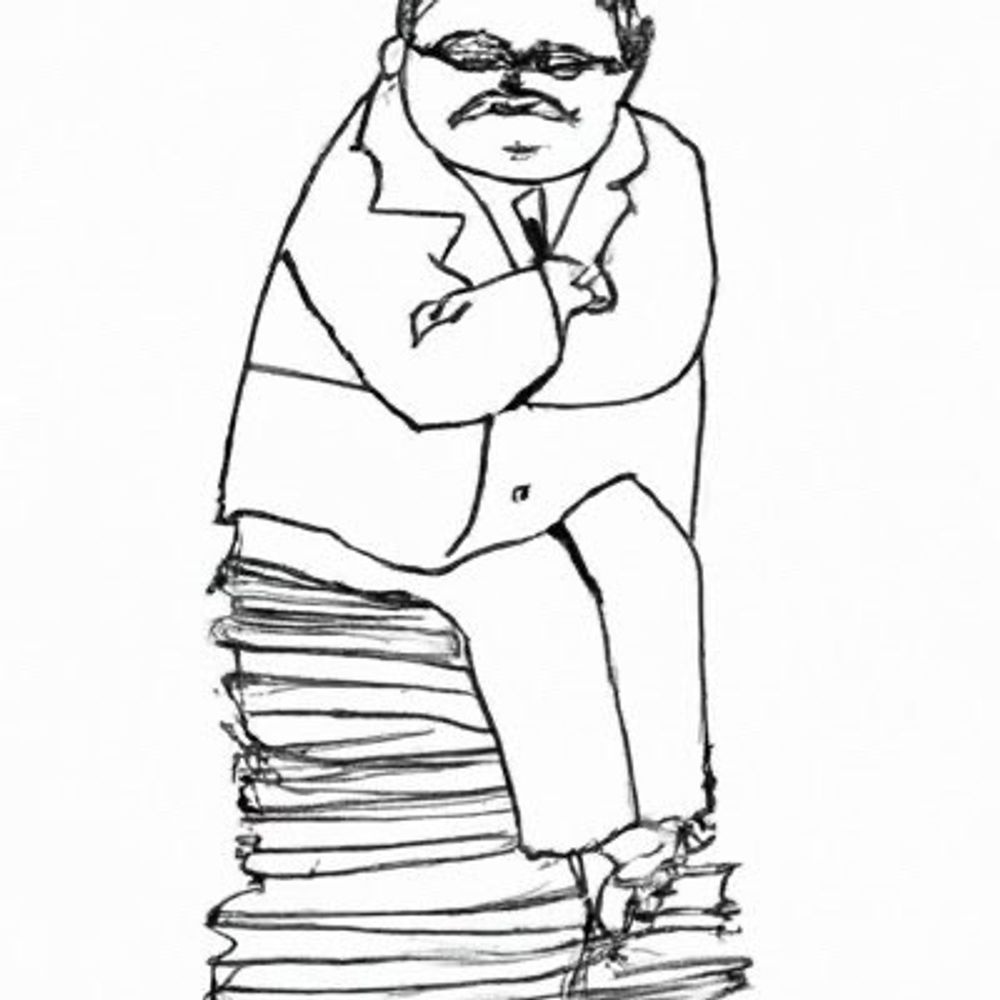
Keeping this at hand in case I need to point to it and tap

December 12, 2025 at 4:39 PM
Keeping this at hand in case I need to point to it and tap
Reposted by Shannon Burns, PhD

🚨 SynthNet is out 🚨
Researchers propose new constructs and measures faster than anyone can track. We (@anniria.bsky.social @ruben.the100.ci) built a search engine to check what already exists and help identify redundancies; indexing 74,000 scales from ~31,500 instruments in APA PsycTests. 🧵1/3
Researchers propose new constructs and measures faster than anyone can track. We (@anniria.bsky.social @ruben.the100.ci) built a search engine to check what already exists and help identify redundancies; indexing 74,000 scales from ~31,500 instruments in APA PsycTests. 🧵1/3
November 26, 2025 at 11:42 AM
🚨 SynthNet is out 🚨
Researchers propose new constructs and measures faster than anyone can track. We (@anniria.bsky.social @ruben.the100.ci) built a search engine to check what already exists and help identify redundancies; indexing 74,000 scales from ~31,500 instruments in APA PsycTests. 🧵1/3
Researchers propose new constructs and measures faster than anyone can track. We (@anniria.bsky.social @ruben.the100.ci) built a search engine to check what already exists and help identify redundancies; indexing 74,000 scales from ~31,500 instruments in APA PsycTests. 🧵1/3
Reposted by Shannon Burns, PhD

Officially out! In this review, Aaron Chuey and I discuss how existing work on ToM mostly focused on a single individual’s mental states (e.g., what Sally thinks). Extending ToM, we argue for ToMS—an understanding of how multiple individuals communicate and influence each others’ minds. t.ly/u4rtb

Theory of Minds: Early Understanding of Interacting Minds
The idea that we understand others’ actions in terms of their underlying mental states has shaped decades of developmental research on social cognition. Existing work, however, has primarily focused o...
www.annualreviews.org
December 10, 2025 at 11:30 PM
Officially out! In this review, Aaron Chuey and I discuss how existing work on ToM mostly focused on a single individual’s mental states (e.g., what Sally thinks). Extending ToM, we argue for ToMS—an understanding of how multiple individuals communicate and influence each others’ minds. t.ly/u4rtb
Reposted by Shannon Burns, PhD

Let me tell you a story. Perhaps you can guess where this is going... though it does have a bit of a twist.
I was poking around Google Scholar for publications about the relationship between chatbots and wellness. Oh how useful: a systematic literature review! Let's dig into the findings. 🧵
I was poking around Google Scholar for publications about the relationship between chatbots and wellness. Oh how useful: a systematic literature review! Let's dig into the findings. 🧵

December 5, 2025 at 10:35 PM
Let me tell you a story. Perhaps you can guess where this is going... though it does have a bit of a twist.
I was poking around Google Scholar for publications about the relationship between chatbots and wellness. Oh how useful: a systematic literature review! Let's dig into the findings. 🧵
I was poking around Google Scholar for publications about the relationship between chatbots and wellness. Oh how useful: a systematic literature review! Let's dig into the findings. 🧵
Reposted by Shannon Burns, PhD

So...my undergrad thesis student is doing a quality analysis of studies found in meta-analyses. She identified a few and we contacted the authors to request their effect sizes and other variables for the studies in their papers.
Here's what happened:
scientiapsychiatrica.com/index.php/Sc...
Here's what happened:
scientiapsychiatrica.com/index.php/Sc...
The Impact of Social Media on Adolescent Mental Health: A Meta-Analysis | Scientia Psychiatrica
Introduction: The proliferation of social media has raised significant concerns about its potential effects on the mental health of adolescents. This meta-analysis aims to provide a comprehensive asse...
scientiapsychiatrica.com
December 7, 2025 at 11:11 PM
So...my undergrad thesis student is doing a quality analysis of studies found in meta-analyses. She identified a few and we contacted the authors to request their effect sizes and other variables for the studies in their papers.
Here's what happened:
scientiapsychiatrica.com/index.php/Sc...
Here's what happened:
scientiapsychiatrica.com/index.php/Sc...
Reposted by Shannon Burns, PhD

A couple years (!) in the making: we’re releasing a new corpus of embodied, collaborative problem solving dialogues. We paid 36 people to play Portal 2’s co-op mode and collected their speech + game recordings.
Paper: arxiv.org/abs/2512.03381
Website: berkeley-nlp.github.io/portal-dialo...
1/n
Paper: arxiv.org/abs/2512.03381
Website: berkeley-nlp.github.io/portal-dialo...
1/n

December 5, 2025 at 6:54 PM
A couple years (!) in the making: we’re releasing a new corpus of embodied, collaborative problem solving dialogues. We paid 36 people to play Portal 2’s co-op mode and collected their speech + game recordings.
Paper: arxiv.org/abs/2512.03381
Website: berkeley-nlp.github.io/portal-dialo...
1/n
Paper: arxiv.org/abs/2512.03381
Website: berkeley-nlp.github.io/portal-dialo...
1/n
Reposted by Shannon Burns, PhD

New preprint w/ Malin Styrnal & @martinhebart.bsky.social
Have you ever computed noise ceilings to understand how well a model performs? We wrote a clarifying note on a subtle and common misapplication that can make models appear quite a lot better than they are.
osf.io/preprints/ps...
Have you ever computed noise ceilings to understand how well a model performs? We wrote a clarifying note on a subtle and common misapplication that can make models appear quite a lot better than they are.
osf.io/preprints/ps...
OSF
osf.io
December 4, 2025 at 6:53 PM
New preprint w/ Malin Styrnal & @martinhebart.bsky.social
Have you ever computed noise ceilings to understand how well a model performs? We wrote a clarifying note on a subtle and common misapplication that can make models appear quite a lot better than they are.
osf.io/preprints/ps...
Have you ever computed noise ceilings to understand how well a model performs? We wrote a clarifying note on a subtle and common misapplication that can make models appear quite a lot better than they are.
osf.io/preprints/ps...
Reposted by Shannon Burns, PhD

1) With the conventional alpha = 5% and a huge sample, you may have extremely high power for your effect of interest – say, 99.9%. That means beta (type-II error rate) = 0.1%. Are you sure that you want your type-I error rate to be 50x the size of your type-II error rate? >
October 31, 2025 at 8:13 AM
1) With the conventional alpha = 5% and a huge sample, you may have extremely high power for your effect of interest – say, 99.9%. That means beta (type-II error rate) = 0.1%. Are you sure that you want your type-I error rate to be 50x the size of your type-II error rate? >
Reposted by Shannon Burns, PhD

Excited to see these studies (finally) published in Scientific Reports! 🚨
S1: More social media users perceived themselves as addicted than met clinical addiction criteria.
S2: Increasing perceived addiction hurt perceived control over use and increased self-blame for overuse.
Thread below... 🧵
S1: More social media users perceived themselves as addicted than met clinical addiction criteria.
S2: Increasing perceived addiction hurt perceived control over use and increased self-blame for overuse.
Thread below... 🧵

November 29, 2025 at 2:33 AM
Excited to see these studies (finally) published in Scientific Reports! 🚨
S1: More social media users perceived themselves as addicted than met clinical addiction criteria.
S2: Increasing perceived addiction hurt perceived control over use and increased self-blame for overuse.
Thread below... 🧵
S1: More social media users perceived themselves as addicted than met clinical addiction criteria.
S2: Increasing perceived addiction hurt perceived control over use and increased self-blame for overuse.
Thread below... 🧵


Reposted by Shannon Burns, PhD

Implicit racial attitudes accounted for ~2.5% of variance in behavior beyond explicit racial attitudes, an effect size that was *just* over our agreed upon threshold for what would constitute a practically significant effect. Explicit racial attitudes still explained much more variance (~45%).

December 2, 2025 at 2:14 PM
Implicit racial attitudes accounted for ~2.5% of variance in behavior beyond explicit racial attitudes, an effect size that was *just* over our agreed upon threshold for what would constitute a practically significant effect. Explicit racial attitudes still explained much more variance (~45%).
Reposted by Shannon Burns, PhD

Things I currently think you should be considering in your proposals. Although this thread will be NIH-centric, my guess is that some of this applies to NSF, etc. Much is synthesized from public information. Much of this is what we've advised all along, just with, um, more emphasis.
Here we go:
Here we go:
November 25, 2025 at 3:27 PM
Things I currently think you should be considering in your proposals. Although this thread will be NIH-centric, my guess is that some of this applies to NSF, etc. Much is synthesized from public information. Much of this is what we've advised all along, just with, um, more emphasis.
Here we go:
Here we go:
Reposted by Shannon Burns, PhD

📍Excited to share that our paper was selected as a Spotlight at #NeurIPS2025!
arxiv.org/pdf/2410.03972
It started from a question I kept running into:
When do RNNs trained on the same task converge/diverge in their solutions?
🧵⬇️
arxiv.org/pdf/2410.03972
It started from a question I kept running into:
When do RNNs trained on the same task converge/diverge in their solutions?
🧵⬇️

November 24, 2025 at 4:43 PM
📍Excited to share that our paper was selected as a Spotlight at #NeurIPS2025!
arxiv.org/pdf/2410.03972
It started from a question I kept running into:
When do RNNs trained on the same task converge/diverge in their solutions?
🧵⬇️
arxiv.org/pdf/2410.03972
It started from a question I kept running into:
When do RNNs trained on the same task converge/diverge in their solutions?
🧵⬇️
Reposted by Shannon Burns, PhD

Is the “standard workflow” holding back fMRI analysis?
Mass-univariate analysis is still the bread-and-butter: intuitive, fast… and chronically overfitted. Add harsh multiple-comparison penalties, and we patch the workflow with statistical band-aids. No wonder the stringency debates never die.
Mass-univariate analysis is still the bread-and-butter: intuitive, fast… and chronically overfitted. Add harsh multiple-comparison penalties, and we patch the workflow with statistical band-aids. No wonder the stringency debates never die.
November 18, 2025 at 10:13 PM
Is the “standard workflow” holding back fMRI analysis?
Mass-univariate analysis is still the bread-and-butter: intuitive, fast… and chronically overfitted. Add harsh multiple-comparison penalties, and we patch the workflow with statistical band-aids. No wonder the stringency debates never die.
Mass-univariate analysis is still the bread-and-butter: intuitive, fast… and chronically overfitted. Add harsh multiple-comparison penalties, and we patch the workflow with statistical band-aids. No wonder the stringency debates never die.
Reposted by Shannon Burns, PhD

Delighted to share our new Perspective article @natrevneuro.nature.com, led by the great @edoardochidichimo.bsky.social : "Towards an informational account of interpersonal coordination". With @loopyluppi.bsky.social, Pedro Mediano, @introspection.bsky.social, Victoria Leong and Richard Bethlehem.

November 19, 2025 at 2:27 PM
Delighted to share our new Perspective article @natrevneuro.nature.com, led by the great @edoardochidichimo.bsky.social : "Towards an informational account of interpersonal coordination". With @loopyluppi.bsky.social, Pedro Mediano, @introspection.bsky.social, Victoria Leong and Richard Bethlehem.
Reposted by Shannon Burns, PhD

new paper by Sean Westwood:
With current technology, it is impossible to tell whether survey respondents are real or bots. Among other things, makes it easy for bad actors to manipulate outcomes. No good news here for the future of online-based survey research
With current technology, it is impossible to tell whether survey respondents are real or bots. Among other things, makes it easy for bad actors to manipulate outcomes. No good news here for the future of online-based survey research

November 18, 2025 at 7:16 PM
new paper by Sean Westwood:
With current technology, it is impossible to tell whether survey respondents are real or bots. Among other things, makes it easy for bad actors to manipulate outcomes. No good news here for the future of online-based survey research
With current technology, it is impossible to tell whether survey respondents are real or bots. Among other things, makes it easy for bad actors to manipulate outcomes. No good news here for the future of online-based survey research
Reposted by Shannon Burns, PhD

We wrote the Strain on scientific publishing to highlight the problems of time & trust. With a fantastic group of co-authors, we present The Drain of Scientific Publishing:
a 🧵 1/n
Drain: arxiv.org/abs/2511.04820
Strain: direct.mit.edu/qss/article/...
Oligopoly: direct.mit.edu/qss/article/...
a 🧵 1/n
Drain: arxiv.org/abs/2511.04820
Strain: direct.mit.edu/qss/article/...
Oligopoly: direct.mit.edu/qss/article/...


November 11, 2025 at 11:52 AM
We wrote the Strain on scientific publishing to highlight the problems of time & trust. With a fantastic group of co-authors, we present The Drain of Scientific Publishing:
a 🧵 1/n
Drain: arxiv.org/abs/2511.04820
Strain: direct.mit.edu/qss/article/...
Oligopoly: direct.mit.edu/qss/article/...
a 🧵 1/n
Drain: arxiv.org/abs/2511.04820
Strain: direct.mit.edu/qss/article/...
Oligopoly: direct.mit.edu/qss/article/...
Reposted by Shannon Burns, PhD

For undergraduates curious about complex systems research, applications are now open for the 2026 Undergraduate Complexity Research (UCR) program — a fully funded, 10-week summer research experience at the Santa Fe Institute.
Apply by Jan. 14, 2026: santafe.edu/ucr
Apply by Jan. 14, 2026: santafe.edu/ucr
November 17, 2025 at 6:30 PM
For undergraduates curious about complex systems research, applications are now open for the 2026 Undergraduate Complexity Research (UCR) program — a fully funded, 10-week summer research experience at the Santa Fe Institute.
Apply by Jan. 14, 2026: santafe.edu/ucr
Apply by Jan. 14, 2026: santafe.edu/ucr
Reposted by Shannon Burns, PhD

periodic reminder of the existence of Atkinson Hyperlegible, a free font available from the Braille Institute designed to improve readability for people with low vision
I use it in talks because it's pretty and also because, as an audience member, I am perpetually squinting at people's slides
I use it in talks because it's pretty and also because, as an audience member, I am perpetually squinting at people's slides

Atkinson Hyperlegible Font - Braille Institute
Read easier with Atkinson Hyperlegible Font, crafted for low-vision readers. Download for free and enjoy clear letters and numbers on your computer!
www.brailleinstitute.org
November 17, 2025 at 4:19 AM
periodic reminder of the existence of Atkinson Hyperlegible, a free font available from the Braille Institute designed to improve readability for people with low vision
I use it in talks because it's pretty and also because, as an audience member, I am perpetually squinting at people's slides
I use it in talks because it's pretty and also because, as an audience member, I am perpetually squinting at people's slides
Reposted by Shannon Burns, PhD

Our paper @sarabogels.bsky.social covering our pre-registered multi-year research is now finally out in Cognition. We show that in conversations people reduce their multimodal signals non-linearly; the steeper this non-linear drop-off the more communicative success.
www.wimpouw.com/files/Bogels...
www.wimpouw.com/files/Bogels...

November 11, 2025 at 4:49 PM
Our paper @sarabogels.bsky.social covering our pre-registered multi-year research is now finally out in Cognition. We show that in conversations people reduce their multimodal signals non-linearly; the steeper this non-linear drop-off the more communicative success.
www.wimpouw.com/files/Bogels...
www.wimpouw.com/files/Bogels...
Reposted by Shannon Burns, PhD

Remembering the time in grad school when a Black PhD student at the next desk over was doing computer vision research. He was testing out a facial recognition tool using his own face as a reference, but it wasn't working. So he asked a (white) colleague to try it, and of course it worked for her.
New incredible detail here: ICE says a match in its facial recognition app Mobile Fortify is a "definitive" determination of a person's status, and that this overrides birth certificates. This is an app ICE is using in the field to scan people
www.404media.co/ice-and-cbp-...
www.404media.co/ice-and-cbp-...

October 29, 2025 at 10:33 PM
Remembering the time in grad school when a Black PhD student at the next desk over was doing computer vision research. He was testing out a facial recognition tool using his own face as a reference, but it wasn't working. So he asked a (white) colleague to try it, and of course it worked for her.
Reposted by Shannon Burns, PhD
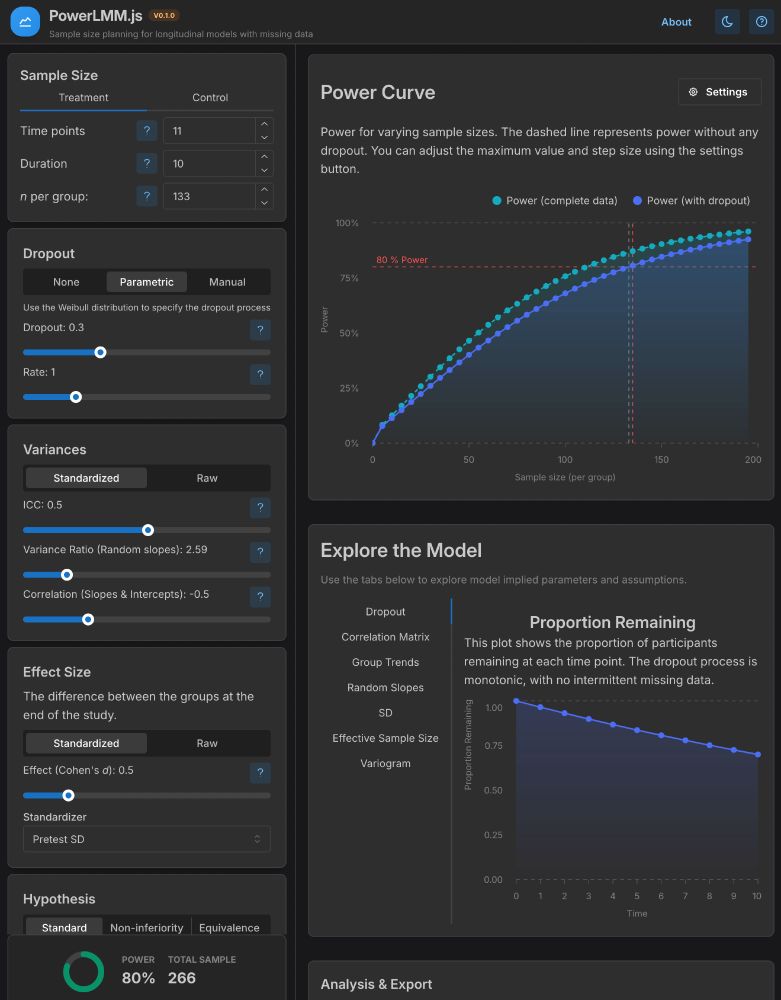
🎉 @rpsychologist.com 's PowerLMM.js is the online statistics application of the year 2025 🎉
powerlmmjs.rpsychologist.com
- Calculate power (etc) for multilevel models
- Examine effects of dropout and other important parameters
- Fast! (Instant results)
powerlmmjs.rpsychologist.com
- Calculate power (etc) for multilevel models
- Examine effects of dropout and other important parameters
- Fast! (Instant results)
October 28, 2025 at 2:37 PM
🎉 @rpsychologist.com 's PowerLMM.js is the online statistics application of the year 2025 🎉
powerlmmjs.rpsychologist.com
- Calculate power (etc) for multilevel models
- Examine effects of dropout and other important parameters
- Fast! (Instant results)
powerlmmjs.rpsychologist.com
- Calculate power (etc) for multilevel models
- Examine effects of dropout and other important parameters
- Fast! (Instant results)
Reposted by Shannon Burns, PhD

Sookud and colleagues found that individuals with higher compulsivity and intrusive thoughts develop a less certain internal understanding of the external world, and this mediates the link between symptoms and goal-directed behaviors.

Impaired goal-directed planning in transdiagnostic compulsivity is explained by uncertainty about learned task structure
Diminished use of goal-directed (“model-based”) decision-making is a hallmark of transdiagnostic
compulsivity, promoting an over-reliance on inflexible and habitual behaviours. However,
the origin of ...
www.biologicalpsychiatrycnni.org
October 27, 2025 at 4:02 PM
Sookud and colleagues found that individuals with higher compulsivity and intrusive thoughts develop a less certain internal understanding of the external world, and this mediates the link between symptoms and goal-directed behaviors.
Reposted by Shannon Burns, PhD
Fundamental features of social environments determine rate of social affiliation www.pnas.org/doi/10.1073/...


October 18, 2025 at 10:34 AM
Fundamental features of social environments determine rate of social affiliation www.pnas.org/doi/10.1073/...
Reposted by Shannon Burns, PhD

Gestural and verbal evidence of conceptual representation differences in blind and sighted individuals. New publication by @ezgimamus.bsky.social & al. with @asliozyurek.bsky.social. doi.org/10.1111/cogs....

Gestural and Verbal Evidence of Conceptual Representation Differences in Blind and Sighted Individuals
This preregistered study examined whether visual experience influences conceptual representations by examining both gestural expression and feature listing. Gestures—mostly driven by analog mappings ....
doi.org
October 15, 2025 at 10:59 AM
Gestural and verbal evidence of conceptual representation differences in blind and sighted individuals. New publication by @ezgimamus.bsky.social & al. with @asliozyurek.bsky.social. doi.org/10.1111/cogs....