



Jeff McNairn
@jlmcnairn.bsky.social
Canadian Historian dividing his time between Toronto, Kingston, and Ottawa and between good food, dry gin, and amazing friends.
Reposted by Jeff McNairn
Brilliant from @adamserwer.bsky.social: the Roberts Court's attack on the Reconstruction Amendments are "consistent with the Antebellum Constitution’s narrow definition of who “We the People” are."
Here are some legal historians exploring the Antebellum Const.
www.theatlantic.com/politics/202...
Here are some legal historians exploring the Antebellum Const.
www.theatlantic.com/politics/202...

Conservatives Want the Antebellum Constitution Back
The Fourteenth and Fifteenth Amendments are in trouble.
www.theatlantic.com
December 21, 2025 at 9:02 PM
Brilliant from @adamserwer.bsky.social: the Roberts Court's attack on the Reconstruction Amendments are "consistent with the Antebellum Constitution’s narrow definition of who “We the People” are."
Here are some legal historians exploring the Antebellum Const.
www.theatlantic.com/politics/202...
Here are some legal historians exploring the Antebellum Const.
www.theatlantic.com/politics/202...
Reposted by Jeff McNairn
On this day in Canadian parliamentary history - December 21, 1967: Justice Minister Trudeau gives a press conference outside the House of Commons on the government’s omnibus criminal law bill. His notable quote? “There is no place for the state in the bedrooms of the nation.”
December 21, 2025 at 10:57 AM
On this day in Canadian parliamentary history - December 21, 1967: Justice Minister Trudeau gives a press conference outside the House of Commons on the government’s omnibus criminal law bill. His notable quote? “There is no place for the state in the bedrooms of the nation.”
Reposted by Jeff McNairn

Tim Hodgson is the most influential member of Mark Carney’s cabinet, and he epitomizes the shift in governing styles and priorities this year. So I spent some time trying to understand how he approaches his job and how it’s going so far. www.theglobeandmail.com/business/art...

Meet Tim Hodgson, the unconventional Energy Minister with a Bay Street eye for deals
Companies seeking government funding or fast-tracking must make their case to the blunt former investment banker, who has little interest in partisanship or policy debates
www.theglobeandmail.com
December 20, 2025 at 1:34 PM
Tim Hodgson is the most influential member of Mark Carney’s cabinet, and he epitomizes the shift in governing styles and priorities this year. So I spent some time trying to understand how he approaches his job and how it’s going so far. www.theglobeandmail.com/business/art...
Reposted by Jeff McNairn

I know not everyone shares my #Foucault obsession, but this just out in #Archivaria 100th anniversary issue "Legacies of Critical Theory in Archives." Thanks guest ed @archivalobjects.bsky.social. Thanks also @historiamagoria.bsky.social for hosting my Messecar Visiting Prof gig, where this began.


December 19, 2025 at 2:30 PM
I know not everyone shares my #Foucault obsession, but this just out in #Archivaria 100th anniversary issue "Legacies of Critical Theory in Archives." Thanks guest ed @archivalobjects.bsky.social. Thanks also @historiamagoria.bsky.social for hosting my Messecar Visiting Prof gig, where this began.
Looking forward to diving into this one. And to the future comparative Canadian work it will inform.

December 19, 2025 at 12:18 AM
Looking forward to diving into this one. And to the future comparative Canadian work it will inform.
Reposted by Jeff McNairn

We are hiring! The Department of History at the University of Guelph seeks a tenure-track Assistant Professor in History of the Middle East.
careers.uoguelph.ca/job/Guelph-A...
careers.uoguelph.ca/job/Guelph-A...

December 17, 2025 at 7:21 PM
We are hiring! The Department of History at the University of Guelph seeks a tenure-track Assistant Professor in History of the Middle East.
careers.uoguelph.ca/job/Guelph-A...
careers.uoguelph.ca/job/Guelph-A...
legalhistoryblog.blogspot.com/2025/12/crom...
Congratulations, Mike on this much deserved recognition for your innovative dissertation.
Congratulations, Mike on this much deserved recognition for your innovative dissertation.
Cromwell Dissertation Prize to Borsk, Olmstead
Continuing with our notices of the awards, prizes, and fellowships announced at the recent meeting of the American Society for Legal History...
legalhistoryblog.blogspot.com
December 16, 2025 at 7:30 PM
legalhistoryblog.blogspot.com/2025/12/crom...
Congratulations, Mike on this much deserved recognition for your innovative dissertation.
Congratulations, Mike on this much deserved recognition for your innovative dissertation.
Reposted by Jeff McNairn
Happy Statute of Westminster Day to all who celebrate!!
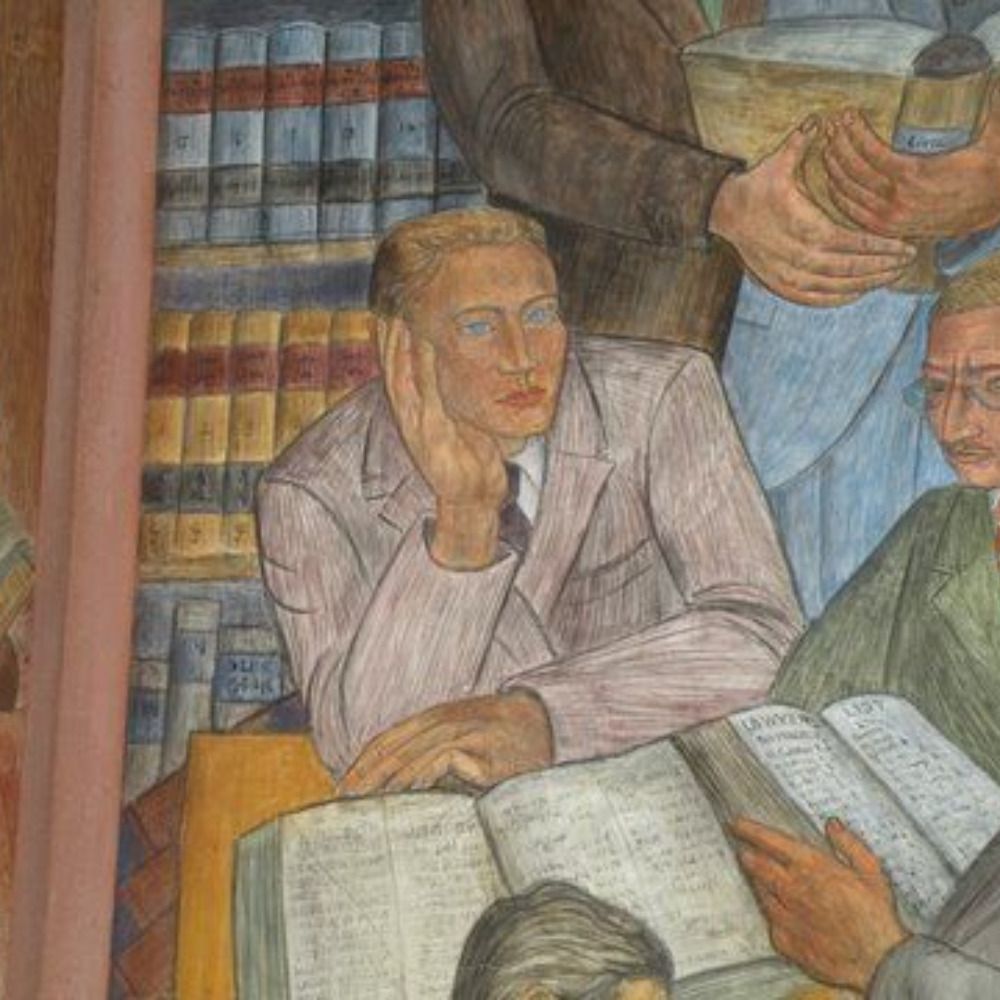
Also, happy 'read more closely' day to those who fall for the trap that the image on the Government of Canada's page about the Statute of Westminster is of the PM signing the Statute of Westminster... :-P
Also, happy 'read more closely' day to those who fall for the trap that the image on the Government of Canada's page about the Statute of Westminster is of the PM signing the Statute of Westminster... :-P


December 11, 2025 at 10:30 AM
Happy Statute of Westminster Day to all who celebrate!!
Also, happy 'read more closely' day to those who fall for the trap that the image on the Government of Canada's page about the Statute of Westminster is of the PM signing the Statute of Westminster... :-P
Also, happy 'read more closely' day to those who fall for the trap that the image on the Government of Canada's page about the Statute of Westminster is of the PM signing the Statute of Westminster... :-P
Reposted by Jeff McNairn

My new book, 'The Fenian Empire: A Hemispheric History of Irish Republican Nationalism' is now live in the NYU Press catalogue and due for release in early June, fittingly on the 160th anniversary of the first major Fenian raid on Canada
nyupress.org/978147983258...
nyupress.org/978147983258...

The Fenian Empire
A bold new exploration of Fenian revolutionary activity across the AmericasIn the aftermath of the American Civil War, the Fenian movement stood at a crossro...
nyupress.org
December 8, 2025 at 4:36 PM
My new book, 'The Fenian Empire: A Hemispheric History of Irish Republican Nationalism' is now live in the NYU Press catalogue and due for release in early June, fittingly on the 160th anniversary of the first major Fenian raid on Canada
nyupress.org/978147983258...
nyupress.org/978147983258...
Reposted by Jeff McNairn

Podcast Alert! I had so much fun chatting with @lizcovart.bsky.social about the history of 1820s interoceanic Canal Dreamers. The @bfworld.bsky.social podcast episode went live today! What a great last day of classes treat. @uncpress.bsky.social 🗃️
benfranklinsworld.com/episode-428-...
benfranklinsworld.com/episode-428-...

Episode 428: Jessica Lepler, America’s Forgotten Quest to Link Two Oceans
In the 1820s, Americans dared to dream big. They believed they could cut a canal through the wild, rain-soaked terrain of Nicaragua. This is their story.
benfranklinsworld.com
December 9, 2025 at 2:22 PM
Podcast Alert! I had so much fun chatting with @lizcovart.bsky.social about the history of 1820s interoceanic Canal Dreamers. The @bfworld.bsky.social podcast episode went live today! What a great last day of classes treat. @uncpress.bsky.social 🗃️
benfranklinsworld.com/episode-428-...
benfranklinsworld.com/episode-428-...
Reposted by Jeff McNairn
“When you allow a machine to summarize your reading, to generate the ideas for your essay, and then to write that essay, you’re not learning how to read, think, or write.“


November 30, 2025 at 9:40 AM
“When you allow a machine to summarize your reading, to generate the ideas for your essay, and then to write that essay, you’re not learning how to read, think, or write.“
Reposted by Jeff McNairn

It's finally here. A history of the Nova Scotia lobster fishery.
Morton is truly an historian's historian, and from the installments I've seen, the book is going to have riches of social history, politics, economics, and even some marine biology.
share.google/J3GYgjTkjV9I...
Morton is truly an historian's historian, and from the installments I've seen, the book is going to have riches of social history, politics, economics, and even some marine biology.
share.google/J3GYgjTkjV9I...

November 29, 2025 at 2:02 PM
It's finally here. A history of the Nova Scotia lobster fishery.
Morton is truly an historian's historian, and from the installments I've seen, the book is going to have riches of social history, politics, economics, and even some marine biology.
share.google/J3GYgjTkjV9I...
Morton is truly an historian's historian, and from the installments I've seen, the book is going to have riches of social history, politics, economics, and even some marine biology.
share.google/J3GYgjTkjV9I...
Reposted by Jeff McNairn

Canadian University salary data is out: Queen's has now passed Toronto in having the highest average professorial salary - $198,875.
November 25, 2025 at 2:59 PM
Canadian University salary data is out: Queen's has now passed Toronto in having the highest average professorial salary - $198,875.
Reposted by Jeff McNairn
Canadian professors by selected age ranges, 1971-2021

November 25, 2025 at 3:09 PM
Canadian professors by selected age ranges, 1971-2021
Reposted by Jeff McNairn

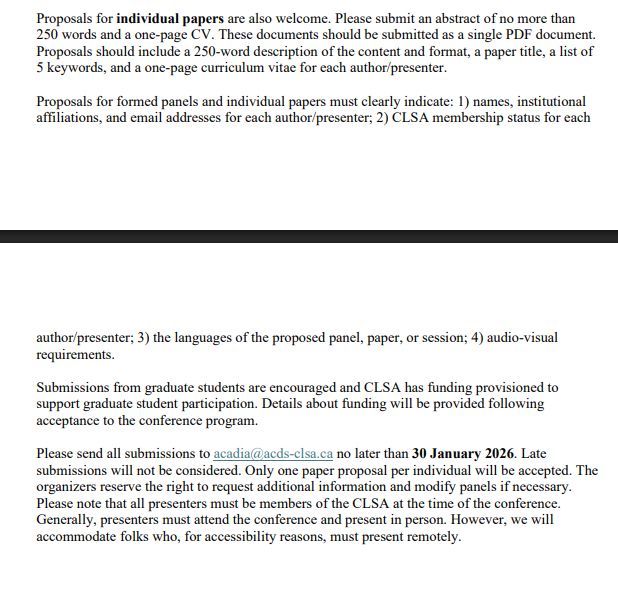
Dear law and society scholars! Come join us at the Canadian Law and Society Association annual conference next June at Acadia University in beautiful Wolfville, NS! Please share.

November 23, 2025 at 5:56 PM
Dear law and society scholars! Come join us at the Canadian Law and Society Association annual conference next June at Acadia University in beautiful Wolfville, NS! Please share.
Reposted by Jeff McNairn
This makes me physically ill. All hail the plagiarism machine that is destroying students’ ability to do everything: read, write, do research, think critically.
There’s still time to beat it. But not if administrators are determined to join it.
There’s still time to beat it. But not if administrators are determined to join it.

November 22, 2025 at 11:29 PM
This makes me physically ill. All hail the plagiarism machine that is destroying students’ ability to do everything: read, write, do research, think critically.
There’s still time to beat it. But not if administrators are determined to join it.
There’s still time to beat it. But not if administrators are determined to join it.
Reposted by Jeff McNairn
This is the start of round 2 of program cuts. A number of colleges tried to hold off these closures for a year, hoping the feds might change their mind about the visa programs. Now, the hope is gone.

George Brown’s renowned chef school halting one-third of its programs #StarExclusive

George Brown’s renowned chef school halting one-third of its programs
Enrolment is being halted in seven of 21 programs in culinary arts and hospitality as colleges face grim financial news.
www.thestar.com
November 20, 2025 at 11:57 PM
This is the start of round 2 of program cuts. A number of colleges tried to hold off these closures for a year, hoping the feds might change their mind about the visa programs. Now, the hope is gone.
Reposted by Jeff McNairn

Emilie Connolly's book about native dispossession and public is coming out next week. She's not on here to be embarrassed by me saying this is the proverbial "highly anticipated" book but at it is, at least by me.
press.princeton.edu/books/hardco...
press.princeton.edu/books/hardco...

November 18, 2025 at 4:29 PM
Emilie Connolly's book about native dispossession and public is coming out next week. She's not on here to be embarrassed by me saying this is the proverbial "highly anticipated" book but at it is, at least by me.
press.princeton.edu/books/hardco...
press.princeton.edu/books/hardco...
Reposted by Jeff McNairn

Out today (in USA)
press.princeton.edu/books/hardco...
press.princeton.edu/books/hardco...

Liberal Worlds
The intellectual biography of a Victorian Liberal polymath
press.princeton.edu
November 18, 2025 at 9:00 AM
Out today (in USA)
press.princeton.edu/books/hardco...
press.princeton.edu/books/hardco...
Reposted by Jeff McNairn

Professor – History of Canada/Québec, 1840-1929. Deadline: January 16, 2026. #cdnhist #UQAM #quebec cha-shc.ca/careers-and-...

November 17, 2025 at 7:31 PM
Professor – History of Canada/Québec, 1840-1929. Deadline: January 16, 2026. #cdnhist #UQAM #quebec cha-shc.ca/careers-and-...
Reposted by Jeff McNairn

Beyond thrilled for this rave review from @johnibbitson.bsky.social in the @theglobeandmail.com for our book, Challenging Exile: Japanese Canadians and the Wartime Constitution. Now available @ubcpress.bsky.social and fine bookstores.
www.theglobeandmail.com/culture/book...
www.theglobeandmail.com/culture/book...

Challenging Exile is essential reading for history buffs
The book tells the story of Japanese Canadians who were deported to Japan after the end of the Second World War
www.theglobeandmail.com
November 14, 2025 at 8:14 PM
Beyond thrilled for this rave review from @johnibbitson.bsky.social in the @theglobeandmail.com for our book, Challenging Exile: Japanese Canadians and the Wartime Constitution. Now available @ubcpress.bsky.social and fine bookstores.
www.theglobeandmail.com/culture/book...
www.theglobeandmail.com/culture/book...
Reposted by Jeff McNairn
Special forum on the 25th anniversary of Richard Bensel's Political Economy of American Industrialization, coming soon in Reviews of American History, w/contributions from me, Rosanne Currarino, Noam Maggor, Nicolas Barreyre, and Emma Teitelman, and a response from Bensel.

November 12, 2025 at 9:52 PM
Special forum on the 25th anniversary of Richard Bensel's Political Economy of American Industrialization, coming soon in Reviews of American History, w/contributions from me, Rosanne Currarino, Noam Maggor, Nicolas Barreyre, and Emma Teitelman, and a response from Bensel.
Reposted by Jeff McNairn
CFP: "AMERICAN REVOLUTION INTERNATIONAL" - Huntington Library, Nov. 6-7, 2006. With generous support from the Early Modern Studies Institute at USC, my co-conspirators & I look forward to two days of generative conversation. Travel & lodging included! Proposals due 1/10. Please spread the word! 🙏

November 12, 2025 at 1:42 PM
CFP: "AMERICAN REVOLUTION INTERNATIONAL" - Huntington Library, Nov. 6-7, 2006. With generous support from the Early Modern Studies Institute at USC, my co-conspirators & I look forward to two days of generative conversation. Travel & lodging included! Proposals due 1/10. Please spread the word! 🙏