


Anna Schrecengost
@annaschreck.bsky.social
postdoc at the University of Rhode Island Graduate School of Oceanography studying marine anaerobic ciliates & their prokaryotic symbionts | she/her
Reposted by Anna Schrecengost
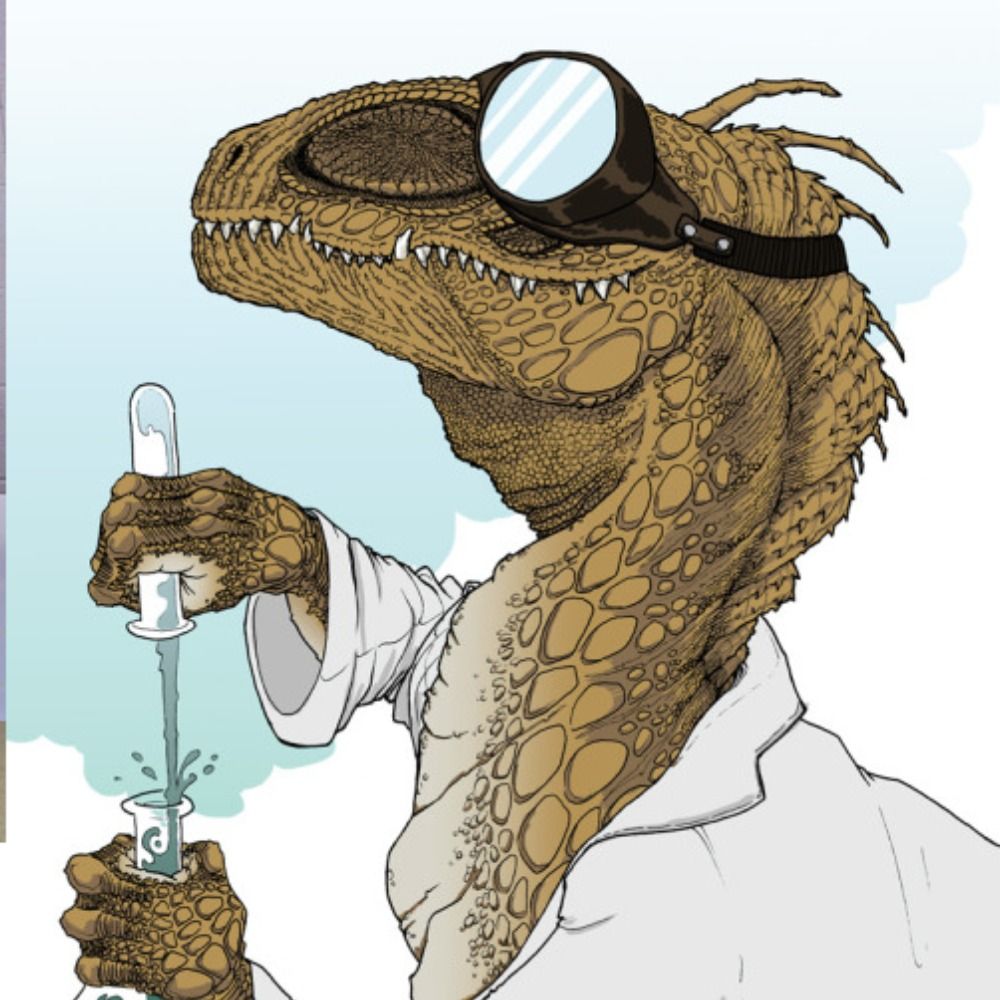
“A process which led from the amoeba to man appeared to the philosophers to be obviously a progress - though whether the amoeba would agree with this opinion is not known"
- Bertrand Russell, 1976.
Time-lapse video of Vampyrella lateritia eating Spirogyra algae from Science Source/Oliver Skibbe. 🦠
- Bertrand Russell, 1976.
Time-lapse video of Vampyrella lateritia eating Spirogyra algae from Science Source/Oliver Skibbe. 🦠
December 17, 2025 at 4:53 PM
“A process which led from the amoeba to man appeared to the philosophers to be obviously a progress - though whether the amoeba would agree with this opinion is not known"
- Bertrand Russell, 1976.
Time-lapse video of Vampyrella lateritia eating Spirogyra algae from Science Source/Oliver Skibbe. 🦠
- Bertrand Russell, 1976.
Time-lapse video of Vampyrella lateritia eating Spirogyra algae from Science Source/Oliver Skibbe. 🦠
Reposted by Anna Schrecengost
Just on time for the holidays! Happy to share the published version of the discovery of leptophytes, a new deep-branching and widespread group of microalgae based on plastid MAGs (ptMAGs). Now with additional support from a mitochondrial MAG (mtMAG) of leptophytes.
www.nature.com/articles/s41...
www.nature.com/articles/s41...
Identification of a deep-branching lineage of algae using environmental plastid genomes - Nature Communications
Here, the authors leverage data from the Tara Oceans expeditions to perform a phylogeny-guided plastid genome-resolved metagenomic survey and provide 660 non-redundant plastid genomes from marine alga...
www.nature.com
December 18, 2025 at 9:48 AM
Just on time for the holidays! Happy to share the published version of the discovery of leptophytes, a new deep-branching and widespread group of microalgae based on plastid MAGs (ptMAGs). Now with additional support from a mitochondrial MAG (mtMAG) of leptophytes.
www.nature.com/articles/s41...
www.nature.com/articles/s41...
Reposted by Anna Schrecengost
Announcing our next #NSFfunded workshop on "Telling Stories Through Data", co-lead by myself + @vgwschutte.bsky.social! It’s half bioinformatics data viz & half #SciComm - this year’s focus is host-associated microbiome datasets. Apply here to join us (form closes 1/10) bit.ly/TSTD2026 #symbiosky

December 17, 2025 at 3:10 PM
Announcing our next #NSFfunded workshop on "Telling Stories Through Data", co-lead by myself + @vgwschutte.bsky.social! It’s half bioinformatics data viz & half #SciComm - this year’s focus is host-associated microbiome datasets. Apply here to join us (form closes 1/10) bit.ly/TSTD2026 #symbiosky
Reposted by Anna Schrecengost
So excited to see this preprint out!! There is so much gold hiding in public eDNA studies, just waiting for taxon-focused investigations to pull out stories like this. Congrats on a great analysis @annaschreck.bsky.social @symbiosisrox.bsky.social
New preprint led by @annaschreck.bsky.social that capitalized on the wealth of publicly available 18S rRNA datasets to explore the oceanic distribution and diversity of understudied anaerobic ciliates. www.biorxiv.org/content/10.6...

A meta-analysis of environmental sequencing data reveals the global distribution and hidden diversity of marine anaerobic ciliates
Anaerobic protists are diverse, ecologically important members of anoxic microbial communities, acting as grazers, nutrient cyclers, and partners in multi-domain associations, yet remain understudied ...
www.biorxiv.org
December 16, 2025 at 10:12 PM
So excited to see this preprint out!! There is so much gold hiding in public eDNA studies, just waiting for taxon-focused investigations to pull out stories like this. Congrats on a great analysis @annaschreck.bsky.social @symbiosisrox.bsky.social
Reposted by Anna Schrecengost

Respiratory endosymbionts, that allow their ciliate hosts to breathe nitrate instead of (or in addition to) oxygen are frequent members of the wastewater microbiome. 🦠 🖥️🧬
Great to see this work by @louison-nicolas.bsky.social published in ISME coummuncations!
doi.org/10.1093/isme...
Great to see this work by @louison-nicolas.bsky.social published in ISME coummuncations!
doi.org/10.1093/isme...
Validate User
doi.org
December 5, 2025 at 4:20 PM
Respiratory endosymbionts, that allow their ciliate hosts to breathe nitrate instead of (or in addition to) oxygen are frequent members of the wastewater microbiome. 🦠 🖥️🧬
Great to see this work by @louison-nicolas.bsky.social published in ISME coummuncations!
doi.org/10.1093/isme...
Great to see this work by @louison-nicolas.bsky.social published in ISME coummuncations!
doi.org/10.1093/isme...
Check out our preprint!! So many cool analyses you can do with public rDNA datasets. Especially if you work with understudied groups or habitats!
#ProtistsOnSky
#ProtistsOnSky
New preprint led by @annaschreck.bsky.social that capitalized on the wealth of publicly available 18S rRNA datasets to explore the oceanic distribution and diversity of understudied anaerobic ciliates. www.biorxiv.org/content/10.6...
A meta-analysis of environmental sequencing data reveals the global distribution and hidden diversity of marine anaerobic ciliates
Anaerobic protists are diverse, ecologically important members of anoxic microbial communities, acting as grazers, nutrient cyclers, and partners in multi-domain associations, yet remain understudied ...
www.biorxiv.org
December 16, 2025 at 4:44 PM
Check out our preprint!! So many cool analyses you can do with public rDNA datasets. Especially if you work with understudied groups or habitats!
#ProtistsOnSky
#ProtistsOnSky
Reposted by Anna Schrecengost

Microbes can store “memories” by collectively altering their environment. These externalized “memories” impact how microbial communities assemble.
isme-microbes.org/bacterial-me...
#MicrobeMemory #MicrobialEcology
isme-microbes.org/bacterial-me...
#MicrobeMemory #MicrobialEcology

November 25, 2025 at 5:26 PM
Microbes can store “memories” by collectively altering their environment. These externalized “memories” impact how microbial communities assemble.
isme-microbes.org/bacterial-me...
#MicrobeMemory #MicrobialEcology
isme-microbes.org/bacterial-me...
#MicrobeMemory #MicrobialEcology
Reposted by Anna Schrecengost

Wisconsin Evolution is accepting applications for our Seminar Series' Early Career Scientist Award. Come share your evolution research and visit UW-Madison's evolution community. Open to grad students and postdocs (<5 yrs post PhD) from outside UW-Madison.
Apply by Dec 15th here: shorturl.at/4a4O6
Apply by Dec 15th here: shorturl.at/4a4O6

Early Career Scientist Awards 2026
Application to the UW-Madison Evolution Seminar Series - Early Career Scientist Awards.
urldefense.com
November 19, 2025 at 8:55 PM
Wisconsin Evolution is accepting applications for our Seminar Series' Early Career Scientist Award. Come share your evolution research and visit UW-Madison's evolution community. Open to grad students and postdocs (<5 yrs post PhD) from outside UW-Madison.
Apply by Dec 15th here: shorturl.at/4a4O6
Apply by Dec 15th here: shorturl.at/4a4O6
Reposted by Anna Schrecengost
How do cells adapt morphology to function? In a 🔥 preprint by @zjmaggiexu.bsky.social , with @dudinlab.bsky.social and @amyweeks.bsky.social , we identify a self-organizing single-cell morphology circuit that optimizes the feeding trap structure of the suctorian P. collini. 🧵 tinyurl.com/4k8nv926
November 18, 2025 at 4:15 PM
How do cells adapt morphology to function? In a 🔥 preprint by @zjmaggiexu.bsky.social , with @dudinlab.bsky.social and @amyweeks.bsky.social , we identify a self-organizing single-cell morphology circuit that optimizes the feeding trap structure of the suctorian P. collini. 🧵 tinyurl.com/4k8nv926
Reposted by Anna Schrecengost
And vice versa, sulfur-oxidizing bacteria are masters of colonizing marine hosts!
This was a wonderful collaboration with Sam Vohsen, Eslam Osman, Mandy Joye, Matt Saxton, grubervodicka.bsky.social, @ibaums.bsky.social
This was a wonderful collaboration with Sam Vohsen, Eslam Osman, Mandy Joye, Matt Saxton, grubervodicka.bsky.social, @ibaums.bsky.social
Corals are masters of obtaining nutrition via symbioses, in the light and in the dark: deep sea corals can associate with sulfur-oxidizing chemoautotrophs, expressing pathways that oxidize sulfur and fix C. Corals hosting them derive some carbon from chemosynthesis. link.springer.com/article/10.1...

Deep-sea corals near cold seeps associate with sulfur-oxidizing chemoautotrophs in the family Ca. Thioglobaceae - Microbiome
Background Corals are known for their symbiotic relationships, yet there is limited evidence of chemoautotrophic associations. This is despite some corals occurring near cold seeps where chemosymbiotic fauna abound including mussels that host sulfur-oxidizing chemoautotrophs from the SUP05 cluster (family Ca. Thioglobaceae). We investigated whether corals near cold seeps associate with related bacteria and report here that these associations are widespread. Results We screened corals, water, and sediment for Thioglobaceae using 16S metabarcoding and found ASVs associated with corals at high relative abundance (10 – 91%). These ASVs were specific to coral hosts, absent in water samples, and rare or absent in sediment samples. Using metagenomics and transcriptomics, we assembled the genome of one phylotype associated with Paramuricea sp. B3 (ASV 4) which contained the genetic potential to oxidize sulfur and fix carbon, and confirmed that these pathways were transcriptionally active. Furthermore, its relative abundance was negatively correlated with the stable isotopic composition of its host coral’s tissue suggesting some contribution of chemoautotrophy to the coral holobiont. Conclusions We propose that some lineages of Thioglobaceae may facultatively supplement the diet of their host corals through chemoautotrophy at seeps or may provide essential amino acids or vitamins. This is the first documented association between chemoautotrophic symbionts and corals at seeps and suggests that the footprint of chemosynthetic environments is wider than currently understood.
https://link.springer.com/article/10.1186/s40168-025-02254-z?utm_source=rct_congratem[…]ampaign=oa_20251113&utm_content=10.1186%2Fs40168-025-02254-z
November 14, 2025 at 3:48 PM
And vice versa, sulfur-oxidizing bacteria are masters of colonizing marine hosts!
This was a wonderful collaboration with Sam Vohsen, Eslam Osman, Mandy Joye, Matt Saxton, grubervodicka.bsky.social, @ibaums.bsky.social
This was a wonderful collaboration with Sam Vohsen, Eslam Osman, Mandy Joye, Matt Saxton, grubervodicka.bsky.social, @ibaums.bsky.social
Reposted by Anna Schrecengost
We are looking for a PhD student to work on an exciting plastid endosymbiosis in microbial eukaryotes. This position involves sampling, exciting microscopy such as CARDFISH, ExM and FIBSEM, single-cell transcriptomics and more. #protistsonsky 1/2

November 12, 2025 at 9:50 AM
We are looking for a PhD student to work on an exciting plastid endosymbiosis in microbial eukaryotes. This position involves sampling, exciting microscopy such as CARDFISH, ExM and FIBSEM, single-cell transcriptomics and more. #protistsonsky 1/2
Reposted by Anna Schrecengost

Job Opening **ASSISTANT PROFESSOR MARINE ECOLOGY**, Department of Biological Sciences, University of Rhode Island.
jobs.uri.edu/postings/15960
jobs.uri.edu/postings/15960

November 10, 2025 at 4:03 PM
Job Opening **ASSISTANT PROFESSOR MARINE ECOLOGY**, Department of Biological Sciences, University of Rhode Island.
jobs.uri.edu/postings/15960
jobs.uri.edu/postings/15960
This past Thursday I successfully defended my dissertation! Thank you @symbiosisrox.bsky.social and the rest of the lab for making it a super fun celebration! I dressed up my son as a #ciliate for the occasion and we jumped into Narragansett Bay at @urigso.bsky.social beach afterwards #ProtistsOnSky


November 12, 2025 at 3:49 PM
This past Thursday I successfully defended my dissertation! Thank you @symbiosisrox.bsky.social and the rest of the lab for making it a super fun celebration! I dressed up my son as a #ciliate for the occasion and we jumped into Narragansett Bay at @urigso.bsky.social beach afterwards #ProtistsOnSky
This is a long shot but does anyone know how to pronounce Epalxellidae?? 😂 #ProtistsOnSky
November 5, 2025 at 8:49 PM
This is a long shot but does anyone know how to pronounce Epalxellidae?? 😂 #ProtistsOnSky
Happening tomorrow!
I am defending my dissertation titled "Ecology and evolution of anaerobic ciliate methanogen symbioses in marine oxygen depleted environments" on Nov 6 at 9:30 am EST!
Message me for the zoom link if you are interested in joining! (Or join in person at beautiful URI GSO)
#ProtistsOnSky #SymbioSky
Message me for the zoom link if you are interested in joining! (Or join in person at beautiful URI GSO)
#ProtistsOnSky #SymbioSky

November 5, 2025 at 4:40 PM
Happening tomorrow!
Reposted by Anna Schrecengost

🎃 👻 Happy Halloween! Last-minute costume idea: giant tubeworm. 🦑 🌊

October 31, 2025 at 1:01 PM
🎃 👻 Happy Halloween! Last-minute costume idea: giant tubeworm. 🦑 🌊
Reposted by Anna Schrecengost
New paper out! 💌🔬Spirorhynchus verrucosus is a Muranotrichean and its sister has been livin' in the deep sea Santa Barbara Basin since the 90's! See them TUFTS!! Wonderful work of B Bourland & Cepicka Lab, R Beinart, & J Bernhard enabling deep sea sampling. Read h1.nu/spiror #ProtistsOnSky #MicroSky
October 9, 2025 at 2:32 PM
New paper out! 💌🔬Spirorhynchus verrucosus is a Muranotrichean and its sister has been livin' in the deep sea Santa Barbara Basin since the 90's! See them TUFTS!! Wonderful work of B Bourland & Cepicka Lab, R Beinart, & J Bernhard enabling deep sea sampling. Read h1.nu/spiror #ProtistsOnSky #MicroSky
Reposted by Anna Schrecengost

October 24, 2025 at 5:58 PM
Reposted by Anna Schrecengost
Database Release: PPSDB, a Linked Open Data Knowledge Base for Protist–Prokaryote Symbioses onlinelibrary.wiley.com/doi/10.1111/... #jcampubs

Database Release: PPSDB, a Linked Open Data Knowledge Base for Protist–Prokaryote Symbioses
As the ecological and evolutionary importance of symbiotic interactions between protists (microbial eukaryotes) and prokaryotes (bacteria and archaea) is better appreciated, keeping an overview of th...
onlinelibrary.wiley.com
October 13, 2025 at 3:20 PM
Database Release: PPSDB, a Linked Open Data Knowledge Base for Protist–Prokaryote Symbioses onlinelibrary.wiley.com/doi/10.1111/... #jcampubs
I am defending my dissertation titled "Ecology and evolution of anaerobic ciliate methanogen symbioses in marine oxygen depleted environments" on Nov 6 at 9:30 am EST!
Message me for the zoom link if you are interested in joining! (Or join in person at beautiful URI GSO)
#ProtistsOnSky #SymbioSky
Message me for the zoom link if you are interested in joining! (Or join in person at beautiful URI GSO)
#ProtistsOnSky #SymbioSky
October 20, 2025 at 5:04 PM
I am defending my dissertation titled "Ecology and evolution of anaerobic ciliate methanogen symbioses in marine oxygen depleted environments" on Nov 6 at 9:30 am EST!
Message me for the zoom link if you are interested in joining! (Or join in person at beautiful URI GSO)
#ProtistsOnSky #SymbioSky
Message me for the zoom link if you are interested in joining! (Or join in person at beautiful URI GSO)
#ProtistsOnSky #SymbioSky
Reposted by Anna Schrecengost

#SymbioSky #MicroSky #ProtistsOnSky
the plot thickens 👇 as we all suspected and feared(?), organellogenesis is not straightforward, but rather, well,... a thicket ¯\_(ツ)_/¯
the plot thickens 👇 as we all suspected and feared(?), organellogenesis is not straightforward, but rather, well,... a thicket ¯\_(ツ)_/¯

October 10, 2025 at 8:23 AM
#SymbioSky #MicroSky #ProtistsOnSky
the plot thickens 👇 as we all suspected and feared(?), organellogenesis is not straightforward, but rather, well,... a thicket ¯\_(ツ)_/¯
the plot thickens 👇 as we all suspected and feared(?), organellogenesis is not straightforward, but rather, well,... a thicket ¯\_(ツ)_/¯
Reposted by Anna Schrecengost
Love #protists? Then you'd love this! Beautiful collection of hand-drawn critters represented here at the Oxford-Japan symposium on ethological dynamics in diorama environments sites.google.com/view/oxford-... #ciliates #testateamoeba #diatoms


September 24, 2025 at 3:14 PM
Love #protists? Then you'd love this! Beautiful collection of hand-drawn critters represented here at the Oxford-Japan symposium on ethological dynamics in diorama environments sites.google.com/view/oxford-... #ciliates #testateamoeba #diatoms
Reposted by Anna Schrecengost

From MBoC: Wallace F. Marshall (UCSF) and team profile the giant ciliate Stentor pyriformis—symbiotic algae in microtubule baskets, symbiont-dependent phototaxis, and a standard genetic code. Paper: www.molbiolcell.org/doi/10.1091/... #CellBiology

September 19, 2025 at 12:02 PM
From MBoC: Wallace F. Marshall (UCSF) and team profile the giant ciliate Stentor pyriformis—symbiotic algae in microtubule baskets, symbiont-dependent phototaxis, and a standard genetic code. Paper: www.molbiolcell.org/doi/10.1091/... #CellBiology
Reposted by Anna Schrecengost
What a lovely find! I adore that I’m always seeing new things, even after 3 years of looking at plankton. This is a ciliate from the family Folliculinidae (thanks for the ID @microbe_guru !). I adore its colour!
#marineplankton 🦑
#marineplankton 🦑
October 1, 2025 at 7:36 PM
What a lovely find! I adore that I’m always seeing new things, even after 3 years of looking at plankton. This is a ciliate from the family Folliculinidae (thanks for the ID @microbe_guru !). I adore its colour!
#marineplankton 🦑
#marineplankton 🦑
Reposted by Anna Schrecengost

We're hiring for several positions (a post-bac researcher in #transcriptomics, a #phage #postdoc, a senior researcher (broad topics) and a graduate student to work on #ciliates) - find info here: www.marine.usf.edu/genomics/app...
Apply - Genomics
www.marine.usf.edu
October 2, 2025 at 5:29 PM
We're hiring for several positions (a post-bac researcher in #transcriptomics, a #phage #postdoc, a senior researcher (broad topics) and a graduate student to work on #ciliates) - find info here: www.marine.usf.edu/genomics/app...