



Aaron Lob
@aaronlob.bsky.social
PhD student at CBDR, University of Zurich: https://cbdr-lab.net/lob. Interested in decision making, uncertainty, modeling, and EMA.
Reposted by Aaron Lob
The first preprint from the SHARE study is out! 🥳 We compared the effects of three different incentives (a bulk payment, a bulk payment with personalized feedback, and payment per beep) on data quantity, data quality, and participant experiences in a student sample.
The effect of incentive type on data quality and quantity in an experience sampling study in a student population: https://osf.io/pc924
December 3, 2025 at 8:03 AM
The first preprint from the SHARE study is out! 🥳 We compared the effects of three different incentives (a bulk payment, a bulk payment with personalized feedback, and payment per beep) on data quantity, data quality, and participant experiences in a student sample.
Reposted by Aaron Lob

We built the openESM database:
▶️60 openly available experience sampling datasets (16K+ participants, 740K+ obs.) in one place
▶️Harmonized (meta-)data, fully open-source software
▶️Filter & search all data, simply download via R/Python
Find out more:
🌐 openesmdata.org
📝 doi.org/10.31234/osf...
▶️60 openly available experience sampling datasets (16K+ participants, 740K+ obs.) in one place
▶️Harmonized (meta-)data, fully open-source software
▶️Filter & search all data, simply download via R/Python
Find out more:
🌐 openesmdata.org
📝 doi.org/10.31234/osf...
October 22, 2025 at 7:34 PM
We built the openESM database:
▶️60 openly available experience sampling datasets (16K+ participants, 740K+ obs.) in one place
▶️Harmonized (meta-)data, fully open-source software
▶️Filter & search all data, simply download via R/Python
Find out more:
🌐 openesmdata.org
📝 doi.org/10.31234/osf...
▶️60 openly available experience sampling datasets (16K+ participants, 740K+ obs.) in one place
▶️Harmonized (meta-)data, fully open-source software
▶️Filter & search all data, simply download via R/Python
Find out more:
🌐 openesmdata.org
📝 doi.org/10.31234/osf...
Reposted by Aaron Lob
🚨 New preprint: What does the research landscape of behavioral reinforcement learning look like 🌍?
We developed an LLM-powered bibliometric analysis to characterize article clusters, investigate their connections, and examine the distribution of topics across the landscape.
osf.io/6c2va_v1
We developed an LLM-powered bibliometric analysis to characterize article clusters, investigate their connections, and examine the distribution of topics across the landscape.
osf.io/6c2va_v1
OSF
osf.io
October 17, 2025 at 7:25 AM
🚨 New preprint: What does the research landscape of behavioral reinforcement learning look like 🌍?
We developed an LLM-powered bibliometric analysis to characterize article clusters, investigate their connections, and examine the distribution of topics across the landscape.
osf.io/6c2va_v1
We developed an LLM-powered bibliometric analysis to characterize article clusters, investigate their connections, and examine the distribution of topics across the landscape.
osf.io/6c2va_v1
Reposted by Aaron Lob

#StrangersInTheDark Across five studies we looked at whether people assume strangers have similar levels of #DarkFactor. Plus we looked at some interesting moderators #sex #attraction. Check it out in #JDM.
doi.org/10.1017/jdm....
#AssumedSimilarity #PersonPerception #Personality
doi.org/10.1017/jdm....
#AssumedSimilarity #PersonPerception #Personality
Strangers in the dark: assumed similarity in judgments of unknown others on aversive personality | Judgment and Decision Making | Cambridge Core
Strangers in the dark: assumed similarity in judgments of unknown others on aversive personality - Volume 20
doi.org
October 3, 2025 at 8:30 AM
#StrangersInTheDark Across five studies we looked at whether people assume strangers have similar levels of #DarkFactor. Plus we looked at some interesting moderators #sex #attraction. Check it out in #JDM.
doi.org/10.1017/jdm....
#AssumedSimilarity #PersonPerception #Personality
doi.org/10.1017/jdm....
#AssumedSimilarity #PersonPerception #Personality
Reposted by Aaron Lob
These days, everyone is talking about #polarization. But how best to measure it? Olivia Fischer and I have a new paper that empirically compares various operationalizations of polarization (e.g., on people's risk perceptions), including a shiny app to simulate […]
[Original post on mstdn.science]
[Original post on mstdn.science]

October 2, 2025 at 8:13 AM
These days, everyone is talking about #polarization. But how best to measure it? Olivia Fischer and I have a new paper that empirically compares various operationalizations of polarization (e.g., on people's risk perceptions), including a shiny app to simulate […]
[Original post on mstdn.science]
[Original post on mstdn.science]
Reposted by Aaron Lob

For all who use Bayesian hierarchical models, have a look at our new preprint, out now together with @linushof.bsky.social @nunobusch.bsky.social and @thorstenpachur.bsky.social
osf.io/preprints/ps...
osf.io/preprints/ps...
osf.io
September 10, 2025 at 2:41 PM
For all who use Bayesian hierarchical models, have a look at our new preprint, out now together with @linushof.bsky.social @nunobusch.bsky.social and @thorstenpachur.bsky.social
osf.io/preprints/ps...
osf.io/preprints/ps...
Reposted by Aaron Lob
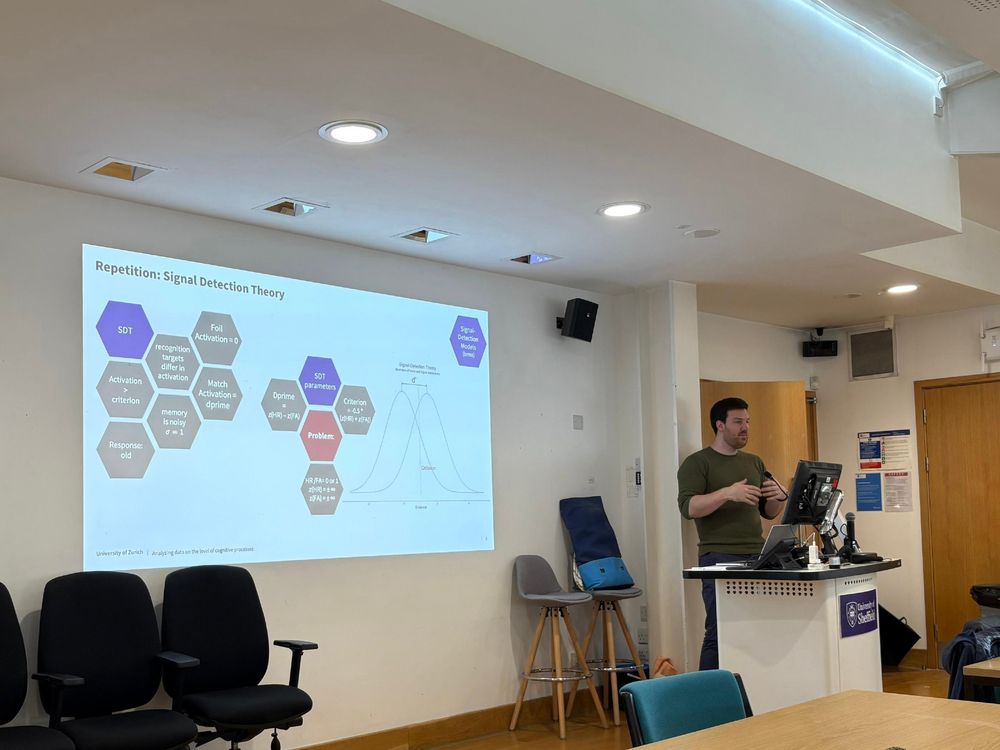
A huge thanks to all participants, my fellow workshop co-organizers @gidon-frischkorn.bsky.social and @ruhibhanap.bsky.social, and #ESCOP2025 for hosting our workshop introducing cognitive measurement models with the #bmm R package (venpopov.github.io/bmm/) - it was such a rewarding experience!


September 12, 2025 at 9:57 AM
A huge thanks to all participants, my fellow workshop co-organizers @gidon-frischkorn.bsky.social and @ruhibhanap.bsky.social, and #ESCOP2025 for hosting our workshop introducing cognitive measurement models with the #bmm R package (venpopov.github.io/bmm/) - it was such a rewarding experience!
Reposted by Aaron Lob
1/7
First paper of my dissertation now out in EJPR with @bnbakker.bsky.social & @gijsschumacher.bsky.social
Can we measure affective polarization in systems with 6, 10, or even more parties without overburdening respondents or compromising validity? We show how.
Paper: doi.org/10.1111/1475...
First paper of my dissertation now out in EJPR with @bnbakker.bsky.social & @gijsschumacher.bsky.social
Can we measure affective polarization in systems with 6, 10, or even more parties without overburdening respondents or compromising validity? We show how.
Paper: doi.org/10.1111/1475...

Establishing the construct and predictive validity of brief measures of affective polarization
Measuring affective polarization, defined as the liking for one's political ingroup and the dislike for political outgroups, poses methodological challenges in multiparty systems: evaluations of seve...
doi.org
May 7, 2025 at 12:11 PM
1/7
First paper of my dissertation now out in EJPR with @bnbakker.bsky.social & @gijsschumacher.bsky.social
Can we measure affective polarization in systems with 6, 10, or even more parties without overburdening respondents or compromising validity? We show how.
Paper: doi.org/10.1111/1475...
First paper of my dissertation now out in EJPR with @bnbakker.bsky.social & @gijsschumacher.bsky.social
Can we measure affective polarization in systems with 6, 10, or even more parties without overburdening respondents or compromising validity? We show how.
Paper: doi.org/10.1111/1475...
Reposted by Aaron Lob
New preprint out on the link between gratitude and wellbeing: who benefits most and under what circumstances?
Across four studies with 220,314 individuals from 67 countries, we investigated whether individual, contextual, or cultural differences moderated this relationship.
osf.io/preprints/ps...
Across four studies with 220,314 individuals from 67 countries, we investigated whether individual, contextual, or cultural differences moderated this relationship.
osf.io/preprints/ps...

April 10, 2025 at 8:10 AM
New preprint out on the link between gratitude and wellbeing: who benefits most and under what circumstances?
Across four studies with 220,314 individuals from 67 countries, we investigated whether individual, contextual, or cultural differences moderated this relationship.
osf.io/preprints/ps...
Across four studies with 220,314 individuals from 67 countries, we investigated whether individual, contextual, or cultural differences moderated this relationship.
osf.io/preprints/ps...
Reposted by Aaron Lob
The first preprint from my PhD is out: osf.io/preprints/ps...! 🥳
We explored the temporal dynamics of four careless responding indicators (response time, within-beep standard deviation, an inconsistency index, occasion-person correlation) in ESM data across different samples.
Thread below🧵
We explored the temporal dynamics of four careless responding indicators (response time, within-beep standard deviation, an inconsistency index, occasion-person correlation) in ESM data across different samples.
Thread below🧵
OSF
osf.io
February 27, 2025 at 8:38 AM
The first preprint from my PhD is out: osf.io/preprints/ps...! 🥳
We explored the temporal dynamics of four careless responding indicators (response time, within-beep standard deviation, an inconsistency index, occasion-person correlation) in ESM data across different samples.
Thread below🧵
We explored the temporal dynamics of four careless responding indicators (response time, within-beep standard deviation, an inconsistency index, occasion-person correlation) in ESM data across different samples.
Thread below🧵
Reposted by Aaron Lob
🥁 Exciting news: Our new article on repeated risky choices is out now! How do children and adults make repeated choices when they learn about probabilities from description (i.e., graphical representation)? Not as expected! 👀
Full text: mpib.berlin/PUMtN
1/n
Full text: mpib.berlin/PUMtN
1/n

Do children match described probabilities? The sampling hypothesis applied to repeated risky choice
One way in which children can learn about probabilities of different outcomes before making a decision is from description, for instance, by observing…
mpib.berlin
December 9, 2024 at 2:13 PM
🥁 Exciting news: Our new article on repeated risky choices is out now! How do children and adults make repeated choices when they learn about probabilities from description (i.e., graphical representation)? Not as expected! 👀
Full text: mpib.berlin/PUMtN
1/n
Full text: mpib.berlin/PUMtN
1/n
Reposted by Aaron Lob
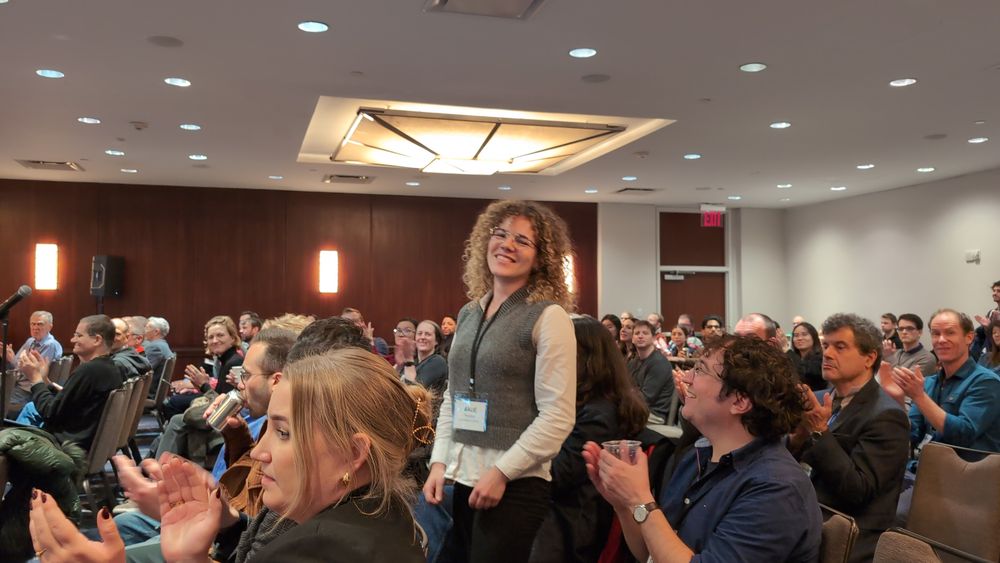
Congratulations to Maué Pantoja (https://cbdr-lab.net/pantoja/) for the 2nd place of the student poster award (Society for Judgment & Decision Making #SJDM / New York) 🚀🚀 🚀 #cbdr
November 25, 2024 at 7:26 PM
Congratulations to Maué Pantoja (https://cbdr-lab.net/pantoja/) for the 2nd place of the student poster award (Society for Judgment & Decision Making #SJDM / New York) 🚀🚀 🚀 #cbdr
Exciting news from cbdr-lab.net: Olivia Fischer presented her recent project aimed at better understanding to what extent the risky choices behavioral scientists study reflect the choices people actually make in real life - and if not, to what extent it matters.
#psynom2024 @sjdm-tweets.bsky.social
#psynom2024 @sjdm-tweets.bsky.social

November 25, 2024 at 3:14 PM
Exciting news from cbdr-lab.net: Olivia Fischer presented her recent project aimed at better understanding to what extent the risky choices behavioral scientists study reflect the choices people actually make in real life - and if not, to what extent it matters.
#psynom2024 @sjdm-tweets.bsky.social
#psynom2024 @sjdm-tweets.bsky.social
Reposted by Aaron Lob

We won the IgNobel Prize in Probability for 350,757 coin flips.
František Bartoš and EJ Wagenmakers received the prize yesterday on behalf the 50-author team.
Fair coins tend to land on the same side they started on (probability = 50.8%).
🧪 #StatsSky #PsychSciSky
More info below. 👇
František Bartoš and EJ Wagenmakers received the prize yesterday on behalf the 50-author team.
Fair coins tend to land on the same side they started on (probability = 50.8%).
🧪 #StatsSky #PsychSciSky
More info below. 👇

September 13, 2024 at 2:31 PM
We won the IgNobel Prize in Probability for 350,757 coin flips.
František Bartoš and EJ Wagenmakers received the prize yesterday on behalf the 50-author team.
Fair coins tend to land on the same side they started on (probability = 50.8%).
🧪 #StatsSky #PsychSciSky
More info below. 👇
František Bartoš and EJ Wagenmakers received the prize yesterday on behalf the 50-author team.
Fair coins tend to land on the same side they started on (probability = 50.8%).
🧪 #StatsSky #PsychSciSky
More info below. 👇