



Yohann Boutté
@yohannboutte.bsky.social
Interested in cell biology and biochemistry of membrane lipids, intracellular trafficking, cell polarity. PI at @LBM_Bordeaux @INSB_CNRS @univbordeaux
Reposted by Yohann Boutté
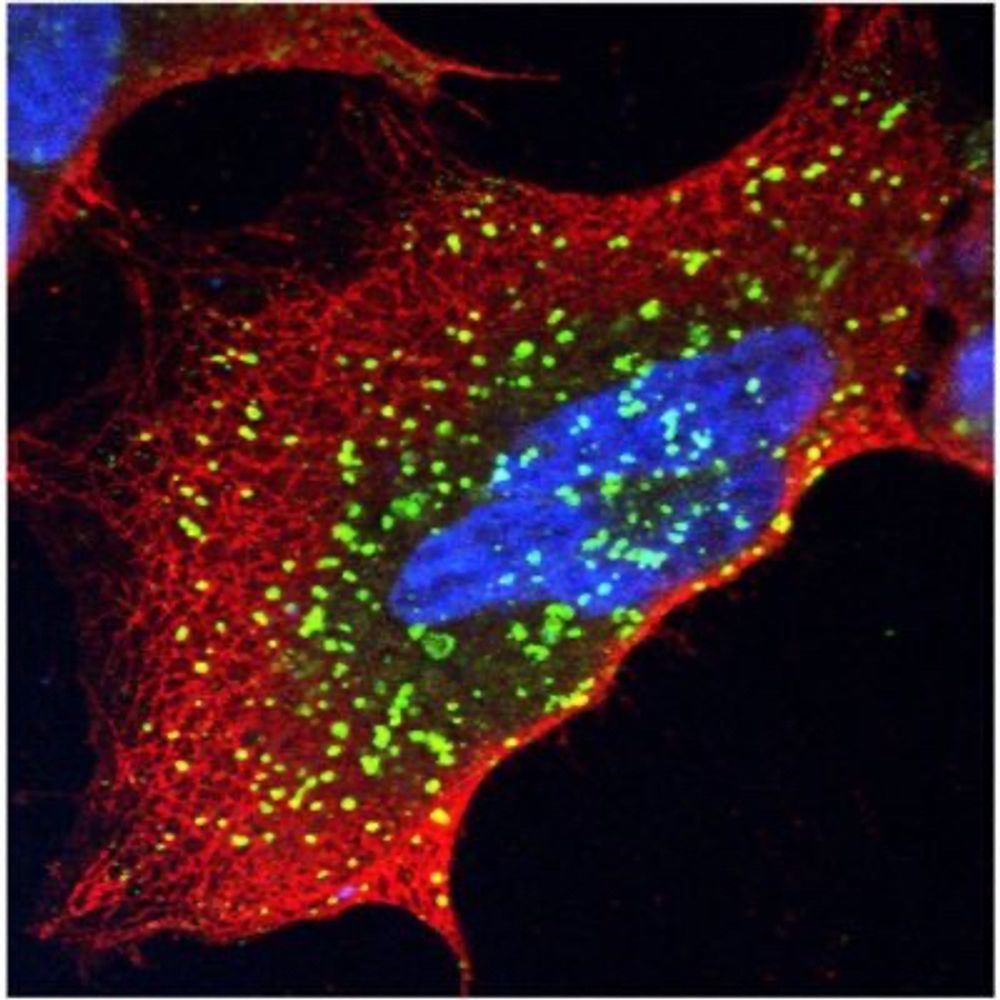
Lipid transfer by ORP3 is required for the regulation of PI4P and PI(4,5)P2 at the plasma membrane in mitosis www.biorxiv.org/content/10.1...

Lipid transfer by ORP3 is required for the regulation of PI4P and PI(4,5)P2 at the plasma membrane in mitosis
Lipid transfer proteins are an evolutionary-conserved families of proteins that transfer lipids at sites of contacts between the membrane of distinct organelles and contribute to the regulation of org...
www.biorxiv.org
December 6, 2025 at 9:28 PM
Lipid transfer by ORP3 is required for the regulation of PI4P and PI(4,5)P2 at the plasma membrane in mitosis www.biorxiv.org/content/10.1...
Reposted by Yohann Boutté

Jean-François Morot-Gaudry (1943–2024): A Life Devoted to Plant Science, Leadership, and Humanity, https://www.mdpi.com/2223-7747/14/24/3711

Jean-François Morot-Gaudry (1943–2024): A Life Devoted to Plant Science, Leadership, and Humanity
Jean-François Morot-Gaudry (1943–2024): A Life Devoted to Plant Science, Leadership, and Humanity
www.scoop.it
December 6, 2025 at 5:27 PM
Jean-François Morot-Gaudry (1943–2024): A Life Devoted to Plant Science, Leadership, and Humanity, https://www.mdpi.com/2223-7747/14/24/3711
Reposted by Yohann Boutté
Oh Wow!
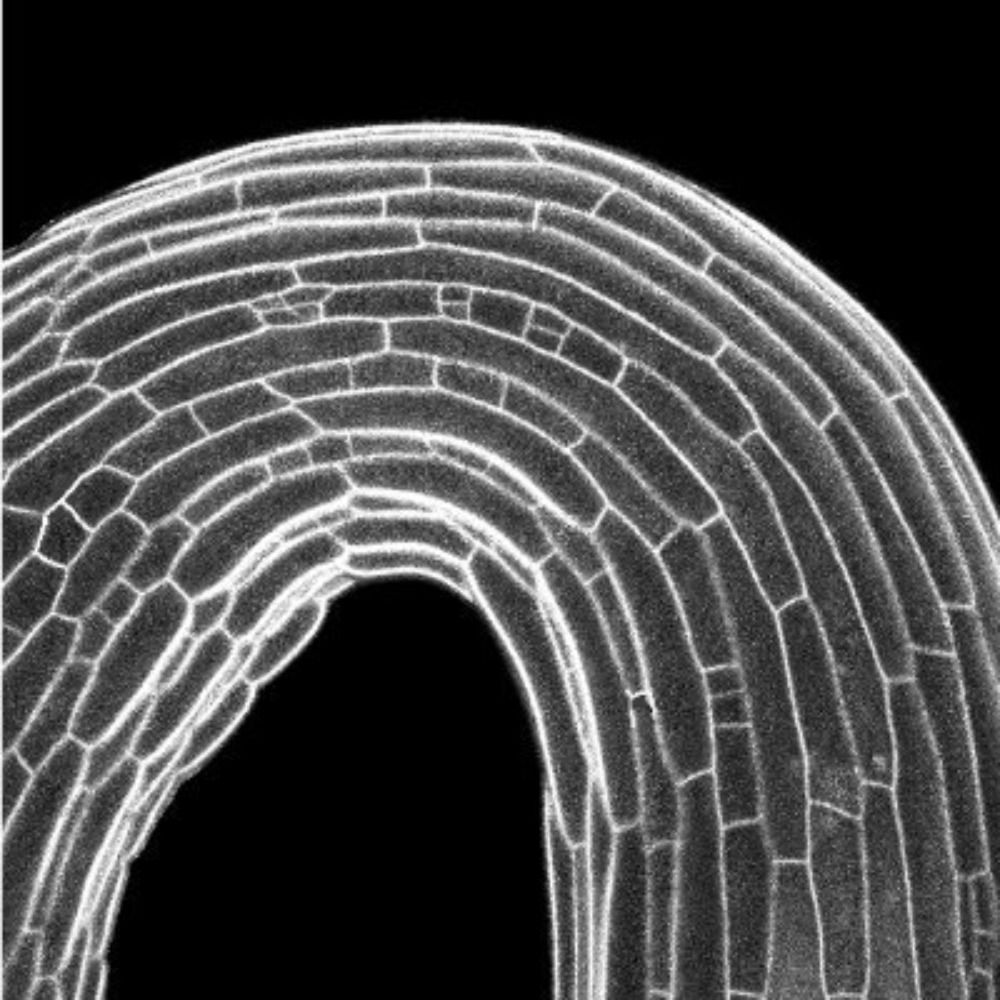
Cell wall patterning regulates plant stem cell dynamics | Science www.science.org/doi/10.1126/...
Cell wall patterning regulates plant stem cell dynamics | Science www.science.org/doi/10.1126/...

Cell wall patterning regulates plant stem cell dynamics
The plant cell wall regulates development through spatiotemporal modulation of its chemical and mechanical properties. Pectin methylesterification is recognized as a rheological switch controlling wal...
www.science.org
December 5, 2025 at 8:37 AM
Oh Wow!
Cell wall patterning regulates plant stem cell dynamics | Science www.science.org/doi/10.1126/...
Cell wall patterning regulates plant stem cell dynamics | Science www.science.org/doi/10.1126/...
Reposted by Yohann Boutté
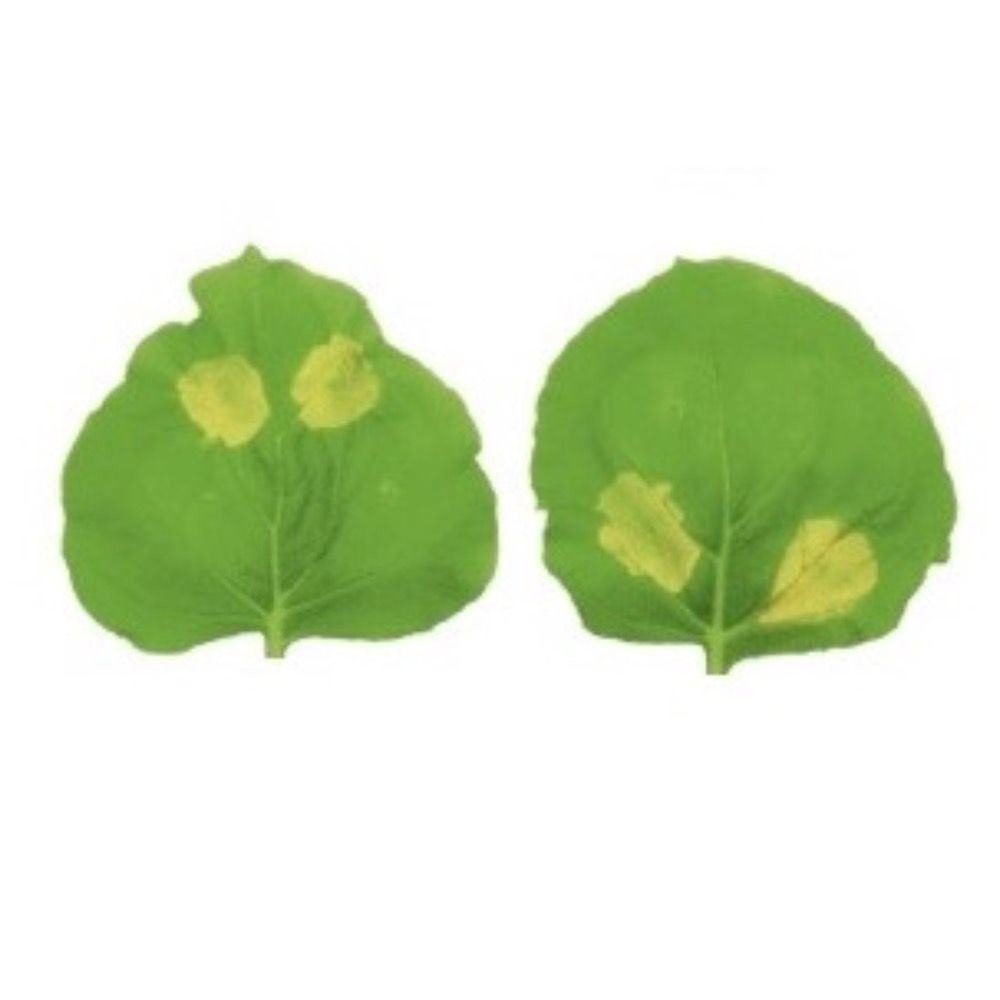
"Common principles of immune receptor channels..." #ThingsThatMakeYouGoHmm 🤔 www.nature.com/articles/s41...
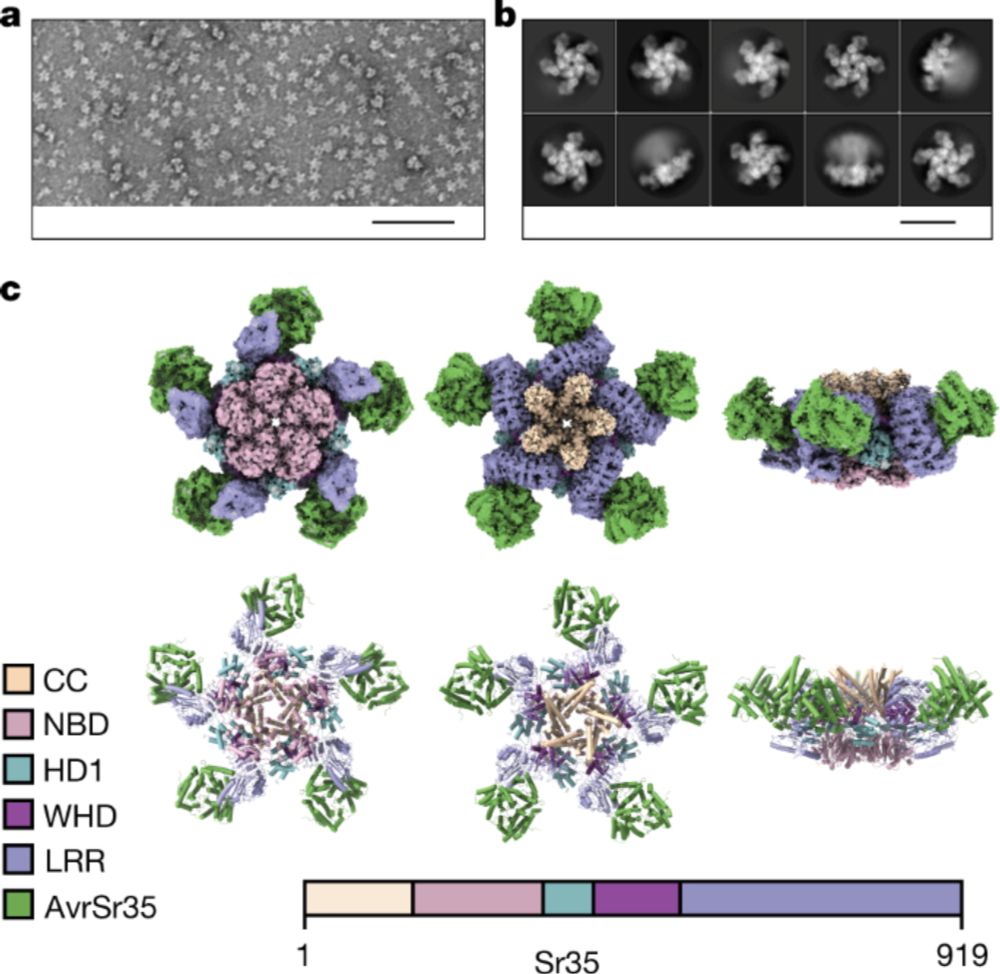
A wheat resistosome defines common principles of immune receptor channels - Nature
Evolutionary conservation of plant receptor structure allowed for generation of new variants of wheat and barley nucleotide-binding leucine-rich repeat receptors (NLRs) that recognize AvrSr35 of the w...
www.nature.com
December 4, 2025 at 3:40 PM
"Common principles of immune receptor channels..." #ThingsThatMakeYouGoHmm 🤔 www.nature.com/articles/s41...
Reposted by Yohann Boutté
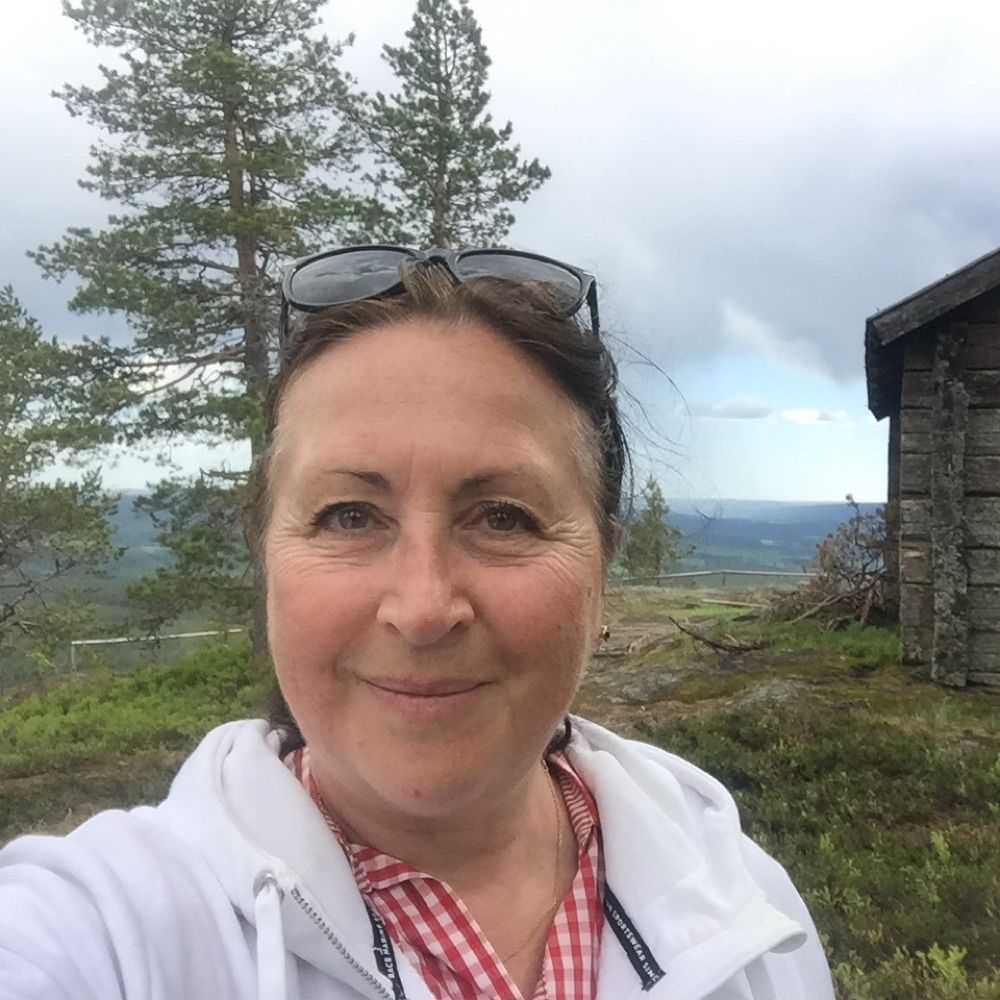
Proud and honoured to be one of the two laureates of the 2025 Rósen Linné Prize. Warm thanks to all students, PhD students and postdocs who joined me over the years and greatly contributed to our research success. Thanks also to colleagues at UPSC, IJPB and INRAE for their continued support always.

🎉 Congratulations to @cathbell62.bsky.social! 🎉
She has been awarded the Roséns Linnaeus Prize in Botany for her research on plant roots and carbon allocation, and for promoting international collaboration in science, especially the #INUPRAG collaboration.🧪🌾
Read more: www.upsc.se/about-upsc/n...
She has been awarded the Roséns Linnaeus Prize in Botany for her research on plant roots and carbon allocation, and for promoting international collaboration in science, especially the #INUPRAG collaboration.🧪🌾
Read more: www.upsc.se/about-upsc/n...

December 4, 2025 at 3:57 PM
Proud and honoured to be one of the two laureates of the 2025 Rósen Linné Prize. Warm thanks to all students, PhD students and postdocs who joined me over the years and greatly contributed to our research success. Thanks also to colleagues at UPSC, IJPB and INRAE for their continued support always.
Reposted by Yohann Boutté
Proud and honoured to be one of the two laureates of the 2025 Rósen Linné Prize. Warm thanks to all students, PhD students and postdocs who joined me over the years and greatly contributed to our research success. Thanks also to colleagues at UPSC, IJPB and INRAE for their continued support always.

#IJPB Congratulations to Catherine Bellini 👏👩🔬🌿
For more check out our news on @ijpb-versaillescly.bsky.social website
👉 ijpb.versailles.inrae.fr/en/news/cath...
For more check out our news on @ijpb-versaillescly.bsky.social website
👉 ijpb.versailles.inrae.fr/en/news/cath...
December 4, 2025 at 4:00 PM
Proud and honoured to be one of the two laureates of the 2025 Rósen Linné Prize. Warm thanks to all students, PhD students and postdocs who joined me over the years and greatly contributed to our research success. Thanks also to colleagues at UPSC, IJPB and INRAE for their continued support always.
Reposted by Yohann Boutté
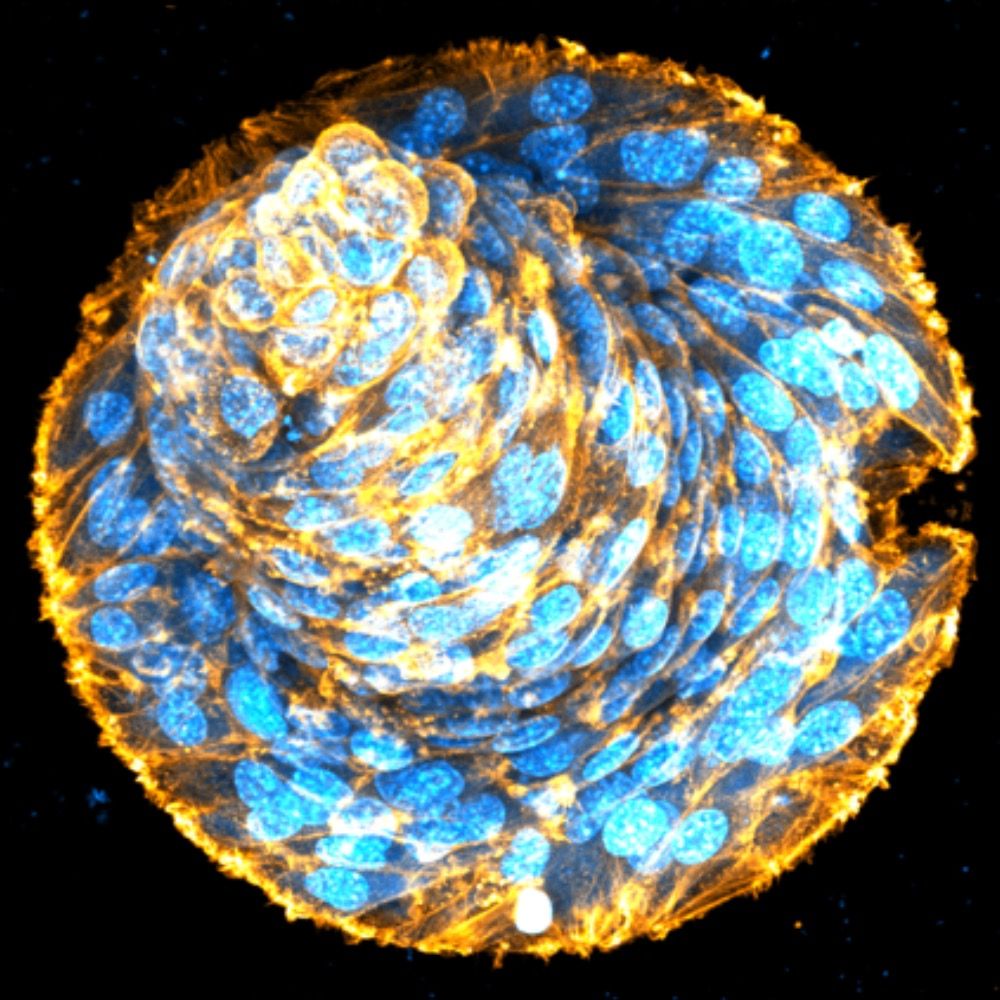
Fantastic work from Javier @javierespadas.bsky.social in collaboration with @buzzbaum.bsky.social and @kaksonen.bsky.social labs, thank you Chris Toret, thank you Diorge @diorgeps.bsky.social!
New preprint from the lab!!🎉
We show that Asgard archaea ESCRT-III proteins can trigger membrane fission and reveal its molecular mechanism, offering clues to how these cells may have built internal compartments. But do these organisms even have these compartments?
www.biorxiv.org/content/10.1...
We show that Asgard archaea ESCRT-III proteins can trigger membrane fission and reveal its molecular mechanism, offering clues to how these cells may have built internal compartments. But do these organisms even have these compartments?
www.biorxiv.org/content/10.1...

Molecular basis for cellular compartmentalization by an ancient membrane fission mechanism
The emergence of cell compartmentalization depends on membrane fission to create the endomembrane compartments. In eukaryotes, membrane fission is commonly executed by ESCRT-III, a protein complex con...
www.biorxiv.org
December 1, 2025 at 1:44 PM
Fantastic work from Javier @javierespadas.bsky.social in collaboration with @buzzbaum.bsky.social and @kaksonen.bsky.social labs, thank you Chris Toret, thank you Diorge @diorgeps.bsky.social!
Reposted by Yohann Boutté
Plasma membrane transbilayer asymmetry of PI(4,5)P2drives unconventional secretion of Fibroblast Growth Factor 2
www.nature.com/articles/s41...
www.nature.com/articles/s41...

Plasma membrane transbilayer asymmetry of PI(4,5)P2 drives unconventional secretion of Fibroblast Growth Factor 2 - Nature Communications
Transbilayer asymmetry is a structural hallmark of biological membranes. Here, the authors show that phosphoinositide asymmetry represents a key feature facilitating FGF2-induced membrane pore formati...
www.nature.com
December 1, 2025 at 3:20 PM
Plasma membrane transbilayer asymmetry of PI(4,5)P2drives unconventional secretion of Fibroblast Growth Factor 2
www.nature.com/articles/s41...
www.nature.com/articles/s41...
Reposted by Yohann Boutté
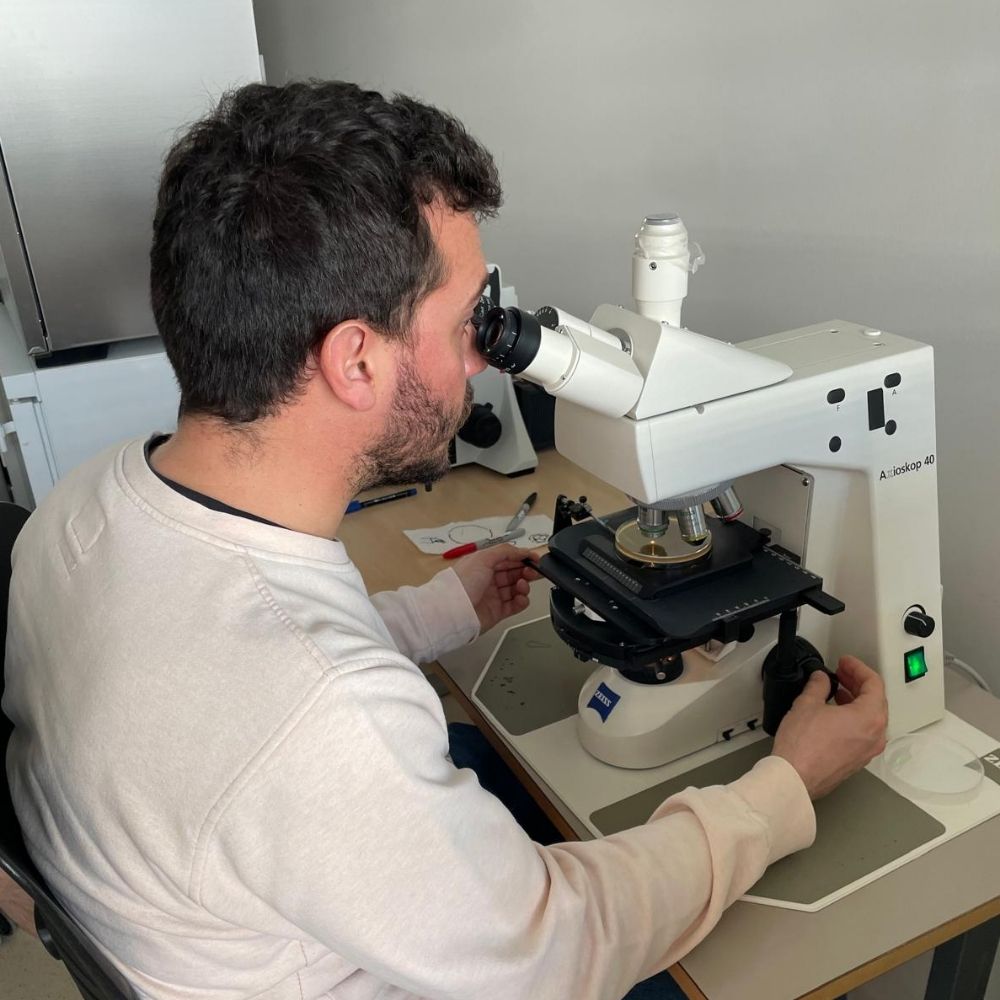
New preprint from the lab!!🎉
We show that Asgard archaea ESCRT-III proteins can trigger membrane fission and reveal its molecular mechanism, offering clues to how these cells may have built internal compartments. But do these organisms even have these compartments?
www.biorxiv.org/content/10.1...
We show that Asgard archaea ESCRT-III proteins can trigger membrane fission and reveal its molecular mechanism, offering clues to how these cells may have built internal compartments. But do these organisms even have these compartments?
www.biorxiv.org/content/10.1...
Molecular basis for cellular compartmentalization by an ancient membrane fission mechanism
The emergence of cell compartmentalization depends on membrane fission to create the endomembrane compartments. In eukaryotes, membrane fission is commonly executed by ESCRT-III, a protein complex con...
www.biorxiv.org
December 1, 2025 at 9:09 AM
New preprint from the lab!!🎉
We show that Asgard archaea ESCRT-III proteins can trigger membrane fission and reveal its molecular mechanism, offering clues to how these cells may have built internal compartments. But do these organisms even have these compartments?
www.biorxiv.org/content/10.1...
We show that Asgard archaea ESCRT-III proteins can trigger membrane fission and reveal its molecular mechanism, offering clues to how these cells may have built internal compartments. But do these organisms even have these compartments?
www.biorxiv.org/content/10.1...
Reposted by Yohann Boutté

Reposted by Yohann Boutté
This is an exciting story! Happy to have contributed a little with @mudgal17.bsky.social. So many things we don't (yet) understand in membrane biology...
New preprint from the lab!!🎉
We show that Asgard archaea ESCRT-III proteins can trigger membrane fission and reveal its molecular mechanism, offering clues to how these cells may have built internal compartments. But do these organisms even have these compartments?
www.biorxiv.org/content/10.1...
We show that Asgard archaea ESCRT-III proteins can trigger membrane fission and reveal its molecular mechanism, offering clues to how these cells may have built internal compartments. But do these organisms even have these compartments?
www.biorxiv.org/content/10.1...
Molecular basis for cellular compartmentalization by an ancient membrane fission mechanism
The emergence of cell compartmentalization depends on membrane fission to create the endomembrane compartments. In eukaryotes, membrane fission is commonly executed by ESCRT-III, a protein complex con...
www.biorxiv.org
December 1, 2025 at 12:43 PM
This is an exciting story! Happy to have contributed a little with @mudgal17.bsky.social. So many things we don't (yet) understand in membrane biology...
Reposted by Yohann Boutté
Proud to announce you my graduation as Doctor in Cell Biology after my thesis defense. By revisiting the early secretory pathway in plant cells: identification of a dynamic tubulo-vesiculated ERGIC that mature in Golgi. Thanks to my supervisor @yohannboutte.bsky.social @lbm-bordeaux.bsky.social


November 29, 2025 at 4:13 PM
Proud to announce you my graduation as Doctor in Cell Biology after my thesis defense. By revisiting the early secretory pathway in plant cells: identification of a dynamic tubulo-vesiculated ERGIC that mature in Golgi. Thanks to my supervisor @yohannboutte.bsky.social @lbm-bordeaux.bsky.social
Reposted by Yohann Boutté
Excited to share our new review on ESCRT-III! If you're intrigued by how cells keep their membranes in shape, this one's for you 🌀✂️

New Online! ESCRT-III function in membrane fission and repair

ESCRT-III function in membrane fission and repair
Nature Reviews Molecular Cell Biology, Published online: 26 November 2025; doi:10.1038/s41580-025-00909-1The endosomal sorting complex required for transport machinery supports key cellular functions including cell division, autophagy and membrane repair. This Review presents recent mechanistic and structural insights into the assembly and remodelling of endosomal sorting complex required for transport complexes in different cellular contexts.
bit.ly
November 27, 2025 at 6:07 PM
Excited to share our new review on ESCRT-III! If you're intrigued by how cells keep their membranes in shape, this one's for you 🌀✂️
Reposted by Yohann Boutté

Nice paper from @leventallab.bsky.social suggess lipid-driven domains organise cargo and trafficking machinery at ERES to sort and export transmembrane proteins.
ER exit sites mediated by the COPII adaptor sec24D selectively recruit lipid raft-preferring proteins for rapid ER export.
rdcu.be/eR8jj
ER exit sites mediated by the COPII adaptor sec24D selectively recruit lipid raft-preferring proteins for rapid ER export.
rdcu.be/eR8jj

ER exit sites mediated by the COPII adaptor sec24D selectively recruit lipid raft-preferring proteins for rapid ER export
Nature Communications - Through synchronized cargo traffic experiments, the authors explore the role of raft partitioning in ER efflux. Raft-preferring cargos show specific preferences for ER exit...
rdcu.be
November 27, 2025 at 8:35 PM
Nice paper from @leventallab.bsky.social suggess lipid-driven domains organise cargo and trafficking machinery at ERES to sort and export transmembrane proteins.
ER exit sites mediated by the COPII adaptor sec24D selectively recruit lipid raft-preferring proteins for rapid ER export.
rdcu.be/eR8jj
ER exit sites mediated by the COPII adaptor sec24D selectively recruit lipid raft-preferring proteins for rapid ER export.
rdcu.be/eR8jj
Reposted by Yohann Boutté

#CNRSnews 📰 The chemical revolution of the early 20th century was a golden age for painters with the rising number of pigments available. Scientists are scrutinising Robert Delaunay’s colours, especially his purples, in an effort to conserve his works 🎨🖌️
👉 news.cnrs.fr/slideshows/s...
👉 news.cnrs.fr/slideshows/s...

Seeing life in purple
The early 20th-century artist Robert Delaunay began painting at a pivotal moment in art history, namely during the chemical industry revolution, when the number of pigments available on the market increased. Today scientists are trying to solve the mystery of the painter’s colours, his purples in particular. One of the objectives of this research is to generate knowledge essential to conserving the works.
news.cnrs.fr
November 25, 2025 at 9:03 PM
#CNRSnews 📰 The chemical revolution of the early 20th century was a golden age for painters with the rising number of pigments available. Scientists are scrutinising Robert Delaunay’s colours, especially his purples, in an effort to conserve his works 🎨🖌️
👉 news.cnrs.fr/slideshows/s...
👉 news.cnrs.fr/slideshows/s...
Reposted by Yohann Boutté

Our paper is now out in Nature Communications! Phosphorylation-coupled autoregulation of TANGO1 and Sec16A maintains functional ER exit sites. rdcu.be/eRNLt
TANGO1 and Sec16 need a Goldilocks level of phosphorylation — not too high, not too low.
TANGO1 and Sec16 need a Goldilocks level of phosphorylation — not too high, not too low.

November 26, 2025 at 4:53 AM
Our paper is now out in Nature Communications! Phosphorylation-coupled autoregulation of TANGO1 and Sec16A maintains functional ER exit sites. rdcu.be/eRNLt
TANGO1 and Sec16 need a Goldilocks level of phosphorylation — not too high, not too low.
TANGO1 and Sec16 need a Goldilocks level of phosphorylation — not too high, not too low.
Reposted by Yohann Boutté
Check out that spindle 🤩🔥
At 63C, most eukaryotic cells would be busy exploding noisily, forget even trying to divide.
The microbial universe never ceases to astound 😍
Thanks for letting us be a tiny part of this! #ExpandThemAll
At 63C, most eukaryotic cells would be busy exploding noisily, forget even trying to divide.
The microbial universe never ceases to astound 😍
Thanks for letting us be a tiny part of this! #ExpandThemAll
While 𝘝. 𝘷𝘦𝘳𝘮𝘪𝘧𝘰𝘳𝘮𝘪𝘴 max temp is around 45°C, we found 𝘐. 𝘤𝘢𝘴𝘤𝘢𝘥𝘦𝘯𝘴𝘪𝘴 grows up to 63°C with optimal growth at 55-57°C🥵. We showed cellular replication via Ultrastructure Expansion Microscopy at 63°C. The previous limit for euks is 60°C!

November 25, 2025 at 8:30 PM
Check out that spindle 🤩🔥
At 63C, most eukaryotic cells would be busy exploding noisily, forget even trying to divide.
The microbial universe never ceases to astound 😍
Thanks for letting us be a tiny part of this! #ExpandThemAll
At 63C, most eukaryotic cells would be busy exploding noisily, forget even trying to divide.
The microbial universe never ceases to astound 😍
Thanks for letting us be a tiny part of this! #ExpandThemAll
Reposted by Yohann Boutté
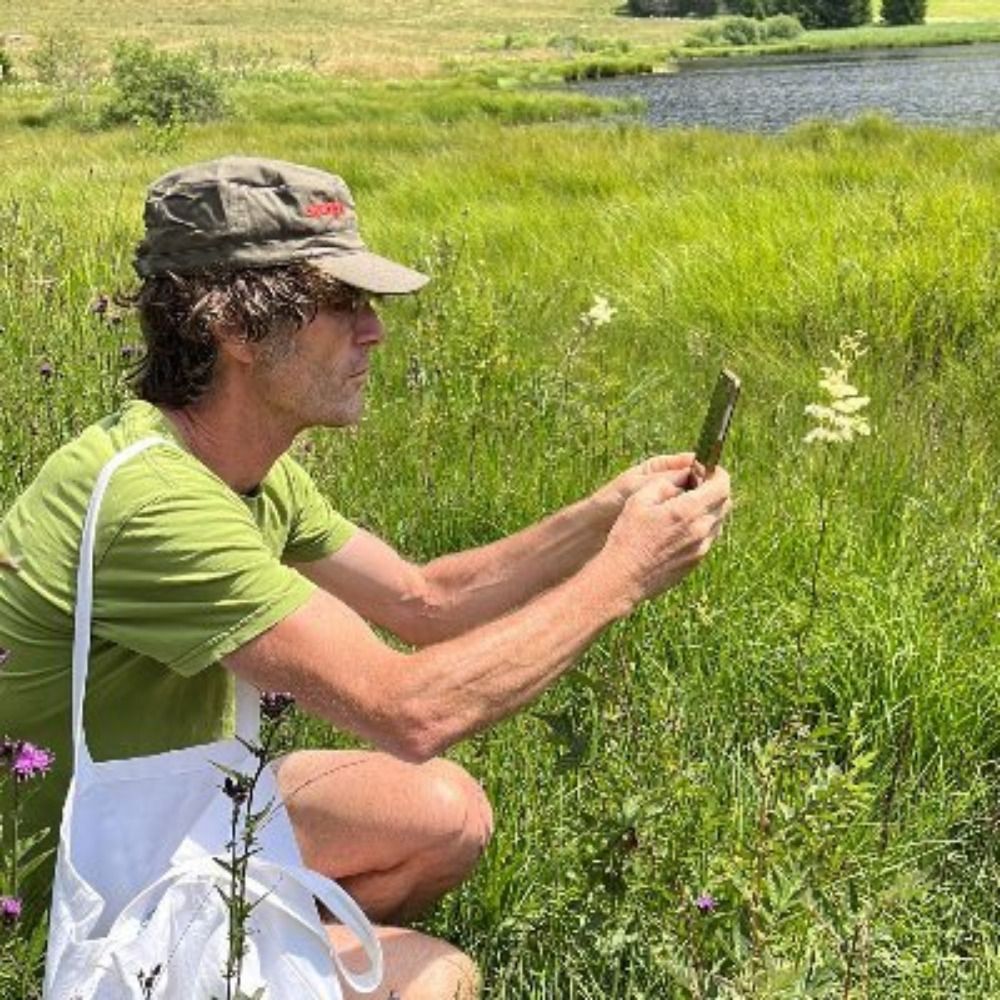
J'ai parlé grosse fleur qui pue pour les petits bateaux www.radiofrance.fr/franceinter/...

Quelle est la fleur la plus grande ?
Léna, cinq ans, pose la question au micro des P’tits bateaux. Et c’est le chercheur François Parcy, spécialiste des fleurs, qui lui répond et lui décrit cette énorme plante que l'on retrouve dans les ...
www.radiofrance.fr
November 25, 2025 at 9:51 AM
J'ai parlé grosse fleur qui pue pour les petits bateaux www.radiofrance.fr/franceinter/...
Reposted by Yohann Boutté
#RejoignezLeCNRS 🫵 Les concours chercheurs CNRS 2026 ouvrent le 8/12 !
Envie de faire avancer la science au sein d’un des plus grands organismes de recherche ?
👉 carrieres.cnrs.fr/concours-...
#ConcoursChercheurs #Science #Recherche #Icicarecrute #recrutement
Envie de faire avancer la science au sein d’un des plus grands organismes de recherche ?
👉 carrieres.cnrs.fr/concours-...
#ConcoursChercheurs #Science #Recherche #Icicarecrute #recrutement

November 25, 2025 at 10:02 AM
#RejoignezLeCNRS 🫵 Les concours chercheurs CNRS 2026 ouvrent le 8/12 !
Envie de faire avancer la science au sein d’un des plus grands organismes de recherche ?
👉 carrieres.cnrs.fr/concours-...
#ConcoursChercheurs #Science #Recherche #Icicarecrute #recrutement
Envie de faire avancer la science au sein d’un des plus grands organismes de recherche ?
👉 carrieres.cnrs.fr/concours-...
#ConcoursChercheurs #Science #Recherche #Icicarecrute #recrutement
Reposted by Yohann Boutté
Phosphorylation-coupled autoregulation of TANGO1 and Sec16A maintains functional ER exit sites
www.nature.com/articles/s41...
www.nature.com/articles/s41...

Phosphorylation-coupled autoregulation of TANGO1 and Sec16A maintains functional ER exit sites - Nature Communications
The ER exit site is a portal on the endoplasmic reticulum where secretory proteins depart. Here, the authors revealed that a balanced phosphorylation state of the ER exit site proteins TANGO1 and Sec1...
www.nature.com
November 25, 2025 at 2:54 PM
Phosphorylation-coupled autoregulation of TANGO1 and Sec16A maintains functional ER exit sites
www.nature.com/articles/s41...
www.nature.com/articles/s41...
Reposted by Yohann Boutté
La science ouverte va-t-elle prendre un nouveau tournant à l’heure d’un contexte international tendu et d’une IA en plein essor ? Sylvie Rousset, directrice de la Direction des données ouvertes et de la recherche, fait le point sur les avancées du @cnrs.fr.

Science ouverte : les succès du CNRS
La science ouverte va-t-elle prendre un nouveau tournant à l’heure d’un contexte international tendu et d’une IA en plein essor pour le meilleur comme pour le
www.cnrs.fr
November 25, 2025 at 3:17 PM
La science ouverte va-t-elle prendre un nouveau tournant à l’heure d’un contexte international tendu et d’une IA en plein essor ? Sylvie Rousset, directrice de la Direction des données ouvertes et de la recherche, fait le point sur les avancées du @cnrs.fr.
Reposted by Yohann Boutté
Is open science on the cusp of taking a new turn in the current context of international tension twinned with AI's rapid rise? Sylvie Rousset, the director of the CNRS's Open Research Data Department takes stock of the organisation progress in this area.
Open science – the CNRS's successes
Is open science on the cusp of taking a new turn in the current context of international tension twinned with AI's rapid rise, for better or for worse?
www.cnrs.fr
November 25, 2025 at 3:11 PM
Is open science on the cusp of taking a new turn in the current context of international tension twinned with AI's rapid rise? Sylvie Rousset, the director of the CNRS's Open Research Data Department takes stock of the organisation progress in this area.
Reposted by Yohann Boutté
Nice paper from Kota @saitolab.bsky.social! Balanced phosphorylation of TANGO1 and Sec16A keep ER exit sites stable and functional.
Do cells maintain this dynamically to keep secretory machinery primed and responsive to changing cargo loads or environmental signals?
www.nature.com/articles/s41...
Do cells maintain this dynamically to keep secretory machinery primed and responsive to changing cargo loads or environmental signals?
www.nature.com/articles/s41...

November 25, 2025 at 4:22 PM
Nice paper from Kota @saitolab.bsky.social! Balanced phosphorylation of TANGO1 and Sec16A keep ER exit sites stable and functional.
Do cells maintain this dynamically to keep secretory machinery primed and responsive to changing cargo loads or environmental signals?
www.nature.com/articles/s41...
Do cells maintain this dynamically to keep secretory machinery primed and responsive to changing cargo loads or environmental signals?
www.nature.com/articles/s41...
Reposted by Yohann Boutté
Apical and basolateral plasma membranes in epithelial cells have distinct lipidomes and biophysical properties www.biorxiv.org/content/10.1...
Apical and basolateral plasma membranes in epithelial cells have distinct lipidomes and biophysical properties
Epithelial cell polarization is essential for many physiological processes, including tissue morphogenesis, nutrient absorption, barrier integrity, and directional secretion. A defining feature of suc...
www.biorxiv.org
November 24, 2025 at 4:45 PM
Apical and basolateral plasma membranes in epithelial cells have distinct lipidomes and biophysical properties www.biorxiv.org/content/10.1...
