



Nigel Moore
@tessellae.bsky.social
Fascinated by how Neolithic man became a social being and by the exquisite beauty of ancient mosaics, after 35 years in psychiatry. Alter ego @ostreology
Has an almost “textile” or “wicker” feel about it. Marvellous
November 25, 2025 at 8:12 AM
Has an almost “textile” or “wicker” feel about it. Marvellous
Such a simple but exquisitely executed design!
November 10, 2025 at 10:11 PM
Such a simple but exquisitely executed design!
Oikos really means room here and not floor which unfortunately is the most common translation
November 10, 2025 at 7:01 PM
Oikos really means room here and not floor which unfortunately is the most common translation
I suppose that bulge under his left elbow is a cushion and not some part of his anatomy. Or any other interpretations.?
Otherwise “recline, dine and wine” is underused as an advert jingle….
Otherwise “recline, dine and wine” is underused as an advert jingle….
November 3, 2025 at 5:38 PM
I suppose that bulge under his left elbow is a cushion and not some part of his anatomy. Or any other interpretations.?
Otherwise “recline, dine and wine” is underused as an advert jingle….
Otherwise “recline, dine and wine” is underused as an advert jingle….
The word Ethiopian has been used in history for different black people so even with Herodotus it’s difficult to know who the people were he referred to. Reminds me of the famous black *Oyster King” of New York Thomas Downing in the early 19th century who was called the “venerable Ethiop”
October 29, 2025 at 9:10 PM
The word Ethiopian has been used in history for different black people so even with Herodotus it’s difficult to know who the people were he referred to. Reminds me of the famous black *Oyster King” of New York Thomas Downing in the early 19th century who was called the “venerable Ethiop”
It’s a shame it is called a Roman mosaic when it is Hellenistic by style, composition and probable dating. Just because it was taken to Pompeii, as war booty or just plundered doesn’t make it Roman (dislike of polychromy was quite common in Roman times as well)
October 27, 2025 at 7:12 PM
It’s a shame it is called a Roman mosaic when it is Hellenistic by style, composition and probable dating. Just because it was taken to Pompeii, as war booty or just plundered doesn’t make it Roman (dislike of polychromy was quite common in Roman times as well)
But like one of my old oriental rugs at home! Supposed to be melon forms , all in natural wool colours

October 27, 2025 at 7:06 PM
But like one of my old oriental rugs at home! Supposed to be melon forms , all in natural wool colours
Perhaps it’s due to the grouting which is so prominent
October 27, 2025 at 12:50 PM
Perhaps it’s due to the grouting which is so prominent
A cute emblema! Again this meme started by Sosos, mentioned by Pliny of a mosaic with doves! Continued even into paleo-Christian mosaic art!
October 20, 2025 at 9:17 PM
A cute emblema! Again this meme started by Sosos, mentioned by Pliny of a mosaic with doves! Continued even into paleo-Christian mosaic art!
I’m sorry but this can’t either be BC as tessellated mosaics were not generally made until the beginning of the 2nd centBC. Its style and composition is much later
October 20, 2025 at 8:36 PM
I’m sorry but this can’t either be BC as tessellated mosaics were not generally made until the beginning of the 2nd centBC. Its style and composition is much later
Saw the whole book is free to download on Internet Archive which is quite amazing! One very grateful reader here at least!
October 8, 2025 at 4:35 PM
Saw the whole book is free to download on Internet Archive which is quite amazing! One very grateful reader here at least!
Thanks for the link and suggestion! I’ll be very curious to read it, though I hope it’s not too focused on cognitive aspects as we need to try and get at feelings, imagination and fantasies as well that these extraordinary sculptures represent and evoke
October 8, 2025 at 11:13 AM
Thanks for the link and suggestion! I’ll be very curious to read it, though I hope it’s not too focused on cognitive aspects as we need to try and get at feelings, imagination and fantasies as well that these extraordinary sculptures represent and evoke
…..no doubt shared but they need to be put into some psychological context too. There’s a lot of interesting work done by anthropologists with psychoanalytic training that could be consulted on these extremely interesting issues of interpretation
October 7, 2025 at 10:13 PM
…..no doubt shared but they need to be put into some psychological context too. There’s a lot of interesting work done by anthropologists with psychoanalytic training that could be consulted on these extremely interesting issues of interpretation
I think Neolithic archaeologists are sometimes too obsessed with its social aspects whilst more psychological constructs, like aggression, fear and sexual drives are often avoided. Cauvin and Hodder are 2 notable exceptions as these carved figures are products of fantasies…..1/2
October 7, 2025 at 10:10 PM
I think Neolithic archaeologists are sometimes too obsessed with its social aspects whilst more psychological constructs, like aggression, fear and sexual drives are often avoided. Cauvin and Hodder are 2 notable exceptions as these carved figures are products of fantasies…..1/2
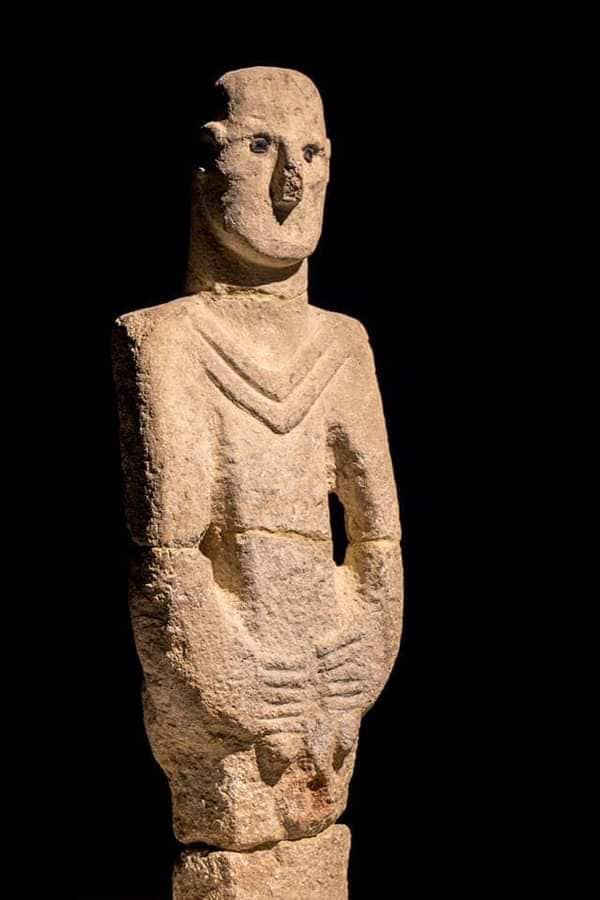
Forgot to add the rep photos

October 7, 2025 at 7:49 PM
Forgot to add the rep photos
This statue also from Karahantepe plus the perhaps even older “Urfa Man” suggest human figures had their place in Neolithic iconography, though we can’t ignore the fact that two are men holding their genitalia which as Hodder esp stresses underlies the strong phallic elements in such projections
October 7, 2025 at 7:48 PM
This statue also from Karahantepe plus the perhaps even older “Urfa Man” suggest human figures had their place in Neolithic iconography, though we can’t ignore the fact that two are men holding their genitalia which as Hodder esp stresses underlies the strong phallic elements in such projections
This statue also from Karahantepe plus the perhaps even older “Urfa Man” suggest human figures had their place in Neolithic iconography
October 6, 2025 at 8:33 PM
This statue also from Karahantepe plus the perhaps even older “Urfa Man” suggest human figures had their place in Neolithic iconography
Thanks! Makes sense m!
October 6, 2025 at 8:25 PM
Thanks! Makes sense m!
Perhaps a theatre mask? Provenance and date??
October 6, 2025 at 8:06 PM
Perhaps a theatre mask? Provenance and date??