


Taoran Fu
@taoranfu.bsky.social
Eco-evo | Postdoc in Brockhurst group at University of Manchester
Microbiology | Pseudomonas | Quorum-sensing and defense system
Microbiology | Pseudomonas | Quorum-sensing and defense system
Pinned
Taoran Fu
@taoranfu.bsky.social
· Dec 6


Thrilled to successfully defend my PhD thesis with no corrections!
Thanks to my examiners Angus Buckling and @whelanfj.bsky.social and the chair Michael Bromley for an enjoyable viva. (1/3)
Thanks to my examiners Angus Buckling and @whelanfj.bsky.social and the chair Michael Bromley for an enjoyable viva. (1/3)
Reposted by Taoran Fu
Phages are full of genes of unknown function that are likely adaptive in specific conditions.
New preprint: Phage TnSeq identifies essential genes rapidly and knocks all non-essentials. We would like to send a pool of phiKZ mutants to anyone wanting it! Reach out
tinyurl.com/bdcfrejh
New preprint: Phage TnSeq identifies essential genes rapidly and knocks all non-essentials. We would like to send a pool of phiKZ mutants to anyone wanting it! Reach out
tinyurl.com/bdcfrejh

December 8, 2025 at 3:04 PM
Phages are full of genes of unknown function that are likely adaptive in specific conditions.
New preprint: Phage TnSeq identifies essential genes rapidly and knocks all non-essentials. We would like to send a pool of phiKZ mutants to anyone wanting it! Reach out
tinyurl.com/bdcfrejh
New preprint: Phage TnSeq identifies essential genes rapidly and knocks all non-essentials. We would like to send a pool of phiKZ mutants to anyone wanting it! Reach out
tinyurl.com/bdcfrejh
Reposted by Taoran Fu
100%, both ONT and PacBio (although most of what we do is not marine / streamlined genome). We just published a specific study of soil metag short- vs long-read, and we see that, among other things, long-reads assemble regions too complex for short reads academic.oup.com/nargab/artic...

Comparison of short-read and long-read metagenome assemblies in a natural soil community highlights systematic bias in recovery of high-diversity populations
Abstract. Comparisons of long-read and short-read (meta)genome assemblies typically show that short-read sequence assemblies are less error-prone, but stru
academic.oup.com
December 8, 2025 at 4:25 PM
100%, both ONT and PacBio (although most of what we do is not marine / streamlined genome). We just published a specific study of soil metag short- vs long-read, and we see that, among other things, long-reads assemble regions too complex for short reads academic.oup.com/nargab/artic...
Reposted by Taoran Fu

My first lead author paper is out with Ben Kerr and @alisonfeder.bsky.social! We found that making an antiviral too strong can sometimes make resistance easier to evolve. This has implications for how we design drugs, choose doses, and think about viral evolution in the face of treatment. (1/n)

Intracellular interactions shape antiviral resistance outcomes in poliovirus via eco-evolutionary feedback - Nature Ecology & Evolution
A model of intrahost poliovirus replication shows that, after several rounds of replication, pocapavir, a poliovirus capsid inhibitor, collapses viral density, preventing intracellular interactions th...
www.nature.com
December 8, 2025 at 5:15 PM
My first lead author paper is out with Ben Kerr and @alisonfeder.bsky.social! We found that making an antiviral too strong can sometimes make resistance easier to evolve. This has implications for how we design drugs, choose doses, and think about viral evolution in the face of treatment. (1/n)
Reposted by Taoran Fu

We had two fantastic visiting speakers today
MERMan alumnus @rowancallumg.bsky.social spoke about his current work with viral cheating in influenza with @asherleeks.bsky.social
And @lavishaparab.bsky.social talked about phage infection trade-offs
Thanks to @microbesng.bsky.social for our snacks!
MERMan alumnus @rowancallumg.bsky.social spoke about his current work with viral cheating in influenza with @asherleeks.bsky.social
And @lavishaparab.bsky.social talked about phage infection trade-offs
Thanks to @microbesng.bsky.social for our snacks!


December 3, 2025 at 5:32 PM
We had two fantastic visiting speakers today
MERMan alumnus @rowancallumg.bsky.social spoke about his current work with viral cheating in influenza with @asherleeks.bsky.social
And @lavishaparab.bsky.social talked about phage infection trade-offs
Thanks to @microbesng.bsky.social for our snacks!
MERMan alumnus @rowancallumg.bsky.social spoke about his current work with viral cheating in influenza with @asherleeks.bsky.social
And @lavishaparab.bsky.social talked about phage infection trade-offs
Thanks to @microbesng.bsky.social for our snacks!
Reposted by Taoran Fu

Metabolic interplay drives population cycles in a cross-feeding microbial community
@natcomms.nature.com from @oventurelli2.bsky.social
www.nature.com/articles/s41...
@natcomms.nature.com from @oventurelli2.bsky.social
www.nature.com/articles/s41...
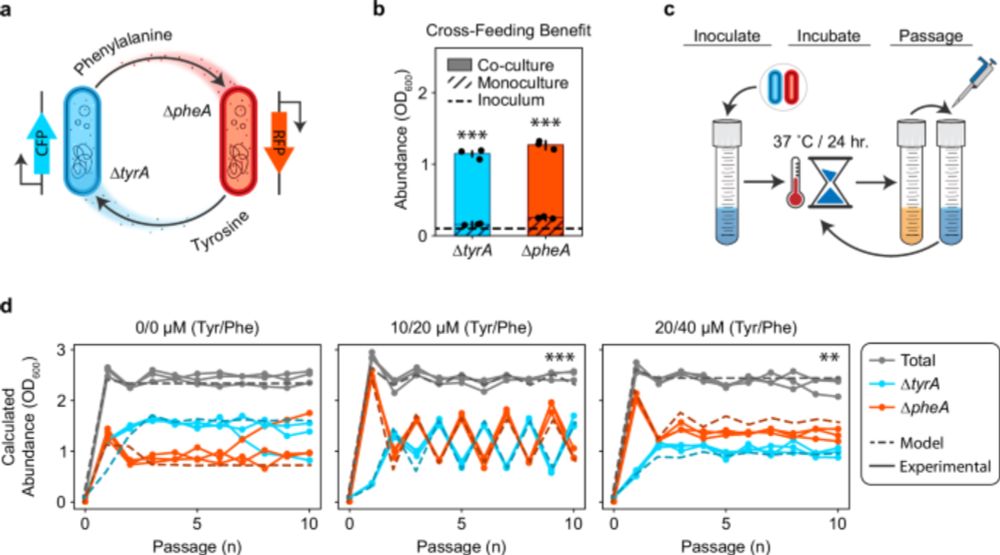
Metabolic interplay drives population cycles in a cross-feeding microbial community - Nature Communications
Here the authors leverage a crossfeeding, engineered microbial community to demonstrate that strain abundance cycles are robust across environmental conditions. They pair this with a nonlinear dynamic model to elucidate population cycles.
www.nature.com
October 7, 2025 at 7:09 PM
Metabolic interplay drives population cycles in a cross-feeding microbial community
@natcomms.nature.com from @oventurelli2.bsky.social
www.nature.com/articles/s41...
@natcomms.nature.com from @oventurelli2.bsky.social
www.nature.com/articles/s41...
Reposted by Taoran Fu

New pre-print www.biorxiv.org/content/10.1...
Plasmid-dependent phage (PDPs) are ubiquitous, but the selective pressures that they impose on plasmids are not well understood. Project led by Daniel Cazares in collaboration with @brockhurstlab.bsky.social!
#phagesky#microsky
Plasmid-dependent phage (PDPs) are ubiquitous, but the selective pressures that they impose on plasmids are not well understood. Project led by Daniel Cazares in collaboration with @brockhurstlab.bsky.social!
#phagesky#microsky

Trade-offs between phage resistance and conjugative ability shape the ecological and evolutionary response of a multidrug resistance plasmid to plasmid-dependent phage
Phage therapy is a promising alternative to antibiotics to treat multidrug resistant infections. Plasmid dependent phages (PDPs) are particularly attractive as therapeutics because they can both kill ...
www.biorxiv.org
October 9, 2025 at 10:07 AM
New pre-print www.biorxiv.org/content/10.1...
Plasmid-dependent phage (PDPs) are ubiquitous, but the selective pressures that they impose on plasmids are not well understood. Project led by Daniel Cazares in collaboration with @brockhurstlab.bsky.social!
#phagesky#microsky
Plasmid-dependent phage (PDPs) are ubiquitous, but the selective pressures that they impose on plasmids are not well understood. Project led by Daniel Cazares in collaboration with @brockhurstlab.bsky.social!
#phagesky#microsky
Reposted by Taoran Fu
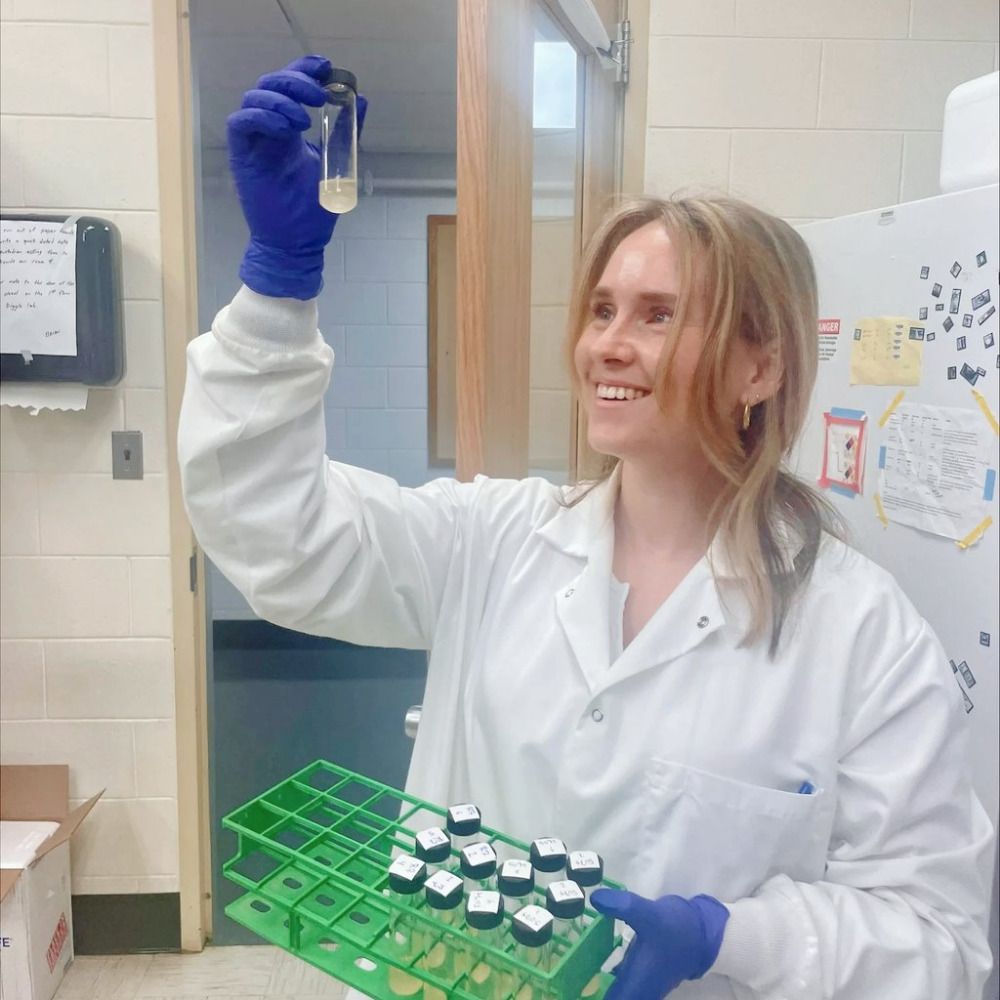
Very happy to see this piece out in @plosbiology.org, on the bacterial immune systems and microbial communities. It was a great team effort with Rafael Custodio, @brockhurstlab.bsky.social , @brownlab.bsky.social, and Edze Westra! 🦠🧫 #phagesky #mevosky
journals.plos.org/plosbiology/...
journals.plos.org/plosbiology/...

Bacterial immune systems as causes and consequences of microbiome structure
Bacterial immune systems have evolved in response to diverse molecular "parasites", yet their ecological roles remain poorly understood. This Essay explores how interactions between mobile genetic ele...
journals.plos.org
November 19, 2025 at 6:35 PM
Very happy to see this piece out in @plosbiology.org, on the bacterial immune systems and microbial communities. It was a great team effort with Rafael Custodio, @brockhurstlab.bsky.social , @brownlab.bsky.social, and Edze Westra! 🦠🧫 #phagesky #mevosky
journals.plos.org/plosbiology/...
journals.plos.org/plosbiology/...
Reposted by Taoran Fu
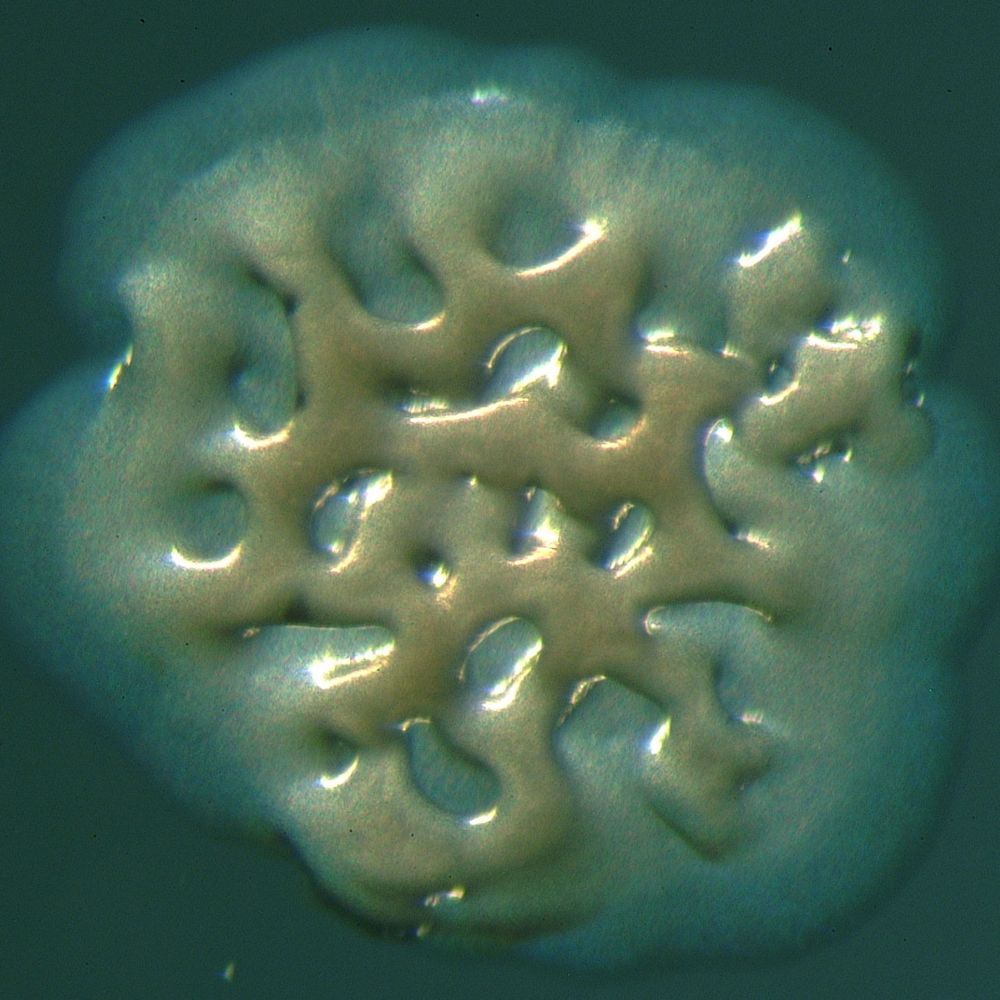
New preprint!
Ever wondered why only a fraction of genomes encode CRISPR immunity? 🧬 🦠
Turns out CRISPR is rarely beneficial against virulent phages, being most beneficial against those for which resistance mutations are rare!
An epic effort by Rosanna Wright
www.biorxiv.org/content/10.1...
Ever wondered why only a fraction of genomes encode CRISPR immunity? 🧬 🦠
Turns out CRISPR is rarely beneficial against virulent phages, being most beneficial against those for which resistance mutations are rare!
An epic effort by Rosanna Wright
www.biorxiv.org/content/10.1...

Resistance mutation supply modulates the benefit of CRISPR immunity against virulent phages
Only a fraction of bacterial genomes encode CRISPR-Cas systems but the selective causes of this variation are unexplained. How naturally virulent bacteriophages (phages) select for CRISPR immunity has...
www.biorxiv.org
October 6, 2025 at 6:27 AM
New preprint!
Ever wondered why only a fraction of genomes encode CRISPR immunity? 🧬 🦠
Turns out CRISPR is rarely beneficial against virulent phages, being most beneficial against those for which resistance mutations are rare!
An epic effort by Rosanna Wright
www.biorxiv.org/content/10.1...
Ever wondered why only a fraction of genomes encode CRISPR immunity? 🧬 🦠
Turns out CRISPR is rarely beneficial against virulent phages, being most beneficial against those for which resistance mutations are rare!
An epic effort by Rosanna Wright
www.biorxiv.org/content/10.1...
Reposted by Taoran Fu

The mechanism of Lamassu, an abundant bacterial immune system, is now solved
Lamassu evolved from a DNA repair complex
Beautiful study from the Patel, Bernheim and Sternberg labs
Lamassu evolved from a DNA repair complex
Beautiful study from the Patel, Bernheim and Sternberg labs

🧬🛡️How are new immune mechanisms created?
We show how Lamassu antiphage system, originated from a DNA-repair complex and evolved into a compact and modular immune machine, wt Dinshaw Patel lab in @pnas.org.
👏 @matthieu-haudiquet.bsky.social, Arpita Chakravarti & all authors!
doi.org/10.1073/pnas...
We show how Lamassu antiphage system, originated from a DNA-repair complex and evolved into a compact and modular immune machine, wt Dinshaw Patel lab in @pnas.org.
👏 @matthieu-haudiquet.bsky.social, Arpita Chakravarti & all authors!
doi.org/10.1073/pnas...


November 27, 2025 at 7:08 PM
The mechanism of Lamassu, an abundant bacterial immune system, is now solved
Lamassu evolved from a DNA repair complex
Beautiful study from the Patel, Bernheim and Sternberg labs
Lamassu evolved from a DNA repair complex
Beautiful study from the Patel, Bernheim and Sternberg labs
Reposted by Taoran Fu
More amazing posters presented by our researchers @zahraaalbaqsami.bsky.social and Rana at #MicroEvo25!


November 27, 2025 at 4:52 PM
More amazing posters presented by our researchers @zahraaalbaqsami.bsky.social and Rana at #MicroEvo25!
Reposted by Taoran Fu
Come chat to Dan at poster 22 to learn about endosymbiosis evolution #MicroEvo25

November 26, 2025 at 3:16 PM
Come chat to Dan at poster 22 to learn about endosymbiosis evolution #MicroEvo25
Reposted by Taoran Fu
If you’re interested in antibiotic resistance evolution in Pseudomonas, come to @flanagella.bsky.social’s poster (number 11) 💊 #MicroEvo25
November 26, 2025 at 1:02 PM
If you’re interested in antibiotic resistance evolution in Pseudomonas, come to @flanagella.bsky.social’s poster (number 11) 💊 #MicroEvo25
Reposted by Taoran Fu
Learn about hot spring microbial communities from @magdalenakurteu.bsky.social at poster 62 🌋 #MicroEvo25

November 26, 2025 at 1:01 PM
Learn about hot spring microbial communities from @magdalenakurteu.bsky.social at poster 62 🌋 #MicroEvo25
Reposted by Taoran Fu
Find out more about DNA repair protein single-molecule tracking from @bexlowrypalms.bsky.social at poster 18🔬 #MicroEvo25

November 26, 2025 at 12:30 PM
Find out more about DNA repair protein single-molecule tracking from @bexlowrypalms.bsky.social at poster 18🔬 #MicroEvo25
Reposted by Taoran Fu
Come and see @willpjsmith.bsky.social at poster 71 to find out more about microbial warfare! #MicroEvo25

November 26, 2025 at 12:26 PM
Come and see @willpjsmith.bsky.social at poster 71 to find out more about microbial warfare! #MicroEvo25
Reposted by Taoran Fu
Starting day two of #MicroEvo25 strong with our first MERMan speaker of the day! An amazing talk by @mattjago.bsky.social about mutational bias in E. coli 🧬


November 27, 2025 at 11:00 AM
Starting day two of #MicroEvo25 strong with our first MERMan speaker of the day! An amazing talk by @mattjago.bsky.social about mutational bias in E. coli 🧬
Reposted by Taoran Fu
Fantastic talk about the impact of inflammation on Pseudomonas aeruginosa evolution by @taoranfu.bsky.social #MicroEvo25


November 26, 2025 at 11:14 AM
Fantastic talk about the impact of inflammation on Pseudomonas aeruginosa evolution by @taoranfu.bsky.social #MicroEvo25
Reposted by Taoran Fu
Our latest paper is out with @adiop.bsky.social and @gmdouglas.bsky.social. We analyzed the extent of homologous recombination between bacterial species (introgression) and how it affects species borders (it can vary a lot depending on the approach used to classify species!). rdcu.be/eQAMf

Introgression impacts the evolution of bacteria, but species borders are rarely fuzzy
Nature Communications - It is commonly thought that bacterial species borders tend to be fuzzy, due to frequent exchange of DNA. Here, Diop et al. quantify the patterns of gene flow between core...
rdcu.be
November 18, 2025 at 9:01 PM
Our latest paper is out with @adiop.bsky.social and @gmdouglas.bsky.social. We analyzed the extent of homologous recombination between bacterial species (introgression) and how it affects species borders (it can vary a lot depending on the approach used to classify species!). rdcu.be/eQAMf
Reposted by Taoran Fu

🚨#PhD studentship opportunity! Plasmids provide bacteria with antimicrobial resistance, but do they have more fundamental effects on behaviour? 🧫🦠💫🧟♂️
Apply for a 4y funded MRC DiMeN position with me and Jamie Wheeler @livuni-ives.bsky.social www.findaphd.com/phds/project...
Apply for a 4y funded MRC DiMeN position with me and Jamie Wheeler @livuni-ives.bsky.social www.findaphd.com/phds/project...

MRC DiMeN Doctoral Training Partnership: Resistant zombies: how drug-resistance plasmids manipulate the behaviour of the opportunistic pathogen Pseudomonas aeruginosa at University of Liverpool on Fin...
PhD Project - MRC DiMeN Doctoral Training Partnership: Resistant zombies: how drug-resistance plasmids manipulate the behaviour of the opportunistic pathogen Pseudomonas aeruginosa at University of Li...
www.findaphd.com
November 18, 2025 at 9:38 AM
🚨#PhD studentship opportunity! Plasmids provide bacteria with antimicrobial resistance, but do they have more fundamental effects on behaviour? 🧫🦠💫🧟♂️
Apply for a 4y funded MRC DiMeN position with me and Jamie Wheeler @livuni-ives.bsky.social www.findaphd.com/phds/project...
Apply for a 4y funded MRC DiMeN position with me and Jamie Wheeler @livuni-ives.bsky.social www.findaphd.com/phds/project...
Reposted by Taoran Fu

gggenomes: A Grammar of Graphics for Comparative Genomics thackl.github.io/gggenomes/ #Rstats

A Grammar of Graphics for Comparative Genomics
An extension of ggplot2 for creating complex genomic maps. It builds on the power of ggplot2 and tidyverse adding new ggplot2-style geoms & positions and dplyr-style verbs to manipulate the…
thackl.github.io
November 18, 2025 at 7:02 PM
gggenomes: A Grammar of Graphics for Comparative Genomics thackl.github.io/gggenomes/ #Rstats
Looks interesting!!

🚨 Excited to share our new paper is out! 🎉
We show how interactions within gut microbiomes allow certain antibiotic-resistant E. coli strains to persist even without antibiotics, helping explain how resistance is maintained in the human gut.
Now published in @natcomms.nature.com rdcu.be/eOf63
We show how interactions within gut microbiomes allow certain antibiotic-resistant E. coli strains to persist even without antibiotics, helping explain how resistance is maintained in the human gut.
Now published in @natcomms.nature.com rdcu.be/eOf63

Multi-layered ecological interactions determine growth of clinical antibiotic-resistant strains within human microbiomes
Nature Communications - The role of ecological factors in modulating the spread of antibiotic-resistance bacteria in the gut remains unclear. Here, the authors use anaerobic microcosms to study the...
rdcu.be
November 7, 2025 at 10:22 AM
Looks interesting!!
Reposted by Taoran Fu
Linking nutrient availability and community size to stochasticity in microbial community assembly
@femsjournals.bsky.social Microbiology Ecology by Berenike Bick et al
academic.oup.com/femsec/advan...
@femsjournals.bsky.social Microbiology Ecology by Berenike Bick et al
academic.oup.com/femsec/advan...

Linking nutrient availability and community size to stochasticity in microbial community assembly
Abstract. Both deterministic (e.g. species-environment interactions) and stochastic processes (e.g. random birth and death events) shape communities, but i
academic.oup.com
October 31, 2025 at 7:16 PM
Linking nutrient availability and community size to stochasticity in microbial community assembly
@femsjournals.bsky.social Microbiology Ecology by Berenike Bick et al
academic.oup.com/femsec/advan...
@femsjournals.bsky.social Microbiology Ecology by Berenike Bick et al
academic.oup.com/femsec/advan...
New preprint out! Really enjoyed working with the team on this one
New pre-print: Plasmid dependent phage effectively eliminate AMR bacteria and block plasmid transmission in the chicken gut microbiome
Fun collaboration with Tao He lab (JAAS) and @brockhurstlab.bsky.social lab (Manchester)
#phagesky#microsky
www.biorxiv.org/content/10.1...
Fun collaboration with Tao He lab (JAAS) and @brockhurstlab.bsky.social lab (Manchester)
#phagesky#microsky
www.biorxiv.org/content/10.1...
Plasmid dependent phage eliminate pathogenic bacteria and antibiotic resistance plasmids from the chicken gut microbiome
Conjugative plasmids are a key reservoir of antimicrobial resistance (AMR) in commensal and pathogenic bacteria within the gut microbiome. Plasmid-dependent phage (PDPs) are a promising therapeutic op...
www.biorxiv.org
October 31, 2025 at 1:54 PM
New preprint out! Really enjoyed working with the team on this one
Reposted by Taoran Fu
New pre-print: Plasmid dependent phage effectively eliminate AMR bacteria and block plasmid transmission in the chicken gut microbiome
Fun collaboration with Tao He lab (JAAS) and @brockhurstlab.bsky.social lab (Manchester)
#phagesky#microsky
www.biorxiv.org/content/10.1...
Fun collaboration with Tao He lab (JAAS) and @brockhurstlab.bsky.social lab (Manchester)
#phagesky#microsky
www.biorxiv.org/content/10.1...
Plasmid dependent phage eliminate pathogenic bacteria and antibiotic resistance plasmids from the chicken gut microbiome
Conjugative plasmids are a key reservoir of antimicrobial resistance (AMR) in commensal and pathogenic bacteria within the gut microbiome. Plasmid-dependent phage (PDPs) are a promising therapeutic op...
www.biorxiv.org
October 27, 2025 at 8:19 AM
New pre-print: Plasmid dependent phage effectively eliminate AMR bacteria and block plasmid transmission in the chicken gut microbiome
Fun collaboration with Tao He lab (JAAS) and @brockhurstlab.bsky.social lab (Manchester)
#phagesky#microsky
www.biorxiv.org/content/10.1...
Fun collaboration with Tao He lab (JAAS) and @brockhurstlab.bsky.social lab (Manchester)
#phagesky#microsky
www.biorxiv.org/content/10.1...
Reposted by Taoran Fu

Do plasmids really move around that much? Well, maybe not always
Thrilled to have contributed to this story with two of my favourite microbiologists: @jrpenades.bsky.social & @sanmillan.bsky.social
This great work was led by Akshay Sabnis & @wfigueroac3.bsky.social
www.cell.com/cell-reports...
Thrilled to have contributed to this story with two of my favourite microbiologists: @jrpenades.bsky.social & @sanmillan.bsky.social
This great work was led by Akshay Sabnis & @wfigueroac3.bsky.social
www.cell.com/cell-reports...

Non-conjugative plasmids limit their mobility to persist in nature
Sabnis et al. explain why non-conjugative plasmids move at a low rate in nature. While
increased mobility can easily evolve by incorporating phage DNA into plasmids, this
is disadvantageous because it...
www.cell.com
October 22, 2025 at 5:47 PM
Do plasmids really move around that much? Well, maybe not always
Thrilled to have contributed to this story with two of my favourite microbiologists: @jrpenades.bsky.social & @sanmillan.bsky.social
This great work was led by Akshay Sabnis & @wfigueroac3.bsky.social
www.cell.com/cell-reports...
Thrilled to have contributed to this story with two of my favourite microbiologists: @jrpenades.bsky.social & @sanmillan.bsky.social
This great work was led by Akshay Sabnis & @wfigueroac3.bsky.social
www.cell.com/cell-reports...