




Nicolas Brisset
@nbrisset.bsky.social
I teach and research the history of economics and the social sciences at Université Côte d’Azur. PhD from the University of Lausanne and Paris 1. https://sites.google.com/d/1kByt4pZDAWI2SNUeW0fwVkvr1gWIoi2Y/p/1Ux-p6ofLnKK5qkhYvMbY8XNhbZ6nU30h/edit
Bon petit samedi soir.

December 6, 2025 at 6:45 PM
Bon petit samedi soir.

December 1, 2025 at 6:28 PM
J'avais écrit il y a longtemps (avec François Allisson) une petite critique d'un article publié dans la Revue économique à ce propos : shs.cairn.info/revue-econom...
On y posait la question du contexte informationnel dans lequel un vote est organisé.
On y posait la question du contexte informationnel dans lequel un vote est organisé.

November 27, 2025 at 5:21 PM
J'avais écrit il y a longtemps (avec François Allisson) une petite critique d'un article publié dans la Revue économique à ce propos : shs.cairn.info/revue-econom...
On y posait la question du contexte informationnel dans lequel un vote est organisé.
On y posait la question du contexte informationnel dans lequel un vote est organisé.
Delighted supervisor here. Very happy to welcome Etienne Martinier to the History of Economic Thought group at GREDEG (Université Côte d’Azur). Etienne will be working on a PhD exploring the relationship between economics and demography in post-war France. Here’s to a great PhD journey for him.

November 25, 2025 at 3:58 PM
Delighted supervisor here. Very happy to welcome Etienne Martinier to the History of Economic Thought group at GREDEG (Université Côte d’Azur). Etienne will be working on a PhD exploring the relationship between economics and demography in post-war France. Here’s to a great PhD journey for him.
Non mais tout va bien, les ficelles ne sont pas du tout énormes.
Il faut expliquer à l'IFOP qu'il existe des enseignements spécifiques sur la confection des questionnaires.
Il faut expliquer à l'IFOP qu'il existe des enseignements spécifiques sur la confection des questionnaires.


November 23, 2025 at 9:11 AM
Non mais tout va bien, les ficelles ne sont pas du tout énormes.
Il faut expliquer à l'IFOP qu'il existe des enseignements spécifiques sur la confection des questionnaires.
Il faut expliquer à l'IFOP qu'il existe des enseignements spécifiques sur la confection des questionnaires.
Et François Perroux c'est ?

November 22, 2025 at 3:11 PM
Et François Perroux c'est ?
Il y a des gens qui travaillent sur l'histoire de la pensée économique française d'après-guerre, et qui le font bien. Au hasard : shs.cairn.info/revue-revue-...

November 22, 2025 at 12:59 PM
Il y a des gens qui travaillent sur l'histoire de la pensée économique française d'après-guerre, et qui le font bien. Au hasard : shs.cairn.info/revue-revue-...
The Revue d'histoire de la Deuxième Guerre mondiale was created in 1950 (everything is online), but there was also a bulletin published by the Committee for Second World War History, which can be found in many archives in France.

November 21, 2025 at 5:48 AM
The Revue d'histoire de la Deuxième Guerre mondiale was created in 1950 (everything is online), but there was also a bulletin published by the Committee for Second World War History, which can be found in many archives in France.
parolesdhistoire.fr/index.php/20...
Au-delà du "ricanement démocratique", comprendre le fascisme en train de se faire.
@andreloez.bsky.social
Au-delà du "ricanement démocratique", comprendre le fascisme en train de se faire.
@andreloez.bsky.social

November 16, 2025 at 3:35 PM
parolesdhistoire.fr/index.php/20...
Au-delà du "ricanement démocratique", comprendre le fascisme en train de se faire.
@andreloez.bsky.social
Au-delà du "ricanement démocratique", comprendre le fascisme en train de se faire.
@andreloez.bsky.social
19/ Seen differently, Orain’s “capitalism of finitude” overlaps with older theories of monopoly and imperialism—from Hilferding and Luxemburg to Braudel. But he rarely situates himself within that lineage, leaving ambiguities.

November 11, 2025 at 9:39 AM
19/ Seen differently, Orain’s “capitalism of finitude” overlaps with older theories of monopoly and imperialism—from Hilferding and Luxemburg to Braudel. But he rarely situates himself within that lineage, leaving ambiguities.
16/ Dutch merchants drew power from political privilege, not productive investment. That’s why, for Meiksins Wood, the Dutch economy was pre-capitalist—and why England, with capitalist property relations, ultimately prevailed.

November 11, 2025 at 9:39 AM
16/ Dutch merchants drew power from political privilege, not productive investment. That’s why, for Meiksins Wood, the Dutch economy was pre-capitalist—and why England, with capitalist property relations, ultimately prevailed.
14/ One example is the Dutch Republic. For Orain, it exemplifies early capitalist finitude: a maritime empire built on commerce and monopolies. An alternative interpretation, developed by Ellen Meiksins Wood, holds that the Dutch Republic did not possess a genuinely capitalist organization.

November 11, 2025 at 9:39 AM
14/ One example is the Dutch Republic. For Orain, it exemplifies early capitalist finitude: a maritime empire built on commerce and monopolies. An alternative interpretation, developed by Ellen Meiksins Wood, holds that the Dutch Republic did not possess a genuinely capitalist organization.
13/ By centering on rents and monopolies, Orain sidelines key dynamics: capital accumulation, class and property relations, social production, etc.


November 11, 2025 at 9:39 AM
13/ By centering on rents and monopolies, Orain sidelines key dynamics: capital accumulation, class and property relations, social production, etc.
12/ From the classic Dobb–Sweezy exchange on the origins of capitalism to the later Brenner Debate on agrarian class structures, these controversies have shaped how we understand both what capitalism is and how it changes.

November 11, 2025 at 9:39 AM
12/ From the classic Dobb–Sweezy exchange on the origins of capitalism to the later Brenner Debate on agrarian class structures, these controversies have shaped how we understand both what capitalism is and how it changes.
11/ This stance may seem somewhat quick to set aside a long and complex historiographical tradition, in which questions of definition and questions of dynamics have always been deeply intertwined.

November 11, 2025 at 9:39 AM
11/ This stance may seem somewhat quick to set aside a long and complex historiographical tradition, in which questions of definition and questions of dynamics have always been deeply intertwined.
9/ This makes the book stimulating: it uses history—maritime law, colonial charters, industrial cartels—to diagnose today’s transformations: digital monopolies, industrial policy, imperial rivalry.

November 11, 2025 at 9:39 AM
9/ This makes the book stimulating: it uses history—maritime law, colonial charters, industrial cartels—to diagnose today’s transformations: digital monopolies, industrial policy, imperial rivalry.
7/ In the age of finitude, accumulation depends less on production than on logistics. Warehouses, data centers, satellites, and platforms become the real engines of capitalist power.

November 11, 2025 at 9:39 AM
7/ In the age of finitude, accumulation depends less on production than on logistics. Warehouses, data centers, satellites, and platforms become the real engines of capitalist power.
4/ This alternation isn’t random. Orain sees it as governed by what he calls “the laws of Mahan”: a structural mechanism linking commerce, logistics, and military power.
When one hegemon dominates the seas, rivals must arm their trade routes—until the cycle resets.
When one hegemon dominates the seas, rivals must arm their trade routes—until the cycle resets.

November 11, 2025 at 9:39 AM
4/ This alternation isn’t random. Orain sees it as governed by what he calls “the laws of Mahan”: a structural mechanism linking commerce, logistics, and military power.
When one hegemon dominates the seas, rivals must arm their trade routes—until the cycle resets.
When one hegemon dominates the seas, rivals must arm their trade routes—until the cycle resets.
3/ He argues that capitalism oscillates between two regimes:
⚖️ liberal capitalism—open, competitive, expansionist
🔒 finite capitalism—closed, monopolistic, imperial
Each phase rises when the other exhausts its logic.
⚖️ liberal capitalism—open, competitive, expansionist
🔒 finite capitalism—closed, monopolistic, imperial
Each phase rises when the other exhausts its logic.
November 11, 2025 at 9:39 AM
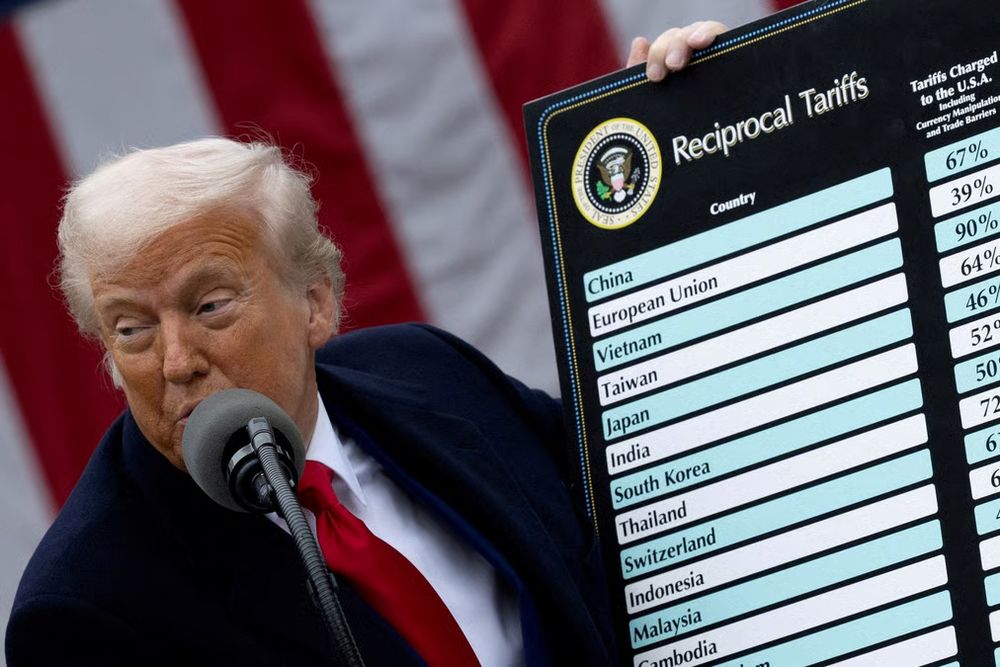
3/ He argues that capitalism oscillates between two regimes:
⚖️ liberal capitalism—open, competitive, expansionist
🔒 finite capitalism—closed, monopolistic, imperial
Each phase rises when the other exhausts its logic.
⚖️ liberal capitalism—open, competitive, expansionist
🔒 finite capitalism—closed, monopolistic, imperial
Each phase rises when the other exhausts its logic.
2/ Orain’s book is bold and provocative: it redefines capitalism itself. What he calls the “capitalism of finitude” isn’t about markets or competition, but about enclosure, monopolization, and imperial control over scarce resources.
November 11, 2025 at 9:39 AM
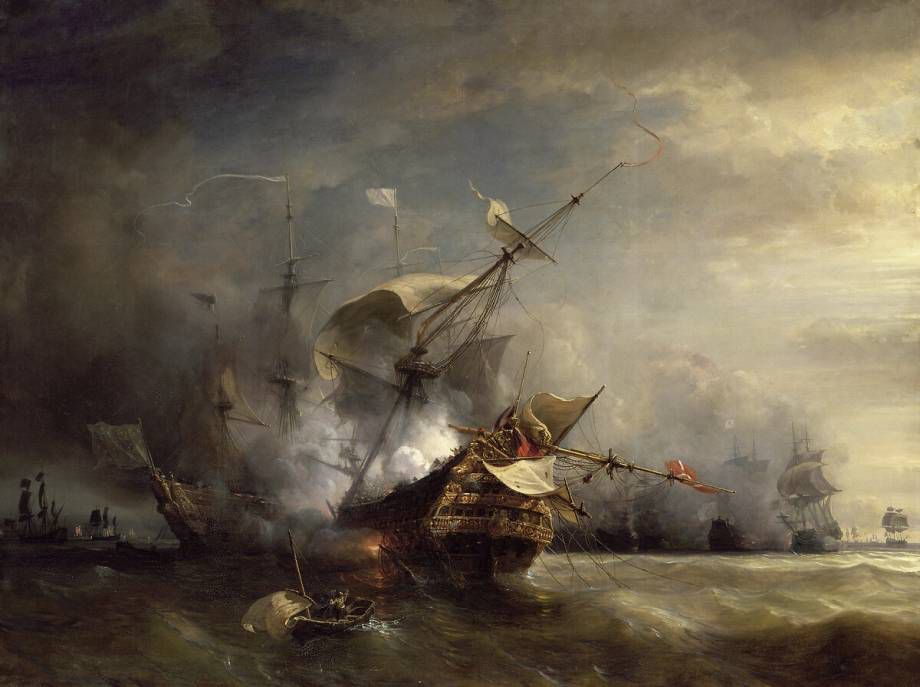
2/ Orain’s book is bold and provocative: it redefines capitalism itself. What he calls the “capitalism of finitude” isn’t about markets or competition, but about enclosure, monopolization, and imperial control over scarce resources.
1/ I recently wrote a review for @hfrancewebsite.bsky.social on Arnaud Orain’s Le monde confisqué: Essai sur le capitalisme de la finitude. The book has stirred major debate in France. It’s rare (and great) to see a historian of economic thought in the spotlight.


November 11, 2025 at 9:39 AM
1/ I recently wrote a review for @hfrancewebsite.bsky.social on Arnaud Orain’s Le monde confisqué: Essai sur le capitalisme de la finitude. The book has stirred major debate in France. It’s rare (and great) to see a historian of economic thought in the spotlight.
Lecture du dimanche soir.

November 9, 2025 at 7:55 PM
Lecture du dimanche soir.
sciencespo.hal.science/hal-03869993...
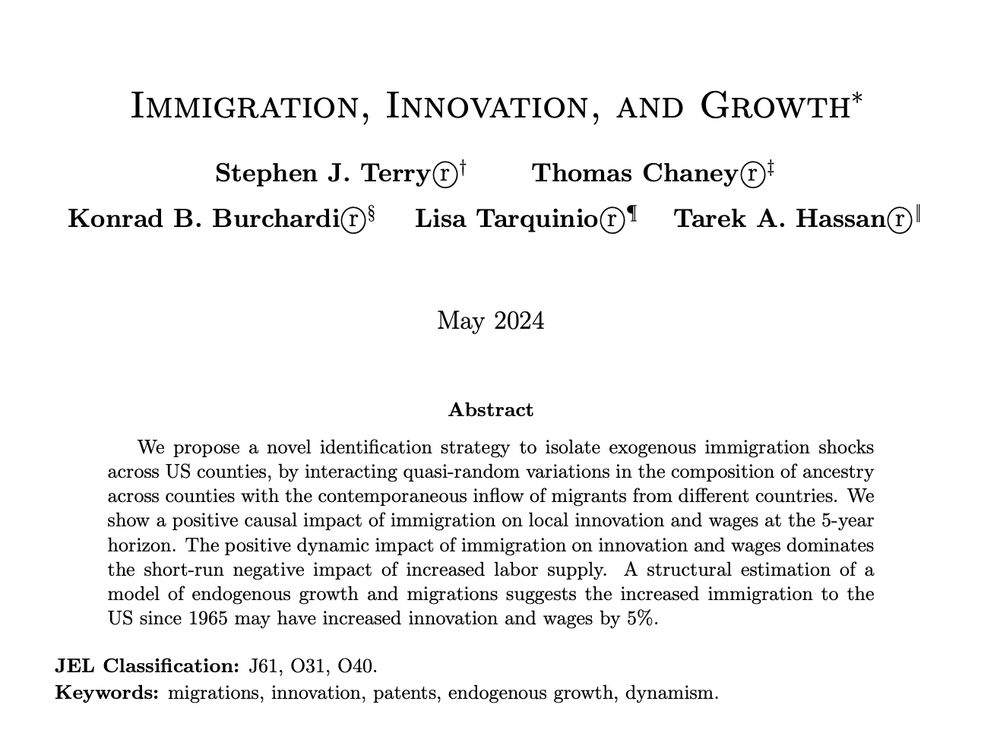
A forthcoming article in the American Economic Review finds that immigration boosts both innovation and wages, effects that outweigh the short-term impact of a larger labor supply.
A forthcoming article in the American Economic Review finds that immigration boosts both innovation and wages, effects that outweigh the short-term impact of a larger labor supply.
October 20, 2025 at 7:00 PM
sciencespo.hal.science/hal-03869993...
A forthcoming article in the American Economic Review finds that immigration boosts both innovation and wages, effects that outweigh the short-term impact of a larger labor supply.
A forthcoming article in the American Economic Review finds that immigration boosts both innovation and wages, effects that outweigh the short-term impact of a larger labor supply.
Dimanche, mes filles (7 et 9 ans) ont fait un scandale devant cette photo (la raison était la maltraitance manifeste de ces pauvres chats). Il fallait voir les regards choqués des visiteurs et visiteuses de l'expo Dali. De mon côté, j'avoue avoir éprouvé une grande fierté...

October 16, 2025 at 6:18 PM
Dimanche, mes filles (7 et 9 ans) ont fait un scandale devant cette photo (la raison était la maltraitance manifeste de ces pauvres chats). Il fallait voir les regards choqués des visiteurs et visiteuses de l'expo Dali. De mon côté, j'avoue avoir éprouvé une grande fierté...
Et surtout, ton livre est maintenant une pièce essentielle du parcours de Kapla !

October 13, 2025 at 5:32 PM
Et surtout, ton livre est maintenant une pièce essentielle du parcours de Kapla !