


MRC Toxicology Unit
@mrc-tu.bsky.social
The MRC Toxicology Unit is working to understand the mechanisms of cellular and tissue response to injury caused by drugs, chemicals and endogenous molecules.
Pinned
MRC Toxicology Unit
@mrc-tu.bsky.social
· Feb 21

What we do at the MRC Toxicology Unit | University of Cambridge
YouTube video by MRC Toxicology Unit - University of Cambridge
youtu.be
What is toxicology and what do we do at the MRC Toxicology Unit?
Our scientists work across a range of topics from the gut microbiome, to air pollution and cancer immunotherapy so new therapeutics and environmental factors can be safe-by-design.
Find out more:
youtu.be/cYaxFnckfUI?...
Our scientists work across a range of topics from the gut microbiome, to air pollution and cancer immunotherapy so new therapeutics and environmental factors can be safe-by-design.
Find out more:
youtu.be/cYaxFnckfUI?...
Reposted by MRC Toxicology Unit
Excited to share our latest research in @natmicrobiol.nature.com . We uncover hundreds of inhibitory interactions between common chemical pollutants and human gut bacteria. A thread🧵 (1/10) #microbiomesky #microsky @kiranrpatil.bsky.social lab @mrc-tu.bsky.social www.nature.com/articles/s41...

Industrial and agricultural chemicals exhibit antimicrobial activity against human gut bacteria in vitro - Nature Microbiology
Screening of 1,076 compounds reveals 168 chemical pollutants with inhibitory effects on gut bacteria and genetic screens indicate commonality between pollutant and antibiotic resistance.
www.nature.com
November 26, 2025 at 10:30 AM
Excited to share our latest research in @natmicrobiol.nature.com . We uncover hundreds of inhibitory interactions between common chemical pollutants and human gut bacteria. A thread🧵 (1/10) #microbiomesky #microsky @kiranrpatil.bsky.social lab @mrc-tu.bsky.social www.nature.com/articles/s41...
The Patil Lab have found that common pollutant chemicals such as pesticides and flame retardants can suppress the growth of healthy bacteria found in our gut.
This data will help us predict the affects of new chemicals on our gut bacteria in future.
This data will help us predict the affects of new chemicals on our gut bacteria in future.
Could everyday chemicals be having a toxic effect on our gut #health? 🧫🧪
150+ common substances may stifle 'good' gut bacteria in our bodies, affecting digestion and mental health.
New #research by @kiranrpatil.bsky.social @indraroux.bsky.social @mrc-tu.bsky.social 👇
https://bit.ly/3Ma9325
150+ common substances may stifle 'good' gut bacteria in our bodies, affecting digestion and mental health.
New #research by @kiranrpatil.bsky.social @indraroux.bsky.social @mrc-tu.bsky.social 👇
https://bit.ly/3Ma9325
University of Cambridge
bit.ly
November 26, 2025 at 3:44 PM
The Patil Lab have found that common pollutant chemicals such as pesticides and flame retardants can suppress the growth of healthy bacteria found in our gut.
This data will help us predict the affects of new chemicals on our gut bacteria in future.
This data will help us predict the affects of new chemicals on our gut bacteria in future.
We recently came together for another successful Unit Science Day to celebrate our science and achievements from the past year. This featured a keynote talk from Professor Eric Miska, Unit research theme talks, and our Unit Recognition Scheme prizes.
Read more here: buff.ly/BOzSBWC
Read more here: buff.ly/BOzSBWC

November 21, 2025 at 3:00 PM
We recently came together for another successful Unit Science Day to celebrate our science and achievements from the past year. This featured a keynote talk from Professor Eric Miska, Unit research theme talks, and our Unit Recognition Scheme prizes.
Read more here: buff.ly/BOzSBWC
Read more here: buff.ly/BOzSBWC
PhD student in the Willis Lab, Alex Chalk will be sharing his work on a new laboratory method called CLEAR-Time ddPCR that measures exactly what happens to DNA after gene editing.

We hope to see you at our EngBio ECRs Meetup 8 Dec featuring talks:
🧬CLEAR-time dPCR for gene-editing assessment-Alex Chalk @mrc-tu.bsky.social
🧫Paired prime editing for genome-function interrogation- Gareth Girling @sangerinstitute.bsky.social
Register here 👉 www.tickettailor.com/events/engin...
🧬CLEAR-time dPCR for gene-editing assessment-Alex Chalk @mrc-tu.bsky.social
🧫Paired prime editing for genome-function interrogation- Gareth Girling @sangerinstitute.bsky.social
Register here 👉 www.tickettailor.com/events/engin...

November 19, 2025 at 2:26 PM
PhD student in the Willis Lab, Alex Chalk will be sharing his work on a new laboratory method called CLEAR-Time ddPCR that measures exactly what happens to DNA after gene editing.
The UK Government have announced plans to phase out animals in research (buff.ly/beHhBbM). We are delighted to be involved by working to develop alternative methods to test cancer treatments.
Find out more: buff.ly/wRpQROa
Find out more: buff.ly/wRpQROa

November 19, 2025 at 11:21 AM
The UK Government have announced plans to phase out animals in research (buff.ly/beHhBbM). We are delighted to be involved by working to develop alternative methods to test cancer treatments.
Find out more: buff.ly/wRpQROa
Find out more: buff.ly/wRpQROa
Join the Cambridge RNA club this Thursday 20th November to hear Xiaoteng Jiang, a postdoctoral researcher in the Patil Lab, share mechanistic insights into duloxetine–microbiome interactions
Ever wondered how antidepressants might influence your gut microbes? 🧬💊Join Dr. Xiaoteng Jiang ( @mrc-tu.bsky.social ) talk on Nov 20, 16:30h at @cambiochem.bsky.social to explore how RNA–protein interactions reveal unexpected drug–microbiome connections 🤯

a blue background with purple and green swirls
ALT: a blue background with purple and green swirls
media.tenor.com
November 18, 2025 at 2:10 PM
Join the Cambridge RNA club this Thursday 20th November to hear Xiaoteng Jiang, a postdoctoral researcher in the Patil Lab, share mechanistic insights into duloxetine–microbiome interactions
We're excited to share that we're part of an ambitious new project that aims to redefine human-based research models for greater understanding of disease and the acceleration of new medicines.

A new £15.9m investment aims to advance human in vitro modelling.
The initiative will help improve our understanding of how diseases develop and progress, and is a major step forward in our commitment to developing innovative, non-animal methods.
www.ukri.org/news/ambitio... #MRC
The initiative will help improve our understanding of how diseases develop and progress, and is a major step forward in our commitment to developing innovative, non-animal methods.
www.ukri.org/news/ambitio... #MRC

Ambitious new UK project to transform human disease modelling
A major new initiative aims to redefine human-based research models for greater understanding of disease and the acceleration of new medicines.
www.ukri.org
November 12, 2025 at 4:10 PM
We're excited to share that we're part of an ambitious new project that aims to redefine human-based research models for greater understanding of disease and the acceleration of new medicines.
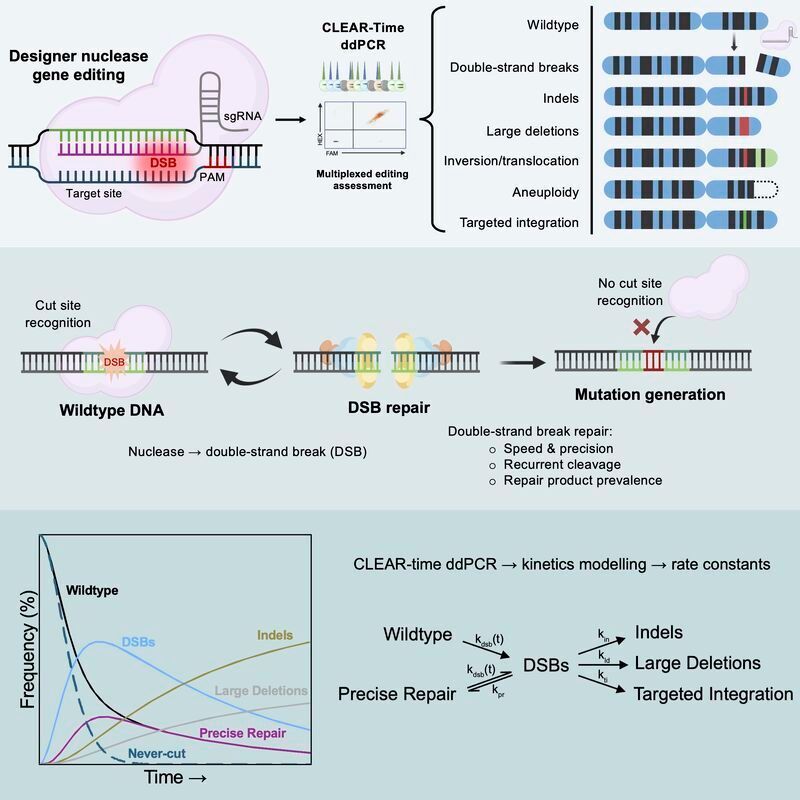
A new PhD student in the Willis Lab, Alexander Chalk has just had his masters/research assistant work published!
Alex and his colleagues developed a new laboratory method called CLEAR-Time ddPCR that measures exactly what happens to DNA after gene editing.
Find out more: buff.ly/wkfiI51
Alex and his colleagues developed a new laboratory method called CLEAR-Time ddPCR that measures exactly what happens to DNA after gene editing.
Find out more: buff.ly/wkfiI51
November 5, 2025 at 6:04 PM
A new PhD student in the Willis Lab, Alexander Chalk has just had his masters/research assistant work published!
Alex and his colleagues developed a new laboratory method called CLEAR-Time ddPCR that measures exactly what happens to DNA after gene editing.
Find out more: buff.ly/wkfiI51
Alex and his colleagues developed a new laboratory method called CLEAR-Time ddPCR that measures exactly what happens to DNA after gene editing.
Find out more: buff.ly/wkfiI51
Tyler Myers, an MPhil student in the Patil Lab, is one of the speakers at the next Neurotalks.
Hear more about our second brain in the latest edition of Neurotalks and learn about the pain of chillis, IBD, gut microbiome and drugs, and listening to the gut in action.
Hear more about our second brain in the latest edition of Neurotalks and learn about the pain of chillis, IBD, gut microbiome and drugs, and listening to the gut in action.
November 4, 2025 at 3:27 PM
Tyler Myers, an MPhil student in the Patil Lab, is one of the speakers at the next Neurotalks.
Hear more about our second brain in the latest edition of Neurotalks and learn about the pain of chillis, IBD, gut microbiome and drugs, and listening to the gut in action.
Hear more about our second brain in the latest edition of Neurotalks and learn about the pain of chillis, IBD, gut microbiome and drugs, and listening to the gut in action.
For Black History Month we are highlighting Jane C. Wright, a pioneering oncologist dedicated to making chemotherapy more accessible at a time when it was still considered a last resort.
Read more here: buff.ly/df8be4E
Read more here: buff.ly/df8be4E

October 30, 2025 at 2:57 PM
For Black History Month we are highlighting Jane C. Wright, a pioneering oncologist dedicated to making chemotherapy more accessible at a time when it was still considered a last resort.
Read more here: buff.ly/df8be4E
Read more here: buff.ly/df8be4E
Tiago Marques-Pedro, a PhD student in the MacFarlane lab, had the opportunity to organise and co-chair this years Gordon Research Symposium on the Cellular and Molecular Mechanisms of Toxicity.
Read more about how Tiago found the experience in our blog: buff.ly/NB5EJVw
Read more about how Tiago found the experience in our blog: buff.ly/NB5EJVw

Tiago co-chairs symposium on the Cellular and Molecular Mechanisms of Toxicity | MRC Toxicology Unit
Tiago Marques-Pedro is a PhD student in the MacFarlane lab who studies mitochondrial toxicity. Tiago had the opportunity to organise and co-chair a Gordon Research Symposium.
buff.ly
October 28, 2025 at 1:50 PM
Tiago Marques-Pedro, a PhD student in the MacFarlane lab, had the opportunity to organise and co-chair this years Gordon Research Symposium on the Cellular and Molecular Mechanisms of Toxicity.
Read more about how Tiago found the experience in our blog: buff.ly/NB5EJVw
Read more about how Tiago found the experience in our blog: buff.ly/NB5EJVw
Reposted by MRC Toxicology Unit

We recently shared our research into Nucleic Acid Therapies (NATs) at the Big Biology Day. Our Operation NAT activity took visitors through the journey that scientists and NATs take to treat a disease.
Find out more about the event here: buff.ly/7JUXHTe
Find out more about the event here: buff.ly/7JUXHTe

October 20, 2025 at 3:36 PM
We recently shared our research into Nucleic Acid Therapies (NATs) at the Big Biology Day. Our Operation NAT activity took visitors through the journey that scientists and NATs take to treat a disease.
Find out more about the event here: buff.ly/7JUXHTe
Find out more about the event here: buff.ly/7JUXHTe
Congratulations to Dr Alex Borodavka, for receiving the Lister Prize at the MRC Toxicology Unit this week. The award was presented by Lister Institute of Preventative Medicine Chair Professor Sir John Iredale.
Read about his award here: buff.ly/d4jzNxS
Read about his award here: buff.ly/d4jzNxS

October 17, 2025 at 5:06 PM
Congratulations to Dr Alex Borodavka, for receiving the Lister Prize at the MRC Toxicology Unit this week. The award was presented by Lister Institute of Preventative Medicine Chair Professor Sir John Iredale.
Read about his award here: buff.ly/d4jzNxS
Read about his award here: buff.ly/d4jzNxS
This Thursday 16th October, we are honoured to host Dr Alexander Borodavka to present a seminar following his receipt of the 2024 Lister Institute of Preventive Medicine Prize Fellowship.
More information on the seminar can be found here: buff.ly/eDJSY7g
@thelisterinstitute.bsky.social
More information on the seminar can be found here: buff.ly/eDJSY7g
@thelisterinstitute.bsky.social

October 14, 2025 at 9:23 AM
This Thursday 16th October, we are honoured to host Dr Alexander Borodavka to present a seminar following his receipt of the 2024 Lister Institute of Preventive Medicine Prize Fellowship.
More information on the seminar can be found here: buff.ly/eDJSY7g
@thelisterinstitute.bsky.social
More information on the seminar can be found here: buff.ly/eDJSY7g
@thelisterinstitute.bsky.social
Could gut microbes protect us from toxic 'forever chemicals (PFAS)’?
Kiran Patil discusses exciting findings from his group that certain species of human gut bacteria can take in and store PFAS. Boosting these species could help protect us from the harmful effects of PFAS.
Watch:
Kiran Patil discusses exciting findings from his group that certain species of human gut bacteria can take in and store PFAS. Boosting these species could help protect us from the harmful effects of PFAS.
Watch:

Gut microbes could protect us from toxic ‘forever chemicals’
Scientists have discovered that certain species of microbe found in the human gut can absorb PFAS - the toxic and long-lasting ‘forever chemicals.’ They say boosting these species in our gut…
buff.ly
October 8, 2025 at 10:21 AM
Could gut microbes protect us from toxic 'forever chemicals (PFAS)’?
Kiran Patil discusses exciting findings from his group that certain species of human gut bacteria can take in and store PFAS. Boosting these species could help protect us from the harmful effects of PFAS.
Watch:
Kiran Patil discusses exciting findings from his group that certain species of human gut bacteria can take in and store PFAS. Boosting these species could help protect us from the harmful effects of PFAS.
Watch:
Our next science comic, from the MacFarlane lab, is about macrophages, biopersistent fibres and how this is linked to mesothelioma.
Each comic, created with @claudiaflandoli.bsky.social tells a story from the microworld and relates it to real world research.
Find out more here: buff.ly/SWp8G4v
Each comic, created with @claudiaflandoli.bsky.social tells a story from the microworld and relates it to real world research.
Find out more here: buff.ly/SWp8G4v

October 7, 2025 at 5:03 PM
Our next science comic, from the MacFarlane lab, is about macrophages, biopersistent fibres and how this is linked to mesothelioma.
Each comic, created with @claudiaflandoli.bsky.social tells a story from the microworld and relates it to real world research.
Find out more here: buff.ly/SWp8G4v
Each comic, created with @claudiaflandoli.bsky.social tells a story from the microworld and relates it to real world research.
Find out more here: buff.ly/SWp8G4v
Reposted by MRC Toxicology Unit
Our Director John Whittaker took part in a short video interview discussing; what motivated him to work in biostatistics, why he enjoys being Director, and his thoughts on the future of #Biostatistics.
Watch here 👇
youtu.be/o3ArK999wgE
Watch here 👇
youtu.be/o3ArK999wgE

Meet our researchers: Interview with John Whittaker
YouTube video by MRC Biostatistics Unit, University of Cambridge
youtu.be
October 7, 2025 at 9:14 AM
Our Director John Whittaker took part in a short video interview discussing; what motivated him to work in biostatistics, why he enjoys being Director, and his thoughts on the future of #Biostatistics.
Watch here 👇
youtu.be/o3ArK999wgE
Watch here 👇
youtu.be/o3ArK999wgE
Professor Anne Willis, our Unit director, will be speaking alongside other experts at the Nature Conference, Cracking the Code: Nucleic Acid Medicines Coming of Age in Boston MA this December.
Abstract submission and early bird registration closes on the 10th October: buff.ly/Iar2R7H
Abstract submission and early bird registration closes on the 10th October: buff.ly/Iar2R7H


October 3, 2025 at 10:21 AM
Professor Anne Willis, our Unit director, will be speaking alongside other experts at the Nature Conference, Cracking the Code: Nucleic Acid Medicines Coming of Age in Boston MA this December.
Abstract submission and early bird registration closes on the 10th October: buff.ly/Iar2R7H
Abstract submission and early bird registration closes on the 10th October: buff.ly/Iar2R7H
Welcome to our new PhD and MPhil students! We're excited for you to join our diverse group of researchers working to understand how chemicals in our environment and medicines affect our bodies. We look forward to seeing what new discoveries you will make!

October 1, 2025 at 5:05 PM
Welcome to our new PhD and MPhil students! We're excited for you to join our diverse group of researchers working to understand how chemicals in our environment and medicines affect our bodies. We look forward to seeing what new discoveries you will make!
Reposted by MRC Toxicology Unit
Apply now for the #MPhil in Therapeutic Sciences at the University of #Cambridge, starting Oct 2026!
1-year full-time course with a 6-month research placement, combining world-class academic & industry training.
Developed with the Cambridge Academy of Therapeutic Sciences.
🔗 bit.ly/3KdJrk9
1-year full-time course with a 6-month research placement, combining world-class academic & industry training.
Developed with the Cambridge Academy of Therapeutic Sciences.
🔗 bit.ly/3KdJrk9

September 25, 2025 at 9:00 AM
Apply now for the #MPhil in Therapeutic Sciences at the University of #Cambridge, starting Oct 2026!
1-year full-time course with a 6-month research placement, combining world-class academic & industry training.
Developed with the Cambridge Academy of Therapeutic Sciences.
🔗 bit.ly/3KdJrk9
1-year full-time course with a 6-month research placement, combining world-class academic & industry training.
Developed with the Cambridge Academy of Therapeutic Sciences.
🔗 bit.ly/3KdJrk9
With Anfas finishing his MPhil project in the Sawarkar Lab, we spoke to him about about his experience at the MRC Tox Unit, his research on the heat shock protein HSP90, and how HSP90 is linked to regulation of cellular stress.
Read our interview with Anfas here: buff.ly/rGicEMw
Read our interview with Anfas here: buff.ly/rGicEMw

September 25, 2025 at 10:30 AM
With Anfas finishing his MPhil project in the Sawarkar Lab, we spoke to him about about his experience at the MRC Tox Unit, his research on the heat shock protein HSP90, and how HSP90 is linked to regulation of cellular stress.
Read our interview with Anfas here: buff.ly/rGicEMw
Read our interview with Anfas here: buff.ly/rGicEMw
We aim to carry out pioneering research which leads to safer medicines and environments. To support our work, we're looking for a dynamic and enthusiastic individual to join the Building Services Team as a Building Services Technician.
Apply buff.ly/Ubp8X4C
@cambridgebiosci.bsky.social
Apply buff.ly/Ubp8X4C
@cambridgebiosci.bsky.social

September 24, 2025 at 4:23 PM
We aim to carry out pioneering research which leads to safer medicines and environments. To support our work, we're looking for a dynamic and enthusiastic individual to join the Building Services Team as a Building Services Technician.
Apply buff.ly/Ubp8X4C
@cambridgebiosci.bsky.social
Apply buff.ly/Ubp8X4C
@cambridgebiosci.bsky.social
Members from the MRC Toxicology Unit, Department of Pharmacology and the Gurdon Institute took part in the Chariots of Fire event, a charity race that takes a scenic route through central Cambridge.
Read more about the event here: buff.ly/QgJr1DK
@phar.cam.ac.uk @gurdoninstitute.bsky.social
Read more about the event here: buff.ly/QgJr1DK
@phar.cam.ac.uk @gurdoninstitute.bsky.social

September 22, 2025 at 12:00 PM
Members from the MRC Toxicology Unit, Department of Pharmacology and the Gurdon Institute took part in the Chariots of Fire event, a charity race that takes a scenic route through central Cambridge.
Read more about the event here: buff.ly/QgJr1DK
@phar.cam.ac.uk @gurdoninstitute.bsky.social
Read more about the event here: buff.ly/QgJr1DK
@phar.cam.ac.uk @gurdoninstitute.bsky.social
Working together on the same topics allows us to benefit from the expertise of our colleagues across the School of Biological Sciences. This theme focusses on the building blocks of life - cells and molecules. How they interact is key to understanding health and disease.
We’re excited to re-introduce the academic leads for our Molecules and Cells Research Theme! Hear from new Theme Lead Marc about what the Research Themes mean to him.
Find out more bio.cam.ac.uk
#BiologicalSciences @scicambridge.bsky.social @cambiochem.bsky.social @mrc-tu.bsky.social
Find out more bio.cam.ac.uk
#BiologicalSciences @scicambridge.bsky.social @cambiochem.bsky.social @mrc-tu.bsky.social

September 18, 2025 at 8:46 AM
Working together on the same topics allows us to benefit from the expertise of our colleagues across the School of Biological Sciences. This theme focusses on the building blocks of life - cells and molecules. How they interact is key to understanding health and disease.