



Ercio Munoz
@ercio.bsky.social
Pinned
Ercio Munoz
@ercio.bsky.social
· Dec 2

The Geography of Intergenerational Mobility in Latin America and the Caribbean | Economía LACEA Journal
Economía LACEA Journal has become the outlet of choice for some of the best research conducted in and on Latin America or relevant for the region. The Journal publishes peer-reviewed general interest ...
doi.org
Happy to share that my paper "The Geography of Intergenerational Mobility in Latin America and the Caribbean" has been published in Economia LACEA Journal: doi.org/10.31389/eco...
#EconSky
#EconSky
Reposted by Ercio Munoz

Households with intersex members (representing nearly 3 percent of Chile's population) have substantively lower incomes than those without. Previous work shows "significant workplace rejection and discrimination." www.sciencedirect.com/science/arti... by @ercio.bsky.social et al.

August 19, 2025 at 11:04 PM
Households with intersex members (representing nearly 3 percent of Chile's population) have substantively lower incomes than those without. Previous work shows "significant workplace rejection and discrimination." www.sciencedirect.com/science/arti... by @ercio.bsky.social et al.
ICYMI, new working paper that introduces the largest cross-country dataset to date on intergenerational income mobility, covering 87 countries and accounting for 84% of the world’s population. 👇

A great new paper & full database on inter-generational mobility around the world by Encio Munoz and Roy van der Weide.
openknowledge.worldbank.org/server/api/c...
.
openknowledge.worldbank.org/server/api/c...
.
openknowledge.worldbank.org
August 16, 2025 at 7:41 PM
ICYMI, new working paper that introduces the largest cross-country dataset to date on intergenerational income mobility, covering 87 countries and accounting for 84% of the world’s population. 👇
Reposted by Ercio Munoz

We invite applications for two postdoctoral scholars! These 2-year positions start in Aug. 2026 and are based at the GC CUNY Stone Center in NYC. One is focused on #mobility and #poverty, the other on #wealth and/or wealth inequality. Apply by Nov. 3!
#EconSky #Sociology #PoliSciSky
bit.ly/40TZR6J
#EconSky #Sociology #PoliSciSky
bit.ly/40TZR6J

Applications Are Open for Two Postdoctoral Positions at the GC CUNY Stone Center - Stone Center on Socio-Economic Inequality
The Stone Center on Socio-Economic Inequality is seeking applicants for an eighth cohort of postdoctoral scholars. These full-time, two-year positions will begin in August 2026.
stonecenter.gc.cuny.edu
August 6, 2025 at 4:13 PM
We invite applications for two postdoctoral scholars! These 2-year positions start in Aug. 2026 and are based at the GC CUNY Stone Center in NYC. One is focused on #mobility and #poverty, the other on #wealth and/or wealth inequality. Apply by Nov. 3!
#EconSky #Sociology #PoliSciSky
bit.ly/40TZR6J
#EconSky #Sociology #PoliSciSky
bit.ly/40TZR6J
Reposted by Ercio Munoz

Several GC CUNY PhD graduates were in the house! I caught up with 3 from GC Econ - Ercio Muñoz, Luis Monroy-Gómez-Franco, & Nishant Yonzan. Also Dirk Witteveen from GC Soc. @ercio.bsky.social
@mgf91.bsky.social @dirkwitteveen.bsky.social @thegraduatecenter.bsky.social
@cunygcsociology.bsky.social
@mgf91.bsky.social @dirkwitteveen.bsky.social @thegraduatecenter.bsky.social
@cunygcsociology.bsky.social


July 12, 2025 at 10:36 PM
Several GC CUNY PhD graduates were in the house! I caught up with 3 from GC Econ - Ercio Muñoz, Luis Monroy-Gómez-Franco, & Nishant Yonzan. Also Dirk Witteveen from GC Soc. @ercio.bsky.social
@mgf91.bsky.social @dirkwitteveen.bsky.social @thegraduatecenter.bsky.social
@cunygcsociology.bsky.social
@mgf91.bsky.social @dirkwitteveen.bsky.social @thegraduatecenter.bsky.social
@cunygcsociology.bsky.social
Reposted by Ercio Munoz
It's a wrap! The 11th ECINEQ conference, hosted by the World Bank & GWU, July 9-11. The conference featured 226 papers presented in 74 sessions - a colossal goldmine of high-quality empirical and theoretical research on multiple facets of #inequality. @lflopezcalva.bsky.social

July 12, 2025 at 10:36 PM
It's a wrap! The 11th ECINEQ conference, hosted by the World Bank & GWU, July 9-11. The conference featured 226 papers presented in 74 sessions - a colossal goldmine of high-quality empirical and theoretical research on multiple facets of #inequality. @lflopezcalva.bsky.social
Reposted by Ercio Munoz

❓Why do the Nordics & Dutch speak English so much better than the Germans, Italians & French?
➡️ New Working Paper:
Out-of-School Learning: Subtitling vs. Dubbing and the Acquisition of Foreign-Language Skills
w/ F. Baumeister & E. Hanushek
www.nber.org/papers/w33984
A 🧵 1/12
➡️ New Working Paper:
Out-of-School Learning: Subtitling vs. Dubbing and the Acquisition of Foreign-Language Skills
w/ F. Baumeister & E. Hanushek
www.nber.org/papers/w33984
A 🧵 1/12

July 7, 2025 at 6:33 AM
❓Why do the Nordics & Dutch speak English so much better than the Germans, Italians & French?
➡️ New Working Paper:
Out-of-School Learning: Subtitling vs. Dubbing and the Acquisition of Foreign-Language Skills
w/ F. Baumeister & E. Hanushek
www.nber.org/papers/w33984
A 🧵 1/12
➡️ New Working Paper:
Out-of-School Learning: Subtitling vs. Dubbing and the Acquisition of Foreign-Language Skills
w/ F. Baumeister & E. Hanushek
www.nber.org/papers/w33984
A 🧵 1/12
Reposted by Ercio Munoz

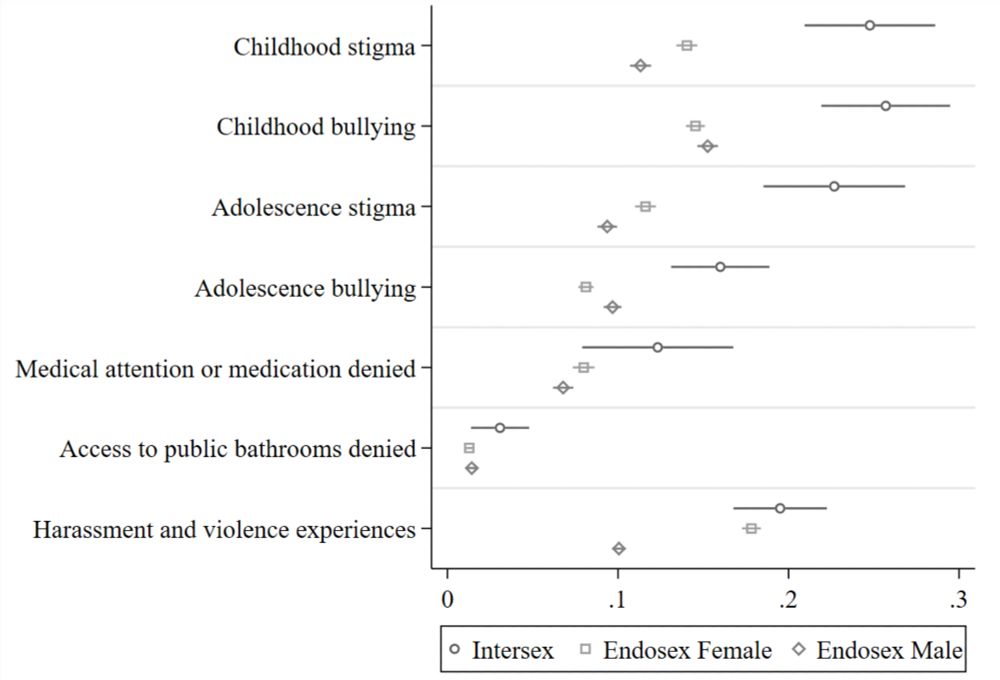
A look at the experiences of intersex individuals in Mexico reveals disparities affecting their health and livelihoods. Intersex people are born with physical sex characteristics that don’t fit typical definitions of male or female bodies. In PNAS Nexus: academic.oup.com/pnasnexus/ar...
May 19, 2025 at 6:23 PM
A look at the experiences of intersex individuals in Mexico reveals disparities affecting their health and livelihoods. Intersex people are born with physical sex characteristics that don’t fit typical definitions of male or female bodies. In PNAS Nexus: academic.oup.com/pnasnexus/ar...
Happy to share that my paper "Intergenerational Educational Mobility within Chile" has been accepted at Estudios de Economía 🤗
Working paper here: dx.doi.org/10.18235/001...
Working paper here: dx.doi.org/10.18235/001...
May 9, 2025 at 6:59 PM
Happy to share that my paper "Intergenerational Educational Mobility within Chile" has been accepted at Estudios de Economía 🤗
Working paper here: dx.doi.org/10.18235/001...
Working paper here: dx.doi.org/10.18235/001...
Reposted by Ercio Munoz

What are the Trends in Inheritance Across Developed Economies? Why is this important & What are the major drivers? Why has the Progressivity of inheritance tax been declining globally? I have talked about these issues in the Economist (@economist.com) podcast "Money Talks".
tinyurl.com/khaekyre
tinyurl.com/khaekyre

Why having rich parents may trump hard work
Our podcast on markets, the economy and business. This week, the rise of the inheritocracy
www.economist.com
May 4, 2025 at 8:26 PM
What are the Trends in Inheritance Across Developed Economies? Why is this important & What are the major drivers? Why has the Progressivity of inheritance tax been declining globally? I have talked about these issues in the Economist (@economist.com) podcast "Money Talks".
tinyurl.com/khaekyre
tinyurl.com/khaekyre
Reposted by Ercio Munoz

via @minnpop @ipums.bsky.social IPUMS Announces 2024 Research Award Recipients: IPUMS is excited to announce the winners of its annual IPUMS Research Awards. These awards honor both published research and nominated graduate student papers…

IPUMS Announces 2024 Research Award Recipients – Use It for Good
IPUMS is excited to announce the winners of its annual IPUMS Research Awards. These awards honor both published research and nominated graduate student papers from 2024 that use IPUMS data to advance or deepen our understanding of social and demographic processes.
The 2024 competition awarded prizes for the best published and best graduate student research in eight categories, each associated with specific IPUMS data collections:
IPUMS USA, providing data from the U.S. decennial censuses, the American Community Survey, and includes full count data, from 1850 to the present.
IPUMS CPS, providing data from the monthly U.S. labor force survey, the Current Population Survey (CPS), from 1962 to the present.
IPUMS International, providing harmonized data contributed by more than 100 international statistical office partners; it currently includes information on over 1 billion people in more than 547 censuses and surveys from around the world, from 1960 forward.
IPUMS Health Surveys, which makes available the U.S. National Health Interview Survey (NHIS) and the Medical Expenditure Panel Survey (MEPS).
IPUMS Spatial, covering IPUMS NHGIS, IPUMS IHGIS, and IPUMS CDOH. NHGIS includes GIS boundary files from 1790 to the present; IHGIS provides data tables from population and housing censuses as well as agricultural censuses from around the world; CDOH provides access to measures of disparities, policies, and counts, by state and county, for historically marginalized populations in the US.
IPUMS Global Health, providing harmonized data from the Demographic and Health Surveys (DHS), Multiple Indicator Cluster Surveys (MICS), and the Performance Monitoring for Action (PMA) data series, for low and middle-income countries.
IPUMS Time Use, providing time diary data from the U.S. and around the world from 1930 to the present.
IPUMS Excellence in Research, The IPUMS mission of democratizing data demands that we increase representation of scholars from groups that are systemically excluded in research spaces. This award is an opportunity to highlight and reward outstanding work using any of the IPUMS data collections by authors who are underrepresented in social science research*.
Over 1,300 publications based on IPUMS data appeared in journals, magazines, and newspapers worldwide last year. From these publications and from nominated graduate student papers, the award committees selected the 2024 honorees.
IPUMS USA Research Award Winners:
Published Research:
Paul Starr and Christina Pao
The Multiracial Complication: The 2020 Census and the Fictitious Multiracial Boom
Paul Starr and Christina Pao use the American Community Survey to examine how changes in the US Census Bureau’s processing of responses to the race question in the 2020 Census led to the statistical illusion of a “multiracial boom.” Their use of IPUMS highlights the importance of consistent measurement over time, and careful examination of the effects of processing categorical response data.
Student Research:
Amy Kim and Carolyn Tsao
The Effects of Prohibiting Marriage Bars: The Case of U.S. Teachers
Amy Kim and Carolyn Tsao take advantage of the 1930 and 1940 full count census data to study how laws banning discrimination against married women teachers affected the teaching profession and women’s labor market opportunities. Their work highlights how IPUMS full count data in conjunction with careful analysis of policy changes can shed new light on long-standing historical questions.
IPUMS CPS Research Award Winners:
Published Research:
Martha J. Bailey, Thomas Helgerman, and Bryan A. Stuart
How the 1963 Equal Pay Act and 1964 Civil Rights Act Shaped the Gender Gap in Pay
Bailey and colleagues use 1950 and 1960 Census data combined with CPS ASEC data from 1962 to 1975 to quantify the effects of the Equal Pay Act and Title VII of the 1964 Civil Rights Act on women’s wages and employment. Their results suggest that working women’s wages rose almost immediately after the Equal Pay Act and Title VII legislation, but that their employment may have fallen as a consequence in the longer term. This research illustrates the importance of addressing both pay and employment discrimination for addressing gender gaps in women’s wages and employment.
Student Research:
Bowei Hu
Banking the Unbanked Spurs Payday Loan Usage Among Black Households
Hu uses the Unbanked and Underbanked supplement to the CPS to examine the impact of bank account ownership on racial disparities in the use of alternative financial services (AFS) such as non bank check cashing, pawn shops, and payday lending. policies. This results show, however, that bank account ownership, often a prerequisite for payday loans, is associated with increased use of payday loans for Black households. This research suggests that addressing financial inclusion alone is necessary, but still insufficient, for reducing the use of AFS.
IPUMS International Research Award Winners:
Published Research:
Roman Hoffmann, Guy Abel, Maurizio Malpede, Raya Muttarak, and Marco Percoco
Drought and Aridity Influence Internal Migration Worldwide
Hoffman and co-authors took a unique approach to examine the impact of drought and aridity on global internal migration flows (between sub-national units and by age and education groups) to find that climate change has a significant impact on internal migration and is stronger in richer countries.
The authors use 72 IPUMS International census data samples in conjunction with climate data to analyze more than 100,000 migration flows. The paper makes a great use of spatial harmonization, harmonized migration, level one subnational geography, and migration variables for the analysis. It demonstrates the massive breadth of IPUMS and contributes to new comparative evidence in climate change effects on migration. The paper is further strengthened by detailed maps and visualizations.
There is high potential for significant contribution to the larger climate change/migration discussion and the authors’ experience using IPUMS data could be helpful to the greater IPUMS user community.
Student Research:
Xinyan Cao
Unequal Beginnings: Socioeconomic Disparities in Rural Under-Five Survival Rates
Cao and colleagues use the 2000 China Population and Housing Census sample from IPUMS (in conjunction with earlier census information from China via the country’s national bureau of statistics) to find that increasing education and income for rural parents leads to higher survival rates for children under five. The paper concludes that the mother’s education is the strongest predictor of under 5 years old survival rate and that the mother’s SES has a larger effect than that of the father.
The paper highlights the importance of Chinese data and the utility of older data in combination with contemporary data to examine change over time. In this case, the comparison provides significant information to analyze population dynamics from China’s One-Child Policy era. It also demonstrates the usefulness of microdata to study micro-level trends.
IPUMS Health Surveys Research Award Winners:
Published Research:
Amy L. Johnson, Christopher Levesque, Neil A. Lewis Jr., and Asad L. Asad
Deportation Threat Predicts Latino US Citizens and Noncitizens’ Psychological Distress, 2011 to 2018
The authors document increasing levels of anxiety and depression among Latinos between 2011 and 2018 and study how that varies by citizenship status. They measure the relative effect on psychological distress of dramatic policy changes (e.g., DACA announced, Trump’s first election) versus the general institutional and social environment of deportation threat (i.e., monthly DHS detainee requests and monthly Google searches on “immigration”), and they find the latter to be more impactful. This innovative study shows how joining harmonized NHIS data with other data sources can illuminate contextual influences on mental health.
Student Research (TIE):
Ishnaa Gulati, Carolin Kilian, Charlotte Buckley, Nina Mulia, and Charlotte Probst
Socioeconomic Disparities in Healthcare Access and Implications for All-Cause Mortality Among US Adults: A 2000-2019 Record Linkage Study
Noting that behavioral risk factors do not fully explain the increasing SES gap in adults’ all-cause mortality in the U.S. since 2000, the authors use NHIS data for 2000-2018 linked to the National Death Index to evaluate the role of unequal access to health care. Higher mortality risk was associated with lower education, uninsurance, inability to afford care, and delayed health care. Moreover, differences in health care partly explain the higher mortality of those with less education. This study is impressive for tackling an important, policy-relevant question.
Oluwaseun T. Emoruwa, Gabe H. Miller, Gbenga I. Elufisan, Guadalupe Marquez-Velarde, David Ademule, Hannah M. Lindl, Olusola A. Omisakin, Guizhen Ma, Stephanie M. Hernandez, and Verna M. Keith
Physical Health Among Black Immigrants by Region of Birth: A Test of the Racial Context Hypothesis
The authors compare five physical health measures for Black immigrants to the U.S. coming from racially mixed, majority-Black, and majority-White regions. After controlling for sociodemographic and socioeconomic characteristics, the study finds that immigrants from racially mixed and majority-Black regions had better outcomes, while U.S.-born Blacks and Black immigrants from White Majority areas had worse, parallel outcomes. These results present a more nuanced understanding of the “immigrant health advantage” and effectively test the intriguing Racial Context Hypothesis on how inequality shapes health.
IPUMS Spatial Research Award Winners:
Published Research (TIE):
Jeffrey Brinkman and Jeffrey Lin
Freeway Revolts! The Quality of Life Effects of Highways
Brinkman and Lin use 1950 to 2010 census tract data from IPUMS NHGIS for 64 metropolitan cities, along with other spatial data, to assess the impact of freeway construction on growth in central versus outlying neighborhoods. They find that freeway construction accounted for 30 percent of the population loss in central neighborhoods along with welfare costs equivalent to 5 percent lower incomes and substantial increases in travel times due to barrier effects for households in central neighborhoods. These local disamenities likely explain the presence of freeway revolts and mitigation plans in central cities.
Scott Markley and Steven Holloway
Underestimating Racism? Decoupling Race and Redlining
Markley and Holloway use household monetary data and crosswalk files from IPUMS NHGIS, along with data from the Historical Housing Unit and Urbanization Database, to disentangle the effects of HOLC redlining maps from the effects of the Racist Theory of Value on neighborhood-level home valuation. The authors demonstrate that where urban Black population growth diverges from HOLC grades, home values track more closely with the Black population share, with Black population share becoming a stronger predictor of home values after 1970. Focusing exclusively on HOLC grades thus serves to misattribute racialized property devaluation to federal policy alone rather than to systemic racial biases.
Student Research:
Laura R. Sullivan
Testing the Chain of Inclusion: Examining if Upzoning Changes the Housing Supply and Demographics of Places Using National Data
In contrast to the “chain of exclusion,” in which exclusionary zoning leads to lower density and higher segregation, Sullivan proposes a “chain of inclusion,” in which upzoning to allow higher densities reduces segregation. To test this theory, Sullivan combines place-level data from IPUMS NHGIS with zoning data from the National Longitudinal Land Use Survey for two points in time. Through a two-part analysis, first modeling density change as an outcome of upzoning and then as a driver of demographic change, she finds that, “upzoning alone is not associated with significant increases in housing density. However, increases in housing density—regardless of zoning changes—are associated with an increase in the number and share of non-Hispanic Black residents and a decrease in the share of non-Hispanic White residents.”
IPUMS Global Health Research Award Winners:
Published Research:
Carina Isbell, Daniel Tobin, Brian C. Thiede, Kristal Jones, and Travis Reynolds
The Association Between Crop Diversity and Children’s Dietary Diversity: Multi-Scalar and Cross-National Comparisons
Past research examining whether growing diverse agricultural crops reduces child undernutrition has focused on household production. Isbell and colleagues consider a broader context, linking IPUMS DHS data on young children’s dietary diversity for 10 Sub-Saharan African countries to agricultural production estimates for 112 crop species at multiple scales (10-, 25-, and 50-kilometer radii) around the geo-coordinates of sample clusters. Results of this careful, policy-relevant study vary considerably across countries, which reminds us of the importance of conducting country-specific as well as pooled multi-country analyses.
Student Research:
Isabel H. McLoughlin Brooks
Gender, Climate and Landowning: Sources of Variability in the Weather Pattern Change and Ideal Fertility Relationship in Sahelian West Africa
Brooks analyzes how high temperatures raise ideal fertility goals for young, childless adults in four West African countries. A strength of this paper is its thoughtful consideration of how responses to extreme weather conditions vary according to the climate zone, are tempered by household landownership, and differ for male and female respondents. Desire for more children or more sons reflects respondents’ need to generate additional human capital to meet increased labor demands when agricultural production becomes more difficult.
IPUMS Time Use Research Award Winners:
Published Research:
Joan Garcia Roman, Pablo Gracia, and Giulia Zerbini
Cross-National Differences in Adolescents’ Sleep Patterns: A Time-Use Approach
Garcia-Roman and colleagues use time diary data from nine countries to conduct a comparative analysis of adolescent sleep patterns. Their results highlight the timing and duration of sleep on school days and non-school days as well as sleep onset and wake times and activity patterns preceding sleep. The findings underscore concerns about insufficient adolescent sleep on school days across countries, but especially in South Korea.
Student Research:
Anna Wiersma Strauss
The Earned Income Tax Credit (EITC) and Time Spent Helping and Caring for Adults
Wiersma Strauss uses the ATUS to examine whether expansions of the Earned Income Tax Credit (EITC), which requires recipients to work and provides benefits based on the level of earnings, crowds out unpaid caregiving provided to adults. The analysis, which leverages variation across time and place in EITC benefit generosity, shows that increases in EITC benefits to low-income unmarried mothers are associated with maintaining, and in some cases increasing, engagement in adult caregiving. This research illustrates ways in which the EITC impacts recipients’ time use beyond paid work and extends beyond the recipient to influence the well-being of care recipients.
IPUMS Excellence In Research Awards Winners:
Published Research:
Scott D. Landes, Bonnielin K. Swenor, and Nastassia Vaitsiakhovich
Counting Disability in the National Health Interview Survey and its Consequence: Comparing the American Community Survey to the Washington Group Disability Measures
Landes, Swenor, and Vaitsiakhovich exploit a unique feature of the 2011-2012 NHIS where it included two competing measures of disability intended for use by the US federal statistical system — the ACS disability measures and the WG-SS. Comparing the same individuals’ responses to both measures, the authors find that the WG-SS, the measure adopted by the NHIS, systematically and substantially undercounts people with disabilities by only identifying those with multiple disabilities (according to the ACS disability measures). Related to the finding that the WG-SS only appears to identify those with multiple disabilities, the study demonstrates that the WG-SS measure of disability also overestimates disability mortality risk relative to the ACS disability measures.
Student Research:
Ana Kujundzic and Janneke Pieters
Consistent Segregation Metrics: Addressing Structural Variations in Global Labor Markets
This paper provides a new metric for measuring segregation that simply and intuitively isolates true changes in segregation from structural changes in labor markets. By aiding researchers in running studies of segregation that are comparable across a wide range of countries and time periods, this new tool makes a strong case for how international harmonized microdata can help provide important nuance to global changes such as economic development and gender segregation.
Congratulations to all our winners, and thank you to everyone who submitted their work. Next year’s awards will open this upcoming winter.
*Because IPUMS is based in the United States, we often include persons who identify as Black/African American, Indigenous, Hispanic/Latino/a/x, Asian American, first-generation college graduates or students, LGBTQ persons, or persons with disabilities in our definition of systemically excluded groups. We recognize for scholars outside of the U.S., in particular, this list may not capture discrimination in their social contexts, and encourage submissions from persons who identify with a group that has been systemically excluded even if it is not explicitly listed here.
Post Views: 29
blog.popdata.org
April 15, 2025 at 5:10 PM
via @minnpop @ipums.bsky.social IPUMS Announces 2024 Research Award Recipients: IPUMS is excited to announce the winners of its annual IPUMS Research Awards. These awards honor both published research and nominated graduate student papers…
Reposted by Ercio Munoz

📊Time-use surveys provide unique data to understand productivity, equity and wellbeing, e.g. on paid work, unpaid domestic work, leisure and self-care.
➡️ @ercio.bsky.social from @the_IDB writes about them in this blog post:
blogs.iadb.org/igualdad/en/...
➡️ @ercio.bsky.social from @the_IDB writes about them in this blog post:
blogs.iadb.org/igualdad/en/...

Time use data: a tool for equality - ¿Y si hablamos de igualdad?
How do people spend their time? These data are indispensable for public policy formulation and economic inclusion. Read more.
blogs.iadb.org
April 6, 2025 at 12:59 PM
📊Time-use surveys provide unique data to understand productivity, equity and wellbeing, e.g. on paid work, unpaid domestic work, leisure and self-care.
➡️ @ercio.bsky.social from @the_IDB writes about them in this blog post:
blogs.iadb.org/igualdad/en/...
➡️ @ercio.bsky.social from @the_IDB writes about them in this blog post:
blogs.iadb.org/igualdad/en/...
Reposted by Ercio Munoz

New @ifau.bsky.social WP out with Martin Nybom and Gunnar Brandén: www.ifau.se/Forskning/Pu...
The social mobility literature has organized around three types of measures: intergenerational regressions, sibling correlations, and equality of opportunity (EOp) indices. 1/4
The social mobility literature has organized around three types of measures: intergenerational regressions, sibling correlations, and equality of opportunity (EOp) indices. 1/4
IFAU
www.ifau.se
March 20, 2025 at 10:15 AM
New @ifau.bsky.social WP out with Martin Nybom and Gunnar Brandén: www.ifau.se/Forskning/Pu...
The social mobility literature has organized around three types of measures: intergenerational regressions, sibling correlations, and equality of opportunity (EOp) indices. 1/4
The social mobility literature has organized around three types of measures: intergenerational regressions, sibling correlations, and equality of opportunity (EOp) indices. 1/4
Reposted by Ercio Munoz

🖥️ LIS is happy to announce data updates:
▶️LIS Data
• Austria – AT22
• Australia – AU20
• Brazil – Annualisation BR80-BR89
• Canada – CA21
• Greece – Annualisation GR02-GR21
• Norway – NO22
▶️LWS Data
• France – FR09/14/17/20
• Norway – NO22
• Slovenia – SI21
www.lisdatacenter.org/news-and-eve...
▶️LIS Data
• Austria – AT22
• Australia – AU20
• Brazil – Annualisation BR80-BR89
• Canada – CA21
• Greece – Annualisation GR02-GR21
• Norway – NO22
▶️LWS Data
• France – FR09/14/17/20
• Norway – NO22
• Slovenia – SI21
www.lisdatacenter.org/news-and-eve...
LIS Cross-National Data Center in Luxembourg
www.lisdatacenter.org
March 12, 2025 at 3:44 PM
🖥️ LIS is happy to announce data updates:
▶️LIS Data
• Austria – AT22
• Australia – AU20
• Brazil – Annualisation BR80-BR89
• Canada – CA21
• Greece – Annualisation GR02-GR21
• Norway – NO22
▶️LWS Data
• France – FR09/14/17/20
• Norway – NO22
• Slovenia – SI21
www.lisdatacenter.org/news-and-eve...
▶️LIS Data
• Austria – AT22
• Australia – AU20
• Brazil – Annualisation BR80-BR89
• Canada – CA21
• Greece – Annualisation GR02-GR21
• Norway – NO22
▶️LWS Data
• France – FR09/14/17/20
• Norway – NO22
• Slovenia – SI21
www.lisdatacenter.org/news-and-eve...
Reposted by Ercio Munoz

It was a pleasure to present my latest research with @ercio.bsky.social and @alisto.bsky.social on attitudes toward sexual minorities in Chile at the University of Oxford today 🏳️🌈


February 3, 2025 at 9:23 PM
It was a pleasure to present my latest research with @ercio.bsky.social and @alisto.bsky.social on attitudes toward sexual minorities in Chile at the University of Oxford today 🏳️🌈
Reposted by Ercio Munoz
⁉️ Did you know that discrimination based on race and ethnicity affects multiple dimensions of well-being, like education, employment, and health ?
Join the #REPLAC conference
📅 January 30
⏲️ 8.30-3.30 ET
Register ➡️https://lnkd.in/d5HCffKd
@anamibanez.bsky.social @daveevansphd.bsky.social
Join the #REPLAC conference
📅 January 30
⏲️ 8.30-3.30 ET
Register ➡️https://lnkd.in/d5HCffKd
@anamibanez.bsky.social @daveevansphd.bsky.social

January 22, 2025 at 10:14 PM
⁉️ Did you know that discrimination based on race and ethnicity affects multiple dimensions of well-being, like education, employment, and health ?
Join the #REPLAC conference
📅 January 30
⏲️ 8.30-3.30 ET
Register ➡️https://lnkd.in/d5HCffKd
@anamibanez.bsky.social @daveevansphd.bsky.social
Join the #REPLAC conference
📅 January 30
⏲️ 8.30-3.30 ET
Register ➡️https://lnkd.in/d5HCffKd
@anamibanez.bsky.social @daveevansphd.bsky.social
Reposted by Ercio Munoz

JOB ALERT: I am looking to hire two full-time pre-doctoral scholar to work with me in projects related to social stratification, human capital formation and health disparities. Data management and statistical analysis skills required. The position offers competitive salary and benefits.
Careers | Human Resources
main-princeton.icims.com
January 8, 2025 at 3:13 PM
JOB ALERT: I am looking to hire two full-time pre-doctoral scholar to work with me in projects related to social stratification, human capital formation and health disparities. Data management and statistical analysis skills required. The position offers competitive salary and benefits.
Reposted by Ercio Munoz
First post on Bsky! Hello world!
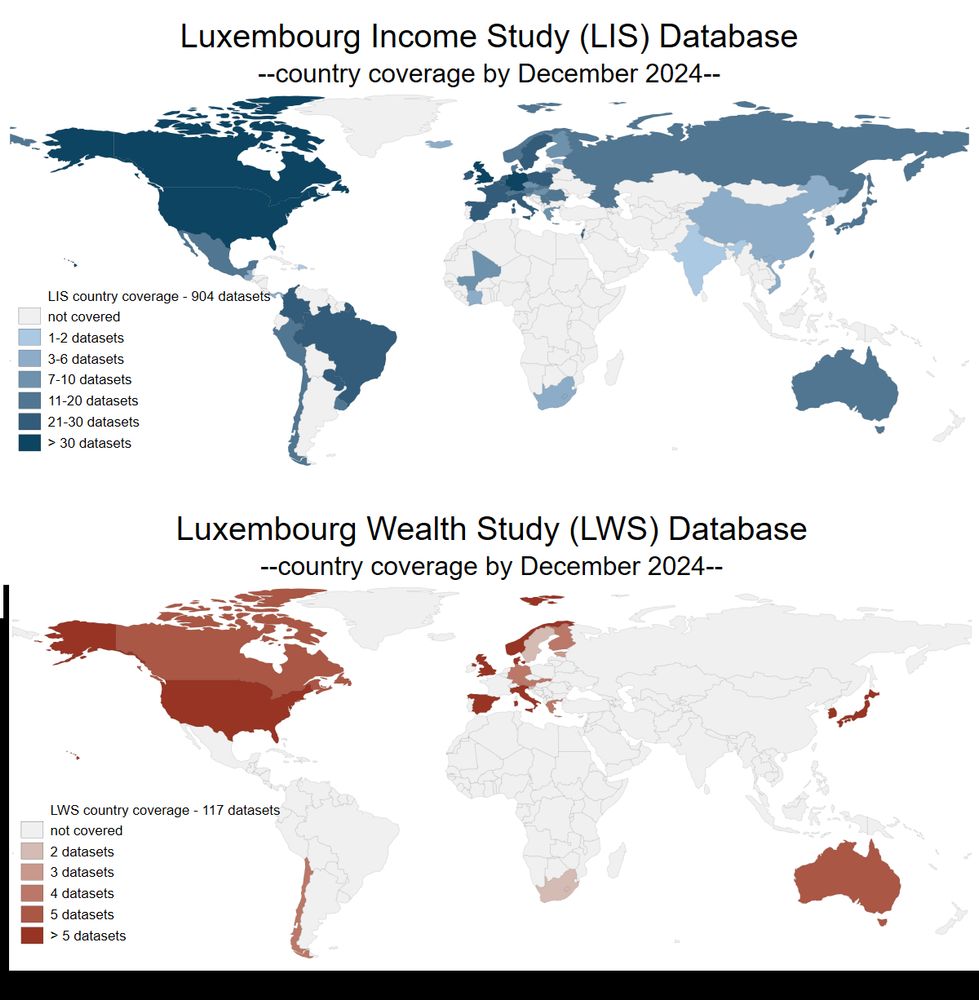
👇Since December 2024 the LIS & LWS databases contain more than 1000 datasets. This enables research on more than 30 Mio. households and 90 Mio individuals.
Explore our databases here: www.lisdatacenter.org/our-data/ #LISdata #inequality #poverty #research
👇Since December 2024 the LIS & LWS databases contain more than 1000 datasets. This enables research on more than 30 Mio. households and 90 Mio individuals.
Explore our databases here: www.lisdatacenter.org/our-data/ #LISdata #inequality #poverty #research
January 15, 2025 at 7:19 PM
First post on Bsky! Hello world!
👇Since December 2024 the LIS & LWS databases contain more than 1000 datasets. This enables research on more than 30 Mio. households and 90 Mio individuals.
Explore our databases here: www.lisdatacenter.org/our-data/ #LISdata #inequality #poverty #research
👇Since December 2024 the LIS & LWS databases contain more than 1000 datasets. This enables research on more than 30 Mio. households and 90 Mio individuals.
Explore our databases here: www.lisdatacenter.org/our-data/ #LISdata #inequality #poverty #research
Reposted by Ercio Munoz

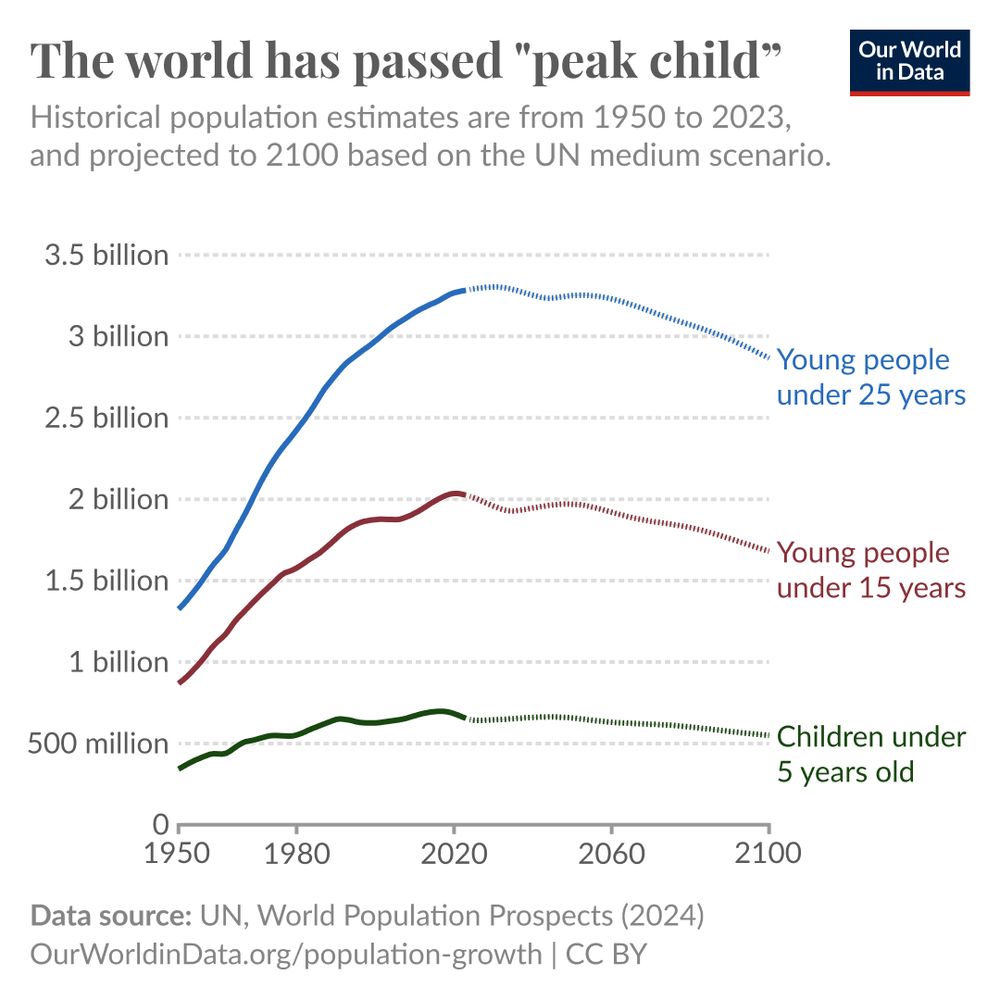
The world has passed “peak child”
January 13, 2025 at 6:18 PM
The world has passed “peak child”
Good overview on research on gender, violence, and harrassment 👇🏻

January 12, 2025 at 5:02 PM
Good overview on research on gender, violence, and harrassment 👇🏻
Reposted by Ercio Munoz
I am happy to share that our #LGBTQ paper reviewing the socioeconomic and health impact of same-sex marriage legalization is now in print in JPAM! 🎉 @appam.bsky.social
Huge thanks to my amazing coauthors @lbadgett.bsky.social Kitt Carpenter Maxine Lee
Check it out here: doi.org/10.1002/pam....
Huge thanks to my amazing coauthors @lbadgett.bsky.social Kitt Carpenter Maxine Lee
Check it out here: doi.org/10.1002/pam....

A review of the effects of legal access to same‐sex marriage
On June 26, 2015, the United States Supreme Court extended nationwide legal access to same-sex marriage in Obergefell v. Hodges, following a series of court cases and legislative activities at the st...
doi.org
January 7, 2025 at 3:43 PM
I am happy to share that our #LGBTQ paper reviewing the socioeconomic and health impact of same-sex marriage legalization is now in print in JPAM! 🎉 @appam.bsky.social
Huge thanks to my amazing coauthors @lbadgett.bsky.social Kitt Carpenter Maxine Lee
Check it out here: doi.org/10.1002/pam....
Huge thanks to my amazing coauthors @lbadgett.bsky.social Kitt Carpenter Maxine Lee
Check it out here: doi.org/10.1002/pam....
Nice podcast episode of the mixtape with my CUNY professor Ted Joyce: open.spotify.com/episode/01Ey...

S4E10: Ted Joyce, Health Economist, CUNY
The Mixtape with Scott · Episode
open.spotify.com
January 6, 2025 at 4:10 PM
Nice podcast episode of the mixtape with my CUNY professor Ted Joyce: open.spotify.com/episode/01Ey...
Interesting WP estimating intergenerational mobility in Ecuador finds a rank-rank slope of 0.27, much lower than what was recently estimated in Brazil by Britto et al. using a "similar approach"

January 4, 2025 at 3:05 PM
Interesting WP estimating intergenerational mobility in Ecuador finds a rank-rank slope of 0.27, much lower than what was recently estimated in Brazil by Britto et al. using a "similar approach"
Reposted by Ercio Munoz

The rise of predatory "limbic capitalism" paulkrugman.substack.com/p/america-th...

America the Addicted
Gambling — on sports, stocks and crypto — is the new opioids
paulkrugman.substack.com
December 23, 2024 at 3:58 PM
The rise of predatory "limbic capitalism" paulkrugman.substack.com/p/america-th...
Reposted by Ercio Munoz
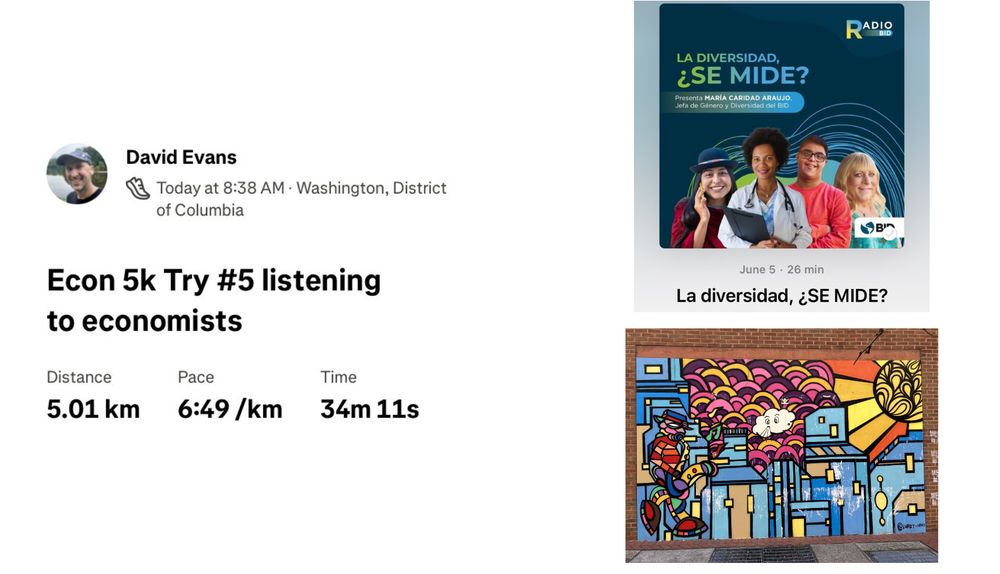
#Econ5k Try #5 while listening to economist @caridadaraujo.bsky.social discuss how data on diverse groups in Latin America can improve lives, with experts @ercio.bsky.social, Andrea Monje, Piedad Urdinola, and others.
www.youtube.com/watch?v=vKpg...
@econ5k.bsky.social
www.youtube.com/watch?v=vKpg...
@econ5k.bsky.social
December 18, 2024 at 2:56 PM
#Econ5k Try #5 while listening to economist @caridadaraujo.bsky.social discuss how data on diverse groups in Latin America can improve lives, with experts @ercio.bsky.social, Andrea Monje, Piedad Urdinola, and others.
www.youtube.com/watch?v=vKpg...
@econ5k.bsky.social
www.youtube.com/watch?v=vKpg...
@econ5k.bsky.social
Reposted by Ercio Munoz

And to close the day, @ercio.bsky.social presented his work on sibling correlations across the world as a measure of inequality of opportunity.
Roughly 50% of the inequality in educational outcomes comes from inequality of opportunity. In Mexico is more
Roughly 50% of the inequality in educational outcomes comes from inequality of opportunity. In Mexico is more


December 10, 2024 at 12:20 AM
And to close the day, @ercio.bsky.social presented his work on sibling correlations across the world as a measure of inequality of opportunity.
Roughly 50% of the inequality in educational outcomes comes from inequality of opportunity. In Mexico is more
Roughly 50% of the inequality in educational outcomes comes from inequality of opportunity. In Mexico is more