



CRC 392 - Molecular Evolution in Prebiotic Environments
@crc392molevo.bsky.social
CRC 392 Molecular Evolution in Prebiotic Environments at @lmumuenchen.bsky.social, funded by @dfg.de. Continuing the work of CRC 235 Emergence of Life.
Impressum: https://tinyurl.com/4uyc4sfs
Impressum: https://tinyurl.com/4uyc4sfs
Our guest speaker, Ebbe Andersen (the inventor of the first DNA origami box!), explained the logic behind the RNA World Hypothesis and how RNA origami could enable us to fold functional molecules from scratch.
November 21, 2025 at 3:06 PM
Our guest speaker, Ebbe Andersen (the inventor of the first DNA origami box!), explained the logic behind the RNA World Hypothesis and how RNA origami could enable us to fold functional molecules from scratch.
Kerstin Göpfrich introduced the challenge of RNA design, which is more complex than designing DNA or proteins. The solution: pyFuRNAce, a new RNA origami design tool. From membrane-breaking RNA centipedes to RNA-based nanopores and droplets: RNA might be our next programmable hardware.
November 21, 2025 at 3:06 PM
Kerstin Göpfrich introduced the challenge of RNA design, which is more complex than designing DNA or proteins. The solution: pyFuRNAce, a new RNA origami design tool. From membrane-breaking RNA centipedes to RNA-based nanopores and droplets: RNA might be our next programmable hardware.
Big questions, bold ideas, and a setting you won’t forget. Zsófia Meggyesi, a CRC PhD student, captured the spirit of the week through her lens — thank you!
Grazie mille, Venice!
(3/3)
Grazie mille, Venice!
(3/3)
October 8, 2025 at 6:34 AM
Big questions, bold ideas, and a setting you won’t forget. Zsófia Meggyesi, a CRC PhD student, captured the spirit of the week through her lens — thank you!
Grazie mille, Venice!
(3/3)
Grazie mille, Venice!
(3/3)
One of the highlights was a thought-provoking panel on the definition of life with Diego Puricelli, who is both a priest and a medical biotechnologist. We discussed: So how should we define life? And how important is it to communicate science before the breakthroughs — not only afterwards.
(2/3)
(2/3)
October 8, 2025 at 6:34 AM
One of the highlights was a thought-provoking panel on the definition of life with Diego Puricelli, who is both a priest and a medical biotechnologist. We discussed: So how should we define life? And how important is it to communicate science before the breakthroughs — not only afterwards.
(2/3)
(2/3)
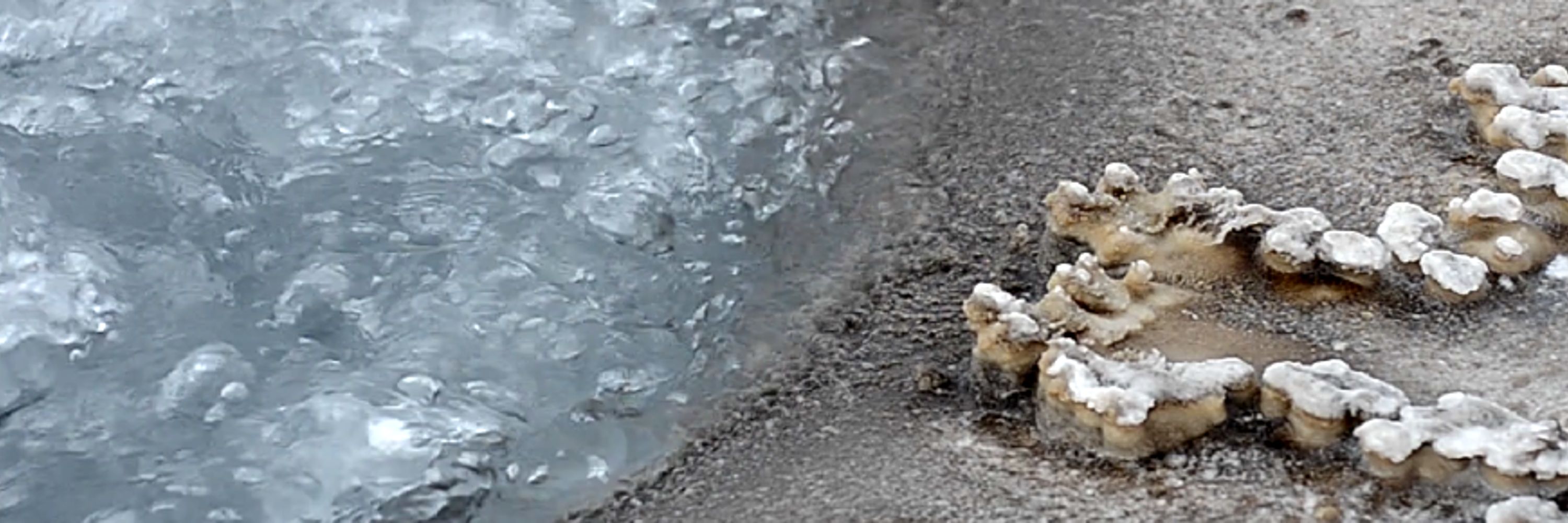
The environment with the most votes is 🥁 ... Hydrothermal vents. Now we only have to wait a few more years until science finds out what the right answer is 😅
September 3, 2025 at 3:41 PM
The environment with the most votes is 🥁 ... Hydrothermal vents. Now we only have to wait a few more years until science finds out what the right answer is 😅
Following the presentations, we explored the labs and enjoyed a jam session featuring piano, electric, and acoustic guitar.
The weather cleared just in time for a barbecue, providing the perfect end to the day. Thanks to the Richert group for the warm hospitality!
(3/3)
The weather cleared just in time for a barbecue, providing the perfect end to the day. Thanks to the Richert group for the warm hospitality!
(3/3)
July 31, 2025 at 3:51 PM
Following the presentations, we explored the labs and enjoyed a jam session featuring piano, electric, and acoustic guitar.
The weather cleared just in time for a barbecue, providing the perfect end to the day. Thanks to the Richert group for the warm hospitality!
(3/3)
The weather cleared just in time for a barbecue, providing the perfect end to the day. Thanks to the Richert group for the warm hospitality!
(3/3)
After a warming lunch, Max von Delius gave a talk titled “Putting Phosphorus-Based Reaction Cycles to Work in Chemically-Driven Molecular Machines.”
This brought back memories of organic chemistry lectures and sparked lively discussions about synthesis strategies.
(2/3)
This brought back memories of organic chemistry lectures and sparked lively discussions about synthesis strategies.
(2/3)
July 31, 2025 at 3:51 PM
After a warming lunch, Max von Delius gave a talk titled “Putting Phosphorus-Based Reaction Cycles to Work in Chemically-Driven Molecular Machines.”
This brought back memories of organic chemistry lectures and sparked lively discussions about synthesis strategies.
(2/3)
This brought back memories of organic chemistry lectures and sparked lively discussions about synthesis strategies.
(2/3)
The result: a precisely controllable world where synthetic droplets can form, dissolve, and be revived.
👨🔬 Yinqing’s favorite part? Testing how the geometry of the tunnels and reaction chamber shapes internal flow.
🔗 Want to dive deeper? Niederholtmeyer Lab: hn-lab.org
#OriginOfLife #Science
(5/5)
👨🔬 Yinqing’s favorite part? Testing how the geometry of the tunnels and reaction chamber shapes internal flow.
🔗 Want to dive deeper? Niederholtmeyer Lab: hn-lab.org
#OriginOfLife #Science
(5/5)
July 14, 2025 at 3:58 PM
The result: a precisely controllable world where synthetic droplets can form, dissolve, and be revived.
👨🔬 Yinqing’s favorite part? Testing how the geometry of the tunnels and reaction chamber shapes internal flow.
🔗 Want to dive deeper? Niederholtmeyer Lab: hn-lab.org
#OriginOfLife #Science
(5/5)
👨🔬 Yinqing’s favorite part? Testing how the geometry of the tunnels and reaction chamber shapes internal flow.
🔗 Want to dive deeper? Niederholtmeyer Lab: hn-lab.org
#OriginOfLife #Science
(5/5)
Two gel halves are carefully aligned by hand under a microscope, down to just 10 µm precision. Once the gel layers are perfectly aligned and stacked, tiny holes are punched to insert needles: some feed the reaction chamber, others control the gel vaults.
(4/5)
(4/5)

July 14, 2025 at 3:58 PM
Two gel halves are carefully aligned by hand under a microscope, down to just 10 µm precision. Once the gel layers are perfectly aligned and stacked, tiny holes are punched to insert needles: some feed the reaction chamber, others control the gel vaults.
(4/5)
(4/5)
How do you build something so tiny and complex? In a cleanroom!
The tunnels are formed using a wafer: a glass mold with microscopic grooves. Since these molds would be destroyed by UV light, the room is lit with yellow light. (New to me: there was a sticky foil at the entrance to trap dust)
(3/5)
The tunnels are formed using a wafer: a glass mold with microscopic grooves. Since these molds would be destroyed by UV light, the room is lit with yellow light. (New to me: there was a sticky foil at the entrance to trap dust)
(3/5)


July 14, 2025 at 3:58 PM
How do you build something so tiny and complex? In a cleanroom!
The tunnels are formed using a wafer: a glass mold with microscopic grooves. Since these molds would be destroyed by UV light, the room is lit with yellow light. (New to me: there was a sticky foil at the entrance to trap dust)
(3/5)
The tunnels are formed using a wafer: a glass mold with microscopic grooves. Since these molds would be destroyed by UV light, the room is lit with yellow light. (New to me: there was a sticky foil at the entrance to trap dust)
(3/5)
To control fluid flow, the chips include side tunnels filled with water. When pressure is applied, the water lifts a soft gel layer that blocks specific channels, acting like a flexible gel gatekeeper.
(2/5)
(2/5)
July 14, 2025 at 3:58 PM
To control fluid flow, the chips include side tunnels filled with water. When pressure is applied, the water lifts a soft gel layer that blocks specific channels, acting like a flexible gel gatekeeper.
(2/5)
(2/5)