




Bastienne Zaremba
@bassi-z.bsky.social
Scientist on a quest to unravel brain development and evolution @Kaessmannlab
Reposted by Bastienne Zaremba

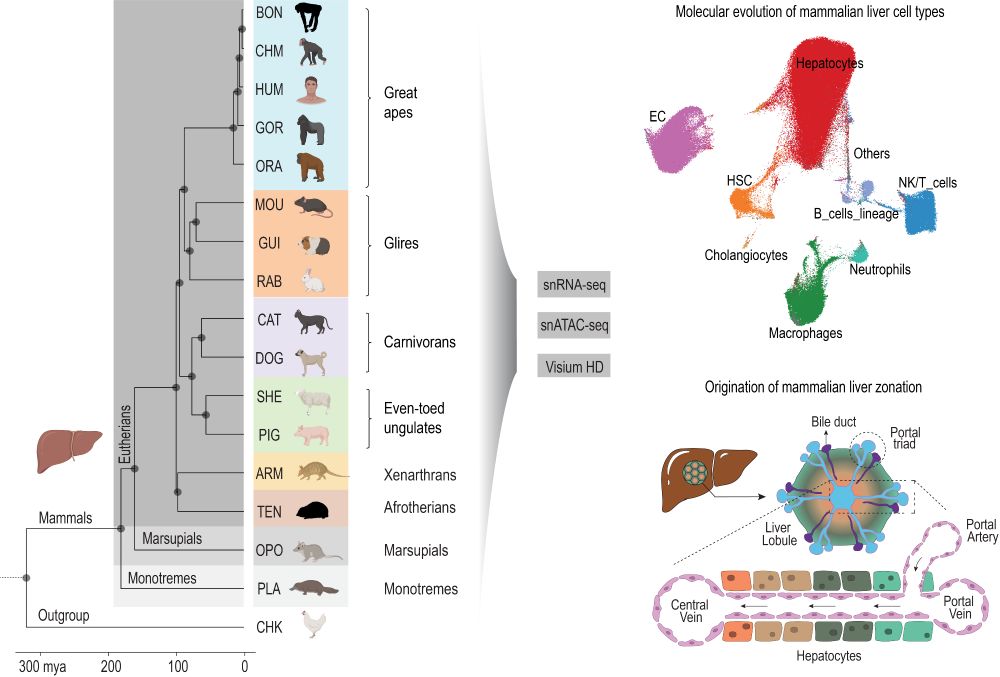
We are thrilled to share our new preprint entitled “The origin and molecular evolution of the mammalian liver cell architecture” www.biorxiv.org/content/10.1...
October 15, 2025 at 12:51 PM
We are thrilled to share our new preprint entitled “The origin and molecular evolution of the mammalian liver cell architecture” www.biorxiv.org/content/10.1...
Reposted by Bastienne Zaremba
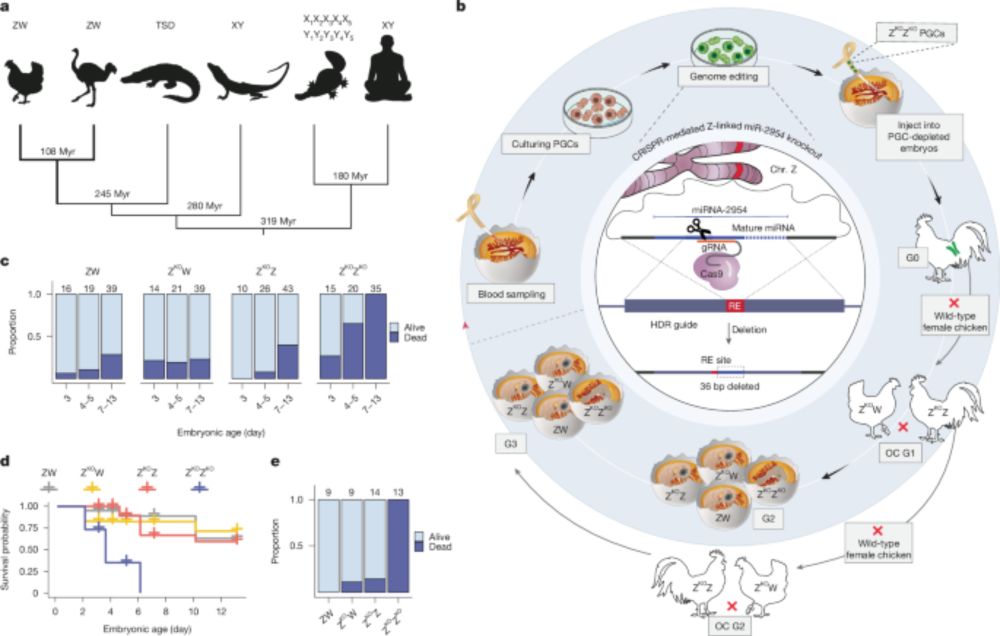
Our study on a male-essential microRNA and the evolution of other dosage compensation mechanisms in birds is now out in Nature! www.nature.com/articles/s41...
A male-essential miRNA is key for avian sex chromosome dosage compensation - Nature
Birds have evolved a unique sex chromosome dosage compensation mechanism involving the male-biased microRNA (miR-2954), which is essential for male survival by regulating the expression of dosage-sens...
www.nature.com
July 16, 2025 at 3:23 PM
Our study on a male-essential microRNA and the evolution of other dosage compensation mechanisms in birds is now out in Nature! www.nature.com/articles/s41...
Reposted by Bastienne Zaremba

I am very happy to have posted my first bioRxiv preprint. A long time in the making - and still adding a few final touches to it - but we're excited to finally have it out there in the wild:
www.biorxiv.org/content/10.1...
Read below for a few highlights...
www.biorxiv.org/content/10.1...
Read below for a few highlights...
Decoding cnidarian cell type gene regulation
Animal cell types are defined by differential access to genomic information, a process orchestrated by the combinatorial activity of transcription factors that bind to cis -regulatory elements (CREs) to control gene expression. However, the regulatory logic and specific gene networks that define cell identities remain poorly resolved across the animal tree of life. As early-branching metazoans, cnidarians can offer insights into the early evolution of cell type-specific genome regulation. Here, we profiled chromatin accessibility in 60,000 cells from whole adults and gastrula-stage embryos of the sea anemone Nematostella vectensis. We identified 112,728 CREs and quantified their activity across cell types, revealing pervasive combinatorial enhancer usage and distinct promoter architectures. To decode the underlying regulatory grammar, we trained sequence-based models predicting CRE accessibility and used these models to infer ontogenetic relationships among cell types. By integrating sequence motifs, transcription factor expression, and CRE accessibility, we systematically reconstructed the gene regulatory networks that define cnidarian cell types. Our results reveal the regulatory complexity underlying cell differentiation in a morphologically simple animal and highlight conserved principles in animal gene regulation. This work provides a foundation for comparative regulatory genomics to understand the evolutionary emergence of animal cell type diversity. ### Competing Interest Statement The authors have declared no competing interest. European Research Council, https://ror.org/0472cxd90, ERC-StG 851647 Ministerio de Ciencia e Innovación, https://ror.org/05r0vyz12, PID2021-124757NB-I00, FPI Severo Ochoa PhD fellowship European Union, https://ror.org/019w4f821, Marie Skłodowska-Curie INTREPiD co-fund agreement 75442, Marie Skłodowska-Curie grant agreement 101031767
www.biorxiv.org
July 6, 2025 at 6:15 PM
I am very happy to have posted my first bioRxiv preprint. A long time in the making - and still adding a few final touches to it - but we're excited to finally have it out there in the wild:
www.biorxiv.org/content/10.1...
Read below for a few highlights...
www.biorxiv.org/content/10.1...
Read below for a few highlights...
Reposted by Bastienne Zaremba
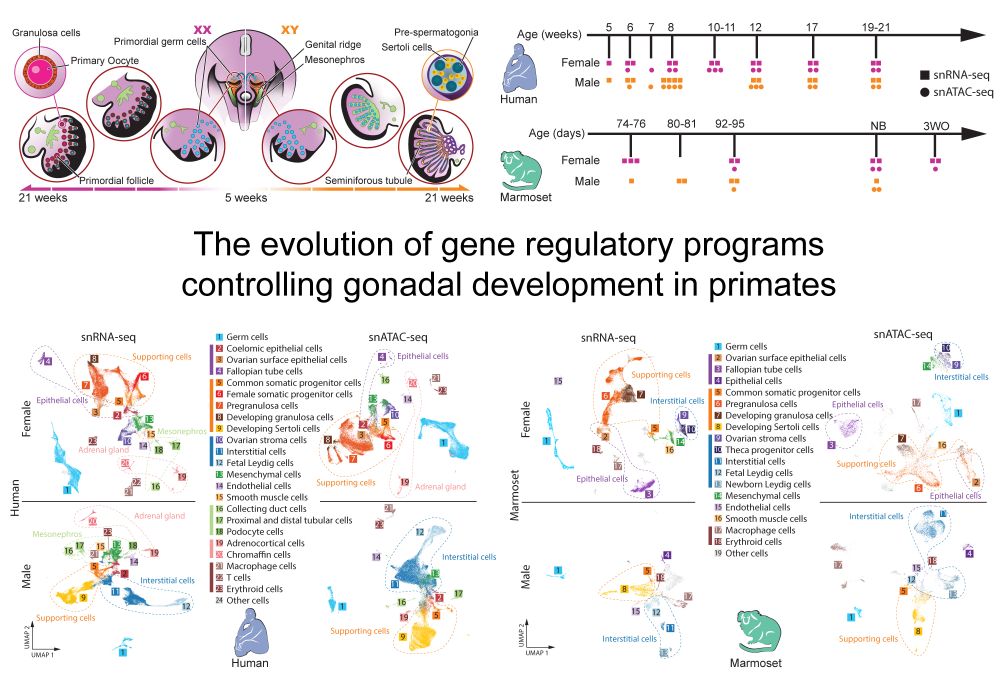
We are delighted to share our new preprint “The evolution of gene regulatory programs controlling gonadal development in primates” www.biorxiv.org/content/10.1...
June 20, 2025 at 8:13 AM
We are delighted to share our new preprint “The evolution of gene regulatory programs controlling gonadal development in primates” www.biorxiv.org/content/10.1...
Reposted by Bastienne Zaremba
A great article highlighting the broader implications of the three parallel recent papers from our group and our wonderful colleagues in Spain and Belgium...
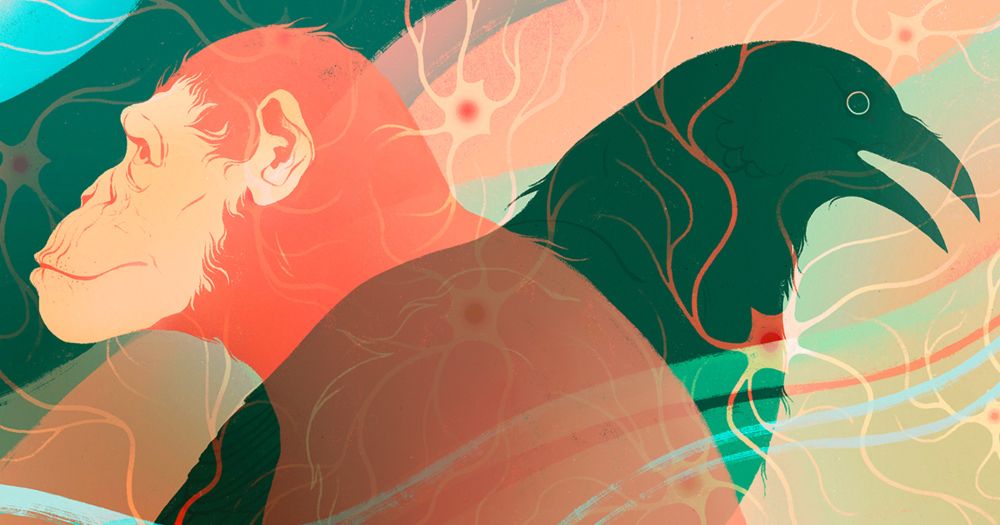
Calling someone bird-brained is, in fact, a way of calling someone highly intelligent. @yaseminsaplakoglu.bsky.social reports: www.quantamagazine.org/intelligence...
Intelligence Evolved at Least Twice in Vertebrate Animals | Quanta Magazine
Complex neural circuits likely arose independently in birds and mammals, suggesting that vertebrates evolved intelligence multiple times.
www.quantamagazine.org
April 7, 2025 at 3:49 PM
A great article highlighting the broader implications of the three parallel recent papers from our group and our wonderful colleagues in Spain and Belgium...
Thank you to @yaseminsaplakoglu.bsky.social, who wrote a fantastic article for @quantamagazine.bsky.social about our studies on the evolution of the avian pallium. Love it! shorturl.at/vmTLq
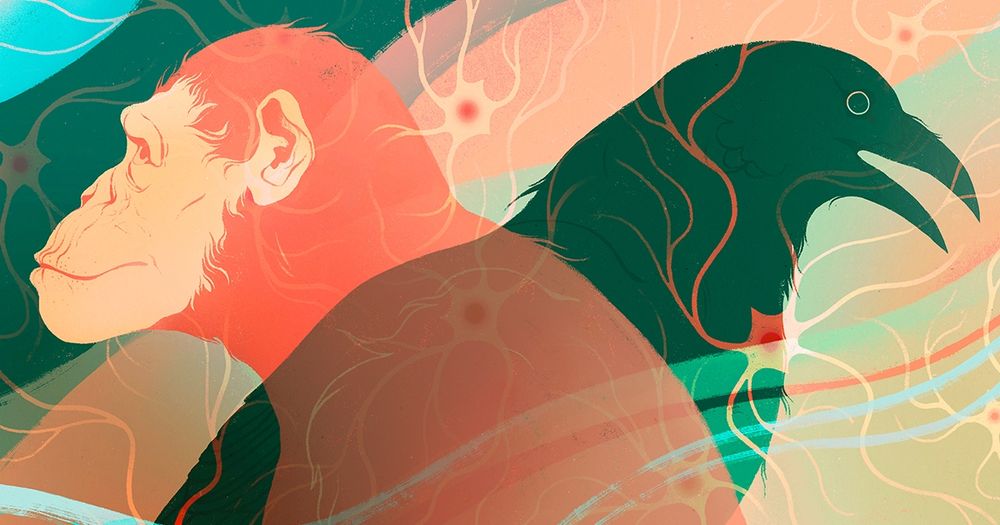
Intelligence Evolved at Least Twice in Vertebrate Animals | Quanta Magazine
Complex neural circuits likely arose independently in birds and mammals, suggesting that vertebrates evolved intelligence multiple times.
shorturl.at
April 7, 2025 at 3:52 PM
Thank you to @yaseminsaplakoglu.bsky.social, who wrote a fantastic article for @quantamagazine.bsky.social about our studies on the evolution of the avian pallium. Love it! shorturl.at/vmTLq
Reposted by Bastienne Zaremba
Calling someone bird-brained is, in fact, a way of calling someone highly intelligent. @yaseminsaplakoglu.bsky.social reports: www.quantamagazine.org/intelligence...
Intelligence Evolved at Least Twice in Vertebrate Animals | Quanta Magazine
Complex neural circuits likely arose independently in birds and mammals, suggesting that vertebrates evolved intelligence multiple times.
www.quantamagazine.org
April 7, 2025 at 2:28 PM
Calling someone bird-brained is, in fact, a way of calling someone highly intelligent. @yaseminsaplakoglu.bsky.social reports: www.quantamagazine.org/intelligence...
What a week! I defended my PhD on Monday, and now my first first-author paper was published in @science.org.
shorturl.at/fvIGZ
I am so incredibly grateful to everyone who made this possible! Especially @kaessmannlab.bsky.social and the García-Moreno lab 💛
shorturl.at/fvIGZ
I am so incredibly grateful to everyone who made this possible! Especially @kaessmannlab.bsky.social and the García-Moreno lab 💛


February 14, 2025 at 6:27 PM
What a week! I defended my PhD on Monday, and now my first first-author paper was published in @science.org.
shorturl.at/fvIGZ
I am so incredibly grateful to everyone who made this possible! Especially @kaessmannlab.bsky.social and the García-Moreno lab 💛
shorturl.at/fvIGZ
I am so incredibly grateful to everyone who made this possible! Especially @kaessmannlab.bsky.social and the García-Moreno lab 💛
Reposted by Bastienne Zaremba

Komplexe Evolution: Fortgeschrittene kognitive Fähigkeiten bei Vögeln – Heidelberger Forscher kartieren verantwortliche Gehirnregionen und gewinnen neue Erkenntnisse zu ihrer embryonalen und evolutionären Entwicklung www.uni-heidelberg.de/de/newsroom/...

February 14, 2025 at 8:49 AM
Komplexe Evolution: Fortgeschrittene kognitive Fähigkeiten bei Vögeln – Heidelberger Forscher kartieren verantwortliche Gehirnregionen und gewinnen neue Erkenntnisse zu ihrer embryonalen und evolutionären Entwicklung www.uni-heidelberg.de/de/newsroom/...
Reposted by Bastienne Zaremba
And please check out the wonderful Perspective by Maria Tosches and Giacomo Gattoni on our paper and the two related ones by the groups of @steinaerts.bsky.social and Fernando Garcia-Moreno!!
www.science.org/doi/10.1126/...
www.science.org/doi/10.1126/...
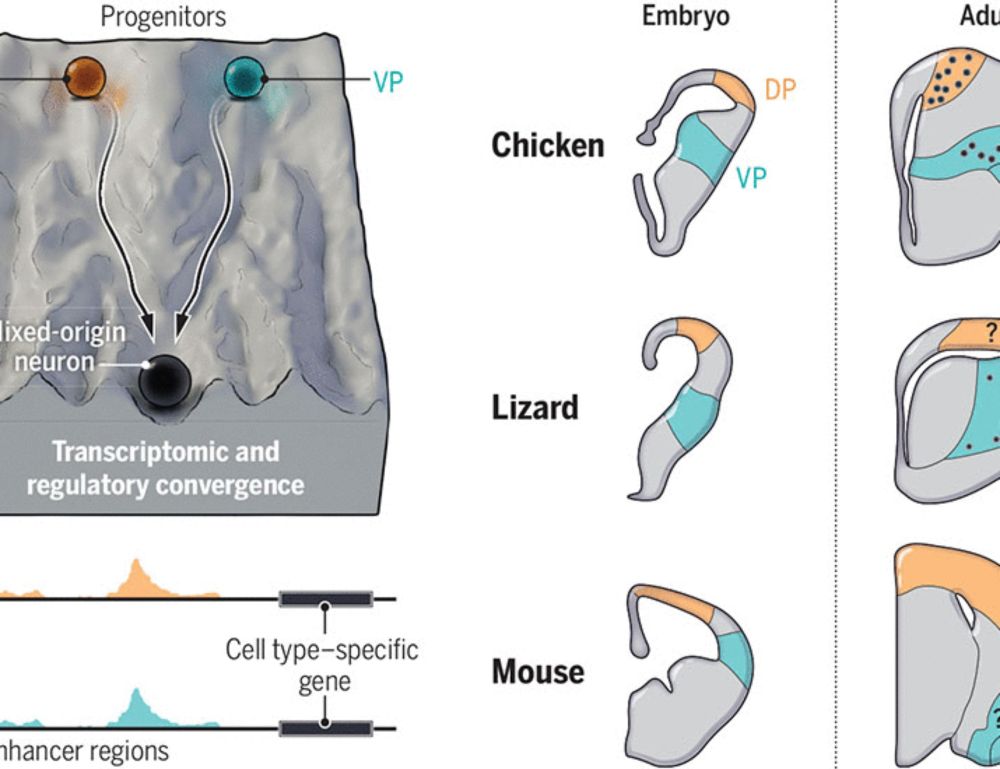
Constrained roads to complex brains
Neural development and brain circuit evolution converged in birds and mammals
www.science.org
February 13, 2025 at 10:32 PM
And please check out the wonderful Perspective by Maria Tosches and Giacomo Gattoni on our paper and the two related ones by the groups of @steinaerts.bsky.social and Fernando Garcia-Moreno!!
www.science.org/doi/10.1126/...
www.science.org/doi/10.1126/...
Reposted by Bastienne Zaremba
So excited to announce that our study on the development and evolution of pallial cell types and structures in birds, led by @bassi-z.bsky.social, is now out in @science.org!
www.science.org/doi/10.1126/...
www.science.org/doi/10.1126/...

Developmental origins and evolution of pallial cell types and structures in birds
Innovations in the pallium likely facilitated the evolution of advanced cognitive abilities in birds. We therefore scrutinized its cellular composition and evolution using cell type atlases from chick...
www.science.org
February 13, 2025 at 10:17 PM
So excited to announce that our study on the development and evolution of pallial cell types and structures in birds, led by @bassi-z.bsky.social, is now out in @science.org!
www.science.org/doi/10.1126/...
www.science.org/doi/10.1126/...