


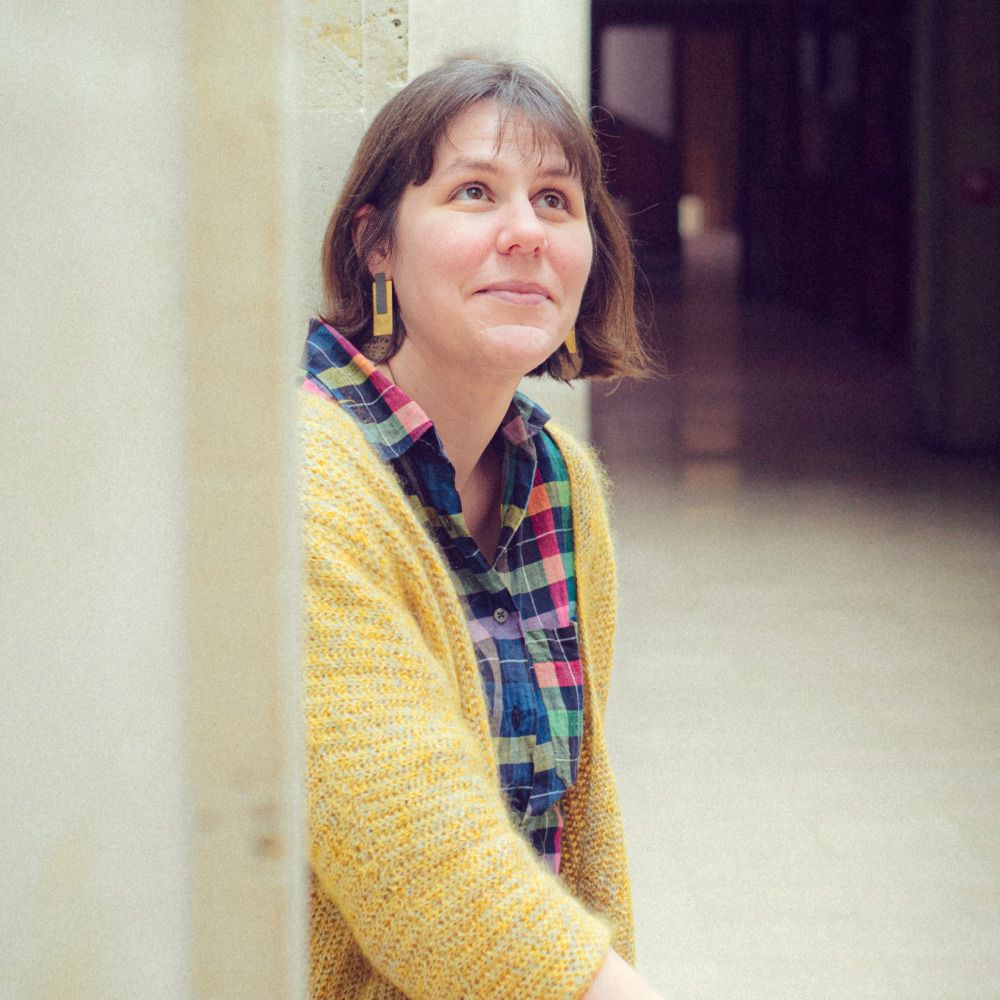
Béatrice Cointe
banner
beatricecointe.bsky.social
Béatrice Cointe
@beatricecointe.bsky.social

Solar-powered Science & Technology Studies researcher and IAM ethnographer at CSI - CNRS, Mines Paris-PSL.
"Well the world of research has gone berserk, too much paperwork" (Dylan 2006)
Soundtrack: t.ly/0V77d

Economics 38%
Environmental science 16%
Pinned
"In the midst of perpetual debates on most issues of the climate change problem, one refreshing exception is the consensus on our ignorance..."

(from the report on a 1993 Workshop on Integrative assessment of mitigation, impacts and adaptation to climate change)
New paper! How are emissions scenarios 📉 from the IPCC (and other sources) actually used by decision-makers? We asked them, and the results are out just in time for the holidays 🧑‍🎄🤶🧑‍🎄 (with @idasogn.bsky.social & @climansen.bsky.social)
Analysing the use of emissions scenarios in practice - npj Climate Action
npj Climate Action - Analysing the use of emissions scenarios in practice
www.nature.com
Music, materials, weather and climate - a great story about a set of organ record books from the 1960s to now. Are there older ones? When did recording temperature and humidity become a common part of the tuner's practice? www.theguardian.com/environment/... #histSTM #envhist
Organ-tuning books in English churches provide notes on a warming climate
Researchers have realised the records are a ‘goldmine’ to study changes in environmental conditions
www.theguardian.com

ParanoiAI

I’ve reached the point where I’m questioning co-authoring papers because what if one co-author uses it without my knowing
I’m sorry, but it is disgraceful to be an academic who uses this technology to conduct research. It should be prohibited in all of our scholarly institutions, including universities and journals.

Reposted by Béatrice Cointe

💼 Au 1er semestre 2026, le projet #ETRANHET du @cired.bsky.social recrute un·e stagiaire niveau Master SHS pour étudier comment les économistes ont pensé la ❓énergétique pendant la décolonisation 🇫🇷 (1946-80).

🗓️ Candidature avant le 15/01/2026

Tous les détails : www.centre-cired.fr/wp-content/u...
www.centre-cired.fr

Gift link, probably the funniest thing the Wall Street Journal has done this year.
We Let AI Run Our Office Vending Machine. It Lost Hundreds of Dollars.
An AI agent ran a snack operation in the WSJ newsroom. It gave away a free PlayStation, ordered a live fish—and taught us lessons about the future of AI.
www.wsj.com

Reposted by Fabián Muniesa

[3/3] The other one in Œconomia on the history of climate economics, that I co-edit with Antoine Missemer and Christophe Cassen.

Deadline for *abstracts* Jan 15, 2026
Full papers expected July 5, 2026

journals.openedition.org/oeconomia/19...
History of Climate Economics
Editors of the Special Issue Christophe Cassen (CNRS, CIRED Paris) Béatrice Cointe (CNRS, CSI Paris) Antoine Missemer (CNRS, CIRED Paris) Call for Papers In 2018, the Sveriges Riksbank Prize in Eco...
journals.openedition.org

Reposted by Fabián Muniesa

[2/3] One in Futures on "Constructing futures through climate modelling", that I'm co-editing with @dralaaclimate.bsky.social, @natasja.bsky.social, @a-nikas.bsky.social and Chris Groves

Submission deadline for *papers* : March 31

www.sciencedirect.com/special-issu...
Futures | ScienceDirect.com by Elsevier - Futures | ScienceDirect.com by Elsevier
Read the latest articles of Futures at ScienceDirect.com, Elsevier’s leading platform of peer-reviewed scholarly literature
www.sciencedirect.com
[1/3] Before everyone scatters away on holidays, a reminder to people here interested in the history of climate economics and/or the politics of climate modelling about two ongoing calls for papers.

One questions futures, the other is history-oriented, take your pick!

If I were to write SF now, I'd set it in a world were the digital is just AIs producing content for other AIs to process, while humans have reverted to largely analogue communication and organisation, because digital tools are so polluted now.

Coming next, AI-generated documents for historians, AI-generated maps for geographers, AI-generated telescope data for astronomers, AI-generated trade balances for economists, AI-generated 3D models or artifacts for archeologists, and AI-generated election results for political scientists.
Did you know that from tomorrow, Qualtrics is offering synthetic panels (AI-generated participants)?

Follow me down a rabbit hole I'm calling "doing science is tough and I'm so busy, can't we just make up participants?"
Did you know that from tomorrow, Qualtrics is offering synthetic panels (AI-generated participants)?

Follow me down a rabbit hole I'm calling "doing science is tough and I'm so busy, can't we just make up participants?"
JO du jour : ouverture des postes de CR au CNRS : www.legifrance.gouv.fr/jorf/id/JORF...
Avec une coquille : le titre et la liste des postes disent "chargés de recherche de classe normale" mais l'article 1 dit "directeurs de recherche de 1ère classe". Rectificatif à venir.
www.legifrance.gouv.fr

Reposted by Béatrice Cointe

💬Mon entretien Prendre les COP au sérieux ? vient de paraître dans le revue Les temps qui restent.

C'est la revue héritière des Temps modernes de Sartre - aujourd’hui réinventée pour penser l’Anthropocène dans une veine latourienne.

🔗 lestempsquirestent.org/fr/numeros/n...

un petit 🧵
Les temps qui restent | Prendre les COP au sérieux<br>Entretien avec Stefan Aykut
Les Temps qui restent (TQR) est un collectif multimédia déployé autour d’une revue généraliste en ligne, lancé à l’initiative du dernier comité de rédaction des Temps Modernes (interrompu en 2018). Ou...
lestempsquirestent.org

“BuT wHat aBouT poWEr?!” 🫠

Reposted by Béatrice Cointe

did u know that if you put your research interests in **bold** on academic application forms, it increases your chance of success by 3.6%?

follow for more tips from

the

font of knowledge
Tis the season to ... submit to Economy and Society’s Early-Career Paper Prize 2026.
Competition closes 15th December 2025. The winner will receive a £1,000 award
files.taylorandfrancis.com
CfP: a special issue of Œconomia – History | Methodology | Philosophy on the History of Climate Economics
journals.openedition.org/oeconomia/19...

Exactly!
📣 New call for paper in OEconomia: "History of Climate Economics", edited by Christophe Cassen, @beatricecointe.bsky.social and Antoine Missemer.

Extended abstract submission: January 15, 2026
More info ➡️ journals.openedition.org/oeconomia/19...
History of Climate Economics
Editors of the Special Issue Christophe Cassen (CNRS, CIRED Paris) Béatrice Cointe (CNRS, CSI Paris) Antoine Missemer (CNRS, CIRED Paris) Call for Papers In 2018, the Sveriges Riksbank Prize in Eco...
journals.openedition.org
Now that we are likely to cross 1.5°C, there is increasing discussion on "overshoot".

There is a lot of uncertainties on overshoot, but there is one thing that we are 100% sure about:

GHG emissions need to go down >90% in decades for overshoot to be a reality.

www.swp-berlin.org/publikation/...

😆

It’s the lighting but also the fact that COPs are SO cinematographic that I wonder how “international conference movies” is not a genre in itself
The lighting on this pic makes it look a snapshot from the trailer of the Cop30 movie
1/2. “The COP of Truth cannot ignore science. 75% of carbon emissions come from fossil fuels. Today we are not even allowed to discuss pathways for a just and equitable transition away from fossil fuels.” Colombia at the close of #COP30.

Reposted by Béatrice Cointe

The lighting on this pic makes it look a snapshot from the trailer of the Cop30 movie
1/2. “The COP of Truth cannot ignore science. 75% of carbon emissions come from fossil fuels. Today we are not even allowed to discuss pathways for a just and equitable transition away from fossil fuels.” Colombia at the close of #COP30.

Reposted by Béatrice Cointe

The hierarchy is clear: 75–85% of emission reductions through 2050 come from using less fossil fuel.

CCS plays a role, but it is strictly secondary, contributing a median of just 15–25%.

Technological neutrality is a political concept, not a scientific one.

2/3

"autre chose"

moi aussi des fois j'écoute autre chose que du Dylan

fourble.co.uk/podcast/them...
Theme Time Radio Hour podcast
Bob Dylan hosts an eclectic mix of music, guests, interviews and commentary.
fourble.co.uk

Il faut, il faut.
Call for papers:

HISTORY OF CLIMATE ECONOMICS

Details at:
journals.openedition.org/oeconomia/19...

Editors of the Special Issue

Christophe Cassen (CNRS, CIRED Paris)
Béatrice Cointe (CNRS, CSI Paris)
Antoine Missemer (CNRS, CIRED Paris)

Deadline for abstracts : January 15th, 2026
History of Climate Economics
Editors of the Special Issue Christophe Cassen (CNRS, CIRED Paris) Béatrice Cointe (CNRS, CSI Paris) Antoine Missemer (CNRS, CIRED Paris) Call for Papers In 2018, the Sveriges Riksbank Prize in Eco...
journals.openedition.org